
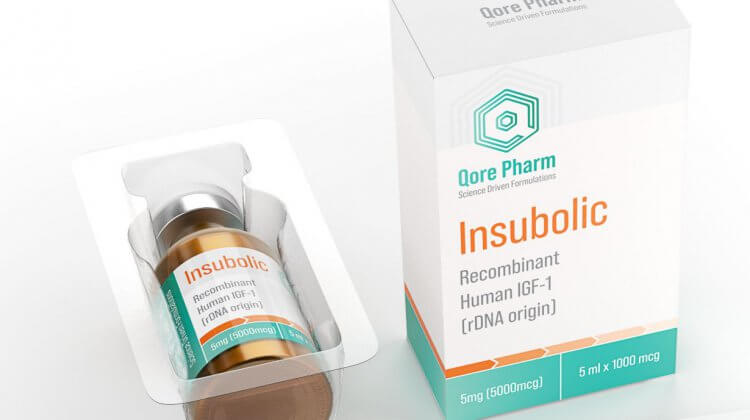
IGF-1 or insulin-like growth factor 1 (brand name: Increlex) is a growth factor which is very closely related to insulin. It carries the same amount of amino acids as insulin and responsible for the anabolic reactions to GH. IGF-1 is an important factor in childhood growth and is highly anabolic in adults. It is also known by the brand name Increlex and the generic name mecasermin.
Background
In the 1970’s, IGF-1 was known as as “Sulfation Factor” and “Nonsuppressible Insulin-like Activity” (NSILA). In the 1980’s, it was known as “Somatomedin C.” The most popular type of IGF-1 available on the Black Market is a longer lasting version (more amino acids in length) known as Long R3 Insulin-like Growth Factor-I or Long R3IGF-I. Lr3igf-1 is more potent than the lesser versions which are no longer available on the black market. Of that type of IGF, there are two types commonly available (Media and Receptor grades, respectively). These last two types of IGF mostly just refer to the purity of what is actually in the bottle.
Action
IGF-1 is released in the liver and binds to the IGF receptors within the cells, which ultimately causes a stimulation of cell growth (both causing new tissue formation and existing tissue growth) and an inhibition of cell death. It is a highly anabolic and anti-catabolic compound. For the athlete or bodybuilder, this had many positive effects: increased nitrogen retention and protein synthesis because it is highly anabolic. IGF-1 (in the presence of sufficient protein) actually promotes growth of new muscle cells, which increases the overall number of cells in the muscle.
IGF protects the neurons of the brain as well as promotes growth of new motor neurons, making it more possible to rapidly learn new skills during its use. IGF-1 is also responsible in connective tissue production, improves collagen formation and aids in cartilage repair. Similarly, it affects the bones by aiding in bone production and repair.
Technical Data
In a study done on young adult mice, a compound responsible for increased secretion of IGF-1 in muscle fibers was administered. There was an average increase of 15% in muscle mass and a 14% increase in strength. When the study was then conducted on adult mice, there was a 27% increase in strength in the injected muscles as compared with non-injected muscles. It was also found to prevent aging of the muscles. Muscle mass and muscle fiber growth were similar to the levels found in young adults. These effects are most likely due to the ability of IGF-1 to activate satellite cells, therefore stimulating muscle rejuvenation (1).
In studies conducted where GH and IGF1 were used together, a greater increase of Lean Body Mass and fat reduction was found than by use with each compound alone (2). Researches also believe that use of testosterone would also increase IGF levels in muscle (3). In a 12 week study on subjects using IGF-1, IGF-1+GH, or GH alone subjects in this study, gained around 3kgs of lean mass, and lost around 2kgs of fat(4) .
The complete human IGF-1 Long R3 IGF-1 is 2-3 times more potent than IGF-1 due to less ability to be made inactive by IGF binding proteins (5) (6).
User Notes
I’m actually a very big fan of Lr3 IGF-1. For me, I’ve found that it’s had beneficial effects on helping me recover from training injuries and has shown to be very helpful in improving my strength, speed, and performance. I also noted some pretty enhanced muscle building effects and very enhanced fat burning when I’ve been on IGF…nothing on the level of Anabolic Steroids, but still, the effect was very pronounced.
Most users opt for a dose of about 100mcg/day injected bilaterally in the muscle group just trained, immediately post workout.
I suspect that in the coming years, more and more professional athletes will be using IGF, as it is very difficult to test for, and many have switched over from GH to this compound already.
Anecdotally, IGF seems to stack best with Trenbolone and Testosterone, and there’s certainly some synergy between these compounds. Lately, MGF is being added to most IGF protocols.
References
- Viral mediated expression of insulin-like growth factor I blocks the aging-related loss of skeletal muscle function.Proc Natl Acad Sci U S A. 1998 Dec 22;95(26):15603-7.
- Recombinant human growth hormone, insulin-like growth factor 1, and combination therapy in AIDS-associated wasting. A randomized, double-blind, placebo-controlled trial. Ann Intern Med. 1996 Dec 1;125(11):865-72.
- Am J Physiol Endocrinol Metab. 2002 Mar;282(3):E601
- Am J Physiol Endocrinol Metab. 2002 Mar;282(3):E601-
- IGF-I variants which bind poorly to IGF-binding proteins show more potent and prolonged hypoglycaemic action than native IGF-I in pigs and marmoset monkeys.J Endocrinol. 1997 Nov;155(2):377-86.
- In vivo actions of IGF analogues with poor affinities for IGFBPs: metabolic and growth effects in pigs of different ages and GH responsiveness. Prog Growth Factor Res. 1995;6(2-4):385-95. Review.
About the author

Anthony Roberts is an expert in the field of performance and image enhancing drugs. He has authored books ranging from the pharmacology of anabolic steroids and growth hormone to their illicit use and trafficking. His writing can be found in magazines such as Muscle Evolution, Muscle & Fitness, Human Enhancement Drugs, Muscle Insider, and Muscular Development.