
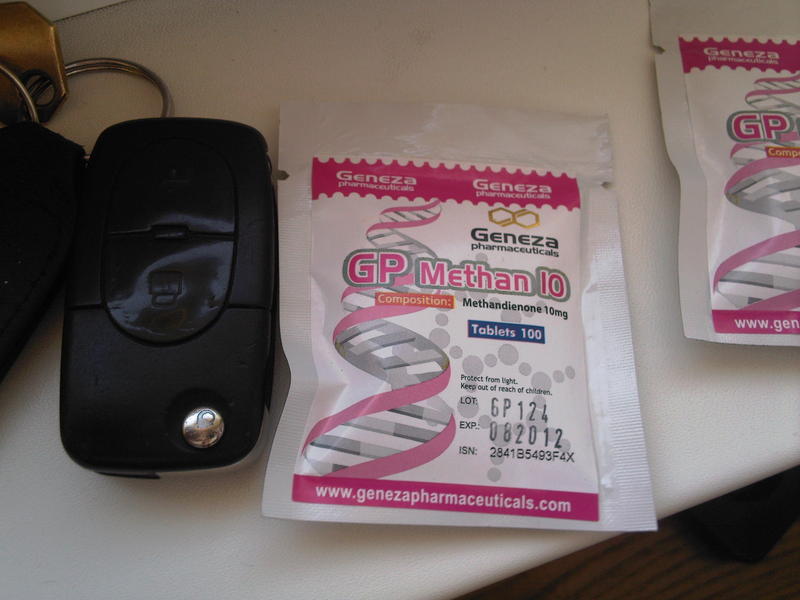
Question: Is Dianabol a good anabolic for a “steroid bridge” since it’s not really suppressive of natural testosterone production?
Answer: Dianabol adversely affects the HPTA. There is a lot of commentary, both in posts and websites, that dianabol does not adversely affect the HPTA. It is difficult, more like impossible, to find support for this in the peer reviewed literature. Additionally, personal experience on testing of the HPTA from individuals using dianabol shows consistently and uniformly HPTA suppression.
One website cites a study on the effects of rat methandrostenolone (dianabol) on the estrous cycle as proof that there is little HPTA effect.
[Blasberg ME, Langan CJ, Clark AS. The effects of 17 alpha-methyltestosterone, methandrostenolone, and nandrolone decanoate on the rat estrous cycle. Physiol Behav 1997;61:265-72.]
Initial impression should make one cautious since the study is on females, not males. This alone is a stretch. Rat studies and human studies have some factors in common but quite a bit more that are not common. Regardless, extrapolating from rat to human is a mistake. The authors of the above study have a number of publications dealing with sexual behavior in rats during AAS administration. Almost all of these studies are on rat sexual behavior and not on HPTA effects. It is even more hazardous to translate from animal sexual behavior, complex in itself, to a supposed HPTA effect in humans.
Many of the results are all over the board and a conclusion that dianabol has little HPTA effect appears to misinterpret and misrepresent their studies as well as select studies to meet their conclusions.
For example, in the study cited above that dianabol has little HPTA effect, the authors, in fact, conclude, “The short-term administration of AAS compounds at levels commonly used by humans disrupts female neuroendocrine function in a dose-dependent manner.”
In one study where testosterone levels are measured, there is the investigation of AAS on the sexual behavior of intact male rats.
[Clark AS, Harrold EV, Fast AS. Anabolic-androgenic steroid effects on the sexual behavior of intact male rats. Horm Behav 1997;31:35-46.]
The six AAS compounds analyzed in this study were 17alpha-methyltestosterone, methandrostenolone (dianabol), nandrolone decanoate, stanozolol, oxymetholone, and testosterone cypionate.
Twelve weeks of administration of the high dose of three AAS compounds, 17alpha-methyltestosterone, stanozolol, and oxymetholone eliminated male sexual behavior. These treatments also suppressed serum testosterone levels. The remaining compounds had minimal effects on sexual behavior at any dose.
Although the abstract is confusing for whether all of the AAS treatments suppressed serum testosterone levels or only 17alpha-methyltestosterone, stanozolol, and oxymetholone, the translation to humans is not possible. If all compounds suppressed testosterone this is contrary to the commonly held belief that dianabol does not suppress the HPTA. However, if one believes that only 17alpha-methyltestosterone, stanozolol, and oxymetholone suppress testosterone, thus, supporting the belief that dianabol does not affect the HPTA, than where does nandrolone decanoate fit into this picture? There is no doubt that nandrolone suppresses the HPTA.
Finally, a case study from 1977 describes findings on the use of dianabol (up to 20 mg/day in intermittent courses for a year or more). These are the following: At the time of examination there was no subjective disturbance of sexual function, but testosterone levels were low relative to laboratory standards and luteinizing hormone levels were also reduced – particularly in relation to testosterone concentrations. Abnormal liver function tests were seen in three of the six subjects, and one had mild diabetes with high serum cholesterol, triglycerides and uric acid. The weight gain of the group was not outstanding, and the only possible finding was a high hemoglobin and hematocrit in one of the six subjects.
[Shephard RJ, Killinger D, Fried T. Responses to sustained use of anabolic steroid. Br J Sports Med 1977;11:170-3.]
Bottom line: Dianabol adversely affects the HPTA.
About the author

The research of Michael Scally focuses on returning individuals to normal physiology after the discontinuation of anabolic steroids. Dr. Scally has presented his medical protocol for the treatment of Anabolic Steroid Induced Hypogonadism before the Endocrine Society, American Association of Clinical Endocrinologists, American College of Sports Medicine, and International Workshop on Adverse Drug Reactions and Lipodystrophy in HIV. Dr. Scally is the author of "Anabolic Steroids - A Question of Muscle: Human Subject Abuses in Anabolic Steroid Research."
Leave a Reply
You must be logged in to post a comment.