
Q: “Is there any way I can have anabolic steroids lab tested without the lab knowing that I’ve sent them anything illegal?”
A: Probably yes.
NMR spectra ordinarily are not interpreted by labs: instead, only the spectrum itself is provided and it’s the customer’s job to interpret the spectrum.
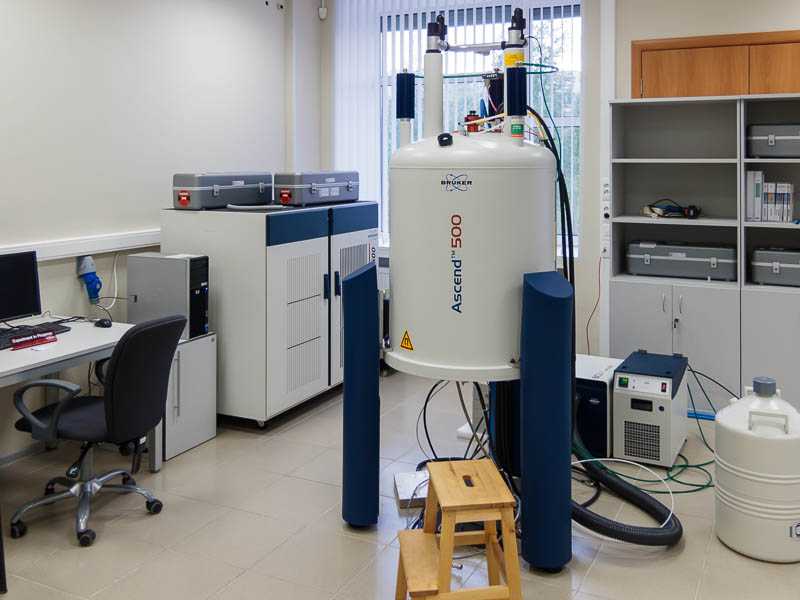
Molecules are of course made up of individual atoms arranged in a particular pattern. The molecule includes electrons distributed about the molecule, with the density (so to speak) of the electron field varying across the molecule in a particular and characteristic way. Nuclear Magnetic Resonance (NMR) spectroscopy measures the effect of this electron field on the nuclei of the atoms of the molecule. In this way, a characteristic fingerprint is obtained for the molecule.
An NMR spectrum therefore is pretty much (not quite absolutely, but good enough for our purposes) “proof positive” of chemical identity. Furthermore, ordinarily the lab will not themselves interpret the spectrum, so they will not know that they have a controlled substance. The likelihood of their spotting it can be further reduced by spiking the sample with a second material which will add spurious peaks, which you know to ignore when interpreting the spectrum, but they would not.
So how to do this?
A small amount of sample is sent, typically about 20 mg, but if desired the amount can be more. The sample is preferably pure, but for example if the product is a relatively high concentration oil preparation of an anabolic steroid, the oil solution can be used. It may not work to send a crushed tablet, because the amount of excipient relative to active could be too high, and excipient material may well overwhelm the spectrum.
The order form can request testing in either DMSOd6 or CDCl3. Either will work. Generally, CDCl3 can be a little preferable because spectrum prediction is usually relative to that solvent. The spectrum to be run is 1H (proton), not carbon.
If running what should be pure material, such as powder from a supplier or acetone-removed product from a tablet, the entire spectrum should look close to the predicted spectrum. It will not look the exact same, and some peaks will be at somewhat different positions. This is because prediction software, or at least that which is available for free use on the Internet, isn’t completely accurate.
What should be paid the most attention to are the characteristic peaks, which are those of protons (where the molecular structure shows an H) which are near a double bond. What should receive no attention is the particular shape down low in the spectrum.
NMR prediction software can be found by Google search.
The above is really short I know and doesn’t say enough to fully do the job, but either it will be enough with some individual effort, or an entire book would be needed. The advice may be helpful for some. Due to a fairly high degree of technical difficulty this type of analysis will always be only for some, rather than suitable for all, unfortunately. If developments make it easy for anyone to do without needing a book’s worth of guidance, definitely at that time I’ll write more on how to do that. But presently, this is a way that could enable getting started.
About the author

Bill Roberts is an internationally-recognized expert on anabolic steroids and performance-enhancing drugs (PEDs). He received a bachelor degree in Microbiology and Cell Science and completed the educational and research requirements for a PhD in Medicinal Chemistry at a major American university.
Bill entered the nutritional supplement industry prior to completing his doctoral thesis but his education was invaluable so far as being able to design/improve nutritional supplement compounds, since it was in the field of designing drug molecules and secondarily some work in transdermal delivery.
His education was not specifically "geared" toward anabolic steroids other than expertise with pharmacological principles having broad applications. This has allowed Bill to provide unique insight into the field of anabolic pharmacology with knowledge of points which he would not have known otherwise.
Leave a Reply
You must be logged in to post a comment.