
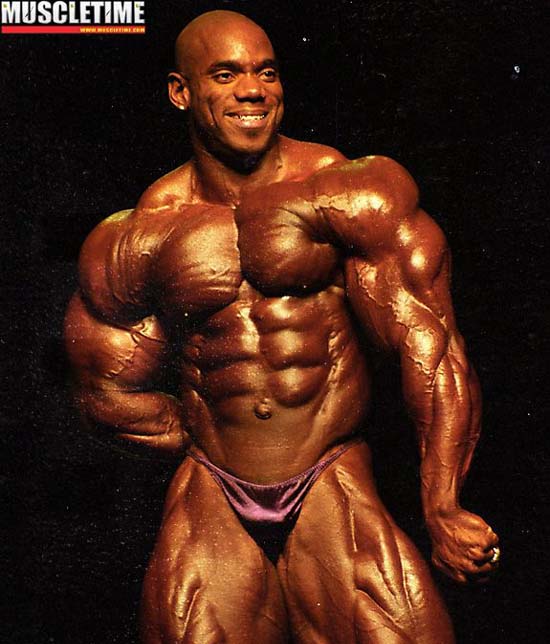
The New York Times highlighted the widespread use of steroids in competitive bodybuilding suggesting that anabolic steroids cause a specific form of kidney disease known as focal segmental glomerulosclerosis. This was the disease that required IFBB pro bodybuilder Flex Wheeler to undergo kidney transplant surgery. The article interviews three IFBB pro bodybuilders: Flex Wheeler, King Kamali, and Bob Cicherillo.
The study in the Journal of the American Society of Nephrology allegedly establishes a direct link between steroid use and kidney damage (“Bodybuilders See Kidney Damage with Steroids,” December 10).
The study began 10 years ago when a kidney pathologist at Columbia University Medical Center in New York noticed that a bodybuilder had an advanced form of kidney disease. Curious, she started looking for similar cases and eventually studied 10 men with serious kidney damage who acknowledged using steroids. Nine were bodybuilders and one was a competitive powerlifter with a similar training routine.
All 10 men in the case series, published in November by the Journal of the American Society of Nephrology, showed damage to the filters of the kidney. Nine had an irreversible disease known as focal segmental glomerulosclerosis ”the same disease contracted by Wheeler” even though the men in the study did not have other apparent risk factors. Their disease was worse than in obese patients with a higher body-mass index, suggesting that steroids ” combined with the other practices ” might be harming the kidneys.
Several steroid experts were skeptical of the causal link between steroids and kidney damage. Dr. Michael Scally, M.D., founder of the biotech pharmaceutical company HPT/Axis, posted his concerns on MESO-Rx that researchers may have prematurely jumped to conclusions.
The authors of the article cited in the NYT piece have also published similar findings in the obese and nonobese with an increased muscle mass (abstracts below). While not discounting the possible role of AAS in the kidney pathology, I caution that often and without good evidence AAS are quickly grabbed on as the culprits for many pathologies only to later determine not to be the cause. […]
On first review, I am little impressed by the authors’ attribution of AAS to the pathology. Admittedly, being a cynic I am more likely to take the position that the authors are looking for research dollars and the use of AAS as causation will help bring monies. Regardless, I hope that true independent third-party research confirms or refutes this hypothesis. One must be very careful though since others might grasp on this for their own research dollars (i.e., AAS addiction/dependency).
Bill Roberts, anabolic pharmacology and medicinal chemistry expert, pointed out that the kidney disease was mult-factorial and that steroids were unlikely to be the sole factor involved. A more reasonable explanation for kidney disease is hypertension that may or may not be aggravated by steroids. He posted his reaction on MESO-Rx:
I agree with Dr Scally. More than one factor is involved, but for reasons having — in my opinion — to do with the muscle-hating psychology of many individuals, these findings may be considered by them to be a useful weapon against anabolic steroids.
It is actually a reasonable argument that supraphysiological androgen levels may aggravate glomerulosclerosis where it is already developing, or perhaps be “the last straw” if other factors contribute. Or perhaps even with some forms of use being sufficient as a sole factor. There is considerable evidence that testosterone, even at physiological levels, can be an aggravating factor.
However, whether this is due to anything but hypertension, I don’t know.
Certainly hypertension is strongly linked to this disease state, and is prevalent among those with high BMI, whether from extreme muscle mass or from obesity. Androgens also can raise blood pressure, but of course the individual can monitor this and so by no means is this an inevitable side effect.
It is important to acknowledge that, while the claim that anabolic steroids cause kidney damage is certainly overstated, the extreme polypharmacy in competitive bodybuilding that involves prolonged use of high dosages of anabolic steroids combined various other anabolic agents and ancillaries can have serious health consequences.
Flex Wheeler acknowledged to NY Times reporter Katie Thomas that competitive bodybuilding “has nothing to do with health” but does not believe anabolic steroids caused his kidney problems
Lifting weights in the gym is extremely healthy for you, said Kenneth Wheeler, a former elite bodybuilder known as Flex. But if you want to be a bodybuilder and compete at the highest level, it has nothing to do with health. A relatively rare form of kidney disease forced Wheeler to retire in 2003 at age 37, and he needed a kidney transplant later that year. […]
Wheeler said he was convinced steroid use did not cause his kidney disease, although it might have made it worse.
Iron Man Magazine’s Jerry Brainun told Thomas that he found the results “alarming” and called for additional research.
Jerry Brainum writes a column for Iron Man Magazine called Bodybuilding Pharmacology and said he welcomes more research on the subject. I found it very alarming, quite frankly, Brainum said.
The NY Times article referenced a July 2005 editorial published in FLEX Magazine. Former FLEX Editor-in-Chief Peter McGough warned that competitive bodybuilding had reached a dangerous crossroads and required decisive action by the IFBB leadership to save the sport (“For Whom the Bells Toll,” July 2005).
Just going from memory, the list of bodybuilders who have died prematurely since 1992, in addition to Durr and Youngblood, includes Momo Benaziza, Andreas Munzer, Curtis Leffler, Hans Hopstaken, Sonny Schmidt and Derrick Whitsett. Bodybuilders whose competitive careers were cut short by illness include Dennis Newman, Mike Francois, Don Long, Flex Wheeler, Tom Prince and Mike Matarazzo. The list of athletes that we know have experienced harum-scarum hospital visits with conditions in which their lives have been in danger includes Mike Matarazzo, Edgar Fletcher, Paul Dillett (twice), Milos Sarcev, Nasser El Sonbaty, Bob Cicherillo and Mustafa Mohammad (twice).
Our sport has reached a dangerous crossroad, where it seems that too many athletes (pro and amateur) have become walking time bombs, with the prospect of a future lived in poor health (or worse) being the only trophy they can look forward to. Consider the following lifestyle: use liberal amounts of steroids, growth hormone and insulin; kick in an array of exotic substances for God knows what; add huge quantities of food every two hours that severely overtax the human digestive system; throw in a heavy dose of painkillers (some narcotic in nature); adopt an MO that requires dropping 40 or 50 pounds twice a year in a 12-week period; peak on contest day by means of diuretics so as to be bone dry and severely dehydrated. We don’t have to fund a Harvard research project to figure out that such a regimen is a recipe for physical disaster.
To save certain athletes from themselves and to save the sport, an overhaul of how physiques are to be judged has already been implemented and a discussion on drug-testing controls has already begun (more on that in the months to come). Rest assured, the combined powers that be are committed to returning competitive bodybuilding to the position where it is a celebration of life, not a shortening of it.
Bob Cicherillo did his best to defend the current state of the IFBB. He told the New York Times about the little known IFBB Pro drug testing policy; Cicherillo also stated that bodybuilders are unfairly singled out when athletes in other sports also use steroids.
The International Federation of Body Building and Fitness reserves the right to test for steroids and human growth hormone at the professional level, and testing is done on a random basis, said Bob Cicherillo, athlete representative for the federation, which is the main governing body for bodybuilding.
But several bodybuilders said the testing was nearly nonexistent, and Cicherillo said he could not provide specific figures on competitors who tested positive. […]
Bodybuilders said that they were unfairly singled out as drug abusers when athletes in most other sports were also using performance-enhancing drugs. Like anything else, it’s use and abuse, Cicherillo said. We’re the ones who are visual. We’re the ones who walk around, and you see us with the big muscles.
Law enforcement had started targeting steroid use by competitive bodybuilders in large scale arrests and indictments in Oklahoma, Texas (Operation Juicy Phruit), and most recently Pennsylvania (Operation Roid Runner). Unfortunately, it was only a matter of time before mainstream media started to focus on competitive bodybuilding and steroids.
About the author

Millard writes about anabolic steroids and performance enhancing drugs and their use and impact in sport and society. He discusses the medical and non-medical uses of anabolic-androgenic steroids while advocating a harm reduction approach to steroid education.
Leave a Reply
You must be logged in to post a comment.