
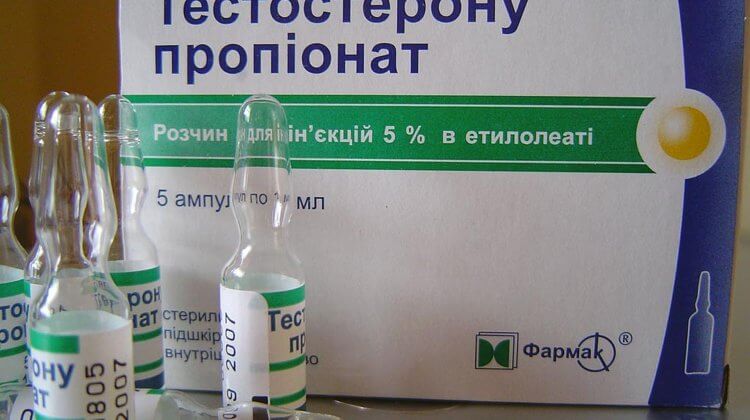
One of the most infamous hormones around is Testosterone. You hear Clueless news anchors about it on the evening news. You hear about it in the gym. You even read about it in the “growing older with style” magazines. Depending on who you talk to, it is both the good, the bad, and the ugly of hormones.
In bodybuilding it is hailed as the king of muscle builders. Among forward-thinking baby boomers it is considered the fountain of youth. In other circles it is pointed to as the cause of all men’s shortcomings including violence and sexual promiscuity. Finally, it has even been associated with potentially lethal diseases that threaten the lives of thousands of men each year. So how can one hormone be so many different things to so many different people? Taking a closer look at this complex hormone may shed some light on this question.
First, what exactly is testosterone? Testosterone is the principle male hormone and belongs to a class of steroid chemicals called androgens (andro = man, gen = to make). It is produced primarily in the testes but can also be made by enzymatically converting other androgens (e.g. androstenediol) secreted from the adrenal gland into testosterone. Testosterone plays a role in everything from growth and maintenance of the male sexual organs during puberty, to male pattern baldness in the later years. It also plays an important role in bone growth, sexual behavior, male fertility, muscle protein synthesis, as well as inducing the appearance of secondary male sexual characteristics such as facial hair, body hair, and deepening of the voice.
Research has shown that resistance exercise can significantly raise testosterone levels. (1) This is good news if you’re looking to build a more muscular body. When in comes to muscle growth, testosterone production is the key to success. Testosterone literally turns on the genetic machinery leading to bigger and stronger muscles. It works like this. Testosterone binds to receptors inside your muscle cells. These receptors then transport the testosterone molecule to the nucleus. The nucleus is where your DNA is located. Your DNA contains blue prints for every protein found in your body. This androgen receptor, once bound to testosterone, acts as a messenger that tells the DNA which proteins to make from the blue prints. In muscle tissue the whole process results in the production of contractile proteins, which are used to make your muscle contract more forcefully, as well as structural proteins that are used to make the cell larger to accommodate the new contractile proteins. In plain and simple terms, testosterone is a messenger that tells your muscles to grow! Still, this barely touches the surface of the many secondary roles testosterone plays in muscle tissue as well as in the brain.
Clearly, testosterone is important to both mind and body. Among the anti-aging crowd, testosterone stands as a symbol of youth and vitality. One of the signs of aging is a reduction in the circulating levels of testosterone. This in turn has been associated with a decrease in muscle mass and strength as the years go by. Doctors are now calling this “andropause”. (2) Through testosterone replacement therapy, many older patients express a sense of psychological well-being and vitality they haven’t experienced since they were 30 years younger. (3,4) If men desire it, in the near future hormone replacement for men will be just as common as it is for women today.
Unfortunately, testosterone is not free from negative effects on the body. One common undesirable effect of testosterone, which could be considered minor, is alopecia or male pattern baldness. The drug Propecia, a 5-alpha reductase inhibitor, prevents the conversion of testosterone into a more potent androgen called dihydrotestosterone (DHT). DHT, and a set of your parent’s genes, is responsible for male pattern baldness. In many men Propecia is effective at preventing further hair loss and even allowing some to grow back. (5) On a more serious note, DHT may also be a serious risk factor for some cancers such as prostate cancer. (6) Treatment of prostate cancer often involves a total elimination of circulating testosterone. Although this helps to reduce the growth rate of tumors, removing a man’s testosterone leaves him feeling emotionally disoriented, there is a complete loss of sex drive and sexual function, muscle is lost and fat patterning takes on a feminine characteristic, even hot flashes, usually associated with female menopause, are experienced.
All in all testosterone plays a very important role in a man’s sense of health and well-being. It is the major muscle-building hormone; it increases the strength of both muscles and bones, and even affects our brains. Certainly a man’s interest in keeping his testosterone levels optimized is justified despite the unavoidable risks and negative effects it may impart. A healthy lifestyle including proper diet and regular resistance exercise will ensure that you are getting all the benefits testosterone has to offer.
Don’t think for a minute that testosterone is only important for men. For more information on how testosterone effects women, check out Contrarian Endocrinology Part I: Testosterone for Women by Karlis Ullis and Josh Shackman .
References
1) Kremer WJ., Marchitelli L., Gordon SE., et al: Hormonal and growth factor responses to heavy resistance exercise. J Appl Physiol 69(4): 1442-1450, 1990
2) Tserotas K, Merino G. Andropause and the aging male. Arch Androl 1998 Mar-Apr;40(2):87-93
3) Lund BC, Bever-Stille KA, Perry PJ. Testosterone and andropause: the feasibility of testosterone replacement therapy in elderly men. Pharmacotherapy 1999 Aug;19(8):951-6
4) Tenover JL. Male hormone replacement therapy including “andropause”. Endocrinol Metab Clin North Am 1998 Dec;27(4):969-87
5) Baumann LS, Kelso EB. Selections from current literature: androgenetic alopecia: the science behind a new oral treatment. Fam Pract 1998 Oct;15(5):493-6
6) Sandow J, von Rechenberg W, Engelbart K. Pharmacological studies on androgen suppression in therapy of prostate carcinoma. Am J Clin Oncol 1988;11 Suppl 1:S6-10
Leave a Reply
You must be logged in to post a comment.