Autoclavable vacuum filter setup question

focussvt

New Member
Would this be an appropriate autoclavable vacuum filter setup? I see it has a stainless screen which is allegedly better than the sintered glass as I'm looking to do a couple dozen .5 to 1 liter batches.

 
get the kind with the flip lock orscew on no clamp. You can autoclave them with a Hydrohpobic PTFE filter in place, have your glass filter flask covered in foil trait out of the oven. You will need a constant temperature forced air oven to dry it. Put it in self seal bags
 
get the kind with the flip lock orscew on no clamp. You can autoclave them with a Hydrohpobic PTFE filter in place, have your glass filter flask covered in foil trait out of the oven. You will need a constant temperature forced air oven to dry it. Put it in self seal bags
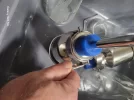
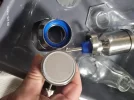
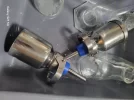
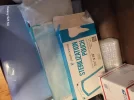
Ones like this? I'm not seeing any that have a screw down filter assembly other than some very large pieces.

https://www.sterlitech.com/stainles...eQGQpNT9S5IjgXkz-cXCwY0oFlCfB_Yo-8OKFtOVZjM9h
 
Those or like this
 

Attachments

  • 20251124_112152.webp
    20251124_112152.webp
    934.4 KB · Views: 56
  • 20251124_112136.webp
    20251124_112136.webp
    885 KB · Views: 48
  • 20251124_112120.webp
    20251124_112120.webp
    1.1 MB · Views: 51
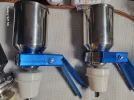
This kind work but sterilizing them with the membrane in place is usually a disaster and you need to install sterile membranes with forceps and aseptic technique after and if your not working under a hood in a clean environment thats tricky.
 

Attachments

  • 20251124_112246.webp
    20251124_112246.webp
    1.3 MB · Views: 51
I will be using a laminar flow hood to assemble the equipment in after sterilization and do the filtering in so that shouldn't be a problem. I was planning to wrap the openings of the glassware, etc in foil for drying in the oven after the autoclave in the standard method but what are these drying bags you refer to?
 
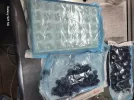
Self seal bags, ypu can get on Amazon cheap in different sizes. The oven isnt a sterile area best to wrap in autoclave paper with autoclave tape or self seal bags not foil. And aseptic handling inside your hood is still risky thats why the connecting units that seal are convenient. The laminar flow hood just gives a flow of positive pressure thats filtered doesn't protect from all the particals on you while your moving around and touching stuff. Every step where ypu exposing and touching stuff is best to eliminate.
 
I will be using a laminar flow hood to assemble the equipment in after sterilization and do the filtering in so that shouldn't be a problem. I was planning to wrap the openings of the glassware, etc in foil for drying in the oven after the autoclave in the standard method but what are these drying bags you refer to?
These
 

Attachments

  • 20251124_115856.webp
    20251124_115856.webp
    977.4 KB · Views: 54
Ok, it looks like I am going to have to do more research. My plan to autoclave and dry them and then assemble everything inside of the flow hood might not be sufficient to keep everything as sterile as I hoped, and then there is the problem of autoclaving and drying the individual vials and stoppers.
 
Ok, it looks like I am going to have to do more research. My plan to autoclave and dry them and then assemble everything inside of the flow hood might not be sufficient to keep everything as sterile as I hoped, and then there is the problem of autoclaving and drying the individual vials and stoppers.
You can do it all in those bags. I do the vials in plastic trays so they can be filled and assembled with minimal touching. And it doesn't matter how clean everything is sterile and clean are two very different things. Covering yourself properly is the biggest factor.
 

Attachments

  • 20251124_122531.webp
    20251124_122531.webp
    1,023.7 KB · Views: 48
Yes, Sterile gloves, respirator, hairnet is of course a must. Does your autoclave have a drying cycle or are you putting those bags of vials into a low temperature drying oven to remove condensation?

Where did you find those stainless steel filter holders with the camming action clamp? It looks more secure than the spring clamp sort, and the other example that I found which looks to just fit together but not with any sort of clamp.
 
I've heard good things about stainless steel screens being more durable for repeated use. One tip: make sure you get a filter with a flip lock or screw-on instead of a clamp. Also, I'd suggest using a hydrophobic PTFE filter. After autoclaving, dry everything in a constant temperature forced air oven and store in self-seal bags. Just be careful sterilizing with the membrane in place; it can be problematic. Install sterile membranes with forceps and aseptic technique in a clean environment.
 
Yes, Sterile gloves, respirator, hairnet is of course a must. Does your autoclave have a drying cycle or are you putting those bags of vials into a low temperature drying oven to remove condensation?

Where did you find those stainless steel filter holders with the camming action clamp? It looks more secure than the spring clamp sort, and the other example that I found which looks to just fit together but not with any sort of clamp.
I got those on a 3 peice stainless manifold set from a company in India I found on alibaba. I prefer sterilized solutions to go directly into a recieving flask and use the manifolds for bioburden testing and membrane filtration technique sterility testing. Forget hairnets your stopping microscopic particals. Tyvek coverals, k95 respirator and goggles. Double glove and gloves don't mean sterile after you touch stuff. Learn what aseptic technique is plenty of videos. Even under a laminar flow hood I have dry heat sterilized sheets of aluminum foil I cover the vial racks with and only expose 1 row at a time while filling that gentle positive pressure goes right out the window when you start moving around quickly.
 
Thank you. I believe I found that same stainless steel filter assembly here on ebay. We're you autoclaving the filter membrane in situ with it fully assembled or doing those separately and putting the membrane in the assembly after autoclaving both separately?Vacuum Filtration Assembly Holder Laboratory, Suction 47mm, stainless steel | eBay
With the kind that lock in place I autoclave the PTFE hydrophobic membrane in place with the whole assembly in those self seal bags that have chemical indicators on them. For the ones with clamps thats not a good idea they move around you need to install those with sterile forceps. Upside is if it starts to clog ypu can swap easily if ypu sterilize extras but after ypu open the packadge and use the forceps they are not sterile. I keep a bunson burner in the hood filtering the flame.the forceps before changing the filter.
 
Thank you. I believe I found that same stainless steel filter assembly here on ebay. We're you autoclaving the filter membrane in situ with it fully assembled or doing those separately and putting the membrane in the assembly after autoclaving both separately?Vacuum Filtration Assembly Holder Laboratory, Suction 47mm, stainless steel | eBay
With the kind that lock in place I autoclave the PTFE hydrophobic membrane in place with the whole assembly in those self seal bags that have chemical indicators on them. For the ones with clamps thats not a good idea they move around you need to install those with sterile forceps. Upside is if it starts to clog ypu can swap easily if ypu sterilize extras but after ypu open the packadge and use the forceps they are not sterile. I keep a bunson burner in the hood filtering the flame.the forceps before changing the filter
How much can you filter before it gets clogged and what oil are you using?
Different rates depending on the solute density in the solution and if you have any insoluble contamination. And if you pre-filter all your solvents and co-solvents. You doing straight to .22ųm or .45 first. Test prop at 100mg will flow through like water while test cyp at 200 will go so slow you will want to scream.
 
Pre-wet the hydrophobic filters after set up with a few mls and the turn the vacuum on or Peristaltic pump if you want more control.
 
Sounds like it might help to have some extra pre sterilized ptfe filters ready when I start filtering. Would it make sense to put a few of them individually in autoclave bags to have handy in case I need to swap part way through a batch?
 
Sounds like it might help to have some extra pre sterilized ptfe filters ready when I start filtering. Would it make sense to put a few of them individually in autoclave bags to have handy in case I need to swap part way through a batch?
I stick a few in autoclave bags with a set of forceps so its together when I open it. Remember the outside of the bags isn't sterile. I got a UVC/Ozone sterilizer I stage all the wrapped and bags in while I clean the hood so less chance of surface contamination when I put those inside the sterile zone.
 
Back
Top