How long did you run it for? After reading quite a bit of research data it looks like the dose has to be pretty high for most people to get positive effects but I’ve seen the length of the protocol all over the place, mostly 2 weeks to a month range.
I am thinking of starting at 4mg and have enough to do 30 days up to 10mg a day. Then I want to run Mots-c.
ive done two 4 week runs of ss31. it's not something you feel IMO, mitochondrial repair - I ran it using a protocol of 5mg/day for 20 days, then a run of MOTSC. Did it first time when I started looking into optimizing things and cleaning up my lifestyle. Now that I'm 2 years into a healthier me - I think I'll keep running this 2x year.
Is really nobody using this? There are still only two threads with SS-31 in the title.
I got a kit from QSC last year, but there was always something that kept me from running it. I doubt that one kit is gonna do much though. The price is the only thing that keeps me from buying more.
It is very frequently being mentioned in the Underground sub-forum, so I assume people are buying it.
I cycled through a 10mg kit and used it like this:
Day 1: 4mg
Day 2: 6mg
Day 3-11: 10mg
The 4mg first day is just to make sure you don't have a bad reaction. Finish the vial the next day. Then just do one vial per day until they're all gone.
I've tried several dosing protocols for this and am currently trialing 10mg/day. The dosing is all over the place.
Likely because it was originally studied for a very serious condition (Barth Syndrome) but is now used for all kinds of health issues.
Then all different types of animals (mice, sheep, dogs, rats,.. and I believe I also came across a cow study), were also used so that didn't make it easier.
This right here gives a pretty good overview of the doses used in animal studies in table 1 half-way down the page:
3mg/kg in mice seems to be an often used dose but it isn't just 1:1 to human weight. Look up the Body Surface Area (BSA) normalization method. In short it's:
HED (mg/kg) = Animal Dose (mg/kg) × (Animal Km / Human Km)
HED : human equivalent dose
Km : correction factor
So that 3mg dose for mice that I mentioned would be:
HED (mg/kg) = Animal Dose (mg/kg) × (Animal Km / Human Km) = 3 mg/kg × (3 / 37) = ~0.24 mg/kg
So if you're 190lbs (86kg) just multiply it by 0.24 mg:
20.9 mg per day (for a human)
There's an easy converter for some animal species to humans at the bottom of this page:
Our team of industry scientists distills key disclosures from patents, conferences, and scientific literature into a single, structure-searchable knowledge platform.
I’m on the last week of a 4-week run SS-31, first 3 weeks at 4mg/d and this last week at 8mg/d. Following this protocol that’s been passed around which includes NAD+ and MOTS-C.
Started it right after a DNP run to see if it would help heal some of the mitochondrial damage, and I’m pretty happy with the results so far.
Excited to see how MOTS-C works out - will try to remember to post an update after a few weeks on that.
I've tried several dosing protocols for this and am currently trialing 10mg/day. The dosing is all over the place.
...
So if you're 190lbs (86kg) just multiply it by 0.24 mg:
20.9 mg per day (for a human)
In barth syndrome it's 40mg/day by the way, but like I said, that's a really serious condition.
Thanks a lot. So why did you settle on 10mg, was it for cost reasons?
How far are you into your run?
There seems to evidence that a longer run will restore the mitochondrial function (kinda?) permanently, where as the 10 day runs only do so temporarily.
I figured that you could run it higher at the beginning and then taper off, since a lot of the effect happens at the beginning, but the longer duration is apparently necessary for longterm repair.
But given there is not much data to support this, it is rather speculative.
I’m on the last week of a 4-week run SS-31, first 3 weeks at 4mg/d and this last week at 8mg/d. Following this protocol that’s been passed around which includes NAD+ and MOTS-C.
@Banana Joe Yes, unfortunately in my case the reason is 100% cost. If that wasn't a factor (or a lesser one) I would be doing 40mg daily. Even 20mg would be better. 10mg is the best I can do for now.
You make a great point about starting high. I would be really interested to see how that goes if you decide to try it. It is indeed hard to know if it will work due to the lack of data.
I know that SSA, prior to them leaving had 1 gram of raw SS-31 for $520. So that may be an option if a different vendor offers something similar. We would have to filter it first of course.
@Banana Joe Yes, unfortunately in my case the reason is 100% cost. If that wasn't a factor (or a lesser one) I would be doing 40mg daily. Even 20mg would be better. 10mg is the best I can do for now.
You make a great point about starting high. I would be really interested to see how that goes if you decide to try it. It is indeed hard to know if it will work due to the lack of data.
I am happy to hear, my idea could have some applicable use.
The durations for the SS-31 seem to be all over the place, but my preliminary results seem to indicate that 8 weeks could be a decent middle ground. I would escalate the dose over the course of 5-7 days and then slowly taper off. Excluding Barth-Syndrome, most human trials seem to run for 12-24 weeks though.
Based on that start-high-then-taper-off-hypothesis, what do you imagine would be a good protocol for an average of 10mg or 20mg? What do you imagine should be the end dose of that taper if 20mg/8w? 10mg - or less?
A 8w/20mg average would be 1100mg total. I already have 10*50mg in my freezer, so that would be doable for me.
Do you have any studies in particular to look at regarding this?
I assume that IM isn't seem to be much worse than IV.
I know that SSA, prior to them leaving had 1 gram of raw SS-31 for $520. So that may be an option if a different vendor offers something similar. We would have to filter it first of course.
Thanks, though I would need to read up on how to best handle peptide raws.
I am a bit worried to get an infection eventually, if doing daily IM injections of said raw.
@Banana Joe thanks for your help and insight, I'm also trying to find a protocol to stick to, right now I'm just trailing different dosages. At the moment that's 10mg/day. Funny thing is, I also have about 500mg total right now.
I completely agree with the 8 weeks being a good idea.
I need some time to dig up the studies but for a protocol, we should be take into consideration that depending on the study, the half-life of SS-31 that was reported has ranged from:
- 1.3 hours
- 2.3 hours
- 2 to 3 hours
It's very short. If we take it as 2 hours. That means only half of that has been eliminated after 2 hours. After that it becomes a different equation.
In short, it takes about 7 to 8 half-lives for SS-31 to be pretty much cleared from the body completely.
The twist is that most drugs need >10% of peak concentration for efficacy. For a 5 mg dose that would happen between the 3rd (12.5% of SS-31 remaining) and 4th half-life (6.25% of SS-31 remaining).
If you do two injections per day, you would be covered for longer, although at a lower dose (but still >10%). That's important for the mitochondria (or cardiolipin binding technically).
So twice daily after the original front-load week would be best, if that's feasible for you. It would be even better if you split the front-loading dose too.
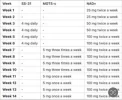
If you use the 500mg that you have, if it were me, I would do it like this (and I probably will). Let's hope Meso's tables work here:
period
week
dose daily
total daily
week total
amount of the 500mg total used
Front-Loading
1
10mg twice a day
20 mg
140mg
140mg
Maintenance
2-8
2.5 mg twice day
5 mg
35 mg
245 mg
Total
8
-
-
-
485 mg (you'd have 15mg left)
I think I'd just inject the remaining 15mg on the final day to be honest. End it with one final energy blast
Thanks for the report.
Do you have blood work, to support the assumption your mitochondria work better afterwards? And can give a rough estimate, even if it just feelz, how long that effects lasts, before you have to repeat the cycle.
@Banana Joe thanks for your help and insight, I'm also trying to find a protocol to stick to, right now I'm just trailing different dosages. At the moment that's 10mg/day. Funny thing is, I also have about 500mg total right now.
You're welcome, though I am not sure how much help and insight I have provided so far. I feel like I have to do a lot more reading, before I am able to formulate a more sound idea, of how cost vs. benefit could potentially be maximised.
So far it seems that up to 40mg ed, the worst side effects seems to be spending a lot of money on the SS-31.
I must admit those 8 weeks were mostly based, or pieced together, on that one rodent study of 8 weeks, and the fact that this stuff adds up to be in the thousands in cost for a full length therapy to restore mitochondrial function. How many weeks that might however actually be.
I need some time to dig up the studies but for a protocol, we should be take into consideration that depending on the study, the half-life of SS-31 that was reported has ranged from:
.....
If you do two injections per day, you would be covered for longer, although at a lower dose (but still >10%). That's important for the mitochondria (or cardiolipin binding technically).
So twice daily after the original front-load week would be best, if that's feasible for you. It would be even better if you split the front-loading dose too.
Interesting, I didn't account for the minimum required dose for efficacy.
Not sure if I understand you correctly, but are you saying one needs 10% of whatever dose (and its peak) to maintain efficacy? Because, if I understand what you are talking about correctly, my understanding is that you'd need 10% (or whatever that number actually is) of the therapeutic dose of SS-31.
And so far, we don't really know what therapeutic dose actually is, for a non-Barth-syndrome-patient, or do we?
I would be willing to do 2x injections a day, but knowing myself my adherence at 3x will be bad, at least if I have to do that for multiple months.
My gut feeling is that 5mg ed, after the initial 3(?) weeks, might be too low, but who I am to make such claims.
So far I have only quizzed AI a bit, about possible dosages and durations for a case like you or me. Though the results were very mixed at best. Hopefully you can add some more links to that.
Animal Studies on SS-31 (Elamipretide) and Mitochondrial Function
eLife 2020
An 8-week intervention with SS-31 reversed age-associated cardiac decline in mice by reducing mitochondrial oxidative damage and restoring energy production capabilities. This study demonstrates SS-31’s potential to rejuvenate mitochondrial function during aging, emphasizing mechanisms that decrease reactive oxygen species and improve mitochondrial respiratory efficiency.
Alzheimer’s Discovery PDF
In mouse models of Alzheimer’s disease, SS-31 administered twice weekly at 5 mg/kg intraperitoneally for 6 weeks significantly improved mitochondrial biogenesis, enhanced synaptic gene expression, and reduced toxic amyloid effects. This suggests SS-31’s neuroprotective role through its mitochondrial support and antioxidative properties, potentially impacting neurodegenerative disease progression at the cellular energy production level.
PMC 2020: Mitochondrial protein interaction
This study reveals SS-31’s direct enhancement of mitochondrial respiration in aged mouse skeletal muscle by stabilizing protein complexes involved in oxidative phosphorylation. Treatment reduced proton leak and increased ATP synthesis efficiency, indicating SS-31’s ability to improve mitochondrial bioenergetics at the molecular machinery level.
Nature Scientific Reports 2024
SS-31 treatment restored mitochondrial architecture and function in a Barth syndrome mouse model, notably correcting defects in mitophagy and respiratory chain supercomplex organization. This highlights SS-31’s critical role in maintaining mitochondrial structural integrity and dynamic turnover essential for energy homeostasis in disease models.
PubMed 35862638, 2022
Improved mitochondrial function following SS-31 treatment was demonstrated in human tenocytes based on insights derived from animal and cell models. The peptide’s mitochondrial protective effects were linked to enhanced mitochondrial respiration and reduction of oxidative stress in musculoskeletal tissues, pointing to translational therapeutic applications.
Wiley Online Library (dogs study)
In a large animal model, elamipretide administration improved mitochondrial function and muscular performance in dogs with chronic heart failure. This provides important evidence supporting the peptide’s cardioprotective and mitochondrial enhancing effects across species, with implications for veterinary and human cardiovascular diseases.
Human Clinical and Research Articles
PubMed 35862638
This study explores SS-31's potential to augment mitochondrial function and tissue healing in tendinopathy patients. Though preliminary, it underscores the peptide's therapeutic promise for musculoskeletal mitochondrial dysfunction, calling for more rigorous human trials to define optimal dosing and efficacy in clinical settings.
PMC 6873783
A thorough review of mitochondria-targeted peptides including SS-31, this article summarizes preclinical successes and early clinical observations. It highlights SS-31’s molecular actions, improving mitochondrial bioenergetics and reducing oxidative damage, while noting that dose standardization and long-term effects remain topics under investigation.
PMC 9674582
Experimental data presented here demonstrate SS-31’s capacity to decrease oxidative damage in mitochondria and preserve their functional integrity. Despite promising findings in cellular and animal studies, this review points out the lack of consensus on human treatment regimens and calls for additional clinical evaluation.
PMC 7935714
This mechanistic review delves into SS-31's interaction with mitochondrial membranes and cardiolipin stabilization processes that drive its disease-modifying potential. It consolidates evidence from ongoing clinical trials, emphasizing the peptide's emerging role in managing various mitochondrial disorders.
PMC 11176169
Comprehensive clinical evaluations of elamipretide’s formulations (subcutaneous, intravenous) show variable patient outcomes, with best responses observed in Barth syndrome. The article stresses the importance of administration routes and dosing schedules in optimizing therapeutic efficacy.
PMC 10382259
Studies of elamipretide in ophthalmic conditions such as age-related macular degeneration report functional improvements with regular subcutaneous administration lasting months. These data support the peptide’s mitochondrial protective effects in ocular tissues, marking another promising clinical application.
Neurology.org 2018
This clinical trial demonstrated SS-31’s ability to improve exercise tolerance and reduce fatigue in patients with mitochondrial myopathy. Administered daily over several weeks, the peptide showed safety and efficacy signals, advancing its clinical development for muscle mitochondrial dysfunctions.
PNAS 2020
Mechanistic investigations revealed SS-31 binds selectively to cardiolipin in the mitochondrial inner membrane, reducing reactive oxygen species and enhancing mitochondrial oxidative phosphorylation. Proteomic studies pinpointed interactions with key ATP production enzymes, elucidating molecular bases for clinical benefits.
ClinicalTrials.gov NCT03323749
Phase 2 evidence from this trial using daily 40 mg subcutaneous SS-31 injections for 12 weeks reported moderate improvement in symptoms of primary mitochondrial myopathy. Results support continued exploration of dosing regimens and assessment of long-term safety profiles.
Nature Genetics 2020
This genetic study of Barth syndrome highlights elamipretide’s therapeutic promise in mitochondrial remodeling. It underscores the peptide's ability to compensate for deficiencies in mitochondrial dynamics through structural and bioenergetic support.
Nature Scientific Reports 2024
Animal model data here provide compelling evidence of neurological benefits from SS-31, reinforcing the rationale for additional clinical trials targeting neurodegenerative diseases with mitochondrial pathology.
Science Direct 2025 Review
This comprehensive review tracks mitochondrial therapeutics progress, describing how SS-31 transitioned from experimental peptide to FDA-approved drug for specific mitochondrial diseases. It outlines ongoing clinical challenges and development needs for broader application.
Science Direct 2024 Cardiovascular
Cardiovascular studies confirm SS-31’s protective role against ischemia-reperfusion injury and chronic heart failure. The peptide improves mitochondrial respiration, reduces oxidative stress, and enhances cardiac muscle function, highlighting its therapeutic relevance in cardiovascular diseases.
News, Approvals, and Drug Information
Johns Hopkins 2025
The FDA granted approval for elamipretide (marketed as Forzinity) to treat Barth syndrome, endorsing a 40 mg daily subcutaneous injection protocol. This approval marks a critical milestone as the first therapeutic specifically targeting mitochondrial dysfunction in this rare disorder.
Medscape Drug Reference
This resource details Forzinity’s clinical use, including dosing guidelines (40 mg SC once daily), pharmacokinetics, administration methods, safety alerts, and observed side effects. It is a primary reference for clinicians prescribing elamipretide.
Taylor & Francis Pharmaceutical Overview
An overview of elamipretide’s biochemical properties, clinical trial progression, and approval status. It discusses structural features facilitating mitochondrial targeting and the current landscape of peptide-based therapies.
Stealth Bio Therapeutics Pipeline
Corporate pipeline documents outline elamipretide’s clinical applications spanning Barth syndrome, age-related macular degeneration, heart failure, and other mitochondrial disorders, showcasing ongoing research and development commitments.
Alzheimer’s Discovery PDF
This research summary reports clinical trial dosing ranges (10-80 mg/day SC), confirms an excellent safety profile, and discusses SS-31’s potential in neurodegenerative disease treatment by protecting mitochondrial function and reducing oxidative neurotoxicity.
When I started SS-31 I started at 1mg/day and had histamine reactions to it. I believe I am someone who has a lot of mitochondrial damage due to a long undiagnosed illness. I slowly moved doses up as the reactions reduced. The first run I did ran me down really badly and I learned you need to run it with a methyl donor (it’s a vitamin). Second time I ran it I got up to 10mg/day. Mainly posting so people can see you might want to be cautious about jumping to a super high dose day 1, trial a couple days at lower doses to check your histamine response.
I believe I am someone who has a lot of mitochondrial damage due to a long undiagnosed illness. I slowly moved doses up as the reactions reduced.
...
Mainly posting so people can see you might want to be cautious about jumping to a super high dose day 1, trial a couple days at lower doses to check your histamine response.
Duly noted, thanks!
That is why I wrote about escalating the dose to that peak of whatever mg amount you end up with. But if you look at it from this perspective, 7 days is likely not enough, to reach a peak dose of 20mg or higher. Given this is a long cycle anyway, adding another week at the beginning, will not yield much different mg per day over the course of the remaining 10+weeks.
The first run I did ran me down really badly and I learned you need to run it with a methyl donor (it’s a vitamin). Second time I ran it I got up to 10mg/day.
Could you further elaborate on this? I can't really find anything that brings them in close relation to each other.
Given you mentioned a methyl donor, I quizzed AI if running Methylene Blue alongside SS-31 could improve its efficacy and/or reduce the mg of SS_31 needed for the same outcome, and there is probably some merit in doing so.
I also asked about MOTS-C, SLU-PP-332 and Amino 5MQ, but they were assumed to not be very beneficial to add to running SS-31.
I also downloaded an ebook called "The Peptide Encyclopedia" and this is what it said about SS-31, though I am am unsure if that information is encyclopedic value:
Common Dosages:
- 0.5 mg to 2 mg per day (subcutaneous or intravenous)
I ran ss-31 for 2 months on the second run, was planning on running longer but life happened and I got off track, my highest dose was 16.5mg.
I use TMG and B12/folate and also run glycine as an assist. With SS-31 upping the atp output if your are lacking in methyl donor you could feel fatigue and headaches. When SS-31 is repairing it uses the methylation pathways so if those aren’t strong you really won’t get much action in the repair process. Not everyone has sluggish methylation so not everyone needs it but I also think it can’t hurt as the repair process leans pretty heavily on the pathway.
Do you have blood work, to support the assumption your mitochondria work better afterwards? Can give a rough estimate, even if it is just feelz, how long these effects lasts, before you have to repeat the cycle?
First off, this is a great thread! I have ran ss-31 once at 5mg a day for 40 days. I felt an increase in internal body temp. Like I would sweat more easily. It did seem like it gave me a boost of energy but I was running that along with methane blue as well so I can’t say how much the SS-31 played into that. My next run, I plan to run it at 10MG for 100 days to see how that works.
First off, this is a great thread! I have ran ss-31 once at 5mg a day for 40 days. I felt an increase in internal body temp. Like I would sweat more easily. It did seem like it gave me a boost of energy but I was running that along with methane blue as well so I can’t say how much the SS-31 played into that. My next run, I plan to run it at 10MG for 100 days to see how that works.
I am obviously really just guessing, and leaving aside that MB might boost the efficacy of SS-31, but at 40 days I would not expect a long term repair effect of SS-31 yet, especially at 5mg ed. Do you feel like there is, or at least was, a lasting effect after you ended the 40 daycycle of SS-31?
Because what you describe otherwise is not far off from how I would describe the effect of 10-15mg of MB alone.
This site uses cookies to help personalise content, tailor your experience and to keep you logged in if you register.
By continuing to use this site, you are consenting to our use of cookies.