

MESO-Rx
Anabolic Steroids

Navigation
Install the app
How to install the app on iOS
Follow along with the video below to see how to install our site as a web app on your home screen.
Note: This feature may not be available in some browsers.
More options
Style variation
Guest viewing is limited
- You have a limited number of page views remaining
- 4 guest views remaining
- Register now to remove this limitation
- Already a member? Click here to login
You are using an out of date browser. It may not display this or other websites correctly.
You should upgrade or use an alternative browser.
You should upgrade or use an alternative browser.
#FreeJulian
- Thread starter pumpingiron22
- Start date

So who could have silenced Assange? The USA or some other government who's ticked off at him?

So who could have silenced Assange? The USA or some other government who's ticked off at him?
You HAVE to be kidding...
Assange’s Fate
The left turns on him, the right embraces him
by Justin Raimondo, October 19, 2016
The saga of Julian Assange seems to be drawing to a climax – one that will decide the fate of this historic whistleblower who, for years, has been a giant thorn in the side of governments everywhere.
His role in exposing the machinations of the US government over the years earned him the plaudits of liberals – until the Bush era ended, and he started exposing the crimes of the Obama administration and – most pointedly – the hypocrisy and venality of Hillary Clinton and her journalistic camarilla. Now we see right-wing figures like Sean Hannity and – yes! – Donald Trump praising and defending him, while the ostensible liberals take up the cry of the Clinton campaign that he’s a “pawn of the Kremlin” and a “rapist.” Even Glenn Greenwald, formerly a comrade-in-arms, who together with Assange helped Edward Snowden evade the not-so-loving arms of Uncle Sam, has lately sought to distance himself from the founder of WikiLeaks (over the value of “curation”). Nice timing, Glenn!
Funny how that works.
Now we see that the Ecuadorian government, which has provided sanctuary for Assange ever since the frame-up “rape” charges by the Swedes were brought, is succumbing to pressure from Washington to silence him. As Assange released the now famous Podesta emails, that – among other things – exposed the collusion of the media and the Clinton campaign in delicious detail, John Kerry demanded that the Ecuadorians cut off Assange’s Internet access – and they meekly complied. Of course, since leftist Ecuadorian President Rafael Correa has openly endorsed Mrs. Clinton, and openly abhors Trump, this is hardly surprising: this is how the left operates internationally, as well as in this country – if you stray from the party line it doesn’t take long before the knives come out, aimed directly at one’s back.
In any case, Correa’s betrayal seems to have been short-circuited by the ever-resourceful Assange, who is still releasing incriminating emails. This is someone with a Plan!
Coincident with all this is the culmination of the long “legal” process initiated by the Swedish government, which is falsely accusing Assange of “rape.” He was supposed to have met with Swedish prosecutors on Monday, but has put off the meeting until November 14 – after the US elections.
Given Sweden’s bizarre laws on the subject, and the provenance of his accusers, the smear campaign aimed at Assange has zero credibility. No one believes these charges (and remember, he has never been formally charged) aren’t motivated by Washington’s stated desire to get him extradited to the US on “espionage” charges – and there isn’t anyone who thinks that the British government (which has spent millions making sure he stays holed up in Ecuador’s embassy) wouldn’t do so given half a chance.
Is it a coincidence that the way the Establishment tries to destroy those who oppose it is by hurling sex charges at them? They did the same thing to Dan Ellsberg: it’s the oldest trick in the book.
Equally ridiculous are the accusations that Assange is a “Russian agent.” To begin with, despite the US government’s propaganda, there isn’t https://medium.com/@jeffreycarr/can-facts-slow-the-dnc-breach-runaway-train-lets-try-14040ac68a55#.9846dg5u3. of real https://medium.com/@jeffreycarr/faith-based-attribution-30f4a658eabc#.2u4hgwxmt. that the Russians hacked the DNC emails, or any of the other emails published by WikiLeaks It could just as easily have been an insider. The fact of the matter is that, although they try to project the illusion of their own omniscience , they just don’t know.
What’s instructive is that the liberal media, which is not even bothering to hide its support for Hillary Clinton, is echoing Washington’s campaign to discredit Assange as a Kremlin tool. And of course the neoconservatives, who are solidly in Clinton’s camp, have always hated Assange, and are glad to join the chorus.
Assange has done more than any single figure to expose the machinations of governments worldwide to murder and plunder the rest of us: as the declared enemy of the powerful, he is their principal target – and it behooves those of us who defend liberty and transparency to rally around the banner of Wikileaks.
Assange has been holed up in the Ecuadorian embassy in London since August of 2012, with governments all over the world – and especially our government – determined to get him, smear him, and discredit him by any means necessary. Yet he continues to expose them, even in these straitened circumstances, without regard for his own health, happiness, or ultimate fate. He is a hero for our times – in an age when the heroic seems entirely absent. And he is now in more danger than ever before: what with the leftist Ecuadorian government, eager to curry favor with Hillary Clinton, wavering in his defense, and with Mrs. Clinton herself wondering “Can’t we just drone this guy?”
Assange’s fate, whatever it turns out to be, limns our own: if he goes down, then, in a sense, so do we all. Because what that means is that there’s no room for truth-tellers in our world, and no tolerance for heroes. And that’s not the kind of world I care to live in.
Saw on the news late yesterday that it was Ecuador itself that cut off Assange web access, most likely at the behest of USA.
So to me this is a conspiracy to silence the truth..agree @flenser? Good post btw.
So to me this is a conspiracy to silence the truth..agree @flenser? Good post btw.
Saw on the news late yesterday that it was Ecuador itself that cut off Assange web access, most likely at the behest of USA.
So to me this is a conspiracy to silence the truth..agree @flenser? Good post btw.
The progressives operate under the religion of "Language Constructs Reality" (also known as the Social Construction of Reality). So when they try to silence a detractor like Assange, they are literally trying to alter the state of the universe. In their view, if no one knows about it, it didn't happen, and truth is just an abstraction. And no, I'm not kidding..

Until he leaked hacked emails from dnc and John Podesta that the Russians gave him. He has no friends now.The left turns on him,

You're clueless. Go watch some more CNN.Until he leaked hacked emails from dnc and John Podesta that the Russians gave him. He has no friends now.
I prefer foxYou're clueless. Go watch some more CNN.

Did you like the idea of seeing if he can fly?You're clueless. Go watch some more CNN.
Will President Trump Free Julian Assange?
by Justin Raimondo, November 04, 2016
The former British ambassador to Cuba, Paul Webster Hare, wants the British police to invade the Ecuadorian embassy and ferret out Julian Assange – in the name of preserving diplomacy:
“The Ecuadorians have partially cut Assange’s access to the Internet – perhaps until after the election. But that will not solve the problem.
“Now the U.K. legal authorities have to decide whether the precedents Assange has set in handling “stolen” property while residing in a diplomatic mission is sufficient reason to rescind temporarily the inviolable status of Ecuador’s mission.”
In the Bizarro World we live in today, invading the inviolable territory of an embassy is “diplomacy pushing back,” as Ambassador Hare puts it. He goes on to burble: “It’s time for diplomacy to reassert itself in a world that seems increasingly willing to reject consensus-building in favor of stoking nationalist fervor.”
Whatever that means.
So what, exactly, is the rationale for invading what is legally Ecuadorian territory? According to Hare, WikiLeaks has been picking on the United States exclusively, and so it doesn’t really qualify as an advocate of transparency:
“To have an impact, transparency must be applied to every state – not used to bludgeon just one. If it wants to be valued as a window into duplicitous diplomacy, then WikiLeaks should probe the communications of all states.”
Where has the Ambassador been since 2008? As The New Yorker pointed out:
“In December, 2006, WikiLeaks posted its first document: a ‘secret decision,’ signed by Sheikh Hassan Dahir Aweys, a Somali rebel leader for the Islamic Courts Union, that had been culled from traffic passing through the Tor network to China. The document called for the execution of government officials by hiring ‘criminals’ as hit men.”
Assange followed that up by exposing how Kenyan leader Daniel arap Moi had looted his own country. That year, everything from illegal activities engaged in by Cayman Islands banks to the membership lists of the far-right British National Party found their way to the pages of WikiLeaks. The next year it released intercepted phone conversations that exposed the role played by Peruvian politicians who enriched themselves in the “Petrogate” scandal. The first news of a major nuclear accident at the Iranian nuclear facility at Natanz was revealed by WikiLeaks. That year also featured a number of other revelations involving governments other than that of the United States, but let’s move on to some of the major ones in subsequent years: in 2012, WikiLeaks published the Syria files, a compendium of millions of emails sent and received by Syrian government officials and state-owned companies: in 2015, WikiLeaks published the Saudi cables, consisting of thousands of emails, cables, and memoranda by Saudi government officials.
There’s plenty more, but you get the idea. The Ambassador has his head so far up his ass that he can’t think straight. That’s why he’s able to write the following:
“Assange’s actions, if not challenged, threaten core elements of diplomatic practice – like the right of diplomats to secure and unfettered communications – and could negatively impact how diplomacy is practiced around the world.”
What could “negatively impact how diplomacy is practiced around the world” more than the invasion of a country’s embassy by the host nation? Not even the Soviet Union and its Eastern European satellites undertook such an action: when Cardinal Josef Mindszenty was given asylum in the US embassy in Budapest after the crushing of the Hungarian Revolution in 1956, he stayed there for fifteen years, and the Communists didn’t dare touch him. That’s because even they recognized that to violate the sanctity of an embassy would have catastrophic consequences – but not Ambassador Hare. And he has the nerve to invoke the virtues of “diplomacy”!
Hare goes on to speculate that the Ecuadorian government, whose president, Rafael Correa, supports Hillary Clinton and despises Donald Trump, may soon tire of its troublesome guest: like the slimeball he is, Hare says this is “a delicious irony.” One can imagine him licking his lips as he wrote this.
And it’s true: President Correa may very well kick Assange out into the street, where the British police have been waiting for years to grab him. Correa is no doubt eager to suck up to Hillary, whom he probably – and perhaps mistakenly – thinks is slated to occupy the White House. The heroic founder of WikiLeaks has never been in greater danger. After all, it’s been reported that Hillary has said: “Can’t we just drone this guy?” And I wouldn’t put it past her, but that may not be necessary.
The great irony is that, if Donald Trump is elected President, Assange may be home free. It’s not hard to imagine a Trump administration putting pressure on the Brits to let him leave the embassy and seek another safe haven – perhaps even the United States. After all, didn’t Trump declare “I love WikiLeaks!”?
We’re living in Bizarro World, where up is down, right is left, a diplomat argues against the inviolability of embassies, and a Republican presidential candidate is praising the man who has exposed the depredations of US imperialism around the world. Yes, it’s weird, but you know what? I kind of like it this way.
by Justin Raimondo, November 04, 2016
The former British ambassador to Cuba, Paul Webster Hare, wants the British police to invade the Ecuadorian embassy and ferret out Julian Assange – in the name of preserving diplomacy:
“The Ecuadorians have partially cut Assange’s access to the Internet – perhaps until after the election. But that will not solve the problem.
“Now the U.K. legal authorities have to decide whether the precedents Assange has set in handling “stolen” property while residing in a diplomatic mission is sufficient reason to rescind temporarily the inviolable status of Ecuador’s mission.”
In the Bizarro World we live in today, invading the inviolable territory of an embassy is “diplomacy pushing back,” as Ambassador Hare puts it. He goes on to burble: “It’s time for diplomacy to reassert itself in a world that seems increasingly willing to reject consensus-building in favor of stoking nationalist fervor.”
Whatever that means.
So what, exactly, is the rationale for invading what is legally Ecuadorian territory? According to Hare, WikiLeaks has been picking on the United States exclusively, and so it doesn’t really qualify as an advocate of transparency:
“To have an impact, transparency must be applied to every state – not used to bludgeon just one. If it wants to be valued as a window into duplicitous diplomacy, then WikiLeaks should probe the communications of all states.”
Where has the Ambassador been since 2008? As The New Yorker pointed out:
“In December, 2006, WikiLeaks posted its first document: a ‘secret decision,’ signed by Sheikh Hassan Dahir Aweys, a Somali rebel leader for the Islamic Courts Union, that had been culled from traffic passing through the Tor network to China. The document called for the execution of government officials by hiring ‘criminals’ as hit men.”
Assange followed that up by exposing how Kenyan leader Daniel arap Moi had looted his own country. That year, everything from illegal activities engaged in by Cayman Islands banks to the membership lists of the far-right British National Party found their way to the pages of WikiLeaks. The next year it released intercepted phone conversations that exposed the role played by Peruvian politicians who enriched themselves in the “Petrogate” scandal. The first news of a major nuclear accident at the Iranian nuclear facility at Natanz was revealed by WikiLeaks. That year also featured a number of other revelations involving governments other than that of the United States, but let’s move on to some of the major ones in subsequent years: in 2012, WikiLeaks published the Syria files, a compendium of millions of emails sent and received by Syrian government officials and state-owned companies: in 2015, WikiLeaks published the Saudi cables, consisting of thousands of emails, cables, and memoranda by Saudi government officials.
There’s plenty more, but you get the idea. The Ambassador has his head so far up his ass that he can’t think straight. That’s why he’s able to write the following:
“Assange’s actions, if not challenged, threaten core elements of diplomatic practice – like the right of diplomats to secure and unfettered communications – and could negatively impact how diplomacy is practiced around the world.”
What could “negatively impact how diplomacy is practiced around the world” more than the invasion of a country’s embassy by the host nation? Not even the Soviet Union and its Eastern European satellites undertook such an action: when Cardinal Josef Mindszenty was given asylum in the US embassy in Budapest after the crushing of the Hungarian Revolution in 1956, he stayed there for fifteen years, and the Communists didn’t dare touch him. That’s because even they recognized that to violate the sanctity of an embassy would have catastrophic consequences – but not Ambassador Hare. And he has the nerve to invoke the virtues of “diplomacy”!
Hare goes on to speculate that the Ecuadorian government, whose president, Rafael Correa, supports Hillary Clinton and despises Donald Trump, may soon tire of its troublesome guest: like the slimeball he is, Hare says this is “a delicious irony.” One can imagine him licking his lips as he wrote this.
And it’s true: President Correa may very well kick Assange out into the street, where the British police have been waiting for years to grab him. Correa is no doubt eager to suck up to Hillary, whom he probably – and perhaps mistakenly – thinks is slated to occupy the White House. The heroic founder of WikiLeaks has never been in greater danger. After all, it’s been reported that Hillary has said: “Can’t we just drone this guy?” And I wouldn’t put it past her, but that may not be necessary.
The great irony is that, if Donald Trump is elected President, Assange may be home free. It’s not hard to imagine a Trump administration putting pressure on the Brits to let him leave the embassy and seek another safe haven – perhaps even the United States. After all, didn’t Trump declare “I love WikiLeaks!”?
We’re living in Bizarro World, where up is down, right is left, a diplomat argues against the inviolability of embassies, and a Republican presidential candidate is praising the man who has exposed the depredations of US imperialism around the world. Yes, it’s weird, but you know what? I kind of like it this way.
And speaking of Russia..
Putin: Russians Were Told to Mind Their Own Business on Tsarnaev
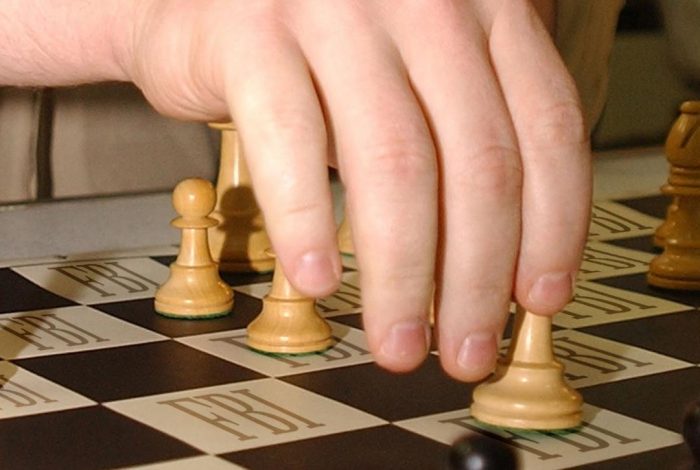
Photo credit: https://commons.wikimedia.org/wiki/File:US_Navy_030305-N-0923G-020_Chief_Personnelman_Robert_Curran_carefully_plans_his_next_move_while_playing_chess.jpg
Vladimir Putin said Russian officials were told not to interfere in the US’s domestic affairs after multiple attempts to warn about Tamerlan Tsarnaev’s growing radicalization.
The Russian president’s remarks about the lead-up to the 2013 Boston Marathon bombing were made during a recent address to the Valdai Discussion Club in Sochi, Russia.
Putin’s claim, however, directly refutes the official US stance, which maintains that the FBI repeatedly asked the Russians for more substantive information on Tsarnaev so it could investigate deeper. The Bureau claims its hands were tied because Russia wouldn’t provide more information.
The FBI maintains it first became aware of Tsarnaev from a March 2011 memo sent by Russia’s Federal Security Service (known by the Russian acronym FSB). There is, however, evidence Tsarnaev was on the bureau’s investigatory radar before Russia’s warning.
But, getting back to Russia’s March 2011 memo — it stated that Tsarnaev had “changed radically,” and that he was “a follower of radical Islam.” The FSB also claimed to have knowledge that Tsarnaev intended to travel to Russia’s Caucasus region to join underground militant groups.

Vladimir Putin at the Valdai Discussion Club in Sochi, Russia.
Photo credit: President of Russia (CC BY 4.0)
The FBI conducted a six month “assessment” of Tsarnaev which it claims found no link or “nexus” to terrorism. But it was not much of an investigation considering the claims made by Russia.
Inexplicably, the FBI never even asked Tsarnaev about any travel plans — even though that was central to the warning provided by the Russians.
Why the FBI needed more information than that to thoroughly investigate the young Russian immigrant living in Cambridge, Massachusetts, has never been satisfactorily explained. The small amount of information the Russians withheld from their initial warning later became public in court documents. It really wasn’t any more substantive than the relatively specific warning they had initially provided.
“[W]e send our American partners information and often get no response at all. Some time ago, we sent information on the Tsarnaev brothers. We sent the first document, got no response, sent a second document, and got the response that ‘this is not your business, they are US citizens now and we will take care of things ourselves’,” Putin told French television journalists in an early October interview. “The result was a terrorist attack in the USA. Is this not an example of how we end up with losses if we neglect cooperation in this very sensitive area?”
Putin’s words could be written off as political grandstanding, especially in the growing climate of rancor between Russia and the US. However, the deteriorating relations may also be Putin’s motivation for exposing an unsavory truth about US investigators’ handling of Tamerlan Tsarnaev prior to the Boston Marathon bombing.
Would the US’s national security operatives knowingly allow a potential terrorist to roam free without keeping him on an extremely tight leash?
Stating the Obvious
.
The FBI’s apparent “hands off” approach to Tsarnaev left a lot of people scratching their heads, including Senator Chuck Grassley (R-IA). In a letter to FBI Director James Comey, Grassley asked, among other probing questions, whether Tsarnaev had been recruited to be an informant: “Did the FBI attempt to use the tactic of ‘recruitment’ or a sting operation with Tamerlan Tsarnaev? If not, why not?”
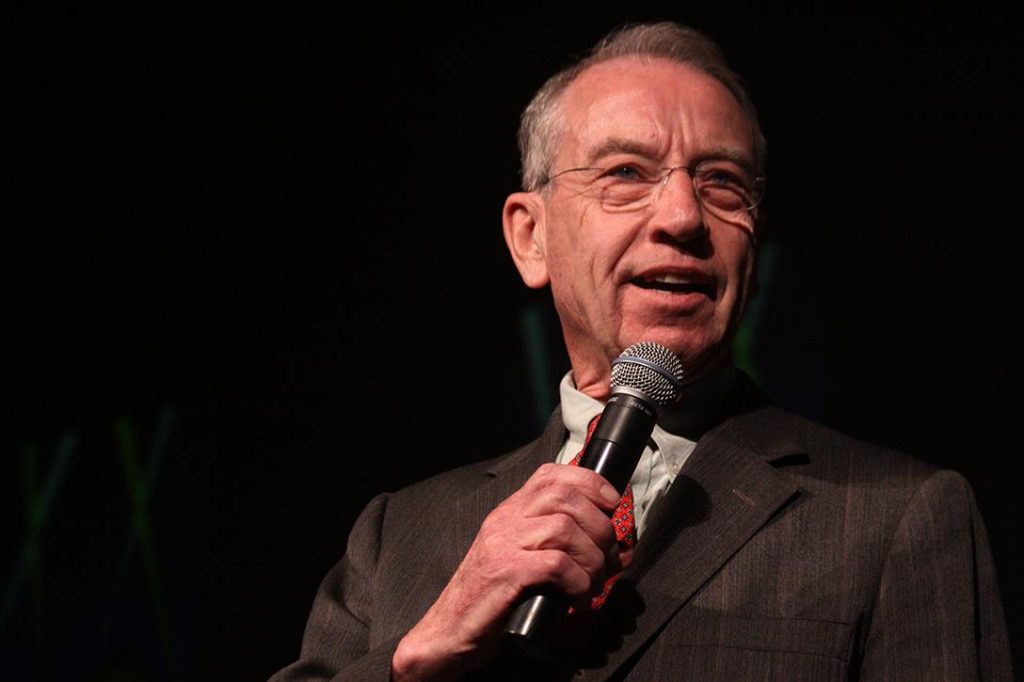
Iowa Senator Chuck Grassley
Photo credit: Gage Skidmore / Flickr (CC BY-SA 2.0)
Grassley was referring to a widely known fact: the FBI and other clandestine agencies routinely recruit foreign nationals from strategically important regions, particularly Muslims. Tsarnaev was an ethnic Chechen Muslim and native Russian speaker. (Please see our story, Classic Who: Was Tamerlan Tsarnaev a Double Agent Recruited by the FBI?)
The unsettling nature of the investigation was also noted in an April 2014 report by the Inspector General of the Intelligence Community (IG IC), which examined “intelligence failures” leading up to the bombing. A close reading of this report only compounds the confusion about why Tsarnaev was twice waived through JFK International in 2012 when he flew to Russia for six months, despite warnings about a potential for violence on multiple watch lists.
In addition, as WhoWhatWhy has documented, there is evidence that the FBI was indeed playing a dangerous game with Tsarnaev, classifying him as a “known or suspected terrorist,” likely all the way up until the moment of his death, while still allowing him to roam free (see here, here and here).
In an uncharacteristically candid phrase about US-Russia relations, The New York Times offered this analysis a year after the bombing about why the FBI handled Tsarnaev the way they did: “At the time [of the FBI’s investigation], American law enforcement officials believed that Mr. Tsarnaev posed a far greater threat to Russia.”
For the FBI (or other federal agency) to admit they knew he was a dangerous radical — “but dangerous to Russian interests only, we thought” — would be a PR nightmare of epic proportions.
The Times article was only stating the obvious. The US has an established track record of using radical jihadis to undermine Russia’s interests. The CIA supported the Afghan Mujahedin to fight the Russian army after its invasion of Afghanistan is one example. Many analysts consider Al Qaeda to be a direct offshoot of the US’s support for extremists to fight a proxy war.
It is this kind of “blowback” that US officials could be trying to distance themselves from with Tsarnaev.
Putin: Russians Were Told to Mind Their Own Business on Tsarnaev
Photo credit: https://commons.wikimedia.org/wiki/File:US_Navy_030305-N-0923G-020_Chief_Personnelman_Robert_Curran_carefully_plans_his_next_move_while_playing_chess.jpg
Vladimir Putin said Russian officials were told not to interfere in the US’s domestic affairs after multiple attempts to warn about Tamerlan Tsarnaev’s growing radicalization.
The Russian president’s remarks about the lead-up to the 2013 Boston Marathon bombing were made during a recent address to the Valdai Discussion Club in Sochi, Russia.
Putin’s claim, however, directly refutes the official US stance, which maintains that the FBI repeatedly asked the Russians for more substantive information on Tsarnaev so it could investigate deeper. The Bureau claims its hands were tied because Russia wouldn’t provide more information.
The FBI maintains it first became aware of Tsarnaev from a March 2011 memo sent by Russia’s Federal Security Service (known by the Russian acronym FSB). There is, however, evidence Tsarnaev was on the bureau’s investigatory radar before Russia’s warning.
But, getting back to Russia’s March 2011 memo — it stated that Tsarnaev had “changed radically,” and that he was “a follower of radical Islam.” The FSB also claimed to have knowledge that Tsarnaev intended to travel to Russia’s Caucasus region to join underground militant groups.
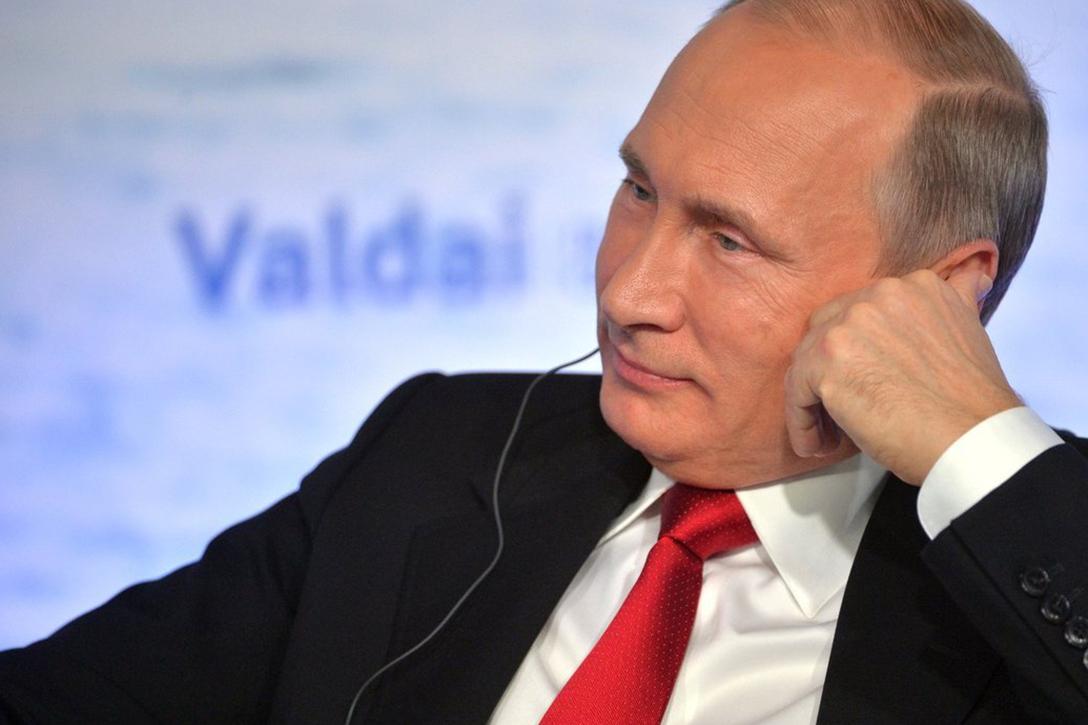
Vladimir Putin at the Valdai Discussion Club in Sochi, Russia.
Photo credit: President of Russia (CC BY 4.0)
The FBI conducted a six month “assessment” of Tsarnaev which it claims found no link or “nexus” to terrorism. But it was not much of an investigation considering the claims made by Russia.
Inexplicably, the FBI never even asked Tsarnaev about any travel plans — even though that was central to the warning provided by the Russians.
Why the FBI needed more information than that to thoroughly investigate the young Russian immigrant living in Cambridge, Massachusetts, has never been satisfactorily explained. The small amount of information the Russians withheld from their initial warning later became public in court documents. It really wasn’t any more substantive than the relatively specific warning they had initially provided.
“[W]e send our American partners information and often get no response at all. Some time ago, we sent information on the Tsarnaev brothers. We sent the first document, got no response, sent a second document, and got the response that ‘this is not your business, they are US citizens now and we will take care of things ourselves’,” Putin told French television journalists in an early October interview. “The result was a terrorist attack in the USA. Is this not an example of how we end up with losses if we neglect cooperation in this very sensitive area?”
Putin’s words could be written off as political grandstanding, especially in the growing climate of rancor between Russia and the US. However, the deteriorating relations may also be Putin’s motivation for exposing an unsavory truth about US investigators’ handling of Tamerlan Tsarnaev prior to the Boston Marathon bombing.
Would the US’s national security operatives knowingly allow a potential terrorist to roam free without keeping him on an extremely tight leash?
Stating the Obvious
.
The FBI’s apparent “hands off” approach to Tsarnaev left a lot of people scratching their heads, including Senator Chuck Grassley (R-IA). In a letter to FBI Director James Comey, Grassley asked, among other probing questions, whether Tsarnaev had been recruited to be an informant: “Did the FBI attempt to use the tactic of ‘recruitment’ or a sting operation with Tamerlan Tsarnaev? If not, why not?”
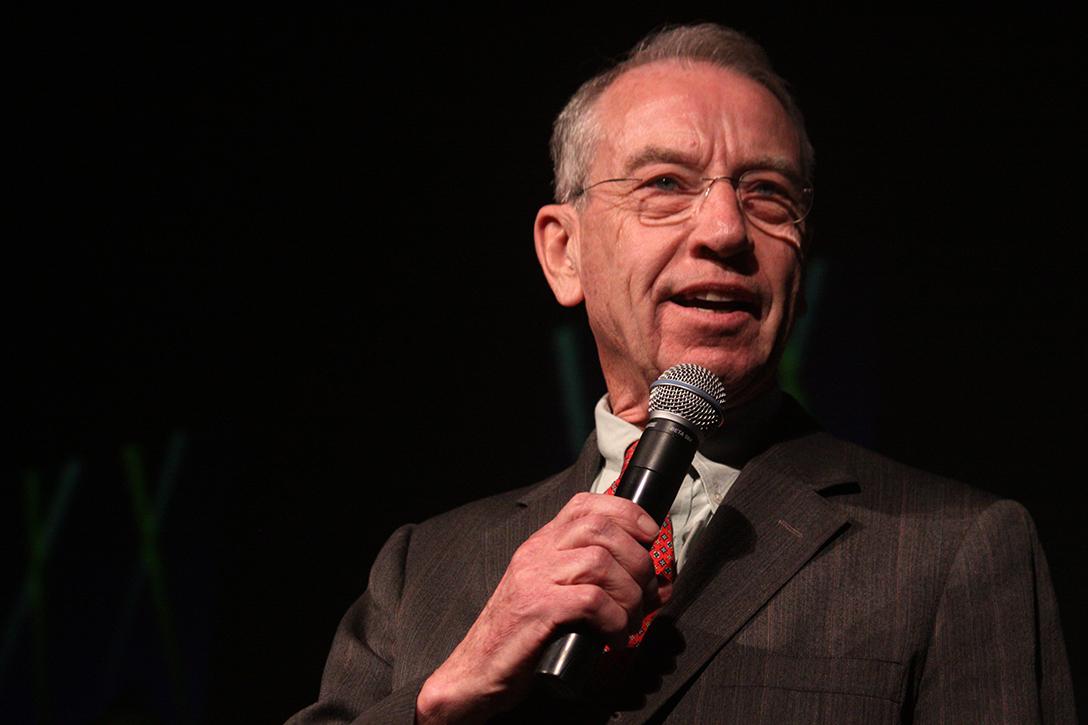
Iowa Senator Chuck Grassley
Photo credit: Gage Skidmore / Flickr (CC BY-SA 2.0)
Grassley was referring to a widely known fact: the FBI and other clandestine agencies routinely recruit foreign nationals from strategically important regions, particularly Muslims. Tsarnaev was an ethnic Chechen Muslim and native Russian speaker. (Please see our story, Classic Who: Was Tamerlan Tsarnaev a Double Agent Recruited by the FBI?)
The unsettling nature of the investigation was also noted in an April 2014 report by the Inspector General of the Intelligence Community (IG IC), which examined “intelligence failures” leading up to the bombing. A close reading of this report only compounds the confusion about why Tsarnaev was twice waived through JFK International in 2012 when he flew to Russia for six months, despite warnings about a potential for violence on multiple watch lists.
In addition, as WhoWhatWhy has documented, there is evidence that the FBI was indeed playing a dangerous game with Tsarnaev, classifying him as a “known or suspected terrorist,” likely all the way up until the moment of his death, while still allowing him to roam free (see here, here and here).
In an uncharacteristically candid phrase about US-Russia relations, The New York Times offered this analysis a year after the bombing about why the FBI handled Tsarnaev the way they did: “At the time [of the FBI’s investigation], American law enforcement officials believed that Mr. Tsarnaev posed a far greater threat to Russia.”
For the FBI (or other federal agency) to admit they knew he was a dangerous radical — “but dangerous to Russian interests only, we thought” — would be a PR nightmare of epic proportions.
The Times article was only stating the obvious. The US has an established track record of using radical jihadis to undermine Russia’s interests. The CIA supported the Afghan Mujahedin to fight the Russian army after its invasion of Afghanistan is one example. Many analysts consider Al Qaeda to be a direct offshoot of the US’s support for extremists to fight a proxy war.
It is this kind of “blowback” that US officials could be trying to distance themselves from with Tsarnaev.
In a few days it will all be over.And speaking of Russia..
Putin: Russians Were Told to Mind Their Own Business on Tsarnaev
Photo credit: https://commons.wikimedia.org/wiki/File:US_Navy_030305-N-0923G-020_Chief_Personnelman_Robert_Curran_carefully_plans_his_next_move_while_playing_chess.jpg
Vladimir Putin said Russian officials were told not to interfere in the US’s domestic affairs after multiple attempts to warn about Tamerlan Tsarnaev’s growing radicalization.
The Russian president’s remarks about the lead-up to the 2013 Boston Marathon bombing were made during a recent address to the Valdai Discussion Club in Sochi, Russia.
Putin’s claim, however, directly refutes the official US stance, which maintains that the FBI repeatedly asked the Russians for more substantive information on Tsarnaev so it could investigate deeper. The Bureau claims its hands were tied because Russia wouldn’t provide more information.
The FBI maintains it first became aware of Tsarnaev from a March 2011 memo sent by Russia’s Federal Security Service (known by the Russian acronym FSB). There is, however, evidence Tsarnaev was on the bureau’s investigatory radar before Russia’s warning.
But, getting back to Russia’s March 2011 memo — it stated that Tsarnaev had “changed radically,” and that he was “a follower of radical Islam.” The FSB also claimed to have knowledge that Tsarnaev intended to travel to Russia’s Caucasus region to join underground militant groups.
Vladimir Putin at the Valdai Discussion Club in Sochi, Russia.
Photo credit: President of Russia (CC BY 4.0)
The FBI conducted a six month “assessment” of Tsarnaev which it claims found no link or “nexus” to terrorism. But it was not much of an investigation considering the claims made by Russia.
Inexplicably, the FBI never even asked Tsarnaev about any travel plans — even though that was central to the warning provided by the Russians.
Why the FBI needed more information than that to thoroughly investigate the young Russian immigrant living in Cambridge, Massachusetts, has never been satisfactorily explained. The small amount of information the Russians withheld from their initial warning later became public in court documents. It really wasn’t any more substantive than the relatively specific warning they had initially provided.
“[W]e send our American partners information and often get no response at all. Some time ago, we sent information on the Tsarnaev brothers. We sent the first document, got no response, sent a second document, and got the response that ‘this is not your business, they are US citizens now and we will take care of things ourselves’,” Putin told French television journalists in an early October interview. “The result was a terrorist attack in the USA. Is this not an example of how we end up with losses if we neglect cooperation in this very sensitive area?”
Putin’s words could be written off as political grandstanding, especially in the growing climate of rancor between Russia and the US. However, the deteriorating relations may also be Putin’s motivation for exposing an unsavory truth about US investigators’ handling of Tamerlan Tsarnaev prior to the Boston Marathon bombing.
Would the US’s national security operatives knowingly allow a potential terrorist to roam free without keeping him on an extremely tight leash?
Stating the Obvious
.
The FBI’s apparent “hands off” approach to Tsarnaev left a lot of people scratching their heads, including Senator Chuck Grassley (R-IA). In a letter to FBI Director James Comey, Grassley asked, among other probing questions, whether Tsarnaev had been recruited to be an informant: “Did the FBI attempt to use the tactic of ‘recruitment’ or a sting operation with Tamerlan Tsarnaev? If not, why not?”
Iowa Senator Chuck Grassley
Photo credit: Gage Skidmore / Flickr (CC BY-SA 2.0)
Grassley was referring to a widely known fact: the FBI and other clandestine agencies routinely recruit foreign nationals from strategically important regions, particularly Muslims. Tsarnaev was an ethnic Chechen Muslim and native Russian speaker. (Please see our story, Classic Who: Was Tamerlan Tsarnaev a Double Agent Recruited by the FBI?)
The unsettling nature of the investigation was also noted in an April 2014 report by the Inspector General of the Intelligence Community (IG IC), which examined “intelligence failures” leading up to the bombing. A close reading of this report only compounds the confusion about why Tsarnaev was twice waived through JFK International in 2012 when he flew to Russia for six months, despite warnings about a potential for violence on multiple watch lists.
In addition, as WhoWhatWhy has documented, there is evidence that the FBI was indeed playing a dangerous game with Tsarnaev, classifying him as a “known or suspected terrorist,” likely all the way up until the moment of his death, while still allowing him to roam free (see here, here and here).
In an uncharacteristically candid phrase about US-Russia relations, The New York Times offered this analysis a year after the bombing about why the FBI handled Tsarnaev the way they did: “At the time [of the FBI’s investigation], American law enforcement officials believed that Mr. Tsarnaev posed a far greater threat to Russia.”
For the FBI (or other federal agency) to admit they knew he was a dangerous radical — “but dangerous to Russian interests only, we thought” — would be a PR nightmare of epic proportions.
The Times article was only stating the obvious. The US has an established track record of using radical jihadis to undermine Russia’s interests. The CIA supported the Afghan Mujahedin to fight the Russian army after its invasion of Afghanistan is one example. Many analysts consider Al Qaeda to be a direct offshoot of the US’s support for extremists to fight a proxy war.
It is this kind of “blowback” that US officials could be trying to distance themselves from with Tsarnaev.
Either you go into a re education camp or I do. I like you bro, but I would rather it be you.
Do you mean to say I think Hillary is going to lose? Not going to happen. I never thought that, never. Had that been the case, I would be posting anti-Trump articles.In a few days it will all be over.
And no, it won't be over in a few days. If you think that, you really are clueless, and I was joking when I said it the first time.

Hillary and Trump are like the two ugly chicks left in the bar at last call. One has a hairlip, the other is cross eyed. There isn't a good choice.
I will state this though, for years Americans have asked for elected officials to not be the same old career politicians they resent. Now they have their chance with Trump. He is anything but politically correct. Maybe worth a try?
I will state this though, for years Americans have asked for elected officials to not be the same old career politicians they resent. Now they have their chance with Trump. He is anything but politically correct. Maybe worth a try?
Julian Assange Issues Statement On The US Election
Tyler Durden
Nov 8, 2016 10:55 AM
Just released by Wikileaks
Assange Statement on the US-Election
By Julian Assange
In recent months, WikiLeaks and I personally have come under enormous pressure to stop publishing what the Clinton campaign says about itself to itself. That pressure has come from the campaign’s allies, including the Obama administration, and from liberals who are anxious about who will be elected US President.
On the eve of the election, it is important to restate why we have published what we have.
The right to receive and impart true information is the guiding principle of WikiLeaks – an organization that has a staff and organizational mission far beyond myself. Our organization defends the public’s right to be informed.
This is why, irrespective of the outcome of the 2016 US Presidential election, the real victor is the US public which is better informed as a result of our work.
The US public has thoroughly engaged with WikiLeaks’ election related publications which number more than one hundred thousand documents. Millions of Americans have poured over the leaks and passed on their citations to each other and to us. It is an open model of journalism that gatekeepers are uncomfortable with, but which is perfectly harmonious with the First Amendment.
We publish material given to us if it is of political, diplomatic, historical or ethical importance and which has not been published elsewhere. When we have material that fulfills this criteria, we publish. We had information that fit our editorial criteria which related to the Sanders and Clinton campaign (DNC Leaks) and the Clinton political campaign and Foundation (Podesta Emails). No-one disputes the public importance of these publications. It would be unconscionable for WikiLeaks to withhold such an archive from the public during an election.
At the same time, we cannot publish what we do not have. To date, we have not received information on Donald Trump’s campaign, or Jill Stein’s campaign, or Gary Johnson’s campaign or any of the other candidates that fufills our stated editorial criteria. As a result of publishing Clinton’s cables and indexing her emails we are seen as domain experts on Clinton archives. So it is natural that Clinton sources come to us.
We publish as fast as our resources will allow and as fast as the public can absorb it.
That is our commitment to ourselves, to our sources, and to the public.
This is not due to a personal desire to influence the outcome of the election. The Democratic and Republican candidates have both expressed hostility towards whistleblowers. I spoke at the launch of the campaign for Jill Stein, the Green Party candidate, because her platform addresses the need to protect them. This is an issue that is close to my heart because of the Obama administration’s inhuman and degrading treatment of one of our alleged sources, Chelsea Manning. But WikiLeaks publications are not an attempt to get Jill Stein elected or to take revenge over Ms Manning’s treatment either.
Publishing is what we do. To withhold the publication of such information until after the election would have been to favour one of the candidates above the public’s right to know.
This is after all what happened when the New York Times withheld evidence of illegal mass surveillance of the US population for a year until after the 2004 election, denying the public a critical understanding of the incumbent president George W Bush, which probably secured his reelection. The current editor of the New York Times has distanced himself from that decision and rightly so.
The US public defends free speech more passionately, but the First Amendment only truly lives through its repeated exercise. The First Amendment explicitly prevents the executive from attempting to restrict anyone’s ability to speak and publish freely. The First Amendment does not privilege old media, with its corporate advertisers and dependencies on incumbent power factions, over WikiLeaks’ model of scientific journalism or an individual’s decision to inform their friends on social media. The First Amendment unapologetically nurtures the democratization of knowledge. With the Internet, it has reached its full potential.
Yet, some weeks ago, in a tactic reminiscent of Senator McCarthy and the red scare, Wikileaks, Green Party candidate Stein, Glenn Greenwald and Clinton’s main opponent were painted with a broad, red brush. The Clinton campaign, when they were not spreading obvious untruths, pointed to unnamed sources or to speculative and vague statements from the intelligence community to suggest a nefarious allegiance with Russia. The campaign was unable to invoke evidence about our publications—because none exists.
In the end, those who have attempted to malign our groundbreaking work over the past four months seek to inhibit public understanding perhaps because it is embarrassing to them – a reason for censorship the First Amendment cannot tolerate. Only unsuccessfully do they try to claim that our publications are inaccurate.
WikiLeaks’ decade-long pristine record for authentication remains. Our key publications this round have even been proven through the cryptographic signatures of the companies they passed through, such as Google. It is not every day you can mathematically prove that your publications are perfect but this day is one of them.
We have endured intense criticism, primarily from Clinton supporters, for our publications. Many long-term supporters have been frustrated because we have not addressed this criticism in a systematic way or responded to a number of false narratives about Wikileaks’ motivation or sources. Ultimately, however, if WL reacted to every false claim, we would have to divert resources from our primary work.
WikiLeaks, like all publishers, is ultimately accountable to its funders. Those funders are you. Our resources are entirely made up of contributions from the public and our book sales. This allows us to be principled, independent and free in a way no other influential media organization is. But it also means that we do not have the resources of CNN, MSNBC or the Clinton campaign to constantly rebuff criticism.
Yet if the press obeys considerations above informing the public, we are no longer talking about a free press, and we are no longer talking about an informed public.
Wikileaks remains committed to publishing information that informs the public, even if many, especially those in power, would prefer not to see it. WikiLeaks must publish. It must publish and be damned.
Tyler Durden
Nov 8, 2016 10:55 AM
Just released by Wikileaks
Assange Statement on the US-Election
By Julian Assange
In recent months, WikiLeaks and I personally have come under enormous pressure to stop publishing what the Clinton campaign says about itself to itself. That pressure has come from the campaign’s allies, including the Obama administration, and from liberals who are anxious about who will be elected US President.
On the eve of the election, it is important to restate why we have published what we have.
The right to receive and impart true information is the guiding principle of WikiLeaks – an organization that has a staff and organizational mission far beyond myself. Our organization defends the public’s right to be informed.
This is why, irrespective of the outcome of the 2016 US Presidential election, the real victor is the US public which is better informed as a result of our work.
The US public has thoroughly engaged with WikiLeaks’ election related publications which number more than one hundred thousand documents. Millions of Americans have poured over the leaks and passed on their citations to each other and to us. It is an open model of journalism that gatekeepers are uncomfortable with, but which is perfectly harmonious with the First Amendment.
We publish material given to us if it is of political, diplomatic, historical or ethical importance and which has not been published elsewhere. When we have material that fulfills this criteria, we publish. We had information that fit our editorial criteria which related to the Sanders and Clinton campaign (DNC Leaks) and the Clinton political campaign and Foundation (Podesta Emails). No-one disputes the public importance of these publications. It would be unconscionable for WikiLeaks to withhold such an archive from the public during an election.
At the same time, we cannot publish what we do not have. To date, we have not received information on Donald Trump’s campaign, or Jill Stein’s campaign, or Gary Johnson’s campaign or any of the other candidates that fufills our stated editorial criteria. As a result of publishing Clinton’s cables and indexing her emails we are seen as domain experts on Clinton archives. So it is natural that Clinton sources come to us.
We publish as fast as our resources will allow and as fast as the public can absorb it.
That is our commitment to ourselves, to our sources, and to the public.
This is not due to a personal desire to influence the outcome of the election. The Democratic and Republican candidates have both expressed hostility towards whistleblowers. I spoke at the launch of the campaign for Jill Stein, the Green Party candidate, because her platform addresses the need to protect them. This is an issue that is close to my heart because of the Obama administration’s inhuman and degrading treatment of one of our alleged sources, Chelsea Manning. But WikiLeaks publications are not an attempt to get Jill Stein elected or to take revenge over Ms Manning’s treatment either.
Publishing is what we do. To withhold the publication of such information until after the election would have been to favour one of the candidates above the public’s right to know.
This is after all what happened when the New York Times withheld evidence of illegal mass surveillance of the US population for a year until after the 2004 election, denying the public a critical understanding of the incumbent president George W Bush, which probably secured his reelection. The current editor of the New York Times has distanced himself from that decision and rightly so.
The US public defends free speech more passionately, but the First Amendment only truly lives through its repeated exercise. The First Amendment explicitly prevents the executive from attempting to restrict anyone’s ability to speak and publish freely. The First Amendment does not privilege old media, with its corporate advertisers and dependencies on incumbent power factions, over WikiLeaks’ model of scientific journalism or an individual’s decision to inform their friends on social media. The First Amendment unapologetically nurtures the democratization of knowledge. With the Internet, it has reached its full potential.
Yet, some weeks ago, in a tactic reminiscent of Senator McCarthy and the red scare, Wikileaks, Green Party candidate Stein, Glenn Greenwald and Clinton’s main opponent were painted with a broad, red brush. The Clinton campaign, when they were not spreading obvious untruths, pointed to unnamed sources or to speculative and vague statements from the intelligence community to suggest a nefarious allegiance with Russia. The campaign was unable to invoke evidence about our publications—because none exists.
In the end, those who have attempted to malign our groundbreaking work over the past four months seek to inhibit public understanding perhaps because it is embarrassing to them – a reason for censorship the First Amendment cannot tolerate. Only unsuccessfully do they try to claim that our publications are inaccurate.
WikiLeaks’ decade-long pristine record for authentication remains. Our key publications this round have even been proven through the cryptographic signatures of the companies they passed through, such as Google. It is not every day you can mathematically prove that your publications are perfect but this day is one of them.
We have endured intense criticism, primarily from Clinton supporters, for our publications. Many long-term supporters have been frustrated because we have not addressed this criticism in a systematic way or responded to a number of false narratives about Wikileaks’ motivation or sources. Ultimately, however, if WL reacted to every false claim, we would have to divert resources from our primary work.
WikiLeaks, like all publishers, is ultimately accountable to its funders. Those funders are you. Our resources are entirely made up of contributions from the public and our book sales. This allows us to be principled, independent and free in a way no other influential media organization is. But it also means that we do not have the resources of CNN, MSNBC or the Clinton campaign to constantly rebuff criticism.
Yet if the press obeys considerations above informing the public, we are no longer talking about a free press, and we are no longer talking about an informed public.
Wikileaks remains committed to publishing information that informs the public, even if many, especially those in power, would prefer not to see it. WikiLeaks must publish. It must publish and be damned.
Similar threads

- Replies
- 0
- Views
- 30


