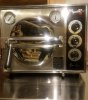
Sterilization can be achieved through various means, including:
heat,
chemicals,
irradiation,
high pressure, and
filtration.
According to many credible sources which u can google urself on web, liquid sterilisation is mostly done with autoclave or dry-heat sterilizator
However its not that cut and dry as there are some bacteria which are heat resistent and as well some prions, they remain active even after standard autoclave procedure.
A microfilter with pore size 0.2
µm will usually effectively remove
microorganisms.
[46] Some
staphylococcal species have, however, been shown to be flexible enough to pass through 0.22 µm filters.
[47] In the processing of
biologics,
viruses must be removed or inactivated, requiring the use of
nanofilters with a smaller pore size (20-50
nm) are used.
Now in our case i would say that you of course need to use 0.2u to filter all debris and particles and most viruses and bacteria.
And if you want to be super sterile then you would as well autoclave/dry heat sterilize it.
But still, it wont be completly sterile, as 0.2u will not filter all types of microbes, as mentioned.
So there you go, we can make it as sterile as it can get in our environment with our tools.