RE: Retatrutide and effects on RMR, I'm going to post an excerpt from an article I enjoyed.
"
That brings us to retatrutide. As we know, it is a triple agonist, acting on GLP-1R, GIP-R and glucagon receptors (GCGR). Structurally, it is nearly identical to tirzepatide. It is also a 39 amino acid modified GIP molecule but with changes to the amino acid structure to allow for activity at the GCGR site as well. It is also an imbalanced agonist. It is 8.9 fold more potent at GIP-R than human GIP!! So this drug is far and away more potent than tirzepatide at GIP-R agonism which means it further enhances any of the GIP-R effects AND the GLP-1 effects in a synergistic manner.
Continuing on, it is 2.9 fold less potent than human glucagon and 2.5 fold less potent than human GLP-1. So this drug is an imbalanced GIP agonist, but balanced when comparing GLP-1 and GCGR activation, that’s probably important for multiple things, namely side effects, cardiovascular effects and allowing GLP-1R and GCGR to work together as well.
So let's focus on the GLP-1 part first, comparisons to semaglutide aren’t necessarily going to be accurate and the research has not been done yet BUT we could speculate that about 6mg of retatrutide would have the same level of GLP-1 agonism as 1 mg of semaglutide, but we need someone to actually do that research first, which probably won’t happen until the phase 3 trials for retatrutide are over. But even that isn’t a fair comparison because of the GCGR activity as well.
The GCGR part along with the heavy GIP-R potency are probably the real secret sauce here. Let’s quickly review what glucagon does in our body. If you took any high school or college level biology class you’ll know that glucagon is the ying to insulin’s yang. The two counterbalance each other out. When your blood sugar drops, your body will start cranking out glucagon, and vice versa, when blood sugar is high, glucagon is suppressed. But it does FAR more than that as we’re discovering.
Glucagon increases heart rate and cardiac output/contractility, and lowers pulmonary vascular resistance. If this sounds like a performance enhancement for exercise you would be correct, except native glucagon is rapidly degraded by our body within minutes. The catch is you don’t want high doses of glucagon because it will crank your heart rate up which is why every drug company running a trial with GCGR agonism is being so hypervigilant about cardiac side effects. It is also why it’s not a bad thing that retatrutide is less potent than glucagon. Allowing dose escalation to happen slowly allows something called tachyphylaxis to occur and allow our bodies to adjust to it. Tachyphylaxis is why most people eventually have less side effects with GLP-1 drugs, their body quite literally gets used to the drug and you don’t have the side effects at the same intensity. It may also explain why some folks switching between these drugs may not notice the “effects” as intensely as when they first took a dose of a GLP-1 drug.
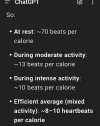
Anecdotally, I’ve lost about 24 pounds so far in the Triumph-1 trial and my running speed and efficiency has noticeably gone up. Some of that is because I’m carrying less weight for sure, but I bet a shiny nickel that some of it is due to the GCGR effect of retatrutide. I’ve been running some of my favorite running routes around town at my ‘easy’ pace and effort the last 2 weeks. I’m not only about 45 seconds faster per mile on all of the routes, but my heart rate for these routes is about 10-15BPM slower than before, even when I look back on 5 years of data(Thanks for that Strava)
Anyways, back to the other important effects of glucagon. Like GLP-1 it increases satiety, slows gastric emptying, and changes our appetite preferences. It, like GLP-1 can also cause nausea. So maybe now you’re connecting the dots as to why the over potent GIP-R agonism effect of retatrutide may be important. Remember, it has an anti-nausea effect.
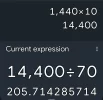
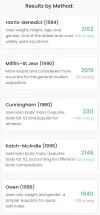
Most importantly, glucagon has a multitude of effects on the liver and brown and white adipose tissue(aka fat). In the liver it increases liver cell survival, increases lipolysis which creates free fatty acids which our body then turns into ketones for energy. In fat cells it increases thermogenesis and lipolysis which further drives that free fatty acids to ketone bodies cycle. It’s literally forcing your body to burn excess fat. Most studies will tell you this effect is probably in the neighborhood of an extra 150-200 calories of excess energy expenditure per day. It is probably why in the phase 2 study that people were still dropping weight. 200 calories a day is nothing to sneeze at. That’s 1400 calories a week! This is probably why you’re seeing such substantial weight loss with retatrutide. The synergistic effect of the imbalanced agonism is working in such a way to maximize the benefits of each incretin hormone while trying to mask the side effects.
Sources: LY3437943, a novel triple glucagon, GIP, and GLP-1 receptor agonist for glycemic control and weight loss: From discovery to clinical proof of concept - ScienceDirect
https://www.sciencedirect.com/science/article/pii/S1550413122003126?via=ihub#sec1
Triple–Hormone-Receptor Agonist Retatrutide for Obesity — A Phase 2 Trial
https://www.nejm.org/doi/pdf/10.1056/NEJMoa2301972
The novel GIP, GLP‐1 and glucagon receptor agonist retatrutide delays gastric emptying - Urva - 2023 - Diabetes, Obesity and Metabolism
https://dom-pubs.onlinelibrary.wiley.com/doi/full/10.1111/dom.15167
Hemodynamic Effects of Glucagon: A Literature Review | The Journal of Clinical Endocrinology & Metabolism | Oxford Academic
https://academic.oup.com/jcem/article/103/5/1804/4931669"