Steroid Bust Poland September 2025

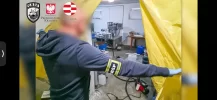
Although it was a shit hole of an environment it did look as though they had nice equipment. Hell, we’ve had sources pop up here and show nothing more than a stainless steel table and the new crowd of members around here found it acceptable.

It’s always interesting to see the lab when a vendor gets busted. Don’t believe we’ve seen a state of the art one yet.
 
Well isn't this interesting. As filthy as this lab is, certainly we can be sure Chinese underground labs, in that land of impeccable cleanliness and always putting consumer safety first (even when no one is looking) maintains much higher standards.

IMG_3087.webp

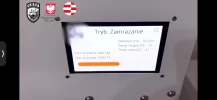
Here's their lyophilizer, in the middle of a batch of rHGH or GLPs. Funny, with all those vial tops open, as they must be for freeze drying, when the product is a human injectable this is supposed to be done in a fully sterile ISO level 5 clean room:

IMG_3084.webpIMG_3088.webp

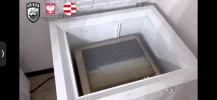
Looks like this is their sterile pre chiller. Note the liquid peptide filled vials nicely frozen, caps completely off exposed to the environment, waiting for their turn in the lyophilizer.

IMG_3083.webp

And the rest of their "chilling" equipment on the other side of the room:

IMG_3086.webp

Don't worry. Ignore the bacterial contamination Jano's found in his sterility testing of peptides, which, despite only checking for a handful of common bacteria still finds a high percentage contaminated.

It's just a little. Your immune system can handle it just fine. His test is "too sensitive".

Pharma standards would require the whole batch be tossed if there's any discovered at all, but they're all bubble boys.

Still, none of this will change the minds of the "Filtering is fearmongering!" crowd here. Syringes in hand, freezer full of mystery vials from “trusted UGL sources,” and the confidence of someone who believes that because they didn’t immediately vomit, collapse, or erupt in boils it’s safe.

"I injected it and it was fine."

The reality? Each dose is a microscopic negotiation with chaos. Those endotoxins don’t throw a party right away. They just nudge your immune system into a permanent low simmer, the kind that makes your joints quietly grind and your arteries quietly harden. A little inflammation today, a touch of endothelial damage tomorrow, and eventually you’re wondering why your knees ache like an eighty-year-old’s or why your liver enzymes look like a crime scene.

But don’t worry, by the time the damage shows up, it’ll be completely impossible to attribute to years of contaminated daily injections. Your future self will visit a rheumatologist who’ll shrug and say, “Could be autoimmune. Could be lifestyle. Could be genetics.” And you’ll nod, because you can’t exactly say, “Actually, doc, I injected half-purified peptides made by a guy identifiable only by his Whatsapp handle.”

That’s the beauty of cumulative harm, it’s diffuse, deniable, and irreversible.

No dramatic collapse, no smoking gun. Just years of quiet cellular resentment.

Cartilage eroding under chronic cytokine drizzle.

Capillaries scarred from endotoxin irritation.

Organs quietly overworked cleaning up microbial debris you paid money to inject.


And the best part? You’ll never prove it. The damage will look just like aging, just a lot faster, uglier, and avoidable.
 
Last edited:
A few months ago @Ghoul officially scared me into overpaying for peptides where sterility and endotoxin testing are done on every (numbered) batch. At least they take credit cards....
 
And they won't be removed by filtering.

Are you asserting that filtering doesn't reduce the endotoxin load the user is being exposed to?

I just want to make sure I'm clearly understanding the basis of your anti-filtering stance.
 
Strawman. Never said I'm anti-filtering.

I would like to know which 0.22um filtration method is certified to remove endotoxins.

Sorry, you didn't SAY you aren't anti-filtering, or you aren't?

Every .22um PES filter reduces endotoxin.

How do you think the majority of endotoxin load from unsterile peptides enters the body?
 
Who is right?

Readalot's correct in the literal sense.

.22um doesn't remove endotoxin.

But disembodied endotoxin isn't the risk in lyophilized peptides.

Manufacturing of peptide APIs is an inherently sterile process and not a source of endotoxin or bacteria.

It's the processing and packaging.

See a description of the commercial lyophilization process via the link below, and how sterility is maintained.

~It starts with mixing steriiized ingredients in a sealed, sterile vessel.

~Using a sterilized lyophilizer.

~Sterilizing the air or inert gas that backfills the vial vacuum space. Like Lobster does.

~Then finally testing the finished vial for sterility of course.


Just like UGL does. Just kidding, they do none of this.

So now uncapped vials are filled with the peptide liquid and left exposed to unsterile air. Anywhere from 20-60% of ambient air bacteria are gram negative.

Loaded into the unsterile lyophilizer, the peptide liquid in the open top vials is exposed to an unsterile environment for hours. Undoubtedly bacteria has found its way into these uncapped vials.

Lyophilization doesn't kill most bacteria, it puts them into cryogenic suspension.

After reconstitution, BAC doesn't kill bacteria. It revives them and only inhibits reproduction.

So far no significant endotoxin is in the vials, just live bacteria.

Once injected, the bacteria may evade immune system surveillance to become a "smoldering" infection, ready to take advantage if the immune system becomes compromised. Or they could form a biofilm on a joint, essentially a stable bacterial colony that forms a gel to protect itself from the immune system, releasing a steady stream of waste, including endotoxin.

Or the bacteria divide until they exceed the critical mass needed to catch the attention of the immune system, which will eventually kill them.

When dividing and after destruction by immune cells, gram negative bacteria leave pieces of their cell wall behind, aka endotoxin. This circulating endotoxin is the source of low level inflammation.

By removing bacteria with a 22um filter, ensuring a sterile solution, you avoid injecting bacteria, greatly reducing or eliminating the endotoxin load in your body.
 
Last edited:
Readalot's correct in the literal sense.

.22um doesn't remove endotoxin.

But disembodied endotoxin isn't the risk in lyophilized peptides. It used to be in rHGH, when it was still made using e.coli bacteria. As all the e.coli were killed in the manufacturing process, and if not purified correctly, left a ton of endotoxin behind. Now it's made using mouse cell lines, eliminating the need for endotoxin purification.

View attachment 356524

Manufacturing of peptide APIs is an inherently sterile process and not a source of endotoxin or bacteria.

It's the processing and packaging.

See the description of sterilization process if commercial lyophilization below.

~It starts with mixing steriiized ingredients in a sealed, sterile vessel.

~Using a sterilized lyophilizer.

~Sterilizing the air or inert gas that backfills the vial vacuum space. Like Lobster does.

~Then finally testing the finished vial for sterility of course.


Just like UGL does. Just kidding, they do none of this.

So now uncapped vials are filled with the peptide liquid and left exposed to unsterile air. Anywhere from 20-60% of ambient air bacteria are gram negative.

Loaded into the unsterile lyophilizer, the peptide liquid in the open top vials is exposed to an unsterile environment for hours. Undoubtedly bacteria has found its way into these uncapped vials.

Lyophilization doesn't kill most bacteria, it puts them into cryogenic suspension.

After reconstitution, BAC doesn't kill bacteria. It revives them and only inhibits reproduction.

So far no significant endotoxin is in the vials, just live bacteria.

Once injected, the bacteria may evade immune system surveillance to become a "smoldering" infection, ready to take advantage if the immune system becomes compromised. Or they could form a biofilm on a joint, essentially a stable bacterial colony that forms a gel to protect itself from the immune system, releasing a steady stream of waste, including endotoxin.

Or the bacteria divide until they exceed the critical mass needed to catch the attention of the immune system, which will eventually kill them.

When dividing and after destruction by immune cells, gram negative bacteria leave pieces of their cell wall behind, aka endotoxin. This circulating endotoxin is the source of low level inflammation.

By removing bacteria with an .22um filter, ensuring a sterile solution, you avoid this.

Would there be any benefit in going down to 0.1um?
Ive got .1um PES and recently just ordered PTFE.
 

Sponsors

Latest posts

Back
Top