Ferhev
Member
How is cheaper Mdprivate labs ? Prolactin test is $99 and with good labs is $9
Follow along with the video below to see how to install our site as a web app on your home screen.
Note: This feature may not be available in some browsers.
Privatemdlabs is 10x more expensive than GoodlabsP
Privatemdlabs is cheaper and offers more testing with their 25% off if you wanna check them out next time.
Thank you for sharing this. I've been using Marek, which I thought was cheap until I saw the prices at Goodlabs!If you need labs here's the 20% off link and code.
Code - Uvbo7K![]()
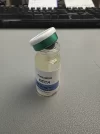
That does make more sense, and hopefully you're right.They said green CAP, so hopefully we're getting plain, uncoloured silver aluminium, and the green is just on the plastic cap.
And aluminium, which was the original spelling recognized by the IUPAC (International Union of Pure and Applied Chemistry) for several years before they decided to acknowledge "aluminum" as a variant.That does make more sense, and hopefully you're right.
Edit: Also, bonus points for the royal spelling of coloured.
Thanks for testing. Still waiting on GCMS?Jano Test E250 “Unknown Batch”
Waiting on other test, also requested Jano to fix report to say Primal and batch “P10” as the label says.
Did we ever find out why we never got the Test E raw results?
That was perfect. Thank you.On it you poor thing. My wife isn’t thick but she is S American.
Yeah. Primal said he didn't feel like releasing the results.Jano Test E250 “Unknown Batch”
Waiting on other test, also requested Jano to fix report to say Primal and batch “P10” as the label says.
Did we ever find out why we never got the Test E raw results?
RIP your email inbox. Might want to get that covered up.Jano Test E250 “Unknown Batch”
Waiting on other test, also requested Jano to fix report to say Primal and batch “P10” as the label says.
Did we ever find out why we never got the Test E raw results?
ExactlyThey said green CAP, so not exactly sure, but hopefully we're getting plain, uncoloured silver aluminium, and the green is just on the plastic cap/flip top
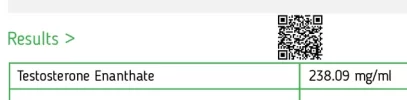
Quick clarification on “same batch” and variance. A batch is a single, homogenized production run mixed, filtered, and filled under the same conditions from the same raw source. Within that, small result swings are normal and typically come from sampling technique, vial position during fill, agitation before aliquoting, lab method differences, instrument calibration and stated uncertainty, and sample prep losses. Two results that fall within the method’s combined uncertainty are statistically consistent with the same batch.View attachment 357727
View attachment 357729
Another "same" batch with large variances.
Thanks for testing.
My thoughts.View attachment 357727
View attachment 357729
Another "same" batch with large variances.
Thanks for testing.
Quick clarification on “same batch” and variance. A batch is a single, homogenized production run mixed, filtered, and filled under the same conditions from the same raw source. Within that, small result swings are normal and typically come from sampling technique, vial position during fill, agitation before aliquoting, lab method differences, instrument calibration and stated uncertainty, and sample prep losses. Two results that fall within the method’s combined uncertainty are statistically consistent with the same batch.
The clean way to verify is to pull a well-mixed composite, split it, run the same method at the same lab in parallel, and document chain of custody. If the spread exceeds the method’s uncertainty, we investigate; if it does not, it reflects normal analytical scatter rather than a different or inconsistent batch. If any of this sounds unfamiliar, it may just be a misunderstanding of how batches and analytical uncertainty work…
Because one good GCMS hit can still fool you. Even with a clean library match, reference standard, and nice ions, you’re still relying on one separation and one ionization in a complex matrix. Coelution, in-source fragments, near-isomers, or matrix additives can mimic the target. An orthogonal check changes the rules of the game to see if the ID survives. Run the reference and sample on a different column and confirm identical retention and RI, verify exact mass and fragments with HRMS/MS, and for polymer additives add FTIR on an extract. If it’s suspected as a leachable, extract the...