MESO-Rx Sponsor Genuine Steroid Powder Manufacturer-AASraw

I brewed 500ml npp filtered once clogged two 0.2 filters and pinned 1ml and all went just fine

Excellent, thank you. What potency did you brew it at? I was thinking of being conservative and going about 120 mg/cc. I am just trying to tide over some lab rats until I get some deca.
 
I did not get an offer of 10% on next order. Has anyone brewed and injected the Test C and NPP? I can't take a chance of anyone getting a bad shot.

I will be filtering the NPP twice. I have never smelled raws like this before.

In terms of the future, will the quality of their raws be improving?
Filtration only removes particals and microorganisms it wont do anything for soluble impurities. Two really good techniques to learn that are also cheap . Melting point and thin line chromatography. MP will give you a better idea of purity than the RF value on TLC but the latter is easier to determine the presence of an second substance and its polarity. You dont need to be an analytical chemist to use these skills both are very simple.
 
Filtration only removes particals and microorganisms it wont do anything for soluble impurities. Two really good techniques to learn that are also cheap . Melting point and thin line chromatography. MP will give you a better idea of purity than the RF value on TLC but the latter is easier to determine the presence of an second substance and its polarity. You dont need to be an analytical chemist to use these skills both are very simple.
True, filtration can only do so much.

I am old and not that smart anymore. I do, however, pay attention to what smart guys like you have to say about a particular sources quality. And of course I look at the Janoshick reports.

I have been brewing the same way for many years now, using heat, BA, and filtration on what is hopefully a well sourced product to produce quality oil. I was actually using the same source for several years before "The Great Raws Shortage of 2025" happened.

Just out of curiosity, how do you go about using melting point as a determinant?
 
10+ years in the business and you test raws at Analiza? What a joke
Why is that care to elaborate instead of the blanket statement. I used to use Jano but I hated how the documentation didn't show methodology or a chromatogram. And actually I use analiza for 3rd party COAs I have a an agilant 8453 UV VIS spectrophotometer between that and melting point analysis I know how pure it is before it goes out.
 
Last edited:
Why is that care to elaborate instead of the blanket statement. I used to use Jano but I hated how the documentation didn't show methodology or a chromatogram. And actually I use analiza for 3rd party COAs I have a an agilant 8453 UV VIS spectrophotometer between that and melting point analysis I know how pure it is before it goes out.
His raw test results are unreliable, always 98% on average when Jano test show 89% stuff like that.

He is ok for quantity HPLC on oils but raw purity test... Not really.
 
His raw test results are unreliable, always 98% on average when Jano test show 89% stuff like that.

He is ok for quantity HPLC on oils but raw purity test... Not really.
Purity on raws is way easier to determine than quanity on oils as you have multiple items to quanityfy and seperate. 89% is wild ive never seen raws that impure. Thats a huge level of contamination thats not even safe to use without a recrystallization at min.
 
Purity on raws is way easier to determine than quanity on oils as you have multiple items to quanityfy and seperate. 89% is wild ive never seen raws that impure. Thats a huge level of contamination thats not even safe to use without a recrystallization at min.
exactly.
why would you cheap out on the 60 extra bucks raw testing costs at jano if testing at analiza means you could be injecting 89% purity without knowing?
For me personally, there is no question about janos certainty (at least in comp to analize)
(local Uni lab is still my preferred method tho)
 
exactly.
why would you cheap out on the 60 extra bucks raw testing costs at jano if testing at analiza means you could be injecting 89% purity without knowing?
For me personally, there is no question about janos certainty (at least in comp to analize)
(local Uni lab is still my preferred method tho)
Well firstly I didn't cheap out on anything. Jano didn't email me back for a couple months of trying and TP referred me to Analiza . It had nothing to do with price . Second I know the purity of my raws I use them for 3rd party COAs . I have a data base of AAS melting points, UV VIS calibration curves and TLC RF values to determine purity for myself.
Lol? Sure man whatever
bro
Lol? Sure man

Lol? Sure man whatever
What does that even mean. Im trying to engage in your question but you seem to be focused on insulting me and sarcastic remarks instead of reason and logic. I was genuinely concerned their were issues with the lab I had been using. But when I ask reasonable questions Im met with sarcasm.
 
Purity on raws is way easier to determine than quanity on oils as you have multiple items to quanityfy and seperate. 89% is wild ive never seen raws that impure. Thats a huge level of contamination thats not even safe to use without a recrystallization at min.
That is why I am so concerned about the NPP scores. Some came back much lower than 89%.

As asked before, how do you use melting point to determine purity? All I know is that good quality raws melt/dissolve instantly as oil (GSO in my case) heats. Is delayed melting and clarity in the oil a suggestion of impurities?
 
Last edited:
Well firstly I didn't cheap out on anything. Jano didn't email me back for a couple months of trying and TP referred me to Analiza . It had nothing to do with price . Second I know the purity of my raws I use them for 3rd party COAs . I have a data base of AAS melting points, UV VIS calibration curves and TLC RF values to determine purity for myself.

bro


What does that even mean. Im trying to engage in your question but you seem to be focused on insulting me and sarcastic remarks instead of reason and logic. I was genuinely concerned their were issues with the lab I had been using. But when I ask reasonable questions Im met with sarcasm.
Welcome to Meso, LOL.
 
That is why I am so concerned about the NPP scores. Some came back much lower than 89%.

AS asked before, how do you use melting point to determine purity?
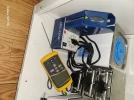
The melting point of a particular substance ( as long as it above room temp EQ, test E, deca you need to use other methods ) use a melting point apparatus. Crush up a tiny sample several mg and put it in a capillary tube tap or drop the tube through a cylinder to conpact it tight you need even heat transfer. Place it in the melting point apparatus turn the heat on and watch the thermometer I use a fluke 52 so I can capture fractions of a degree . It should start melting close to its MP and finish becoming a complete liquid close to it. If its starts melting earlier or completion extends far beyond that shows impurities because those impurities have different melting points. You can get ones like that cheap on ebay used.
 

Attachments

  • 20251030_193526.webp
    20251030_193526.webp
    705.6 KB · Views: 68
Welcome to Meso, LOL.

Welcome to Meso, LOL.
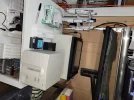
If you really want to get fancy UVVIS is great analytical tool. Your gonna need to study some analytical chemistry and learn Beer lamberts law and be able to make accurate dilutions but its really not that complicated. I picked this up refurbished on ebay with a laptop with chem station software for 2500 bucks.
 

Attachments

  • 20251030_193831.webp
    20251030_193831.webp
    757.4 KB · Views: 64
If you really want to get fancy UVVIS is great analytical tool. Your gonna need to study some analytical chemistry and learn Beer lamberts law and be able to make accurate dilutions but its really not that complicated. I picked this up refurbished on ebay with a laptop with chem station software for 2500 bucks.
Or, I could just go with good Jano reports posted here for free :)
 
Anything larger than .2 microns is large enough but I was referring to soluble impurities those being in a liquid state at the time of filtration will pass.

The 2 halves of that statement don't go together (in bold)

Being in a liquid state doesn't make something immune to filtration if it's big enough
 

Sponsors

Back
Top