I'd been running 6iu's of GH alongside 350T/450Mast/450Primo when recently the lower back pumps got unbearable. I've been on 6iu's for a couple months at this point, and the issue only seemed to arise recently as gear and food have also gone up. My coach and i were able to determine that the GH was the primary culprit, due to water retention so we've been backing off. I'd like to keep it in as i finish out my growth phase, does anyone else have any tips for reducing these pumps? i've already tried Dandelion root and Taurine, not sure if there's anything else i could be doing. let me know.

MESO-Rx
Anabolic Steroids

Navigation
Install the app
How to install the app on iOS
Follow along with the video below to see how to install our site as a web app on your home screen.
Note: This feature may not be available in some browsers.
More options
Style variation
Guest viewing limit reached
- You have reached the maximum number of guest views allowed
- Please register below to remove this limitation
- Already a member? Click here to login
You are using an out of date browser. It may not display this or other websites correctly.
You should upgrade or use an alternative browser.
You should upgrade or use an alternative browser.
HGH - Back Pumps
- Thread starter Zdwhy
- Start date

Kralteramon
Member
Yep, lower the dose. I get the same. Your response to hgh might be really good so you don’t need as much. Taurine helps for me when I get the pumps as well. Frequent Stretching also.

BigDadd7
Member
I have been running 4 iu. I get terrible back pumps/spasms after sleeping all night. Getting out of bed was horrible for the first 30 minutes. I took three days off and I've now dropped to 3 iu. I take 3gms of taurine daily.

Ghoul
Member
oh so the spasms are a thing from gh ?
I get some spasms on one side of my back , on the scapula area . I thought I had some nerve compression tihng because it's just one side lol.
It is nerve compression, from tissue expansion caused by water retention.
Check your IGF Z-score. It’s probably high 3+, and you can tweak your dose based on that.
GH causes general water retention, but IGF-1 causes it locally in specific tissues.
At 31 my baseline igf is 250. According to an online calculator that puts me at 0.75 z score. I just started 5iu so technically as long as I get bloodwork i should try and see how high my igf can go until im about 1.5-2 z score?It is nerve compression, from tissue expansion caused by water retention.
Check your IGF Z-score. It’s probably high 3+, and you can tweak your dose based on that.
GH causes general water retention, but IGF-1 causes it locally in specific tissues.
Weird it’s so high considering my spleen is enlarged and alt is a little high. You think an empty sella has any correlation with naturally high igf?
Ghoul
Member
At 31 my baseline igf is 250. According to an online calculator that puts me at 0.75 z score. I just started 5iu so technically as long as I get bloodwork i should try and see how high my igf can go until im about 1.5-2 z score?
Weird it’s so high considering my spleen is enlarged and alt is a little high. You think an empty sella has any correlation with naturally high igf?
Well if we’re following the lead of how endocrinologists manage dosing, Z is used to “get in the normal IGF range” and manage safety by not exceeding 2. For us, up to 3 is most likely safe long term (endos, like with TRT, are much more conservative).
But within that range, the other things that guide dose are side effects and results.
(Using made up numbers for this example).
If Z 1.5 gives you sides that don’t diminish in a few weeks obviously going to 2.5 isn’t gonna to help. Z allows you to figure out “I need to be at 1 to 1.25 z score to feel best without sides” rather than IU which can be very inaccurate, changing from batch to batch. There’s also changes in your biology that could raise or lower IGF/Z score on the same dose, so again, Z score as your guide gives you a way of tweaking the dose to get the results you want.
One other thing, if you have a choice, get IGF tested at Quest not Labcorp. This may apply to you specifically.
I just encountered a situation where Labcorp was giving a crazy low IGF-1 (50), so he kept on increasing rHGH doses, up to 15iu/day, to try and normalize IGF. 15iu only got him to IGF -1 80.
After switching to Quest, IGF was actually 650, far into acromegaly levels!!
It’s something that’s rare, probably less than 1% of people could have this issue, but the consequences could be bad for those of us using levels of rHGH no endo would ever use regardless of IGF.
Labcorp uses a bioassay, Quest uses LCMS. LCMS sees things bioassays miss.
Last edited:
Yeah lab didnt provide me with a z-scoreIt is nerve compression, from tissue expansion caused by water retention.
Check your IGF Z-score. It’s probably high 3+, and you can tweak your dose based on that.
GH causes general water retention, but IGF-1 causes it locally in specific tissues.
IGF is at 426 , so i asked gpt to calculate it (37M). The math it ran seemed to make sense to me .
definitely on the higher end
| Assay / Analyzer | Mean | SD | Your Z-score |
|---|---|---|---|
| Siemens Immulite | 180 | 45 | +5.5 |
| Roche Cobas | 190 | 50 | +4.7 |
| IDS-iSYS (LabCorp) | 175 | 79 | +3.2 |
| Quest LC/MS | 165 | 83 | +3.1 |
Ghoul
Member
Which lab performed the test?Yeah lab didnt provide me with a z-score
IGF is at 426 , so i asked gpt to calculate it (37M). The math it ran seemed to make sense to me .
definitely on the higher end
Assay / Analyzer Mean SD Your Z-score Siemens Immulite 180 45 +5.5 Roche Cobas 190 50 +4.7 IDS-iSYS (LabCorp) 175 79 +3.2 Quest LC/MS 165 83 +3.1
im in canada, it's DynacareWhich lab performed the test?
Ghoul
Member
im in canada, it's Dynacare
Whatever the midpoint of the range on the results is should be a clue as to method used.
In Canada it’s most likely IDS or Siemens. So your Z is either “slightly high” at 3.2, or “start buying larger shoes” at 5.5 lol.
Range is 83 - 239 , so midpoint would be approximate median would be 161.Whatever the midpoint of the range on the results is should be a clue as to method used.
In Canada it’s most likely IDS or Siemens. So your Z is either “slightly high” at 3.2, or “start buying larger shoes” at 5.5 lol.
I still don't have the full report where they usually disclose the assay. Though on the preliminary report I have this note:
GPT says Dynacare usually does the Siemens Assay.
Roche Diagnostics Electrochemiluminescence Immunoassay(ECLIA).Values obtained with different assay methods orkits may not be comparable and cannot beused interchangeably.
I dont get any sides beside this thing on my right scapula though - running 5 ius atm. Was thinking about tapering it up to 8-10 on a cycle but cruise on the 4-5 level. I might rethink this cruise dose.
Bioassay its the same as bioluminescence? My lab uses this method of testing it is good ?Well if we’re following the lead of how endocrinologists manage dosing, Z is used to “get in the normal IGF range” and manage safety by not exceeding 2. For us, up to 3 is most likely safe long term (endos, like with TRT, are much more conservative).
But within that range, the other things that guide dose are side effects and results.
(Using made up numbers for this example).
If Z 1.5 gives you sides that don’t diminish in a few weeks obviously going to 2.5 isn’t gonna to help. Z allows you to figure out “I need to be at 1 to 1.25 z score to feel best without sides” rather than IU which can be very inaccurate, changing from batch to batch. There’s also changes in your biology that could raise or lower IGF/Z score on the same dose, so again, Z score as your guide gives you a way of tweaking the dose to get the results you want.
One other thing, if you have a choice, get IGF tested at Quest not Labcorp. This may apply to you specifically.
I just encountered a situation where Labcorp was giving a crazy low IGF-1 (50), so he kept on increasing rHGH doses, up to 15iu/day, to try and normalize IGF. 15iu only got him to IGF -1 80.
After switching to Quest, IGF was actually 650, far into acromegaly levels!!
It’s something that’s rare, probably less than 1% of people could have this issue, but the consequences could be bad for those of us using levels of rHGH no endo would ever use regardless of IGF.
Labcorp uses a bioassay, Quest uses LCMS. LCMS sees things bioassays miss.
Ghoul
Member
Bioassay its the same as bioluminescence? My lab uses this method of testing it is good ?
I should’ve said immunoassay, which is
the most common method for measuring IGF.
Chemiluminescent immunoassays (CLIA) grab IGF-1, “light up”, and are read by machine to determine IGF-1 levels.
The problem is some people produce variants of IGF-1 that are active, but aren’t detected by CLIA. In other cases, variants are produced that are inactive, but CLIA measures them as if they are functional IGF.
So CLIA counts active normal IGF (also called “Wild Type” or WT) and IGF variants whether inactive or active, as the same thing. It also misses some variants altogether. There’s no mention of variants in a Labcorp or any other “old fashioned” immunoassay test.
Quest says its LCMS test method doesn’t have this issue. It sees all variants, though only counts “wild type” ie “normal” for its IGF-1 result and Z score.
If they detect variants, it’s mentioned in the notes, along with estimated levels of them.
Not detecting variants has been a problem when patients:
- have normal GH but unexplained low IGF,
- or they’re receiving rHGH treatment but IGF is much lower than expected
- or IGF looks “normal”, on or off rHGH, using a CLIA test like Labcorp, but they have symptoms of low IGF like high body fat and difficulty putting on muscle. It’s potentially because the CLIA is including INACTIVE IGF variants.
A much better understanding of how widespread this problem is comes from a recent study looking at a quarter million patients, and finding .5% of them had significantly wrong Z and IGF because of these IGF variants not being detected.
(Remember “WT” means “wild type”, in other words, “normal” IGF-1.)
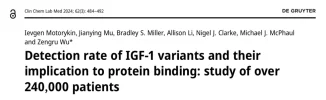
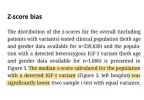
Here the report found that on average, Z scores are much lower in those with variants, and when active variants were added back in, they returned to normal.
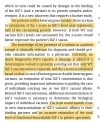
Here the report notes Quest now reports IGF-1 variants, and suggests doctors need to start paying attention to this:
TLDR: Quest / LCMS method of testing IGF-1 is the only truly accurate method available for the 0.5% of the population with IGF-1 variants. That percentage may be a significant undercount of the true number with variants.
Last edited:
I s
I see, ty for your answer! Im having dificulty where i live to find a lab that uses lcmsI should’ve said immunoassay, which is
the most common method for measuring IGF.
Chemiluminescent immunoassays (CLIA) grab IGF-1, “light up”, and are read by machine to determine IGF-1 levels.
The problem is some people produce variants of IGF-1 that are active, but aren’t detected by CLIA. In other cases, variants are produced that are inactive, but CLIA measures them as if they are functional IGF.
So CLIA counts active normal IGF (also called “Wild Type” or WT) and IGF variants whether inactive or active, as the same thing. It also misses some variants altogether. There’s no mention of variants in a Labcorp or any other “old fashioned” immunoassay test.
Quest says its LCMS test method doesn’t have this issue. It sees all variants, though only counts “wild type” ie “normal” for its IGF-1 result and Z score.
If they detect variants, it’s mentioned in the notes, along with estimated levels of them.
Not detecting variants has been a problem when patients:
- have normal GH but unexplained low IGF,
- or they’re receiving rHGH treatment but IGF is much lower than expected
- or IGF looks “normal”, on or off rHGH, using a CLIA test like Labcorp, but they have symptoms of low IGF like high body fat and difficulty putting on muscle. It’s potentially because the CLIA is including INACTIVE IGF variants.
A much better understanding of how widespread this problem is comes from a recent study looking at a quarter million patients, and finding .5% of them had significantly wrong Z and IGF because of these IGF variants not being detected.
(Remember “WT” means “wild type”, in other words, “normal” IGF-1.)
View attachment 366641
Here the report found that on average, Z scores are much lower in those with variants, and when active variants were added back in, they returned to normal.
View attachment 366647
Here the report notes Quest now reports IGF-1 variants, and suggests doctors need to start paying attention to this:
View attachment 366643
TLDR: Quest / LCMS method of testing IGF-1 is the only truly accurate method available for the 0.5% of the population with IGF-1 variants. That percentage may be a significant undercount of the true number with variants.
Ghoul
Member
I s
I see, ty for your answer! Im having dificulty where i live to find a lab that uses lcms
I predict eventually all labs will shift to LCMS because of this, or at least offer it as an option.
There’s only a small chance it applies to you, but if it does, immunoassay can give very deceiving results.
Yes i trying to find the most accurate result before i use hgh, to avoid acromegaly hahaI predict eventually all labs will shift to LCMS because of this, or at least offer it as an option.
There’s only a small chance it applies to you, but if it does, immunoassay can give very deceiving results.
Ironman580
New Member
Back pumps shin pumps just placebos you bread somewhere - never had either on every compound known to man
Similar threads
- Replies
- 10
- Views
- 82

- Replies
- 32
- Views
- 2K


- Replies
- 38
- Views
- 2K


Sponsors
Latest posts
-

-
My Fertility Situation With TRT
- Latest: GREENLIGHTGOOO
-
-
