B-12 Injections Active (Methylcobalamin)

infinitezero

New Member
B-12 Injections Active (Methylcobalamin)

1) Heat Bacteriostatic Water to 170°F before adding any powders.

2) Put Methylcobalamin Powder into the beaker. Mix slowly to avoid clumping.

3) Stir in a Magnetic Stirrer until clear from clumps, about 15 - 20 minutes.

4) Filter into a 10ml vial. (Sterile Syringe Filter PVDF Hydrophilic Filtration 0.22 um Pore Size, 25 mm Membrane Diameter Sterile PVDF Membrane)

5) Store at room temperature.


B-12 Active (Methylcobalamin) - 5mg/mL (5000mcg/mL) - 10mL (Recommended)

.05 grams B-12 Active (Methylcobalamin) Powder
10 mL Bacteriostatic Water


Powder Combination Displacement: ???


To make 10 mL Bacteriostatic Water
- 10 mL of Type II Deionized Water (Laboratory Grade)
- 9 units/ticks of benzyl alcohol (0.09 mL)
- Mix


Dosage:
1000mcg or 1mg once a day Sub-Q with an insulin syringe (20 ticks with 5000mcg/mL).
 
B-12 Injections Active (Methylcobalamin)

1) Heat Bacteriostatic Water to 170°F before adding any powders.

2) Put Methylcobalamin Powder into the beaker. Mix slowly to avoid clumping.

3) Stir in a Magnetic Stirrer until clear from clumps, about 15 - 20 minutes.

4) Filter into a 10ml vial. (Sterile Syringe Filter PVDF Hydrophilic Filtration 0.22 um Pore Size, 25 mm Membrane Diameter Sterile PVDF Membrane)

5) Store at room temperature.


B-12 Active (Methylcobalamin) - 5mg/mL (5000mcg/mL) - 10mL (Recommended)

.05 grams B-12 Active (Methylcobalamin) Powder
10 mL Bacteriostatic Water


Powder Combination Displacement: ???


To make 10 mL Bacteriostatic Water
- 10 mL of Type II Deionized Water (Laboratory Grade)
- 9 units/ticks of benzyl alcohol (0.09 mL)
- Mix


Dosage:
1000mcg or 1mg once a day Sub-Q with an insulin syringe (20 ticks with 5000mcg/mL).
I did a write up on finding displacement values. This might be of use. For the combination I would imagine you just preform the calculations for each individual component. Here is the copy and pasted version.

I also worked out the displacement for glutathione. This should work for anything really. Not a chemist so please correct me if I am wrong.

I found the density for GLH but the important part is the units. It needs to be in g/cm^3. Now cm^3 is a ml. So the units could be written as g/ml. For displacement you want ml per gram or ml/g. This is because in the final step we are multiplying the weight of GLH in grams by the displacement to get the volume in ml that it displaces. So to get ml/g you divide 1 by the density. That gives the displacement in ml/g.

GLH density= 1.475 g/cm^3= 1.475 g/ml
Displacement= 1/1.475=0.678 ml/g
I used 6 g of GLH
Displacement volume= 6*0.678=4.068 ml

I confirmed the measurement by just adding the full 30 ml of bac and then measuring everything in a 50 ml syringe at the end. It seemed to work out. I have also back tested it against known testosterone valves.
 
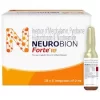
Ampules of pharma produced Neurobion are around 50¢ from India PCT, and includes B6 as well as B3 for a more balanced profile.

It's probably one of the most commonly injected meds in India. (anemic vegetarians)

IMG_0506.webp
 
If you want to make 5000 mcg per mL in a 10 mL vial then:

First off, you need 50 mg (0.05 g) of methylcobalamin powder in total. I checked a couple of reputable sources (like Sigma‑Aldrich and PubChem) which put the density of crystalline methylcobalamin at around 1.35 g/mL. That means the displacement is roughly:

  1 ÷ 1.35 ≈ 0.74 mL per gram

So, for your 0.05 g, it displaces about:

  0.05 g × 0.74 mL/g ≈ 0.037 mL

This small volume is the amount your powder will add to the overall solution, so if you need an exact 10 mL final volume, you might want to subtract that from your water volume. Cheers!
 
Just a heads up, you probably don't want to warm the bac water to 170°F.

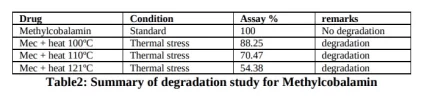
B12 in the form of Methylcobalamin degrades pretty quickly under heat. Approx. by 50% after 30 minutes of 121 degrees Fahrenheit, so it's safe to say that it's even worse for 170°F:

b12.webp
 
This recipe is missing adjusting the ph. You want the ph to be about 4.5 and it really needs a buffer or it will be too unstable and hard to get where you want it….and likely drift afterwards.

I tested a couple vendors b12 ph with a calibrated meter. Stanfords was about 4.6. The other vendor was 5.1.

Acetic acid + sodium acetate seems like a potential buffer for this ph range, but I haven’t researched it much.
 
This recipe is missing adjusting the ph. You want the ph to be about 4.5 and it really needs a buffer or it will be too unstable and hard to get where you want it….and likely drift afterwards.

I tested a couple vendors b12 ph with a calibrated meter. Stanfords was about 4.6. The other vendor was 5.1.

Acetic acid + sodium acetate seems like a potential buffer for this ph range, but I haven’t researched it much.
Might want to research that 4.5 PH recommendation. That is going to hurt……
 
Well aware…you can add lidocaine. I am just telling you that the other vendors that I measured are low as well. Methylcobalamin degrades quickly at ph’s that ate comfortable.
Might want to research that 4.5 PH recommendation. That is going to hurt……
 
I have better things to do with my time than debate you. Just here to say that this statement is objectively false and your logic of just adding lidocaine to fix a problem that is %100 avoidable should be a warning for everyone.
Ok make your methylcobalamin that degrades in 7 days at ph 7.0. I don’t care.

Also HVY lipo c tested at about 4.6.
 
Ok make your methylcobalamin that degrades in 7 days at ph 7.0. I don’t care.
Nope, been holding for quite some time no issues, I made a post about it on another thread, you can check the date. Wife’s b12 came back over 2000 just this week.

Again making claims about things you know nothing about.

You attacking my work is rather funny considering you just recommended everyone inject a rather acidic b12 solution.
 
Last edited:
Back
Top