Jano filtering cloudy HGH before testing?

Elektrobot

Member
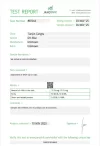
Saw this on a Jano test sheet

"Samples were filtered prior to analysis due to cloudiness".

I've only been in the HGH game for about 6 months, but this was the first time I've seen that on a Jano test.

Is this common?

I know it's not his responsibility give a use or don't use ruling.

Does seeing the test numbers after filtering cloudy hgh change any thoughts on using cloudy HGH?

I'm not suggesting that it should. Just a curiosity.
f0234b94725c44dfa22f82cc1e8ffb05dd1ec678f667410d969e9b08fa979444.webp
 
The 60iu green tops from a US source on here had they same thing on there jano report. They were discontinued because of users reporting cloudiness.
 
Saw this on a Jano test sheet

"Samples were filtered prior to analysis due to cloudiness".

I've only been in the HGH game for about 6 months, but this was the first time I've seen that on a Jano test.

Is this common?

I know it's not his responsibility give a use or don't use ruling.

Does seeing the test numbers after filtering cloudy hgh change any thoughts on using cloudy HGH?

I'm not suggesting that it should. Just a curiosity.

AAS compounds are filtered to prevent damage to the machine.
Now as to why for peptides, im not entirely sure but im going to assuming it might be the same reason.


All samples must be filtered prior to being analyzed. Then the columns themselves change the nature of the sample, for instance, by “disentangling” some of the small aggregates that make it past the filtration stage.

Every method of analysis has certain limitations, which is why no single method ever gives a complete picture.

Cloudy peptides / rHGH, have always been around, yet until recently you never saw a mention of them on reports:

It’s not that HPLC is bad, but it has limitations.

Only being able to analyze samples that have been filtered is one of them.

Common sense should tell you that if you’re not filtering too, what you’re injecting is likely very different from the “99% purity” on the report people equate with “safety”.

A lot of people can’t seem to grasp this.

Peptide / rHGH Jano report = after being purified through a .22um (pores smaller than bacteria) filter.

Unfiltered peptide / rHGH you’re injecting = what’s in the report + whatever shit was caught in the filter. Bacteria, aggregates, metal, glass, plastic particles.

It’s like sending a sample of your drinking water to a lab to be analyzed.

They ultra-filter it before testing, and based on that report you feel safe drinking straight from the tap.
 
Last edited:
All samples must be filtered prior to being analyzed.

For all?
I know its done for AAS but for peps it does seem to imply filtering only if it's cloudy. I don't mind asking in his thread but i'm not sure if he's addressed it before

 
For all?
I know its done for AAS but for peps it does seem to imply filtering only if it's cloudy. I don't mind asking in his thread but i'm not sure if he's addressed it before


This has been asked before. All samples must be “clarified” or there’s a risk of serious damage to the equipment. This is standard practice in every lab analyzing peptide / protein samples with HPLC.

It seems to make some people’s heads explode because of how they assumed “purity” is determined.

And after you get passed blowing up that paradigm, you can get into an entire discussion of how “purity” in the context of this type of analysis is not what they think that means, either. How 2 peptides / rHGH samples with exactly the same purity could produce very different results because of the nuanced differences that can be “hidden under the curve”.
 
Last edited:
He uses a 0.22um PTFE filter for peps.

Probably the #1 use of syringe filters is for sample prep like this. Which is why the occasional “makes it worse by contaminating with fibers!” argument against filtering before injecting doesn’t hold up. If that were the case, those filters would be destroying chromatography machines too.
 
This has been asked before. All samples must be “clarified” or there’s a risk of serious damage to the equipment. This is standard practice in every lab analyzing peptide / protein samples with HPLC.

It seems to make some people’s heads explode because of how they assumed “purity” is determined.

And after you get passed blowing up that paradigm, you can get into an entire discussion of how “purity” in the context of this type of analysis is not what they think that means, either. How 2 peptides / rHGH samples with exactly the same purity could produce very different results because of the nuanced differences that can be “hidden under the curve”.

I couldn't find his reply so I asked in his thread.
I just found it odd he mentions it in some reports and not others. I've seen it in some (not just this) and also for other non hgh peptides.
 
I couldn't find his reply so I asked in his thread.
I just found it odd he mentions it in some reports and not others. I've seen it in some (not just this) and also for other non hgh peptides.

I take it you’re finding this info to be a revelation?

You’re far from alone, the overwhelming majority in the PED and Peptide communities were (and largely still are) unaware of this.

When I first brought this up here as the most obvious “why you should filter” argument, it brought down a ton of denial and hate. Too much of a shocker for some to handle lol.

It was as if I was implying Jano was doing something deceptive (he isn’t, this is standard procedure for all labs).

The misunderstanding (and shock) came from them putting religious like faith into testing without ever asking “What doesn’t this detect? What’s the residual risk?”.

IMG_1083.webp
 
Last edited:
I take it you’re finding this info to be a revelation?

No
But my understanding is that different labs do things differently, it's always good to get clarifications especially in the UGL space

If it's common sop in his lab to filter for peps, then there's no need to mention it. AAS samples are for e.g filtered, theres no mention of it on any report. Why is this mentioned on a peptide report?
 
No
But my understanding is that different labs do things differently, it's always good to get clarifications especially in the UGL space

If it's common sop in his lab to filter for peps, then there's no need to mention it. AAS samples are for e.g filtered, theres no mention of it on any report. Why is this mentioned on a peptide report?

Perhaps his standard reconstitution procedure doesn’t usually result in aggregation (which often takes a little time to incubate), or sterile water vs BAC makes it less likely.

Or whether it’s cloudy or not on reconstitution is irrelevant for the testing being performed.

He’s mentioned a new column to study Tirz aggregation because of a client’s request.

Have you ever seen an AAS report mention floaters in the vial? Do you think every oil sample he’s gotten was particulate free, compared to the relatively frequent reports of particulates?

I think it comes down to Jano can test for anything, but it needs to be requested and paid for (including process development for something new).

He’s running a for profit, very competent and reliable chemical analysis lab. Not a harm reduction charity.
 
Have you ever seen an AAS report mention floaters in the vial? Do you think every oil sample he’s gotten was particulate free, compared to the relatively frequent reports of particulates?

Precisely.

Ive never seen one mention about floaters or crashed gear or what not. Even the sediment filled NPP vials from CN vendors who were sent in for testing or the slushy EQ from Axle that can't hold at room temperature -- nothing special was mentioned. Since he filters all of it prior, there is no need to mention it.

But on peptide testing, why is this mentioned? Cloudy or not, isn't it filtered away?
 
Precisely.

Ive never seen one mention about floaters or crashed gear or what not. Even the sediment filled NPP vials from CN vendors who were sent in for testing or the slushy EQ from Axle that can't hold at room temperature -- nothing special was mentioned. Since he filters all of it prior, there is no need to mention it.

But on peptide testing, why is this mentioned? Cloudy or not, isn't it filtered away?

It may be a new focus on the issue. Or the customer explicitly requested it (god knows vendors won’t).

My hope in pointing out “what we don’t see” via testing is that it starts being requested and Jano creates the necessary protocol to do it to scientific standards. (Cloudy reconstitution of rHGH for instance).

It would require something like “When reconstituted to a dilution of 15iu/ml with Hospira BAC” etc, since it’s got to have some uniformity to the process.

Look at it way. Testing for dimer wasn’t always standard (or even available). Interest was from the ground up (maybe from MESO but I’m not certain).

Once it started being tested by customers, vendors were pressured to do it to, and over the course of a few years dimer got lower and lower because it was visible. Had that testing never been demanded by users, it’d still be as bad as it used to be.

If cloudiness starts being formally tested, and noted on reports, you can be sure vendors will start paying attention to formulation and whatever other factors are causing it to make sure their product doesn’t have this problem, just to compete, the same way they “fixed” dimer.
 
Back
Top