Nebivolol for lowering RHR

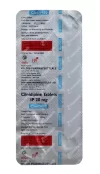
Cilniheal is what they sold me. It gets delivered tomorrow or Tuesday so I’ll know then.
I don't man I asked them via email they told me they had clinlvy and they quoted me a different price too, like one that is a lot higher lol

Pct24x7store we are talking right?
 
Could you point me to a source to establish what "optimal" RHR wound be based on age, by *your* standards, since I don't know which chart to believe in that regard?

Or formula? I have no idea how to find a credible "optimal" number outside of conventional medicine.
I presume a lot of the 'optimal rhr' talk is conflating a lower heart rate due to cardiovascular efficiency and that through pharmacological means.
 
Or formula? I have no idea how to find a credible "optimal" number outside of conventional standards.
Unfortunately, all the data I've found on this seems to be pretty contradictory with little in the way of perfect answers.

Across all age groups, the only for certain data seems to be that below 80 is good. Beyond that, it seems like it's a bit of a mystery and as @rxzed mentioned, who knows whether going from 95 -> 75 through pharamcological means leads to as good outcomes as just through cardiovascular improvement.

I went down this rabbit hole bad a couple years ago when I was worried about my RHR in the 30s. Turns out being a competitive runner will do that to you and I was just an idiot (many echos/stress tests/EKGs/holter monitors later..)

The clinical trials regarding Ivabradine have some interesting citations that may be helpful, since the entire reason the drug exists is to solely lower HR in heart failure patients since that seems to dramatically improve outcomes.
 
Cilniheal is what they sold me. It gets delivered tomorrow or Tuesday so I’ll know then.

Ok, it's made by Synokem, which is a contract manufacturer for Sun, Cipla, and Alembic. These are major suppliers of US and European generics, so to me, that's sufficient evidence it's high quality and I'm not concerned.

Half the meds I get by prescription in the US are from those 3.


IMG_0693.webp

IMG_0694.webp
 
Last edited:
I don't man I asked them via email they told me they had clinlvy and they quoted me a different price too, like one that is a lot higher lol

Pct24x7store we are talking right?

Yep. In fact 24x7 and the Zone quoted me for Cilniheal. I asked for Cilnidipine and that’s the product name they provided. But it wouldn’t be the first time one of the PCTs sent an alternate brand without saying something first.
 
At some point, gotta consider going back to basics instead of adding more drugs on top of more drugs.

Still use drugs, but also know that cardio exercise is a great way to manage RHR & CV risk. Maybe you can even take fewer drugs *gasp*
 
At some point, gotta consider going back to basics instead of adding more drugs on top of more drugs.

Still use drugs, but also know that cardio exercise is a great way to manage RHR & CV risk. Maybe you can even take fewer drugs *gasp*
I agree in people should be doing cardio, but rarely does exercise bring a 150/100 BP to <120/80. Likewise, a person is unlikely to bring a LDL of 200 down to <80 through natural means. You can always titrate off of a statin, but if you fail to reduce your lipids before calcification, you have no recourse.
 
I agree in people should be doing cardio, but rarely does exercise bring a 150/100 BP to <120/80. Likewise, a person is unlikely to bring a LDL of 200 down to <80 through natural means. You can always titrate off of a statin, but if you fail to reduce your lipids before calcification, you have no recourse.

Agree and think at any BP level, if something bad happens, it will be less bad if you have good cardiorespiratory fitness (ie, doing cardio exercise).

Think of running (or swimming, cycling, etc.) as a safety net.
 
LOL at anybody criticizing advice to do cardiovascular exercise
I don’t think it’s ever a bad idea - I think @rxzed was more just referring to how people (I know I’ve certainly seen it) will let their kidneys get trashed by high BP or give themselves another year of plaque buildup because they want to try to “get it down naturally” instead of fixing the problem almost overnight and then implementing those good habits in conjunction with it.

Cardio is always the right answer to the question, regardless of what the question is haha.
 
I don’t think it’s ever a bad idea - I think @rxzed was more just referring to how people (I know I’ve certainly seen it) will let their kidneys get trashed by high BP or give themselves another year of plaque buildup because they want to try to “get it down naturally” instead of fixing the problem almost overnight and then implementing those good habits in conjunction with it.

Cardio is always the right answer to the question, regardless of what the question is haha.

Yeah, I got what he was saying. Do both.

But let's face it. Lots and lots doing one (drugs) and not the other (cardio) or even controlling what they eat . . .
 
Yeah, I got what he was saying. Do both.

But let's face it. Lots and lots doing one (drugs) and not the other (cardio) or even controlling what they eat . . .


My VO2max has been 47-48 for years, putting me around top 5-10% for my age range, where I've been since my 20's,

I've also had elevated blood pressure since my mid 20's, steadily creeping up into hypertension, untreated because I was strongly "pharmaceuticals are poison and best avoided", a big mistake in hindsight. Every one of the relatives on my mother's side died from strokes or heart attacks.

Damage from high BP is a function of level, and time of exposure. On balance, the potential "harm" from modern, especially low dose combo, BP meds is clearly outweighed by the established outcomes of getting and keeping it low for as long as possible.

If lifestyle changes don't get it down to normal within 6-12 months after exceeding 130, whether that's because a person is a lazy fuck or exercise and diet don't move the needle enough, and they sometimes don't, then the evidence is crystal clear that using drugs to lower it is much better than delaying.

Keep trying to get it down with exercise and diet, and maybe come off the pill if possible is even better, but time of exposure to high BP is the enemy. Beating oneself up, avoiding the meds, because someone thinks they either do it naturally or not at all, like I did, is the wrong way to go imo.

These days I look at things like BP meds as, at least potentially when used properly, "HEDs" health enhancement drugs, overcoming the limits of flawed biology, rather than some poison only to be resorted to once symptoms occur.

 
Last edited:
My VO2max has been 47-48 for years, putting me around top 5-10% for my age range, where I've been since my 20's,

I've also had elevated blood pressure since my mid 20's, steadily creeping up into hypertension, untreated because I was strongly "pharmaceuticals are poison and best avoided", a big mistake in hindsight. Every one of the relatives on my mother's side died from strokes or heart attacks.

Damage from high BP is a function of level, and time of exposure. On balance, the potential "harm" from modern, especially low dose combo, BP meds is clearly outweighed by the established outcomes of getting and keeping it low for as long as possible.

If lifestyle changes don't get it down to normal within 6-12 months after exceeding 130, whether that's because a person is a lazy fuck or exercise and diet don't move the needle enough, and they sometimes don't, then the evidence is crystal clear that using drugs to lower it is much better than delaying.

Keep trying to get it down with exercise and diet, and maybe come off the pill if possible is even better, but time of exposure to high BP is the enemy. Beating oneself up, avoiding the meds, because someone thinks they either do it naturally or not at all, like I did, is the wrong way to go imo.

These days I look at things like BP meds as, at least potentially when used properly, "HEDs" health enhancement drugs, overcoming the limits of flawed biology, rather than some poison only to be resorted to once symptoms occur.


Didn't I see you posting that you weigh around 250 or something?

My blood pressure when I weighed 250 is why I called it quits on competing in bodybuilding anymore. As many know reading here, I have been struggling, mentally, with whether to drop down from the 220s, where I am now.

I post this only because bodyweight tends to have a relationship with blood pressure, especially as we age. Oddly, height has a positive correlation, too, but I have not studied the research enough to know how strong it is as an independent variable compared to weight.

All of this is just a long way of saying that there is more to this than cardio, sure, but maybe your blood pressure would be worse if your VO2max was lower from not doing cardio.
 
My blood pressure when I weighed 250 is why I called it quits on competing in bodybuilding anymore. As many know reading here, I have been struggling, mentally, with whether to drop down from the 220s, where I am now.
Mine has a cliff that it falls off at 210 oddly enough.

Above 210 it jumps up, still entirely managable and not bad, and then slowly it will rise in a linear fashion into the 230s but still manageable.

Moment I get below 210, it falls off a cliff and I have to drop BP meds if I want to stay vertical. I imagine I'm not alone it having a certain threshold that really makes a large difference.
 
Didn't I see you posting that you weigh around 250 or something?

My blood pressure when I weighed 250 is why I called it quits on competing in bodybuilding anymore. As many know reading here, I have been struggling, mentally, with whether to drop down from the 220s, where I am now.

I post this only because bodyweight tends to have a relationship with blood pressure, especially as we age. Oddly, height has a positive correlation, too, but I have not studied the research enough to know how strong it is as an independent variable compared to weight.

Have you maxed out all the possible options from lifestyle to all different bp medications? I mean, it may sound simple that just dropping weight your bp will get better but we all here want to live under certain circumstances.

Not saying to be reckless or anything, but in your case i would drop weight if it was the only true solution on fixing health parameters, which i doubt.
 
Mine has a cliff that it falls off at 210 oddly enough.

Above 210 it jumps up, still entirely managable and not bad, and then slowly it will rise in a linear fashion into the 230s but still manageable.

Moment I get below 210, it falls off a cliff and I have to drop BP meds if I want to stay vertical. I imagine I'm not alone it having a certain threshold that really makes a large difference.
For context, how tall are you?
 
PS - out of curiosity, where did you go to test VO2max?
Trust me, if an Obese individual walks into with A bp of 175/100 and marked hypercholesterolemia, with A1C of 6.9, the first advice he would be given is not diet and exercise. Doc will be like: "Sir, I believe we have passed that stage for that..."
They'll want to effectively stabilize his BP and get his lipids under control before hammering the exercise and diet parts
 
Back
Top