Noticed a difference between Tirz and Mounjaro

bigtyivier2k2

New Member
10+ Year Member
For a year I was using Elli Lily’s mounjaro building up to 15mg shots for the last 2 months. It got too expensive so I switched to Stan’s Tirzepatide also doing 15mg shots but the difference is noticeable

Mounjaro: lasts me 5-6 days of extreme appetite suppression where I dont think of food at all and after eating a small meal have zero desire to eat again

Tirz: lasts me 3 days max of appetite suppression but I still think about food and can eat more later in the day
 
I agree with others that this must be a dosing issue. Otherwise it's the exact same compound- unless your compounded tirz has other additives in it?
It is likely not a dosing issue. We have testing for that. In fact most ugl is a bit overdosed. There are plenty of theories here about it if you want to go down the rabbit hole. Can get pretty interesting. Hgh similar story
 
It is likely not a dosing issue. We have testing for that. In fact most ugl is a bit overdosed. There are plenty of theories here about it if you want to go down the rabbit hole. Can get pretty interesting. Hgh similar story
Testing showed the Tirz to be slightly over so I am curious to go down the rabbithole
 
It would be interesting to see. The vials come mixed also like the injector pens. They send them on ice in a big cooler.

They'd likely show low purity if Jano is using the HCL Tirz standard.

Pharma uses the base, not the easier to manufacture salt form that's pretty much universal to UGL and most compounders.

But I'm not certain which standard he uses or of they're close enough that it would allow both forms to be measured based on the same standard.

If you really want to know more
about the quality of your Tirz, without spending a small fortune, request a PH measurement,

Every UGL sample seems to be acidic, 4-6, when it should be 6.8-7.4 ideally, like pharma is. Some folks I know are reconstituting GLPs and rHGH with phosphate buffer saline instead of regular BAC, and reporting zero pip (from batches that caused injection site reactions previously), and anecdotally reporting better results. Pharma Tirz and Sema use phosphate buffers.

Acidity should be counteracted by the correct excipient buffer, and would even convert the salt form into base in the vial upon reconstitution, but doesn't seem something anyone's doing. Without PH correction the protein is much less stable.
 
Did you test your UGL tirz? If you can it's a good a good idea to try to buy a promo or special when they come up because then it's easy to find a group to test with. Then at least you'll have 3rd party results.

Personally I've gone back and forth between Zebound and UGL Tirz and never really noticed a difference.
 
They'd likely show low purity if Jano is using the HCL Tirz standard.

Pharma uses the base, not the easier to manufacture salt form that's pretty much universal to UGL and most compounders.

But I'm not certain which standard he uses or of they're close enough that it would allow both forms to be measured based on the same standard.

If you really want to know more
about the quality of your Tirz, without spending a small fortune, request a PH measurement,

Every UGL sample seems to be acidic, 4-6, when it should be 6.8-7.4 ideally, like pharma is. Some folks I know are reconstituting GLPs and rHGH with phosphate buffer saline instead of regular BAC, and reporting zero pip (from batches that caused injection site reactions previously), and anecdotally reporting better results. Pharma Tirz and Sema use phosphate buffers.

Acidity should be counteracted by the correct excipient buffer, and would even convert the salt form into base in the vial upon reconstitution, but doesn't seem something anyone's doing. Without PH correction the protein is much less stable.
Welcome back. I was actually thinking if ghoul was around he would be able to add some value to this topic. Most likely I won’t send pharma out for testing. I’m interested in it none the less
 
Welcome back. I was actually thinking if ghoul was around he would be able to add some value to this topic. Most likely I won’t send pharma out for testing. I’m interested in it none the less

You can contact the FDA with the batch number and ask for the results under FOIA.

They're required to conduct a number of tests for each batch before release to pharmacies. When they get approval to market a drug the FDA says "you need to check these CQA's (critical quality attributes) for each batch". Going beyond HPLC-MS. They also require that the company pulls back samples from each batch after x months on pharmacy shelves to ensure it's as stable as it should be once it's out in the field.

Consider this. The pens and vials don't have any BAC, or any type of preservative whatsoever, and a two year shelf life despite being reconstituted. That's how confident they are of a perfectly manufactured product. Being a potential target for billion dollar lawsuits if they fuck up tends to focus the QA department.
 
@Ghoul What do you mean by Phosphate buffer? Is this something they use in addition to some type of reconstitution solution or on its own for their pens?

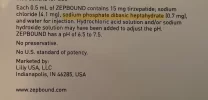
It's used in their own pens. Maintaining the correct pH is crucial for keeping peptides intact and functional. A buffer like phosphate sets and maintains the correct pH.

Some UGLs include buffers in their rHGH, GLPs and other peptides. Others don't.

It would be useful if we had @janoshik measure pH after reconstitution to see who's paying attention to the excipient formulation to ensure the correct pH. If it started showing up on test results, UGLs would start paying attention to that aspect of quality.

IMG_1486.webp
 
Last edited:
You can contact the FDA with the batch number and ask for the results under FOIA.

They're required to conduct a number of tests for each batch before release to pharmacies. When they get approval to market a drug the FDA says "you need to check these CQA's (critical quality attributes) for each batch". Going beyond HPLC-MS. They also require that the company pulls back samples from each batch after x months on pharmacy shelves to ensure it's as stable as it should be once it's out in the field.

Consider this. The pens and vials don't have any BAC, or any type of preservative whatsoever, and a two year shelf life despite being reconstituted. That's how confident they are of a perfectly manufactured product. Being a potential target for billion dollar lawsuits if they fuck up tends to focus the QA department.
That's not correct. Consider this. If there was no fillers in the pens or vials, then how could one .5 ml vial contain 2.5mg. of Tirz and another .5 ml vial contain 15 mg. of Tirz? Answer: there are obvious fillers and likely preservatives.
 
Back
Top