Steroid News
News bot on steroids
http://www.usatoday.com/sports/2008-12-16-george-mason-hgh-test_N.htm&cid=0&ei=YY5ISeqvGY3I9ATs9Nm6DQ&usg=AFQjCNFE4MlZ13Al7AvbLoY3l9yapCdXQQ
[SIZE=-1]USA Today [/SIZE]
[SIZE=-1]It wasn't until earlier this year that they began to alter a test which they hope one day will be able to detect cancer at its earliest stages to find HGH in urine. There has been a blood test for HGH for a few years, but it's extremely expensive and its reliability has been questioned within the anti-doping community. The test has been used at the last three Olympics but has failed to identify an athlete using HGH. There is no indication major sports leagues or their players' unions are eager to implement it.[/SIZE]
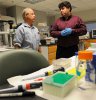
[SIZE=-1]Mixing chemicals that cost less than $100, Petricoin and Liotta created a reaction in the lab that creates millions of nanoparticles tailored to find HGH and, one day, possibly cancer. The particles, which would be placed in a specimen container before collection, find, trap and preserve the compound so standard testing equipment can detect HGH.[/SIZE]
[SIZE=-1]The next step is having their research accepted by the scientific, athletic and legal communities. That process took a step forward last week when their research into the HGH test was published in Nano Research, a peer-reviewed journal specializing in the science of engineering on an atomic and molecular scale.[/SIZE]
[SIZE=-1]Ceres, the biotech company, is cooperating with the U.S. Anti-Doping Agency for the next phase: identifying a normal range of HGH in the body. The study will take urine from dozens of adults 18 to 45 who volunteer to give samples at an on-campus athletics facility. [...][/SIZE]
[SIZE=-1]Starting in 2005, GMU paid $2 million to $3 million to set up the lab for the professors, according to Chandhoke. The two professors brought an exchange program with Instituto Superiore di Sanita, part of the Italian National Health Service, from the NIH. [/SIZE]
[SIZE=-1]Liotta and Petricoin have brought in grant money, but that's not the biggest possible payback. Ceres Nanosciences is paying to license the Nanotrap technology behind the HGH detection system. Ceres, which has relocated to a lab on the Manassas campus, also will pay royalties if the technology is pushed into use. [/SIZE]
[SIZE=-1](Petricoin and Liotta also are part of the management of Theranostics Health, another local start-up that has licensed other research from the pair.) [/SIZE]
[SIZE=-1]...[/SIZE]
http://www.usatoday.com/sports/2008-12-16-george-mason-hgh-test_N.htm&cid=0&ei=YY5ISeqvGY3I9ATs9Nm6DQ&usg=AFQjCNFE4MlZ13Al7AvbLoY3l9yapCdXQQ
[SIZE=-1]USA Today [/SIZE]
[SIZE=-1]It wasn't until earlier this year that they began to alter a test which they hope one day will be able to detect cancer at its earliest stages to find HGH in urine. There has been a blood test for HGH for a few years, but it's extremely expensive and its reliability has been questioned within the anti-doping community. The test has been used at the last three Olympics but has failed to identify an athlete using HGH. There is no indication major sports leagues or their players' unions are eager to implement it.[/SIZE]
[SIZE=-1]Mixing chemicals that cost less than $100, Petricoin and Liotta created a reaction in the lab that creates millions of nanoparticles tailored to find HGH and, one day, possibly cancer. The particles, which would be placed in a specimen container before collection, find, trap and preserve the compound so standard testing equipment can detect HGH.[/SIZE]
[SIZE=-1]The next step is having their research accepted by the scientific, athletic and legal communities. That process took a step forward last week when their research into the HGH test was published in Nano Research, a peer-reviewed journal specializing in the science of engineering on an atomic and molecular scale.[/SIZE]
[SIZE=-1]Ceres, the biotech company, is cooperating with the U.S. Anti-Doping Agency for the next phase: identifying a normal range of HGH in the body. The study will take urine from dozens of adults 18 to 45 who volunteer to give samples at an on-campus athletics facility. [...][/SIZE]
[SIZE=-1]Starting in 2005, GMU paid $2 million to $3 million to set up the lab for the professors, according to Chandhoke. The two professors brought an exchange program with Instituto Superiore di Sanita, part of the Italian National Health Service, from the NIH. [/SIZE]
[SIZE=-1]Liotta and Petricoin have brought in grant money, but that's not the biggest possible payback. Ceres Nanosciences is paying to license the Nanotrap technology behind the HGH detection system. Ceres, which has relocated to a lab on the Manassas campus, also will pay royalties if the technology is pushed into use. [/SIZE]
[SIZE=-1](Petricoin and Liotta also are part of the management of Theranostics Health, another local start-up that has licensed other research from the pair.) [/SIZE]
[SIZE=-1]...[/SIZE]
http://www.usatoday.com/sports/2008-12-16-george-mason-hgh-test_N.htm&cid=0&ei=YY5ISeqvGY3I9ATs9Nm6DQ&usg=AFQjCNFE4MlZ13Al7AvbLoY3l9yapCdXQQ