MESO-Rx Sponsor Primal Pharma - US Domestic

That’s what I was thinking. Is it something that just happens? Is it normal and good to still use? They are all MCT. I know they were clear when I first got them. They been in a dark cabinet 71 degrees.
I've got about ten vials from him from a bit before the whole cyp EO situation. They're all still clear, but i'm not sure if i'll ever use them
 
I've got about ten vials from him from a bit before the whole cyp EO situation. They're all still clear, but i'm not sure if i'll ever use them
If we are talking about Devon’s products, we should not do it in primal’s thread as sone people will get confused as to who’s products we are discussing. My fault for mentioning him.

Please let’s not resurrect Devon’s thread though. It needs a slow death

Maybe here? Schills, “Scientist” and Bros a place to f***k off
 
If we are talking about Devon’s products, we should not do it in primal’s thread as sone people will get confused as to who’s products we are discussing. My fault for mentioning him.

Please let’s not resurrect Devon’s thread though. It needs a slow death
Fair point, to be clear i'm not referring to primal gear at all. I also agree to not resurrect his thread. let that shit die
 
since were on the topic.
I picked up some test C in MCT a few weeks ago. some were yellow colored and the others were clear.

Maybe others have but I’ve had vials of test at 200 and 250 in MCT for a few years and it never changed color. Not his obviously.
 
Last edited:
TLDR:

If a vial yellows over time, either the carrier oil, API or both, have oxidized.

The byproducts of this are Reactive Oxygen Species (the functional opposite of anti-oxidants).

At a cellular level this stresses lipids, proteins, and mitochondria. It triggers inflammation, especially in arterial walls, accelerating artheriosclorisis and converts LDL to oxidized LDL, which is the single most damaging cholesterol molecule.

You will see a rise in HS-CRP.

Yellowed gear is essentially injectable aging.

The least bad effects of oxidized oil are from MCT (it’s mostly saturated fat which can’t oxidize unless exposed to high heat), the worst is GSO. But high quality MCT shouldn’t oxidize or cause AAS to oxidize for a long, long time.

Miglyol 812, the pharma standard, is 100% fully saturated, making it the best for oxidation resistance. It’s definitely the carrier of choice for long term storage,

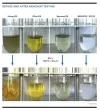
Heating simulates aging. Once the anti-oxidants in the oil are consumed, they start to go rancid / yellow.

IMG_3196.webp

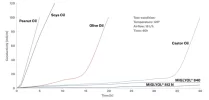
This shows how stable Miglyol 812 is compared to others.

IMG_3197.webp

I have a vial of 6 year old Test-C in Miglyol 812 that’s been at room temp the entire time, as water clear as the day I got it.


 
Last edited:
TLDR:

If a vial yellows over time, either the carrier oil, API or both, have oxidized.

The byproducts of this are Reactive Oxygen Species (the functional opposite of anti-oxidants).

At a cellular level this stresses lipids, proteins, and mitochondria. It triggers inflammation, especially in arterial walls, accelerating artheriosclorisis and converts LDL to oxidized LDL, which is the single most damaging cholesterol molecule.

You will see a rise in HS-CRP.

The least bad effects of oxidized oil are from MCT (it’s mostly saturated fat which can’t oxidize unless exposed to high heat), the worst is GSO. But high quality MCT shouldn’t oxidize or cause AAS to oxidize for a long, long time.

Miglyol 812, the pharma standard, is 100% fully saturated, making it the best for oxidation resistance. It’s definitely the carrier of choice for long term storage,

Heating simulates aging. Once the anti-oxidants in the oil are consumed, they start to go rancid / yellow.

View attachment 357916

This shows how stable Miglyol 812 is compared to others.

View attachment 357917

I have a vial of 6 year old Test-C in Miglyol 812 that’s been at room temp the entire time, as water clear as the day I got it.
thanks for this info. i'm assuming in my case the oil was introduced to some high heat during the brew process?
 
TLDR:

If a vial yellows over time, either the carrier oil, API or both, have oxidized.

The byproducts of this are Reactive Oxygen Species (the functional opposite of anti-oxidants).

At a cellular level this stresses lipids, proteins, and mitochondria. It triggers inflammation, especially in arterial walls, accelerating artheriosclorisis and converts LDL to oxidized LDL, which is the single most damaging cholesterol molecule.

You will see a rise in HS-CRP.

Yellowed gear is essentially injectable aging.

The least bad effects of oxidized oil are from MCT (it’s mostly saturated fat which can’t oxidize unless exposed to high heat), the worst is GSO. But high quality MCT shouldn’t oxidize or cause AAS to oxidize for a long, long time.

Miglyol 812, the pharma standard, is 100% fully saturated, making it the best for oxidation resistance. It’s definitely the carrier of choice for long term storage,

Heating simulates aging. Once the anti-oxidants in the oil are consumed, they start to go rancid / yellow.

View attachment 357916

This shows how stable Miglyol 812 is compared to others.

View attachment 357917

I have a vial of 6 year old Test-C in Miglyol 812 that’s been at room temp the entire time, as water clear as the day I got it.

I use 840 which I would have expected to be more stable, apparently not. Would you be willing to share that article link?
 
I use 840 which I would have expected to be more stable, apparently not. Would you be willing to share that article link?

Sorry I don't think of 840 as MCT so didn’t include it.

840 has a very slight edge for long term stability. It’s also thinner. But it’s synthetic, with a propylene glycol backbone, so it’s not 100% biocompatible like 812 which is MCT and identical to natural triglycerides. 812 is so easily processed by the body it’s FDA approved as an IV supplied source of nutrition, including to infants.

812 is used for Nebido and most other major brand FDA approved androgens.

840 doesn’t absorb as easily into tissues, slightly changes the PH of the surrounding area making pharmacokinetics less “smooth” (and potentially irritating), can draw water to itself creating a transient “lump” if injected too shallow, and slightly more inflammatory. 812 has the lowest inflammatory reaction of all pharmaceutical carrier oils.

In the real world, while 812 is the pharma gold standard, both are excellent and a major upgrade over what most UGL uses.
 
Last edited:
TLDR:

If a vial yellows over time, either the carrier oil, API or both, have oxidized.

The byproducts of this are Reactive Oxygen Species (the functional opposite of anti-oxidants).

At a cellular level this stresses lipids, proteins, and mitochondria. It triggers inflammation, especially in arterial walls, accelerating artheriosclorisis and converts LDL to oxidized LDL, which is the single most damaging cholesterol molecule.

You will see a rise in HS-CRP.

Yellowed gear is essentially injectable aging.

The least bad effects of oxidized oil are from MCT (it’s mostly saturated fat which can’t oxidize unless exposed to high heat), the worst is GSO. But high quality MCT shouldn’t oxidize or cause AAS to oxidize for a long, long time.

Miglyol 812, the pharma standard, is 100% fully saturated, making it the best for oxidation resistance. It’s definitely the carrier of choice for long term storage,

Heating simulates aging. Once the anti-oxidants in the oil are consumed, they start to go rancid / yellow.

View attachment 357916

This shows how stable Miglyol 812 is compared to others.

View attachment 357917

I have a vial of 6 year old Test-C in Miglyol 812 that’s been at room temp the entire time, as water clear as the day I got it.

So at what point is GSO test considered “bad”?
 
Back
Top