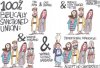
Same Sex Marriage

Michael Scally MD

Doctor of Medicine
10+ Year Member
SCOTUS To Hear SSM - Taking on a historic constitutional challenge with wide cultural impact, the Supreme Court on Friday afternoon agreed to hear four new cases on same-sex marriage.http://www.supremecourt.gov/o…/courtorders/011615zr_f2q3.pdf

The Court said it would rule on the power of the states to ban same-sex marriages and to refuse to recognize such marriages performed in another state. A total of two-and-a-half hours was allocated for the hearings, likely in the April sitting. A final ruling is expected by early next summer, probably in late June.

The Court fashioned the specific questions it is prepared to answer, but they closely tracked the two core constitutional issues that have led to a lengthy string of lower-court rulings striking down state bans.

As of now, same-sex marriages are allowed in thirty-six states, with bans remaining in the other fourteen but under court challenge.

Although the Court said explicitly that it was limiting review to the two basic issues, along the way the Justices may have to consider what constitutional tests they are going to apply to state bans, and what weight to give to policies that states will claim to justify one or the other of the bans.
 
Justice Kennedy key figure as U.S. top court tackles gay marriage
http://news.yahoo.com/justice-kennedy-key-figure-u-top-court-tackles-205422625.html

WASHINGTON (Reuters) - For nearly two decades, U.S. Supreme Court Justice Anthony Kennedy has been building toward this moment in the history of gay legal rights in America.

In decisions since 1996, Kennedy has broadened the court's view of equality for gays. Now, as the court said on Friday it would consider a constitutional right to gay marriage, Kennedy is likely to be the justice who tips the balance on the nine-member court.
 
My opinon is that the government has no business in marriage either way.
There involvement has nothing to do with religeous, moral or ethical values anyway.
They use marriage as a political tool to drive the masses both those pro and against redefining marriage, for there own gain.

The states involvement is simply for control, I can't understand why anyone would want fight to be involved in this "right" that is no longer a "right". Why because a right cannot be licensed by definition.
Frankly the tax and medical coverage privilages are not that great.

Don't know how many people have actually read their marriage license but it is an union between you, your spouse and the state. Any product of that union is equally shared by all partys. This mean your kids are 1/3 yours 1/3 your spouses and 1/3 the states. You and your spouse have a majority as long as you remain in the union of marriage.
If you leave that union then the 3 parties have equal rights, if a parent is found unfit then the state assumes that role and becomes the majority holder of the unions produce.

Anyone divorced with kids or has CPS involved in their lives know this to be the case.
 
Justice Alito’s Dissent in Loving v. Virginia

In 1967, in Loving v. Virginia, the U.S. Supreme Court UNANIMOUSLY struck down miscegenation statutes, which criminalized interracial marriage, as unconstitutional.

In 2013, the Court in United States v. Windsor invalidated Section 3 of the so-called Defense of Marriage Act (“DOMA”), which precluded federal agencies from recognizing marriages between same-sex couples even if the marriages were legally valid in the couples’ home state.

While Loving was a UNANIMOUS decision, the Court in Windsor was closely divided.

Almost half a century after Chief Justice Warren issued his UNANIMOUS Loving opinion, the Loving dissent has been written. Justice Alito authored it in Windsor.

Justice Alito fashioned his dissent as upholding DOMA. But the rationales he employed were much more suited to the facts of Loving than the facts of Windsor.

In this Article, Professor Leslie explains how each of Justice Alito’s reasons for upholding DOMA applies equally or more strongly to miscegenation laws at the time of the Loving opinion than to DOMA in 2013. There is simply no internally consistent way to defend DOMA with Justice Alito’s arguments without also upholding the constitutionality of miscegenation laws.

Thus, Justice Alito not only authored a dissent for the Windsor case; he effectively wrote a dissent in Loving nearly 50 years after the case was decided. His reasoning would require the upholding of Virginia’s miscegenation statute.

To the extent that the legal community now recognizes that the former anti-miscegenation regimes represent a shameful chapter of American history, the fact that the same arguments used to defend miscegenation laws are being invoked to justify bans on same-sex marriage suggests that such bans are inherently suspect and probably unconstitutional.

Christopher R. Leslie, Justice Alito’s Dissent in Loving v. Virginia , 55 B.C.L. Rev. 1563. http://lawdigitalcommons.bc.edu/bclr/vol55/iss5/5
 
Gay Marriage and the Fourteenth Amendment
http://papers.ssrn.com/sol3/papers.cfm?abstract_id=2509443

This essay examines the original meaning of the equality guarantee in American constitutional law. It looks are the seventeenth, eighteenth, and nineteenth century roots of the modern doctrine, and it concludes that the Fourteenth Amendment bans the Hindu Caste system, European feudalism, the Black Codes, the Jim Crow laws, and the common law's denial to women of equal civil rights to those held by men. It then considers the constitutionality of bans on same sex marriage from an Originalist perspective, and it concludes that State laws banning same sex marriage violate the Fourteenth Amendment.
 
Ya know I have no idea why people get so pissy about this subject. Do they really care about 2 people loving eachother and wanting to make it legal..People need to get the fuck over it. If it is about religion, God created us correct ? Well if he was so fucking perfect he would've made sure that men stayed with women, and vice versa. I am fine with kit
 
Same-Sex Marriage Is a Right, Supreme Court Rules, 5-4.
http://www.nytimes.com/2015/06/27/us/supreme-court-same-sex-marriage.html

In a long-sought victory for the gay rights movement, the Supreme Court ruled on Friday that the Constitution guarantees a nationwide right to same-sex marriage. http://www.supremecourt.gov/opinions/14pdf/14-556_3204.pdf

Justice Anthony M. Kennedy wrote the majority opinion in the 5 to 4 decision. He was joined by the court’s four more liberal justices.

Held: The Fourteenth Amendment requires a State to license a marriage between two people of the same sex and to recognize a marriage between two people of the same sex when their marriage was lawfully licensed and performed out-of-State.
 
Nation’s Homophobic Bigots Pack It In
http://www.theonion.com/article/nations-homophobic-bigots-pack-it-50766


WASHINGTON—Following the Supreme Court’s landmark ruling that bans on same-sex marriage were unconstitutional, the nation’s homophobic bigots reportedly conceded today that “rules are rules” and announced that they were going to pack it in. “Well, this certainly went against my personal beliefs, but we must respect the Supreme Court’s ruling,” said Dale Howell of Avery, TX, who, like millions of his fellow intolerant Americans with an intense hatred of homosexuals, believes that he had the opportunity to make his voice heard and is now ready to accept the highest court in the land’s decision and move on. “Obviously, I’m not going to like it. However, my hands are simply tied. The law is the law, and that’s really all there is to the situation.” Sources confirmed that the energy homophobes normally spent discriminating against gays will likely be reallocated to further holding down African Americans, Hispanics, women, and transgender individuals.
 
Unexpected opinion from one of the only openly gay (true) conservatives I know...

The Obergefell Effect: Gay Marriage and US Foreign Policy

The international implications of the gay marriage decision

Justin Raimondo, June 29, 2015

No matter what one thinks of the historic Supreme Court decision establishing the right of gay couples to marry, it is bound to have an effect on the conduct of US foreign policy – perhaps quite a substantial one.

The United States is a global empire: what we do impacts the world at large, and especially those countries closest to us, i.e. Europe and the Western hemisphere. While most of Western Europe already recognizes same-sex nuptials, Italy and Germany are holdouts, and the US Supreme Court decision is likely to energize the movement for marriage rights in those countries. Also, as Buzzfeed’s J. Lester Feder points out, Colombia is facing a decision on the issue soon, with their Supreme Court about to decide a case challenging the lack of legal recognition for gay couples. Our own court’s affirmation of gay rights in this area is likely to influence the Colombian decision.

So, on the one hand, this development in the US is likely to draw us closer to our peers in the rest of the world. However, as Stephen Walt puts it, “it is likely to broaden the gulf between states where homosexuality is becoming a non-issue and those where it is still persecuted and even same-sex unions are illegal.”

Three areas of the world where this gulf promises to grow wider are the Middle East, Africa, and Eastern Europe. Asia, too, is problematic.

Even as gay pride marches took place across the US, and gay people and their supporters celebrated the court’s decision, in Istanbul the police turned water cannons on marchers, driving them into side streets and making a number of arrests. Turkey, a NATO ally, is eager to join the European Union, but if they keep this up the gulf Walt speaks of is likely to grow wider and keep them out. And Turkey is far from alone in this alienation from the West.

The internationalization of the culture war doesn’t bode well for the US presence anywhere in the Middle East. Turkey – a key base for US operations in Syria, and a major military asset for US forces in the region – is just one example. The implications for the rest of our alliances in the Middle East are even worse.

Saudi Arabia, historically the anchor of our regional presence, is already at loggerheads with Washington, and Obergefell vs. Hodges will weaken ties that are already fraying. In the Kingdom, the punishment for homosexuality is death, and hostility to sexual diversity is pervasive throughout this primarily Muslim region. No Middle Eastern country recognizes same-sex unions, and Israel, for all the pink-washing, is no exception. (Although homosexual acts are not illegal in the Jewish state, and gay people are allowed – required – to serve in the military, as are all citizens but for the ultra-Orthodox.)

The effect on our eternal “war on terrorism” may be bigger than anyone now realizes. Obergefell vs. Hodges hands ISIS a propaganda victory on a silver platter: they can now point to the “decadent” West and raise the specter of America’s gay hordes descending on the Middle East to sodomize the pious into submission. While that imagery may be a bit over the top, that’s what war propaganda is all about: projecting disturbing imagery in order to manipulate the gullible. And you’d better believe Islamist propagandists will take full advantage of the opportunity. (By the way, ISIS routinely executes gay people in the most demonstratively brutal manner imaginable: they drop them from tall buildings.)

The idea that “they hate us for who we are” has always rung http://www.pbs.org/newshour/updates/military-july-dec96-fatwa_1996/, at least to my ears. And yet while the concept of “blowback” – that our foreign policy of global intervention invites reprisal – is still valid, our conflict with militant Islam has grown way beyond that. Now that we are in an all-out military conflict with groups like Al Qaeda and its offshoots, who we are and what we represent in their eyes becomes a major factor in the struggle for hearts and minds.

What this means is that according gays full marriage rights in the US is going to make it that much harder to accomplish the main objective of US military planners, which is to win over the peoples of the region and shrink the radical Islamists’ pool of potential recruits.

The same is true of Africa, where homosexuality is mostly illegal (South Africa being the prominent exception). In Kenya, Uganda, and elsewhere, governments have literally declared war on homosexuality, and are actively campaigning to root it out. As we seek to further militarily penetrate Africa in heedless pursuit of every “terrorist” gang that raises its flag, the identification of homosexuality with colonialism – already a meme in what we used to call the “Third World” – will increasingly prove an obstacle in our path. Ironically, what we might call the Obergefell Effect will also hurt so far tentative US attempts to rein in anti-gay persecution in those African countries where we do have some influence.

Another area where the Effect will be felt is in our relations with Russia, with whom we are already engaged in a fast-accelerating propaganda war. Russia has recently enacted a series of viciously stupid laws targeting gays, and their state propagandists are deploying a version of the homosexuality-equals-US imperialism meme. In the countries of the former Warsaw Pact Obergefell is certain to have an impact.

While the legal status of gays varies depending on whether they live in Poland – where it’s legal – or Ukraine, where being gay is not illegal but can get still you in big trouble, societal hostility to homosexuality is endemic throughout the region. Far-right wing movements in Ukraine and Hungary, already infused with anti-Americanism (for both good and bad reasons) are likely to seize on this – and in Hungary in particular, where the ultra-right is on the rise, this may have a discernible effect on the government’s relations with Washington. A rising neo-fascist party in Greece, the Golden Dawn movement, routinely attacks gay people, both physically and rhetorically, and the generally conservative Greek society is not notably inhospitable to gays. The point is that Russia is currently courting both Greece and Hungary, and it’s conceivable the Obergefell Effect could enable Moscow to use it as a wedge issue.

Eastasia, too, will feel the Obergefell Effect, at least to some extent, especially in countries where homosexuality is both illegal and something of a political issue, like Malaysia. India bans all homosexual acts, as do Bangladesh and Bhutan. Indonesia has no nationwide anti-gay laws, but Muslim provinces are allowed to apply Sharia law and the punishment there for homosexual acts is severe.

What all this means is that the Obergefell Effect will tend to isolate the US precisely in those areas of the world where it is contending to establish hegemony: the Middle East, Africa, southeastern Europe, and, to a lesser extent, Eastasia.

Perhaps the worst impact of the Effect will be inside the United States itself, where policymakers are constantly inventing new reasons to meddle in the internal affairs of other nations. As I pointed out here in 2011, then Secretary of State Hillary Clinton’s announcement that the US will henceforth be pushing a gay rights agenda on the rest of the world is a recipe for disaster – especially for the people it is supposedly designed to help. Hectoring foreign governments, while preening in a penumbra of our own moral purity, is only going to create a backlash abroad that will hurt the very people we are supposedly concerned about.

Not that this matters to those pushing this agenda: the lack of gay rights in, say, Russia is just another stick to beat Vladimir Putin over the head with, and is aimed at an American and West European audience. Such rhetoric, aside from establishing one’s liberal credentials, is meant to mobilize the liberal public behind Washington’s efforts to isolate Russia and colonize the former Soviet bloc.

And so while supporters of gay marriage are celebrating their victory, they would do well to remember that every burst of sunlight has its darker aspect. Outside the US, the Obergefell Effect will make it harder for Washington to impose its will on the rest of the globe – and, simultaneously, make it more determined to do so. And that does not bode well for the cause of peace.

 
Now’s the Time To End Tax Exemptions for Religious Institutions
http://time.com/3939143/nows-the-time-to-end-tax-exemptions-for-religious-institutions/


The Supreme Court's ruling on gay marriage makes it clearer than ever that the government shouldn't be subsidizing religion and non-profits
Two weeks ago, with a decision inObergefell v. Hodgeson the way, Sen. Mike Lee of Utah introduced the First Amendment Defense Act, which ensures that religious institutions won’t lose their tax exemptions if they don’t support same-sex marriage. Liberals tend to think Sen. Lee’s fears are unwarranted, and they can even point to Justice Anthony Kennedy’s opinion in Friday’s case, which promises “that religious organizations and persons [will be] given proper protection.”

But I don’t think Sen. Lee is crazy. In the 1983 Bob Jones University case, the court ruled that a school could lose tax-exempt status if its policies violated “fundamental national public policy.” So far, the Bob Jones reasoning hasn’t been extended to other kinds of discrimination, but someday it could be. I’m a gay-rights supporter who was elated by Friday’s Supreme Court decision — but I honor Sen. Lee’s fears.

I don’t, however, like his solution. And he’s not going to like mine. Rather than try to rescue tax-exempt status for organizations that dissent from settled public policy on matters of race or sexuality, we need to take a more radical step. It’s time to abolish, or greatly diminish, their tax-exempt statuses.
 
http://www.marketwatch.com/story/story?guid=c103590e-ede1-11e4-b083-e5fb3b0143b1&storyguid=c103590e-ede1-11e4-b083-e5fb3b0143b1&siteid=nwhpf

http://www.marketwatch.com/Journalists/Quentin_Fottrell

Marriage equality nationwide could mean a $2.6 billion spending boom over the next three years

Wedding bells — as well as those at the cash register — will soon be ringing.

On Friday, the U.S. Supreme Court legalized marriage equality across the land. It struck down state bans on same-sex marriage by a 5-4 majority as unconstitutional and said those states don’t have the right to refuse to recognize couples who have already gotten married in the 37 states and the District of Columbia where it’s already legal. Justice Anthony Kennedy, widely regarded as the swing voter among eight other justices who traditionally sit firmly to the left or right of the political spectrum, wrote of same-sex couples in his ruling, “They ask for equal dignity in the eyes of the law. The constitution grants them that right.”

President Obama tweeted after the decision was announced: “Today is a big step in our march toward equality. Gay and lesbian couples now have the right to marry, just like anyone else.” With the Supreme Court changing its interpretation of the U.S. constitution and legalizing marriage for same-sex couples, many same-sex couples will do just that. In fact, it could mean a $2.6 billion spending boom over the next three years and could also provide enough products and services for over 13,000 jobs, according to the Williams Institute for Sexual Orientation Law and Public Policy at the University of California.

The South, which had been slow to open marriage to same-sex couples, could see a total economic benefit of $733 million over the next three years, the Williams Institute study concluded. A potential $750 million nationwide could be realized now that the Supreme Court extended marriage to same-sex couples, the study found. This would include $181.6 million of spending and $14.8 million in tax revenue in Texas, $70.8 million of spending and $5 million of tax revenue in Ohio and $78.8 million of spending and $5.5 million in tax revenue in Georgia. “It could bring jobs to small businesses all across the country,” says M.V. Lee Badgett, Williams Distinguished Scholar at the Williams Institute.

Much of those increases would come from short-term spending on the weddings. In what has been dubbed by some commentators as the “gay-marriage stimulus package,” additional jobs might be created in the wedding and tourism industries. To put that into perspective, the report estimates that only 390,000 out of nearly 1 million same-sex couples in the U.S. are married. And Americans spend on average $850 each on bachelor and bachelorette parties, according to a recent survey by Google Consumer Surveys for travel website Priceline.com, and the average wedding guest will spend $673 this year, according to the annual American Express Spending & Saving Tracker. Add to that the fact that the cost of attending weddings has soared 16% in four years, reaching $31,213, a separate survey of 15,800 brides by wedding website The Knot concluded.

The inclusion of sexual orientation to the “2013 National Health Interview Survey” by the Centers for Disease Control and Prevention also offers a new source of data to explore differences among same-sex and different-sex married and unmarried couples, Gates adds. An estimated 4 in 10 lesbian, gay or bisexual adults reported either being married or in a cohabiting relationship with a partner compared with 6 in 10 heterosexual adults. Some 51% of lesbians and 35% of gay men were married or in a cohabiting partnership compared with 57% of heterosexual women and 63% of straight men.

Friday’s ruling in support of marriage equality was widely expected, given the Supreme Court’s previous ruling on the issue. In June 2014, the Supreme Court overturned the 1996 Defense of Marriage Act, opening up federal benefits to same-sex married couples. It heard two cases: Hollingsworth v. Perry, the successful challenge to California’s Proposition 8 measure, a 2008 ballot initiative that banned gay marriage in that state; and a New York case, U.S. v. Windsor, which overturned DOMA. In the latter case, New York residents Edith Windsor and Thea Spyer married in Canada in 2007 after 40 years together. Spyer died in 2009 and Windsor was required to pay $363,000 in federal estate taxes on her wife’s estate.
 
Now’s the Time To End Tax Exemptions for Religious Institutions
http://time.com/3939143/nows-the-time-to-end-tax-exemptions-for-religious-institutions/


The Supreme Court's ruling on gay marriage makes it clearer than ever that the government shouldn't be subsidizing religion and non-profits
Two weeks ago, with a decision inObergefell v. Hodgeson the way, Sen. Mike Lee of Utah introduced the First Amendment Defense Act, which ensures that religious institutions won’t lose their tax exemptions if they don’t support same-sex marriage. Liberals tend to think Sen. Lee’s fears are unwarranted, and they can even point to Justice Anthony Kennedy’s opinion in Friday’s case, which promises “that religious organizations and persons [will be] given proper protection.”

But I don’t think Sen. Lee is crazy. In the 1983 Bob Jones University case, the court ruled that a school could lose tax-exempt status if its policies violated “fundamental national public policy.” So far, the Bob Jones reasoning hasn’t been extended to other kinds of discrimination, but someday it could be. I’m a gay-rights supporter who was elated by Friday’s Supreme Court decision — but I honor Sen. Lee’s fears.

I don’t, however, like his solution. And he’s not going to like mine. Rather than try to rescue tax-exempt status for organizations that dissent from settled public policy on matters of race or sexuality, we need to take a more radical step. It’s time to abolish, or greatly diminish, their tax-exempt statuses.
I never met a tax cut I didn't like no matter who was receiving it, but it wouldn't hurt my feelings to see churches remove those American flag "idols" flying above the alters. I might actually start attending again if that happened (well, not really).
 
Judge blocks part of Mississippi LGBT marriage law

JACKSON, Miss. (AP) — A federal judge ruled Monday that Mississippi clerks cannot cite their own religious beliefs to recuse themselves from issuing marriage licenses to same-sex couples.

U.S. District Judge Carlton Reeves' ruling blocks the state from enforcing part of a religious objections bill that was supposed to become law Friday.

Reeves is extending his previous order that overturned Mississippi's ban on same-sex marriage. He says circuit clerks are required to provide equal treatment for all couples, gay or straight.

Mississippi's religious objections measure, House Bill 1523, was filed in response to last summer's U.S. Supreme Court ruling that legalized gay marriage nationwide. That ruling is called the Obergefell case, after the man who filed it.
 
Back
Top