Side effects from recent batch of SSA GH?

The good ol' "dimer Debate", most of the dimer reported is very low, even pharma allows for a certain amount of dimer content, will this ever be "de-bunked" ? Meanwhile we (all UGL hgh users) will have to deal with dimer from our respective sources, Try to get the least amount of dimer and adjust accordingly,,
 
The good ol' "dimer Debate", most of the dimer reported is very low, even pharma allows for a certain amount of dimer content, will this ever be "de-bunked" ? Meanwhile we (all UGL hgh users) will have to deal with dimer from our respective sources, Try to get the least amount of dimer and adjust accordingly,,

It's all bro science but a lot of people here are 100% convinced it's real science

Wait what if there's actual real science done and we find out dimer makes the GH more potent hahaha fuck me @Sampei
 
Do you remember how much 'Dimer' pharma allows?
-Think I fell over something as high as 4% - But maybe I remember incorrectly

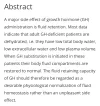
I'm just going to start with this at the top, as a reminder fluid retention is a well known, thoroughly understood "normal and expected" effect of rHGH treatment because GH levels (from any source. endogenous or exogenous) regulate how
much water we hold in tissue. It's worth noting that the inverse applies, if GH is too low, dehydration is common:

IMG_2390.webp


On to your question.

USP requires 88% purity, up to 12% impurities, and no single type of impurity above 6% (including aggregates. which dimer is).

But the FDA increasingly *hates* protein aggregates because if the potential health threats they pose, will not approve a product with high levels, or that creates more in storage, So pharma does all it can to minimize them.

Here's a note from an FDA review of a new rHGH product chastising the manufacturer for aggregates (in a 98% pure rHGH) (redacted parts are "trade secrets" hidden from the public record):

IMG_0595.webp


Realistically most pharma has much tighter requirements than the USP standard internally. 96-99% is typical. Often, where dimer/aggregates are present, they're caused by a conscious tradeoff of selecting certain excipient ingredients that induce a small amount of aggregation but stop further aggregation and degradation from occurring in storage. in other words, accept 2% dimer formation in freshly produced rHGH for a formulation that provides a long stable shelf life that inhibits what would be a much higher level of aggregates 6 months later.

This is crucial to pharma because the FDA requires rHGH to be pulled off pharma shelves and retested for degradation at various points before its expiration date. (unlike UGL).

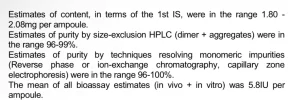
This is the modern international "standard" rHGH established by the World Health Organization and distributed to manufacturers and regulators to compare the commercial rHGH to:

IMG_2387.webp


Finally, here are the most current adult rHGH treatment guidelines in the US. Look at the rate of side effects.(all water retention related). Up to 18%. If this was caused by substandard rHGH (high dimer) that would be considered a major problem. The FDA would be all over pharma to fix that issue.

Instead, they clearly state its dose related, linked to supraphysiologic levels, and some individuals are more susceptible to these effects than others. (older, bigger...).

IMG_2388.webp

and that by slowly titrating the rate of sides was cut in half:

IMG_2389.webp


How would titrating overcome contaminant related side effects?

We know fluid retention sides come primarily from GH changing sodium balance in the body by affecting the kidney function.
 
Last edited:
Good call. The nausea and fatigue could be from too big of a dose of GLP-1 if he’s taking Tirz, Reta or Sema. What all is your bf on?
Yes triz will f you up if taking too much or too quickly. I don't go passed 5mg because I felt like shit and couldn't finish a meal if I went passed 5mg
 
I'm just going to start with this at the top, as a reminder fluid retention is a well known, thoroughly understood "normal and expected" effect of rHGH treatment because GH levels (from any source. endogenous or exogenous) regulate how
much water we hold in tissue. It's worth noting that the inverse applies, if GH is too low, dehydration is common:

View attachment 345425


On to your question.

USP requires 88% purity, up to 12% impurities, and no single type of impurity above 6% (including aggregates. which dimer is).

But the FDA increasingly *hates* protein aggregates because if the potential health threats they pose, will not approve a product with high levels, or that creates more in storage, So pharma does all it can to minimize them.

Here's a note from an FDA review of a new rHGH product chastising the manufacturer for aggregates (in a 98% pure rHGH) (redacted parts are "trade secrets" hidden from the public record):

View attachment 345432


Realistically most pharma has much tighter requirements than the USP standard internally. 96-99% is typical. Often, where dimer/aggregates are present, they're caused by a conscious tradeoff of selecting certain excipient ingredients that induce a small amount of aggregation but stop further aggregation and degradation from occurring in storage. in other words, accept 2% dimer formation in freshly produced rHGH for a formulation that provides a long stable shelf life that inhibits what would be a much higher level of aggregates 6 months later.

This is crucial to pharma because the FDA requires rHGH to be pulled off pharma shelves and retested for degradation at various points before its expiration date. (unlike UGL).

This is the modern international "standard" rHGH established by the World Health Organization and distributed to manufacturers and regulators to compare the commercial rHGH to:

View attachment 345414


Finally, here are the most current adult rHGH treatment guidelines in the US. Look at the rate of side effects.(all water retention related). Up to 18%. If this was caused by substandard rHGH (high dimer) that would be considered a major problem. The FDA would be all over pharma to fix that issue.

Instead, they clearly state its dose related, linked to supraphysiologic levels, and some individuals are more susceptible to these effects than others. (older, bigger...).

View attachment 345421

and that by slowly titrating the rate of sides was cut in half:

View attachment 345422


How would titrating overcome contaminant related side effects?

We know fluid retention sides come primarily from GH changing sodium balance in the body by affecting the kidney function.
T
I'm just going to start with this at the top, as a reminder fluid retention is a well known, thoroughly understood "normal and expected" effect of rHGH treatment because GH levels (from any source. endogenous or exogenous) regulate how
much water we hold in tissue. It's worth noting that the inverse applies, if GH is too low, dehydration is common:

View attachment 345425


On to your question.

USP requires 88% purity, up to 12% impurities, and no single type of impurity above 6% (including aggregates. which dimer is).

But the FDA increasingly *hates* protein aggregates because if the potential health threats they pose, will not approve a product with high levels, or that creates more in storage, So pharma does all it can to minimize them.

Here's a note from an FDA review of a new rHGH product chastising the manufacturer for aggregates (in a 98% pure rHGH) (redacted parts are "trade secrets" hidden from the public record):

View attachment 345432


Realistically most pharma has much tighter requirements than the USP standard internally. 96-99% is typical. Often, where dimer/aggregates are present, they're caused by a conscious tradeoff of selecting certain excipient ingredients that induce a small amount of aggregation but stop further aggregation and degradation from occurring in storage. in other words, accept 2% dimer formation in freshly produced rHGH for a formulation that provides a long stable shelf life that inhibits what would be a much higher level of aggregates 6 months later.

This is crucial to pharma because the FDA requires rHGH to be pulled off pharma shelves and retested for degradation at various points before its expiration date. (unlike UGL).

This is the modern international "standard" rHGH established by the World Health Organization and distributed to manufacturers and regulators to compare the commercial rHGH to:

View attachment 345414


Finally, here are the most current adult rHGH treatment guidelines in the US. Look at the rate of side effects.(all water retention related). Up to 18%. If this was caused by substandard rHGH (high dimer) that would be considered a major problem. The FDA would be all over pharma to fix that issue.

Instead, they clearly state its dose related, linked to supraphysiologic levels, and some individuals are more susceptible to these effects than others. (older, bigger...).

View attachment 345421

and that by slowly titrating the rate of sides was cut in half:

View attachment 345422


How would titrating overcome contaminant related side effects?

We know fluid retention sides come primarily from GH changing sodium balance in the body by affecting the kidney function.
[/QUOTE
I'm just going to start with this at the top, as a reminder fluid retention is a well known, thoroughly understood "normal and expected" effect of rHGH treatment because GH levels (from any source. endogenous or exogenous) regulate how
much water we hold in tissue. It's worth noting that the inverse applies, if GH is too low, dehydration is common:

View attachment 345425


On to your question.

USP requires 88% purity, up to 12% impurities, and no single type of impurity above 6% (including aggregates. which dimer is).

But the FDA increasingly *hates* protein aggregates because if the potential health threats they pose, will not approve a product with high levels, or that creates more in storage, So pharma does all it can to minimize them.

Here's a note from an FDA review of a new rHGH product chastising the manufacturer for aggregates (in a 98% pure rHGH) (redacted parts are "trade secrets" hidden from the public record):

View attachment 345432


Realistically most pharma has much tighter requirements than the USP standard internally. 96-99% is typical. Often, where dimer/aggregates are present, they're caused by a conscious tradeoff of selecting certain excipient ingredients that induce a small amount of aggregation but stop further aggregation and degradation from occurring in storage. in other words, accept 2% dimer formation in freshly produced rHGH for a formulation that provides a long stable shelf life that inhibits what would be a much higher level of aggregates 6 months later.

This is crucial to pharma because the FDA requires rHGH to be pulled off pharma shelves and retested for degradation at various points before its expiration date. (unlike UGL).

This is the modern international "standard" rHGH established by the World Health Organization and distributed to manufacturers and regulators to compare the commercial rHGH to:

View attachment 345414


Finally, here are the most current adult rHGH treatment guidelines in the US. Look at the rate of side effects.(all water retention related). Up to 18%. If this was caused by substandard rHGH (high dimer) that would be considered a major problem. The FDA would be all over pharma to fix that issue.

Instead, they clearly state its dose related, linked to supraphysiologic levels, and some individuals are more susceptible to these effects than others. (older, bigger...).

View attachment 345421

and that by slowly titrating the rate of sides was cut in half:

View attachment 345422


How would titrating overcome contaminant related side effects?

We know fluid retention sides come primarily from GH changing sodium balance in the body by affecting the kidney function.

Thanks for posting this information. Very informative.

 
It's all bro science but a lot of people here are 100% convinced it's real science

Wait what if there's actual real science done and we find out dimer makes the GH more potent hahaha fuck me @Sampei
I’ve heard this before too, that dimer does not cause water retention, achy joints, etc.
also janoshik tested tons of different peptides including HGH after shaking a vial up to mix it and guess what? In no case did shaking a vial to mix ruin any peptide.
 
Back
Top