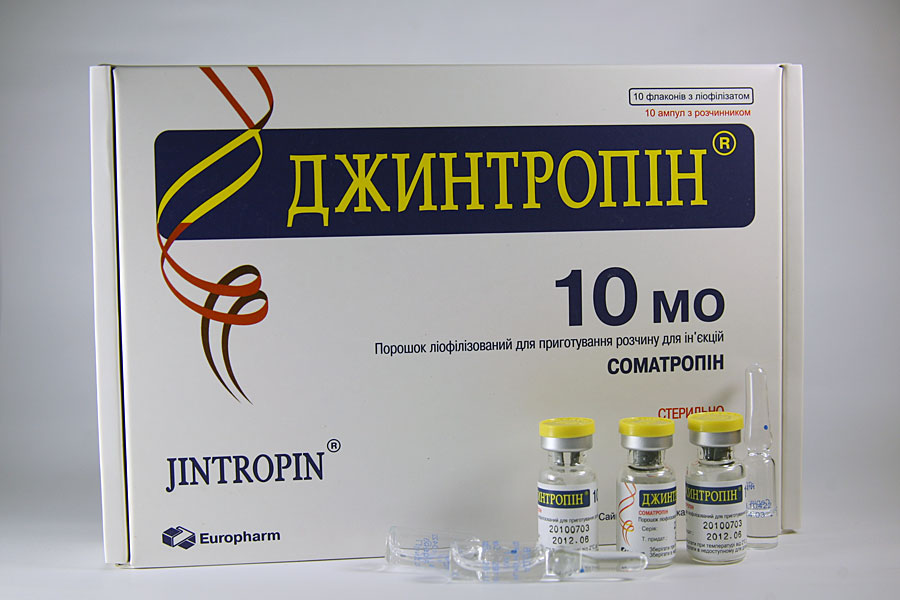
HUMAN GROWTH HORMONE (Trade Names: Genotropin®, Humatrope®, Norditropin®, Nutropin®, Saizen®, Serostim®)
Several FDA-approved injectable hGH preparations are available by prescription from a supervising physician for clearly and narrowly defined indications. In children, hGH is approved for the treatment of poor growth due to Turner’s syndrome, Prader-Willi syndrome, and chronic renal insufficiency, hGH insufficiency/deficiency, for children born small for gestational age, and for idiopathic short stature. Accepted medical uses in adults include but are not limited to the treatment of the wasting syndrome of HIV/AIDS and hGH deficiency.
Dependent on the clinical presentation, pediatric dosages range from 24-100 microgram/kilogram/day and adult dosages from 0.9-25 microgram/kilogram/day, dependent on product. The FDA-approved injectable formulations are available as liquid preparations, or as powder with a diluent for reconstitution.
Control Status:
Human growth hormone is not controlled under the Controlled Substances Act (CSA). However, as part of the 1990 Anabolic Steroids Control Act, the distribution and possession, with the intent to distribute, of hGH "for any use…other than the treatment of a disease or other recognized medical condition, where such use has been authorized by the Secretary of Health and Human Services…and pursuant to the order of a physician…" was criminalized as a five-year felony under the penalties chapter of the Food, Drug, and Cosmetics Act of the FDA.
Dr. Richard Rydze is a vocal advocate of the use of recombinant human growth hormone (rHGH) for the treatment of tendon and ligament injuries. Dr. Rydze

thinksteroids.com
** The Federal Food, Drug, and Cosmetic Act prohibits knowingly distributing or possessing with intent to distribute human growth hormone for any use in humans other than the treatment of a disease or other recognized medical condition that has been authorized by the Secretary of Health and Human Services pursuant to 21 U.S.C. § 355. 21 U.S.C. § 333(c).
The Food and Drug Administration (FDA) has approved human growth hormone only for the following uses: short stature in children with growth hormone deficiency, ideopathic short stature in children, short stature in children with Turner or Prader-Willi syndrome, short stature in children with chronic renal insufficiency, adults with biochemically documented growth hormone deficiency (GHD) diagnosed either in adulthood or childhood, adults with wasting disease associated with AIDS, and adults with short bowel syndrome.
I therefore see no reason why a doctor would prescribe hgh to an adult except for the conditions listed above.



)]

 opcorn: