Im always tempted to yank that on star out. Its not activated but I know they are listening and can still track me if they wanted. I love technology but its a double edge sword. They are even putting RFID Chips in grocery items like cereal boxes to track what area you go. All these stores want you to swipe there little discount card to document what consumers are buying. Dont ask me my email my phone number and my zip. When buying stuff!

MESO-Rx
Anabolic Steroids

Navigation
Install the app
How to install the app on iOS
Follow along with the video below to see how to install our site as a web app on your home screen.
Note: This feature may not be available in some browsers.
More options
Style variation
Guest viewing limit reached
- You have reached the maximum number of guest views allowed
- Please register below to remove this limitation
- Already a member? Click here to login
You are using an out of date browser. It may not display this or other websites correctly.
You should upgrade or use an alternative browser.
You should upgrade or use an alternative browser.
Police State Thread
- Thread starter heady muscle
- Start date

WTF? That completely bonkers! lol
1984 or This Perfect Day by Ira Levin have nothing over our reality and that of our future.
WTF? That completely bonkers! lol
The fucking fireman was responding to an accident. That cop is on such a power trip I hope he gets disciplined for that incident.
This is great! I love it... The moonbeams and other nuts have been talking about this sort of thing (government control, conspiracies, etc. etc.) for a long, long time. Your screwed. Being watched, listened to, numbered, manipulated, controlled, lied to and God only knows what else, more and more as they grow bigger and bigger with each administration. 
COP TAKES PHOTO WITH SNOOP DOGG, AND GETS IN TROUBLE FOR IT
View attachment 22620
The Dallas Morning News reports DPS officials saw the post and immediately cited Spears for deficiencies that require counseling for associating with a known criminal.
Snoop Dogg, legally named Calvin Broadus, has been convicted multiple times of drug possession and even faced a murder charge in 1993 after his bodyguard shot and killed an alleged rival gang member. Both Snoop and his bodyguard were later acquitted.
Spears’ reprimand for counseling read: “While working a secondary employment job, Trooper Spears took a photo with a public figure who has a well-known criminal background including numerous drug charges. The public figure posted the photo on social media and it reflects poorly on the Agency.”
Officer Spears’ Attorney, Ty Clevenger, has maintained his client had no knowledge of the rapper’s past drug convictions, and merely recognized him as a public figure and gave consent for a photograph.
“Troopers get called down to work these events all the time and sometimes people want a picture with them,” Clevenger told the Morning News.
The attorney then told the paper he believes the action against Spears is a retaliatory action against his client, because the trooper reported an Alcoholic Beverage Commission officer last year for “unprofessional conduct.”
Because the formal action against Spears only called for counseling and was not considered a formal disciplinary action, the officer cannot appeal the decision.
The attorney has written a letter asking DPS director Steven McCraw to intervene. “This is not in their policy. They’re making this stuff up as they go,” he said.
Don't really know who the black dude is, although I've heard of him, but he looks like a real asshole. The cop looks kind of friendly.

http://mobile.nytimes.com/2015/04/0...urder-in-black-mans-death.html?_r=0&referrer=
15 year old shot in the back while fleeing from a police officer, nothing new.
Maybe it is law enforcement that needs gun control. They can't seem to stop murdering people. Every time someone gets murdered by a cop they always make the "he reached for my gun" claim. This is the reality of law enforcement, cowards capable of shooting unarmed people in the back (I do realize that this doesn't apply to most cops, but it does apply to enough of them to make it a real issue). If law enforcement officers can't secure their weapons, they shouldn't be carrying them. Like the 5 officers that couldn't manage to restrain 1 homeless guy and instead shot the hell out of him. If you're reasoning for having to murder an unarmed man is, "he reached for my gun", and you have 5 cops helping restrain the suspect or the suspect has his back turned (unarmed), you shouldn't be an LEO carrying a firearm. This is bullshit, police are murdering people and if a normal citizen did anything similar to some of these police officers, they'd be serving prison sentences without a doubt. Why do police officers seem to be held to a lower standard than the typical American? Where I live, I am supposed to hide in a closet while some guy ransacks my house while I wait on some cops to come apprehend him?
I do realize that the cop in the article was arrested.
15 year old shot in the back while fleeing from a police officer, nothing new.
Maybe it is law enforcement that needs gun control. They can't seem to stop murdering people. Every time someone gets murdered by a cop they always make the "he reached for my gun" claim. This is the reality of law enforcement, cowards capable of shooting unarmed people in the back (I do realize that this doesn't apply to most cops, but it does apply to enough of them to make it a real issue). If law enforcement officers can't secure their weapons, they shouldn't be carrying them. Like the 5 officers that couldn't manage to restrain 1 homeless guy and instead shot the hell out of him. If you're reasoning for having to murder an unarmed man is, "he reached for my gun", and you have 5 cops helping restrain the suspect or the suspect has his back turned (unarmed), you shouldn't be an LEO carrying a firearm. This is bullshit, police are murdering people and if a normal citizen did anything similar to some of these police officers, they'd be serving prison sentences without a doubt. Why do police officers seem to be held to a lower standard than the typical American? Where I live, I am supposed to hide in a closet while some guy ransacks my house while I wait on some cops to come apprehend him?
I do realize that the cop in the article was arrested.

It's not just this country by any means either. The whole globalist politico movement will mean just about anywhere you go , the same corruption and money over people paradigm will apply. There won't be any safe haven from the new meaning of "freedom", which is giving up all essence of private life to be "secure". These days, when we turn on our smart phones, we turn off privacy. Makes one wonder when "precrime" will become reality...
http://www.wired.co.uk/news/archive/2014-08/18/stress-surveillance
http://www.wired.co.uk/news/archive/2014-08/18/stress-surveillance
This made me sick when i saw it. No punishment.http://mobile.nytimes.com/2015/04/0...urder-in-black-mans-death.html?_r=0&referrer=
15 year old shot in the back while fleeing from a police officer, nothing new.
Maybe it is law enforcement that needs gun control. They can't seem to stop murdering people. Every time someone gets murdered by a cop they always make the "he reached for my gun" claim. This is the reality of law enforcement, cowards capable of shooting unarmed people in the back (I do realize that this doesn't apply to most cops, but it does apply to enough of them to make it a real issue). If law enforcement officers can't secure their weapons, they shouldn't be carrying them. Like the 5 officers that couldn't manage to restrain 1 homeless guy and instead shot the hell out of him. If you're reasoning for having to murder an unarmed man is, "he reached for my gun", and you have 5 cops helping restrain the suspect or the suspect has his back turned (unarmed), you shouldn't be an LEO carrying a firearm. This is bullshit, police are murdering people and if a normal citizen did anything similar to some of these police officers, they'd be serving prison sentences without a doubt. Why do police officers seem to be held to a lower standard than the typical American? Where I live, I am supposed to hide in a closet while some guy ransacks my house while I wait on some cops to come apprehend him?
I do realize that the cop in the article was arrested.
http://m.ajc.com/news/news/breaking-news/no-charges-for-officers-in-botched-drug-raid-that-/nhc2N/
Parts of three different articles on police. I'm trying to determine where the majority of the police, sheriff, highway patrol or what have, especially most of the ones involved in the articles we see, are coming from. I don't know the percentage of WW2, korean or Nam vets that returned to go into police work, or their motivation to do so. This first article states that "the war on terror has come home". Well, as we all know, A weapon is a weapon, a tool. It's the man using that tool we're talking about. I don't know what's going on, but something's definitely fucked up.
"The “war on terror” has come home — and it’s wreaking havoc on innocent American lives. The culprit is the militarization of the police.
The weapons that destroyed Afghanistan and Iraq have made their way to local law enforcement. While police forces across the country began a process of militarization — complete with SWAT teams and flash-bang grenades — when President Reagan intensified the “war on drugs,” the post-9/11 “war on terror” has added fuel to the fire."
"Instead, the divide appears to be more generational. Older and retired cops don't seem to like were policing is headed. (This is a generalization and an observation -- I haven't taken any polls.) Younger cops, who are nudging policing in a more militaristic direction, are naturally fine with it"
"The “war on terror” has come home — and it’s wreaking havoc on innocent American lives. The culprit is the militarization of the police.
The weapons that destroyed Afghanistan and Iraq have made their way to local law enforcement. While police forces across the country began a process of militarization — complete with SWAT teams and flash-bang grenades — when President Reagan intensified the “war on drugs,” the post-9/11 “war on terror” has added fuel to the fire."
"Instead, the divide appears to be more generational. Older and retired cops don't seem to like were policing is headed. (This is a generalization and an observation -- I haven't taken any polls.) Younger cops, who are nudging policing in a more militaristic direction, are naturally fine with it"
It's not just this country by any means either. The whole globalist politico movement will mean just about anywhere you go , the same corruption and money over people paradigm will apply. There won't be any safe haven from the new meaning of "freedom", which is giving up all essence of private life to be "secure". These days, when we turn on our smart phones, we turn off privacy. Makes one wonder when "precrime" will become reality...
http://www.wired.co.uk/news/archive/2014-08/18/stress-surveillance
"Drugs first surfaced in the United States in the 1800’s. Opium became very popular after the American Civil War. Cocaine followed in the 1880’s. Coca was popularly used in health drinks and remedies. Morphine was discovered in 1906 and used for medicinal purposes. Heroin was used to treat respiratory illness, cocaine was used in Coca-Cola, and morphine was regularly prescribed by doctors as a pain reliever.
The turn of the century witnessed a heightened awareness that psychotropic drugs have a great potential for causing addiction. The abuse of opium and cocaine at the end of the 19th century reached epidemic proportions. Local governments began prohibiting opium dens and opium importation. In 1906 the Pure Food and Drug Act required all physicians to accurately label their medicines. Drugs were no longer seen as harmless remedies for aches and pains.
The Harrison Narcotics Act, passed in 1914, was the United States’ first federal drug policy. The act restricted the manufacture and sale of marijuana, cocaine, heroin, and morphine. The act was aggressively enforced. Physicians, who were prescribing drugs to addicts on “maintenance” programs were harshly punished. Between 1915 and 1938, more than 5,000 physicians were convicted and fined or jailed (Trebach, 1982, p. 125.) In 1919, The Supreme Court ruled against the maintenance of addicts as a legitimate form of treatment in Webb et al. v. United States. America’s first federal drug policy targeted physicians and pharmacists."
Federal drug policy that turned into witch hunts against physicians and pharmacists trying to reasonably manage drug addiction. "In 1919, The Supreme Court ruled against the maintenance of addicts as a legitimate form of treatment in Webb et al. v. United States.", then comes the Supreme Court's failure.
-Sounds like precrime.
"…the opinion which gives to the judges the right to decide what laws are constitutional and what not,
not only for themselves in their own sphere of action but for the Legislature and Executive
also in their spheres, would make the Judiciary a despotic branch."
“To consider the judges as the ultimate arbiters of all constitutional questions; a very dangerous doctrine indeed, and one which would place us under the despotism of an oligarchy. … their power [is] the more dangerous as they are in office for life and not responsible, as the other functionaries are, to the elective control. The Constitution has erected no such single tribunal, knowing that to whatever hands confided…its members would become despots. It has more wisely made all the departments co-equal and co-sovereign within themselves. … When the legislative or executive functionaries act unconstitutionally, they are responsible to the people in their elective capacity. The exemption of the judges from that is quite dangerous enough.”
Further,
“It has long been my opinion, and I have never shrunk from its expression... that the germ of dissolution of our Federal Government is in the constitution of the Federal Judiciary – an irresponsible body…working like gravity by night and by day, gaining a little today and a little tomorrow, and advancing its noiseless step like a thief over the field of jurisdiction until all shall be usurped from the States and the government be consolidated into one. To this I am opposed.”
-Thomas Jefferson
Last edited:
"The supporters of the Harrison bill said little in the Congressional debates (which lasted several days) about the evils of narcotics addiction in the United States. They talked more about the need to implement The Hague Convention of 1912. Even Senator Mann of Mann Act fame, spokesman for the bill in the Senate, talked about international obligations rather than domestic morality.
On its face, moreover, the Harrison bill did not appear to be a prohibition law at all. Its official title was "An Act to provide for the registration of, with collectors of internal revenue, and to impose a special tax upon all persons who produce, import, manufacture, compound, deal in, dispense, sell, distribute, or give away opium or coca leaves, their salts, derivatives, or preparations, and for other purposes ." 4 The law specifically provided that manufacturers, importers, pharmacists, and physicians prescribing narcotics should be licensed to do so, at a moderate fee. The patent-medicine manufacturers were exempted even from the licensing and tax provisions, provided that they limited themselves to "preparations and remedies which do not contain more than two grains of opium, or more than one-fourth of a grain of morphine, or more than one-eighth of a grain of heroin . in one avoirdupois ounce." 5 Far from appearing to be a prohibition law, the Harrison Narcotic Act on its face was merely a law for the orderly marketing of opium, morphine, heroin, end other drugs-in small quantities over the counter, and in larger Quantities on a physician's prescription. Indeed, the right of a physician to prescribe was spelled out in apparently unambiguous terms: "Nothing contained in this section shall apply . . . to the dispensing or distribution of any of the aforesaid drugs to a patient by a physician, dentist, or veterinary surgeon registered under this Act in the course of his professional practice only." 6 Registered physicians were required only to keep records of drugs dispensed or prescribed. it is unlikely that a single legislator realized in 1914 that the law Congress was passing would later be decreed a prohibition law.
The provision protecting physicians, however, contained a joker hidden in the phrase, "in the course of his professional practice only ." 7 After passage of the law, this clause was interpreted by law-enforcement officers to mean that a doctor could not prescribe opiates to an addict to maintain his addiction. Since addiction was not a disease, the argument went, an addict was not a patient, and opiates dispensed to or prescribed for him by a physician were therefore not being supplied "in the course of his professional practice." Thus a law apparently intended to ensure the orderly marketing of narcotics was converted into a law prohibiting the supplying of narcotics to addicts, even on a physician's prescription.
Many physicians were arrested under this interpretation, and some were convicted and imprisoned. Even those who escaped conviction had their careers ruined by the publicity. The medical profession quickly learned that to supply opiates to addicts was to court disaster.
The effects of this policy were almost immediately visible. On May 15, 1915, just six weeks after the effective date of the Harrison Act, an editorial in the New York Medical Journaldeclared:
As was expected ... the immediate effects of the Harrison antinarcotic law were seen in the flocking of drug habitues to hospitals and sanatoriums. Sporadic crimes of violence were reported too, due usually to desperate efforts by addicts to obtain drugs, but occasionally to a delirious state induced by sudden withdrawal....
The really serious results of this legislation, however, will only appear gradually and will not always be recognized as such. These will be the failures of promising careers, the disrupting of happy families, the commission of crimes which will never be traced to their real cause, and the influx into hospitals to the mentally disordered of many who would otherwise live socially competent lives. 8
Six months later an editorial in American Medicine reported:
Narcotic drug addiction is one of the gravest and most important questions confronting the medical profession today. Instead of improving conditions the laws recently passed have made the problem more complex. Honest medical men have found such handicaps and dangers to themselves and their reputations in these laws . . . that they have simply decided to have as little to do as possible with drug addicts or their needs. . . . The druggists are in the same position and for similar reasons many of them have discontinued entirely the sale of narcotic drugs. [The addict] is denied the medical care he urgently needs, open, above-board sources from which he formerly obtained his drug supply are closed to him, and he is driven to the underworld where lie can get his drug, but of course, surreptitiously and in violation of the law....
Abuses in the sale of narcotic drugs are increasing. . . . A particular sinister sequence . . . is the character of the places to which [addicts] are forced to go to get their drugs and the type of people with whom they are obliged to mix. The most depraved criminals are often the dispensers of these habit-forming drugs. The moral dangers, as well as the effect on the self-respect of the addict, call for no comment. One has only to think of the stress under which the addict lives, and to recall his lack of funds, to realize the extent to which these . . . afflicted individuals are under the control of the worst elements of society. In respect to female habitues the conditions are worse, if possible. Houses of ill fame are usually their sources of supply, and one has only to think of what repeated visitations to such places mean to countless good women and girls unblemished in most instances except for an unfortunate addiction to some narcotic drug-to appreciate the terrible menace. 9"
-I won't post all this info but people should read it http://www.druglibrary.org/schaffer/Library/studies/cu/cu8.html
On its face, moreover, the Harrison bill did not appear to be a prohibition law at all. Its official title was "An Act to provide for the registration of, with collectors of internal revenue, and to impose a special tax upon all persons who produce, import, manufacture, compound, deal in, dispense, sell, distribute, or give away opium or coca leaves, their salts, derivatives, or preparations, and for other purposes ." 4 The law specifically provided that manufacturers, importers, pharmacists, and physicians prescribing narcotics should be licensed to do so, at a moderate fee. The patent-medicine manufacturers were exempted even from the licensing and tax provisions, provided that they limited themselves to "preparations and remedies which do not contain more than two grains of opium, or more than one-fourth of a grain of morphine, or more than one-eighth of a grain of heroin . in one avoirdupois ounce." 5 Far from appearing to be a prohibition law, the Harrison Narcotic Act on its face was merely a law for the orderly marketing of opium, morphine, heroin, end other drugs-in small quantities over the counter, and in larger Quantities on a physician's prescription. Indeed, the right of a physician to prescribe was spelled out in apparently unambiguous terms: "Nothing contained in this section shall apply . . . to the dispensing or distribution of any of the aforesaid drugs to a patient by a physician, dentist, or veterinary surgeon registered under this Act in the course of his professional practice only." 6 Registered physicians were required only to keep records of drugs dispensed or prescribed. it is unlikely that a single legislator realized in 1914 that the law Congress was passing would later be decreed a prohibition law.
The provision protecting physicians, however, contained a joker hidden in the phrase, "in the course of his professional practice only ." 7 After passage of the law, this clause was interpreted by law-enforcement officers to mean that a doctor could not prescribe opiates to an addict to maintain his addiction. Since addiction was not a disease, the argument went, an addict was not a patient, and opiates dispensed to or prescribed for him by a physician were therefore not being supplied "in the course of his professional practice." Thus a law apparently intended to ensure the orderly marketing of narcotics was converted into a law prohibiting the supplying of narcotics to addicts, even on a physician's prescription.
Many physicians were arrested under this interpretation, and some were convicted and imprisoned. Even those who escaped conviction had their careers ruined by the publicity. The medical profession quickly learned that to supply opiates to addicts was to court disaster.
The effects of this policy were almost immediately visible. On May 15, 1915, just six weeks after the effective date of the Harrison Act, an editorial in the New York Medical Journaldeclared:
As was expected ... the immediate effects of the Harrison antinarcotic law were seen in the flocking of drug habitues to hospitals and sanatoriums. Sporadic crimes of violence were reported too, due usually to desperate efforts by addicts to obtain drugs, but occasionally to a delirious state induced by sudden withdrawal....
The really serious results of this legislation, however, will only appear gradually and will not always be recognized as such. These will be the failures of promising careers, the disrupting of happy families, the commission of crimes which will never be traced to their real cause, and the influx into hospitals to the mentally disordered of many who would otherwise live socially competent lives. 8
Six months later an editorial in American Medicine reported:
Narcotic drug addiction is one of the gravest and most important questions confronting the medical profession today. Instead of improving conditions the laws recently passed have made the problem more complex. Honest medical men have found such handicaps and dangers to themselves and their reputations in these laws . . . that they have simply decided to have as little to do as possible with drug addicts or their needs. . . . The druggists are in the same position and for similar reasons many of them have discontinued entirely the sale of narcotic drugs. [The addict] is denied the medical care he urgently needs, open, above-board sources from which he formerly obtained his drug supply are closed to him, and he is driven to the underworld where lie can get his drug, but of course, surreptitiously and in violation of the law....
Abuses in the sale of narcotic drugs are increasing. . . . A particular sinister sequence . . . is the character of the places to which [addicts] are forced to go to get their drugs and the type of people with whom they are obliged to mix. The most depraved criminals are often the dispensers of these habit-forming drugs. The moral dangers, as well as the effect on the self-respect of the addict, call for no comment. One has only to think of the stress under which the addict lives, and to recall his lack of funds, to realize the extent to which these . . . afflicted individuals are under the control of the worst elements of society. In respect to female habitues the conditions are worse, if possible. Houses of ill fame are usually their sources of supply, and one has only to think of what repeated visitations to such places mean to countless good women and girls unblemished in most instances except for an unfortunate addiction to some narcotic drug-to appreciate the terrible menace. 9"
-I won't post all this info but people should read it http://www.druglibrary.org/schaffer/Library/studies/cu/cu8.html
I agree, the surplus weaponry and tactical vehicles that ended up in police departments across this nation constitute a step beyond policing. As does no knock raids in most cases. The law of posse comitatus has been violated daily since the early days of post 9/11 ..Katrina was a huge statement when they called in the guard, and attached units to the police. They were still serving that function two years later, running point on every pullover NOPD officers initiated.
The military is prohibited from acting as domestic police, and for good reason, although most military guys don't realize that they will be utilized in that fashion when they sign up. When this started happening , many military tactics became standard protocol for the police. Police should not be hired with my tax dollar to drive around in armored personnel carriers taking down suspected drug possessors.
The military is prohibited from acting as domestic police, and for good reason, although most military guys don't realize that they will be utilized in that fashion when they sign up. When this started happening , many military tactics became standard protocol for the police. Police should not be hired with my tax dollar to drive around in armored personnel carriers taking down suspected drug possessors.
http://mobile.nytimes.com/2015/04/0...urder-in-black-mans-death.html?_r=0&referrer=
50 year old shot in the back while fleeing from a police officer, nothing new.
Maybe it is law enforcement that needs gun control. They can't seem to stop murdering people. Every time someone gets murdered by a cop they always make the "he reached for my gun" claim. This is the reality of law enforcement, cowards capable of shooting unarmed people in the back (I do realize that this doesn't apply to most cops, but it does apply to enough of them to make it a real issue). If law enforcement officers can't secure their weapons, they shouldn't be carrying them. Like the 5 officers that couldn't manage to restrain 1 homeless guy and instead shot the hell out of him. If you're reasoning for having to murder an unarmed man is, "he reached for my gun", and you have 5 cops helping restrain the suspect or the suspect has his back turned (unarmed), you shouldn't be an LEO carrying a firearm. This is bullshit, police are murdering people and if a normal citizen did anything similar to some of these police officers, they'd be serving prison sentences without a doubt. Why do police officers seem to be held to a lower standard than the typical American? Where I live, I am supposed to hide in a closet while some guy ransacks my house while I wait on some cops to come apprehend him?
I do realize that the cop in the article was arrested.
50 year old shot in the back while fleeing from a police officer, nothing new. My original post said 15 year old.


Wings_of_pain
New Member
http://mobile.nytimes.com/2015/04/0...urder-in-black-mans-death.html?_r=0&referrer=
15 year old shot in the back while fleeing from a police officer, nothing new.
Maybe it is law enforcement that needs gun control. They can't seem to stop murdering people. Every time someone gets murdered by a cop they always make the "he reached for my gun" claim. This is the reality of law enforcement, cowards capable of shooting unarmed people in the back (I do realize that this doesn't apply to most cops, but it does apply to enough of them to make it a real issue). If law enforcement officers can't secure their weapons, they shouldn't be carrying them. Like the 5 officers that couldn't manage to restrain 1 homeless guy and instead shot the hell out of him. If you're reasoning for having to murder an unarmed man is, "he reached for my gun", and you have 5 cops helping restrain the suspect or the suspect has his back turned (unarmed), you shouldn't be an LEO carrying a firearm. This is bullshit, police are murdering people and if a normal citizen did anything similar to some of these police officers, they'd be serving prison sentences without a doubt. Why do police officers seem to be held to a lower standard than the typical American? Where I live, I am supposed to hide in a closet while some guy ransacks my house while I wait on some cops to come apprehend him?
I do realize that the cop in the article was arrested.
But the cop feared for his life! /s

Mr. Deltoid
New Member
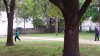
This case in South Carolina is outrageous! It warrants everyone's outrage and disgust. A North Charleston cop shoots a man in the back 8 times while the man is running away. This is police brutality at its worst and vilest! The cop was white and the man black but I Leave they out because we need to strive to see past color and making everything about race when it's not. We will never live up to Martian Luther's dream of we don't stop all of this nonsense racebaiting. The progressive party or the democrats love it it's where they get all they're power pitting us against one another keeping us at each other's throats. We need to wake up And be at their throats their making millions lying to us and kepping us all down.
Mr. Deltoid...I sympathize with you about all this. But race and color has always been an issue of one type or another in all past civilizations. Were not going to fix it. It will work itself out, for the better or worse, one way or the other. And it's very likely the rising police brutality is not just about race and or color.
Mr. Deltoid
New Member
The police are getting more bold everyday. This shit will continue until we change the people at the top.
Wings_of_pain
New Member
Hey I don't know if you are white, but if you are, is it just me or are many white people (I'm not judging) kinda secretly racist but hide it in the professional world? It seems like that, if it is true, tends to bleed into a lot of cops work from all these incidents.The police are getting more bold everyday. This shit will continue until we change the people at the top.
The only thing is that the black cop helped the white cop frame this guy with the taser and all so I don't really know.
Similar threads

- Replies
- 45
- Views
- 3K


