It looks like I am off to fame and fortune with this plan. I just have a few more quick questions. On both days do I still do the warm up sets eg. 135x6, 185x5 and then as outlined above or just stretch out and go for it? On the heavy day how do you determine if it is closer to 5 singles or 10? Do you think a full chest day every third day is too much(one heavy, one light)? I was thinking legs, back, chest(light), arms, shoulders, chest (heavy),off, repeat.
On the subject of technique, I have a hard time understanding how to keep my elbows in to disengage my triceps? I read Brutus' post on bench technique and I am tryin to incorporate it all. I always bench with a flat back and it never moves though out the whole movement. Rotating my scalpular and pinching my shoulder blades seems to have helped, but keeping my elbows more inward seems to activate my tris more. Did I misunderstand something? Next I will work on activating my lats.
Twenty five years ago I had worked up to 315 do to brute strength that is easier achieved by being young. Now if I get there it must be from going it correctly.
Thanks for the help, it is greatly appreciated.
Rocco
1) you want to warm up in such a way that it gets your blood flowing, the required muscles ready to handle the load/working sets, and makes sure you can perform the full ROM. If you're working up to heavy singles you want to conserve energy. If your top set is 315 let's say I would warmup something like this
Bar x 5
135x5
185x2
225x1
255-265x1
And work your top set for the required sets and reps
Don't stretch necessarily. Just warm up and do whatever mobility work you need to to get the full ROM. If you need to do some foam rolling, dynamic stretching, etc do so but don't just static stretch for the hell of it as it will affect your lifting.
2) you can base how many sets to do of singles on several factors:
How fatigued you are, the more fatigued the less sets/less fatigue more sets, whether you're going to do a lot of extra accessory work after or not/lots of accessory work use less sets. You also want the least amount of work that produces the most results. Don't just go crazy on volume bc. Have a reason to.
3) chest every 3rd day might be or might not be too much. Depends on how well you recover, how good you respond to frequency, how your training is structured, etc. Chances are you'll be fine as bench is the least taxing of all the powerlifts. Master powers for example benches to a top daily max 5-6 days a week. He can do so by modulating volume and keeping it low. I'm currently benching 3x a week but with higher volume than Masters. Bc it's higher volume I can't work it as frequently as he does nor do I use the same intensities he uses but it's made up for in volume. You could even make great progress benching once a week and pressing a second day. It's all in blyour ultimate goals and how you want to set up your training.
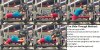
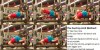
4) you tuck your elbows in closer to your sides so as to engage the triceps more not disengage them. If you have strong tris it can work to your advantage and you want around 45deg between your shoulders and torso. If you have a strong chest it might be better with something not so tucked and more wider angle or flaring more of the elbows. I prefer a middle finger on the ring grip and elbows about 45deg. This also helps my elbow pain. Another thing to consider is that by tucking elbows more and touching lower on your chest you put less stress on your shoulders. If you have bad shoulders it's probably better to tuck your elbows more than a BBer style bench press to save your shoulders.
4) you want a retracted scapula and imagine pinching your shoulder bakers together. This gives you a better base or setup and allows you to stay tighter throughout the movement to lift more weight.
5) to activate the late you'll need to think of bending the bar or imagine you're breaking a pencil. Here's a good read on how to setup from a friend, Joliver
If you are having problems with your bench, it could be a technical issue. It could also be that you aren't strong enough to press the weight, but play my game here....lets assume it is a technical issue.
Technical issues seem to be the toughest to understand for most guys, but it is the easiest fix. You can sit down with a good PL bencher and he will pack pounds onto your bench with his knowledge--no gained strength--just a conversation. So lets talk about it.
Problem number 1: People don't know what it means to set up and get tight. The bench press is a full body lift. If you don't believe it, your opinion doesn't matter because you are a shitty bencher. This isn't bodybuilding and focusing on isolating the "benching muscles" isn't a goal. Back to the full body lift thing. How is it a full body lift? Its called kinetic linking.
What is kinetic linking?
It is when you are tight enough on the bench that power application in a particular direction transfers the force up your rigid frame into the bar that has just touched your chest. Translation: You push with the "dug in" heels of your feet driving your arch up, and your upper back and shoulders into the bench as you press the weight. If you don't have leg drive, or don't use it, you are leaving serious pounds on the table.
How do I get tight?
Well, the simplest way to tell you how to do it is like this: Lie down on the bench and put your feet on it to create a wrestler's bridge (like you see Steelers4life doing to set up). Pull your shoulders back. Your foundation to press should be your upper traps. Arched back (not hyper-arched--back cramp will get you if you do), butt firmly on the bench, and feet firmly on the floor. Nothing should move. There shouldn't be anything loose when you prepare to bench.
Your set up should be uncomfortable. It shouldn't feel good or natural. If you ask me to set up 10 consecutive times for a PR bench, I would be sweating like hell. My coach used to come up to me and knock the hell out of my legs to see if I moved after I was set up.
Problem #2: Your active bench technique is garbage. This is not a bodybuilding movement!!! I am going to lay out a few steps at the for benching that would most likely help anyone. They still help me today.
1) From the start to the finish of the bench, you must squeeze the bar tightly.
2) Do not push up on the bar to take it out of the rack. Use a spotter to carry it out to you, and use your lats to pull it like you would a dumbbell pullover. Never push up. You will blow your set up. You cannot re-set after you break. You may as well put the weight back in the rack.
3) Once the weight is unracked, let it settle for a second in your hand. Eliminate bar inertia--DON'T FIGHT THE BAR'S MOMENTUM ON THE WAY DOWN. If you do, enjoy your shoulders for today...they won't be there tomorrow. Plus, you will be out of your groove, and most likely miss the lift anyway. Let the bar settle.
4) Do not flare your elbows like a bodybuilding press. You aren't trying to build your pecs. Moderately tuck you elbows. How much? I can't tell you that because I don't know the length of your humerus bone.
5) Know where the force is coming from and keep the bar in that line. Your force will be transmitted through the elbow up the forearm into the wrist and hand. Keep the wrist in line with the elbow. Less joint will be cushioning your force transmission (this is the same reason you don't want soft soled shoes in the squat or DL). This takes a lot of practice. I bet I can search videos of the best benchers around and see them violating this rule. They all know it and admit it. If they still fight the tendency to get out of line...you will have to as well. It also protects the wrist once you get into the big weights.
6) Lower the bar with your lats. If you don't know how to do this, there is no way for me to explain it other than telling you to do it. You should always be training your lats in the same plane as your bench anyway, so this should be second nature to you after some practice.
7) Find the point on your torso where you are comfortable bringing the bar to that includes the least shoulder rotation. A good way to test for this position is to decline press. Fill your belly full of air, and press to different touch points. You will ultimately find a point where you are comfortable and have minimal shoulder movement. Try to recreate that position on the flat bench.
8) Once you have received the press command, or you have touched the chest, you will simultaneously fire your pressing muscles with slight external rotation and push your heels into the ground like you are trying to slide your body off the top of the bench. During the press, you must "spread the bar" and as you approach the top of the lift, "break the bar", like a pencil, away from your body.
This is not an all-inclusive bench press lifts. These are just a few best practices that should get you started down the road of PL benching.
As always, if you have any questions, feel free to PM me (or POB about any personal problems--he loves that).