

Myostatin

Chen PR, Lee K. INVITED REVIEW: Inhibitors of myostatin as methods of enhancing muscle growth and development. J Anim Sci 2016;94(8):3125-34. https://dl.sciencesocieties.org/publications/jas/abstracts/94/8/3125

With the increasing demand for affordable, high-quality meat, livestock and poultry producers must continually find ways to maximize muscle growth in their animals without compromising palatability of the meat products.

Muscle mass relies on myoblast proliferation during prenatal or prehatch stages and fiber hypertrophy through protein synthesis and nuclei donation by satellite cells after birth or hatch. Therefore, understanding the cellular and molecular mechanisms of myogenesis and muscle development is of great interest.

Myostatin is a well-known negative regulator of muscle growth and development that inhibits proliferation and differentiation in myogenic cells as well as protein synthesis in existing muscle fibers. In this review, various inhibitors of myostatin activity or signaling are examined that may be used in animal agriculture for enhancing muscle growth.

Myostatin inhibitors are relevant as potential therapies for muscle-wasting diseases and muscle weakness in humans and animals. Currently, there are no commercial myostatin inhibitors for agriculture or biomedical purposes because the safest and most effective option has yet to be identified. Further investigation of myostatin inhibitors and administration strategies may revolutionize animal production and the medical field.
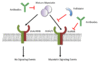
Pages-from-Inhibitors-of-myostatin-as-methods-of-enhancing-muscle-growth-.gif

Myostatin activity is inhibited through several mechanisms.

Follistatin can directly bind to a myostatin dimer and prevent binding to activin receptor IIB (ActRIIB).

Antibodies can either bind to a myostatin dimer to prevent signaling or bind to ActRIIB to act as competitive inhibitors.

The dominant negative mutant of ActRIIB (dnActRIIB) is lacking the cytoplasmic kinase domain; therefore, the myostatin dimer can bind to the receptor but the signaling cascade does not occur.

ALK4/5 = activin receptor-like kinase 4/5.
 

Attachments

[Mice] Exogenous GDF11 Induces Cardiac and Skeletal Muscle Dysfunction And Wasting

Growth differentiation factor 11 (GDF11), a TGF-beta superfamily member, is highly homologous to myostatin and essential for embryonic patterning and organogenesis. Reports of GDF11 effects on adult tissues are conflicting, with some describing anti-aging and pro-regenerative activities on the heart and skeletal muscle while others opposite or no effects.

Herein, we sought to determine the in vivo cardiac and skeletal muscle effects of excess GDF11. Mice were injected with GDF11 secreting cells, an identical model to that used to initially identify the in vivo effects of myostatin.

GDF11 exposure in mice induced whole body wasting and profound loss of function in cardiac and skeletal muscle over a 14-day period. Loss of cardiac mass preceded skeletal muscle loss.

Cardiac histologic and echocardiographic evaluation demonstrated loss of ventricular muscle wall thickness, decreased cardiomyocyte size, and decreased cardiac function 10 days following initiation of GDF11 exposure.

Changes in skeletal muscle after GDF11 exposure were manifest at day 13 and were associated with wasting, decreased fiber size, and reduced strength.

Changes in cardiomyocytes and skeletal muscle fibers were associated with activation of SMAD2, the ubiquitin-proteasome pathway and autophagy.

Thus, GDF11 over administration in vivo results in cardiac and skeletal muscle loss, dysfunction, and death. Here, serum levels of GDF11 by Western blotting were 1.5-fold increased over controls.

Although GDF11 effects in vivo are likely dose, route, and duration dependent, its physiologic changes are similar to myostatin and other Activin receptors ligands. These data support that GDF11, like its other closely related TGF-beta family members, induces loss of cardiac and skeletal muscle mass and function.

Zimmers TA, Jiang Y, Wang M, et al. Exogenous GDF11 induces cardiac and skeletal muscle dysfunction and wasting. Basic Res Cardiol 2017;112(4):48. https://link.springer.com/article/10.1007%2Fs00395-017-0639-9
 
Bhattacharya I, Pawlak S, Marraffino S, et al. Safety, Tolerability, Pharmacokinetics, and Pharmacodynamics of Domagrozumab (PF-06252616), an Antimyostatin Monoclonal Antibody, in Healthy Subjects. Clin Pharmacol Drug Dev. Safety, Tolerability, Pharmacokinetics, and Pharmacodynamics of Domagrozumab (PF-06252616), an Antimyostatin Monoclonal Antibody, in Healthy Subjects - Bhattacharya - 2017 - Clinical Pharmacology in Drug Development - Wiley Online Library

Safety, tolerability, anabolic effects, pharmacokinetics, and pharmacodynamics of single ascending and multiple doses of domagrozumab, an antimyostatin monoclonal antibody, were assessed following intravenous (IV) and subcutaneous (SC) administration in healthy subjects.

A range of single ascending dose levels between 1 and 40 mg/kg IV and multiple doses (3 doses) of 10 mg/kg IV were tested (n = 8 per cohort). Additionally, a 3 mg/kg SC (n = 8) cohort also received domagrozumab. Magnetic resonance imaging and whole-body dual-energy x-ray absorptiometry imaging were conducted to investigate the anabolic effects of domagrozumab.

Domagrozumab was well tolerated with no severe and 1 non-treatment-related serious adverse event. The most commonly reported adverse events were headache (21 subjects) and fatigue, upper respiratory tract infections, and muscle spasms (10 subjects each).

Domagrozumab demonstrated typical IgG1 pharmacokinetics, with slow SC absorption and slow clearance, low volume of distribution, and a long half-life. Target engagement was observed with an increase in extent of myostatin modulation, plateauing at the 20 mg/kg IV dose.

Downstream pharmacology following myostatin binding by domagrozumab was only observed in the 10 mg/kg single IV cohort (increase in whole-body lean mass of 5.38% using dual-energy x-ray absorptiometry) and the 10 mg/kg repeat-dose cohort (muscle volume increase of 4.49% using magnetic resonance imaging).
 
If you want to see someone with a myostatin deficiency look at images of Robert fortsermann´s quads. Yes he's an Olympian so probably on gear but have you ever seen legs that big jfc
 
So , long question short : are there any myostatin inhibitor products on the market already ??? ( black market or pharma ) i did google it but i couldn't find anything that i was expecting .
Yk-11 is supposed to be a steroidal sarm that inhibits mysotatin. No idea if its effects are noticeable though.
 
Maricelli J, Bishaw Y, Wang B, Du M, Rodgers BD. Systemic Smad7 Gene Therapy Increases Striated Muscle Mass and Enhances Exercise Capacity in a Dose-Dependent Manner. Hum Gene Ther. An Error Occurred Setting Your User Cookie

Striated muscle wasting occurs with a variety of disease indications, contributing to mortality and compromising life quality. Recent studies indicate that the recombinant adeno-associated viral (serotype 6) Smad7 gene therapeutic, AVGN7, enhances skeletal and cardiac muscle mass and prevents cancer-induced wasting of both tissues.

This is accomplished by attenuating ActRIIb intracellular signaling and as a result, the physiological actions of myostatin and other ActRIIb ligands. AVGN7 also enhances isolated skeletal muscle twitch force, but is unknown to similarly improve systemic muscle function, especially exercise capacity.

We therefore conducted a 2 month long dose-escalation study using 5x10¹¹, 1x10¹² and 5x10¹² vg/mouse and different tests of systemic muscle function.

Body mass, skeletal muscle mass, heart mass and forelimb grip strength were all increased in a dose-dependent manner as was the fiber cross-sectional area of tibialis anterior muscles. Maximal oxygen consumption (VO2max), a measure of metabolic rate, was similarly enhanced during forced treadmill running and although the total distance traveled was only elevated by the highest dose, all doses reduced the energy expenditure rate compared to control mice injected with an empty vector.

Such improvements in VO2max are consistent with physiological cardiac hypertrophy, which is highly beneficial and a normal adaptive response to exercise. This was particularly evident at the lowest dose tested, which had minimal significant effects on skeletal muscle mass and/or function, but increased heart weight and exercise capacity.

These results together suggest that AVGN7 enhances striated muscle mass and systemic muscle function. They also define minimally effective and optimal doses for future preclinical trials, for toxicology studies and in turn, will aid in establishing dose ranges for clinical trials.


Re: When Will We Have a SAFE & EFFECTIVE Myostatin Inhibitor in the Future?


I disagree. To most, bodybuilding is about pushing the abnormal envelope. So if steroids are good...and an effective (and attainable) myostatin inhibitor is good...then 1+1=3, right? 400lb behemoth bodybuilders here we come!

Doesn't Flex Wheeler claim to have a myostatin defect? :D
Flex wheeler claims a lot of things
 
[OA] Myostatin Inhibitors as Pharmacological Treatment for Muscle Wasting and Muscular Dystrophy

Myostatin, a member of the transforming growth factor beta (TGF-β) superfamily that is highly expressed in skeletal muscle, was first described in 1997. It has been known that loss of myostatin function induces an increase in muscle mass in mice, cow, dogs and humans. Therefore, myostatin and its receptor have emerged as a therapeutic target for loss of skeletal muscle such as sarcopenia and cachexia, as well as muscular dystrophies.

At the molecular level, myostatin binds to and activates the activin receptor IIB (ActRIIB)/Alk 4/5 complex. Therapeutic approaches therefore are being taken both pre-clinically and clinically to inhibit the myostatin signaling pathway. Several myostatin inhibitors, including myostatin antibodies, anti-myostatin peptibody, activin A antibody, soluble (decoy) forms of ActRIIB (ActRⅡB-Fc), anti-myostatin adnectin, ActRⅡB antibody have been tested in the last decade.

The current review covers the present knowledge of several myostatin inhibitors as therapeutic approach for patients with loss of skeletal muscle however, the available information about compounds in development is limited.

Saitoh M, Ishida J, Ebner N, Anker SD, von Haehling S. Myostatin inhibitors as pharmacological treatment for muscle wasting and muscular dystrophy. JCSM Clinical Reports. 2017. Myostatin inhibitors as pharmacological treatment for muscle wasting and muscular dystrophy | Saitoh | JCSM Clinical Reports
 
[OA] Blockade of Activin Type II Receptors with A Dual Anti-ActRIIA/IIB Antibody Is Critical to Promote Maximal Skeletal Muscle Hypertrophy

The TGF-beta family ligands myostatin, GDF11, and activins are negative regulators of skeletal muscle mass, which have been reported to primarily signal via the ActRIIB receptor on skeletal muscle and thereby induce muscle wasting described as cachexia.

Use of a soluble ActRIIB-Fc "trap," to block myostatin pathway signaling in normal or cachectic mice leads to hypertrophy or prevention of muscle loss, perhaps suggesting that the ActRIIB receptor is primarily responsible for muscle growth regulation.

Genetic evidence demonstrates however that both ActRIIB- and ActRIIA-deficient mice display a hypertrophic phenotype.

Here, we describe the mode of action of bimagrumab (BYM338), as a human dual-specific anti-ActRIIA/ActRIIB antibody, at the molecular and cellular levels. As shown by X-ray analysis, bimagrumab binds to both ActRIIA and ActRIIB ligand binding domains in a competitive manner at the critical myostatin/activin binding site, hence preventing signal transduction through either ActRII.

Myostatin and the activins are capable of binding to both ActRIIA and ActRIIB, with different affinities. However, blockade of either single receptor through the use of specific anti-ActRIIA or anti-ActRIIB antibodies achieves only a partial signaling blockade upon myostatin or activin A stimulation, and this leads to only a small increase in muscle mass.

Complete neutralization and maximal anabolic response are achieved only by simultaneous blockade of both receptors.

These findings demonstrate the importance of ActRIIA in addition to ActRIIB in mediating myostatin and activin signaling and highlight the need for blocking both receptors to achieve a strong functional benefit.

Morvan F, Rondeau JM, Zou C, et al. Blockade of activin type II receptors with a dual anti-ActRIIA/IIB antibody is critical to promote maximal skeletal muscle hypertrophy. Proc Natl Acad Sci U S A. Blockade of activin type II receptors with a dual anti-ActRIIA/IIB antibody is critical to promote maximal skeletal muscle hypertrophy
 
I don't get why follistatin isn't the be all and end all of myostatin inhibition. If it binds to the receptors and stops the myostatin from doing so, well then why isn't that problem solved?
 
Novartis’ ‘breakthrough’ muscle drug bimagrumab flunks a late-stage trial | FierceBiotech

Novartis ($NVS) buried some bad pipeline news in its quarterly report today. The pharma giant says that its “breakthrough” drug bimagrumab (BYM338) failed a Phase IIb/III study for a rare, muscle-wasting disease called sporadic inclusion body myositis--putting a drug that has garnered blockbuster peak sales projections under a cloud.


Novartis kept it short and sour, saying that the drug did not hit the primary endpoint. The company plans to evaluate the full data set before it decides on next steps. But for now, it looks like the latest--and biggest--failure in a string of flops in this niche R&D field.

Novartis jumped on board MorphoSys' antibody discovery platform to find BYM338. The treatment reins in myostatin, and investigators have cited its added potential for cachexia, COPD and sarcopenia. Back in the spring of 2014, MorphoSys execs put its peak sales potential at a whopping $4 billion while the FDA has handed out its breakthrough therapy designation alongside its commitment to speed development efforts.

Novartis’ setback for the lead clinical product in the field could be Scholar Rock’s advantage. The Cambridge, MA-based biotech scored a $36 million B round for its new and perhaps improved myostatin blocker, looking to build muscle in patients suffering from muscle atrophy.

Knocking down myostatin, though, could also be potentially dangerous. Peter Ganz at UCSF has also studied myostatin in preclinical studies, recently determining that lower levels of that protein alongside reduced levels of GDF11 were linked to thickening heart muscles and heart failure.

It's also no simple matter to knock down myostatin in order to build muscle to fight wasting, as Atara--an Amgen ($AMGN) spinoff--found out when its clinical candidate PINTA 745 failed a Phase II study for protein energy wasting in patients with end-stage renal disease, forcing the biotech to halt development efforts and switch focus to cancer. Back in 2011, Acceleron ($XLRN) and Shire ($SHPG) also halted clinical work on ACE-031, another myostatin drug with big dreams in fighting muscle wasting, then decided to scrap it altogether in 2013 after running some additional preclinical tests.


"The outcome of the phase 2b/3 study with bimagrumab in sIBM is disappointing,” said MorphoSys CSO Marlies Sproll in a statement. “Nevertheless, ongoing clinical trials, including those in sarcopenia and hip fracture are continuing as planned at this stage.”

- here's the https://www.morphosys.com/media-investors/media-center/morphosys-ag-morphosys-provides-update-on-results-from-partners-phase

This is an older article but was interesting to look at numbers.

mands
 
Novartis’ ‘breakthrough’ muscle drug bimagrumab flunks a late-stage trial | FierceBiotech

Novartis ($NVS) buried some bad pipeline news in its quarterly report today. The pharma giant says that its “breakthrough” drug bimagrumab (BYM338) failed a Phase IIb/III study for a rare, muscle-wasting disease called sporadic inclusion body myositis--putting a drug that has garnered blockbuster peak sales projections under a cloud.


Novartis kept it short and sour, saying that the drug did not hit the primary endpoint. The company plans to evaluate the full data set before it decides on next steps. But for now, it looks like the latest--and biggest--failure in a string of flops in this niche R&D field.

Novartis jumped on board MorphoSys' antibody discovery platform to find BYM338. The treatment reins in myostatin, and investigators have cited its added potential for cachexia, COPD and sarcopenia. Back in the spring of 2014, MorphoSys execs put its peak sales potential at a whopping $4 billion while the FDA has handed out its breakthrough therapy designation alongside its commitment to speed development efforts.

Novartis’ setback for the lead clinical product in the field could be Scholar Rock’s advantage. The Cambridge, MA-based biotech scored a $36 million B round for its new and perhaps improved myostatin blocker, looking to build muscle in patients suffering from muscle atrophy.

Knocking down myostatin, though, could also be potentially dangerous. Peter Ganz at UCSF has also studied myostatin in preclinical studies, recently determining that lower levels of that protein alongside reduced levels of GDF11 were linked to thickening heart muscles and heart failure.

It's also no simple matter to knock down myostatin in order to build muscle to fight wasting, as Atara--an Amgen ($AMGN) spinoff--found out when its clinical candidate PINTA 745 failed a Phase II study for protein energy wasting in patients with end-stage renal disease, forcing the biotech to halt development efforts and switch focus to cancer. Back in 2011, Acceleron ($XLRN) and Shire ($SHPG) also halted clinical work on ACE-031, another myostatin drug with big dreams in fighting muscle wasting, then decided to scrap it altogether in 2013 after running some additional preclinical tests.


"The outcome of the phase 2b/3 study with bimagrumab in sIBM is disappointing,” said MorphoSys CSO Marlies Sproll in a statement. “Nevertheless, ongoing clinical trials, including those in sarcopenia and hip fracture are continuing as planned at this stage.”

- here's the https://www.morphosys.com/media-investors/media-center/morphosys-ag-morphosys-provides-update-on-results-from-partners-phase

This is an older article but was interesting to look at numbers.

mands
Do you know if bimagrumab failed because it didn't lower myostatin,
or because it did lower myostatin, but despite lowered myostatin muscle wasting didn't improve?

I don't get why follistatin isn't the be all and end all of myostatin inhibition. If it binds to the receptors and stops the myostatin from doing so, well then why isn't that problem solved?
Because Follistatin it's proven to lower myostatin and it's natural.
The problem is that Follistatin is too complex a molecule to synthesize so they resort to extract it from recombinant (genetically modified) bacteria = expensive and complex.
I guess that's the reason why they tried "simpler" molecules like bimagrumab.
Also, Follistatin being natural probably makes it unpatentable. So they look for odd alternatives.
 
I don't get why follistatin isn't the be all and end all of myostatin inhibition. If it binds to the receptors and stops the myostatin from doing so, well then why isn't that problem solved?

Novartis’ ‘breakthrough’ muscle drug bimagrumab flunks a late-stage trial | FierceBiotech

Novartis ($NVS) buried some bad pipeline news in its quarterly report today. The pharma giant says that its “breakthrough” drug bimagrumab (BYM338) failed a Phase IIb/III study for a rare, muscle-wasting disease called sporadic inclusion body myositis--putting a drug that has garnered blockbuster peak sales projections under a cloud.


Novartis kept it short and sour, saying that the drug did not hit the primary endpoint. The company plans to evaluate the full data set before it decides on next steps. But for now, it looks like the latest--and biggest--failure in a string of flops in this niche R&D field.

Novartis jumped on board MorphoSys' antibody discovery platform to find BYM338. The treatment reins in myostatin, and investigators have cited its added potential for cachexia, COPD and sarcopenia. Back in the spring of 2014, MorphoSys execs put its peak sales potential at a whopping $4 billion while the FDA has handed out its breakthrough therapy designation alongside its commitment to speed development efforts.

Novartis’ setback for the lead clinical product in the field could be Scholar Rock’s advantage. The Cambridge, MA-based biotech scored a $36 million B round for its new and perhaps improved myostatin blocker, looking to build muscle in patients suffering from muscle atrophy.

Knocking down myostatin, though, could also be potentially dangerous. Peter Ganz at UCSF has also studied myostatin in preclinical studies, recently determining that lower levels of that protein alongside reduced levels of GDF11 were linked to thickening heart muscles and heart failure.

It's also no simple matter to knock down myostatin in order to build muscle to fight wasting, as Atara--an Amgen ($AMGN) spinoff--found out when its clinical candidate PINTA 745 failed a Phase II study for protein energy wasting in patients with end-stage renal disease, forcing the biotech to halt development efforts and switch focus to cancer. Back in 2011, Acceleron ($XLRN) and Shire ($SHPG) also halted clinical work on ACE-031, another myostatin drug with big dreams in fighting muscle wasting, then decided to scrap it altogether in 2013 after running some additional preclinical tests.


"The outcome of the phase 2b/3 study with bimagrumab in sIBM is disappointing,” said MorphoSys CSO Marlies Sproll in a statement. “Nevertheless, ongoing clinical trials, including those in sarcopenia and hip fracture are continuing as planned at this stage.”

- here's the https://www.morphosys.com/media-investors/media-center/morphosys-ag-morphosys-provides-update-on-results-from-partners-phase

This is an older article but was interesting to look at numbers.

mands

I am wary for the success of any of these approaches. A major consideration will be the effect on the heart muscle.
 
[OA] Anti-Myostatin Antibody …

BACKGROUND: The treatments currently approved for Duchenne muscular dystrophy (DMD), a progressive skeletal muscle wasting disease, address the needs of only a small proportion of patients resulting in an urgent need for therapies that benefit all patients regardless of the underlying mutation.

Myostatin is a member of the transforming growth factor-beta (TGF-beta) family of ligands and is a negative regulator of skeletal muscle mass. Loss of myostatin has been shown to increase muscle mass and improve muscle function in both normal and dystrophic mice. Therefore, myostatin blockade via a specific antibody could ameliorate the muscle weakness in DMD patients by increasing skeletal muscle mass and function, thereby reducing patients' functional decline.

METHODS: A murine anti-myostatin antibody, mRK35, and its humanized analog, domagrozumab, were developed and their ability to inhibit several TGB-beta ligands was measured using a cell-based Smad-activity reporter system. Normal and mdx mice were treated with mRK35 to examine the antibody's effect on body weight, lean mass, muscle weights, grip strength, ex vivo force production, and fiber size. The humanized analog (domagrozumab) was tested in non-human primates (NHPs) for changes in skeletal muscle mass and volume as well as target engagement via modulation of circulating myostatin.

RESULTS: Both the murine and human antibodies are specific and potent inhibitors of myostatin and GDF11. mRK35 is able to increase body weight, lean mass, and muscle weights in normal mice. In mdx mice, mRK35 significantly increased body weight, muscle weights, grip strength, and ex vivo force production in the extensor digitorum longus (EDL) muscle. Further, tibialis anterior (TA) fiber size was significantly increased. NHPs treated with domagrozumab demonstrated a dose-dependent increase in lean mass and muscle volume and exhibited increased circulating levels of myostatin demonstrating target engagement.

CONCLUSIONS: We demonstrated that the potent anti-myostatin antibody mRK35 and its clinical analog, domagrozumab, were able to induce muscle anabolic activity in both rodents, including the mdx mouse model of DMD, and non-human primates. A Phase 2, potentially registrational, clinical study with domagrozumab in DMD patients is currently underway.

St Andre M, Johnson M, Bansal PN, et al. A mouse anti-myostatin antibody increases muscle mass and improves muscle strength and contractility in the mdx mouse model of Duchenne muscular dystrophy and its humanized equivalent, domagrozumab (PF-06252616), increases muscle volume in cynomolgus monkeys. Skelet Muscle 2017;7(1):25. A mouse anti-myostatin antibody increases muscle mass and improves muscle strength and contractility in the mdx mouse model of Duchenne muscular dystrophy and its humanized equivalent, domagrozumab (PF-06252616), increases muscle volume in cynomolgus monkeys


Self experimentation has a long history. Scientists have consumed, breathed in, and injected themselves with all manner of substances in the pursuit of scientific understanding. Some have even received Nobel prizes for putting themselves under the microscope. But with the advances in genetic engineering, none have altered their own DNA, in the name of science, until now.

Dr. Josiah Zayner is a biohacker and the founder and CEO of a genetic engineering company, called The Odin which sells biotechnology tools to other biohackers, like himself. "What we try to do is get genetic engineering in the hands of consumers to let them do basically whatever they want with it."

On Oct. 4 at a biotechnology conference in San Francisco, Zayner says he injected himself with CRISPR, the powerful gene editing technology, to biohack the muscle cells in his forearm. "Well it's not necessarily that I want bigger muscles," he says. "The thing is, that this is the first time in history that we are no longer are slaves to our genetics. We no longer have to live with the genetics we had when we were born. Technologies like CRISPR and other genetic modification technologies allow adult humans to modify the cells in their body."

...

The gene Zayner targeted is the myostatin gene. "Now myostatin is a gene in humans and animals that essentially prevents your muscle from growing. So when this myostatin gene isn't functioning, then your muscles grow."


Self experimentation has a long history. Scientists have consumed, breathed in, and injected themselves with all manner of substances in the pursuit of scientific understanding. Some have even received Nobel prizes for putting themselves under the microscope. But with the advances in genetic engineering, none have altered their own DNA, in the name of science, until now.

Dr. Josiah Zayner is a biohacker and the founder and CEO of a genetic engineering company, called The Odin which sells biotechnology tools to other biohackers, like himself. "What we try to do is get genetic engineering in the hands of consumers to let them do basically whatever they want with it."

On Oct. 4 at a biotechnology conference in San Francisco, Zayner says he injected himself with CRISPR, the powerful gene editing technology, to biohack the muscle cells in his forearm. "Well it's not necessarily that I want bigger muscles," he says. "The thing is, that this is the first time in history that we are no longer are slaves to our genetics. We no longer have to live with the genetics we had when we were born. Technologies like CRISPR and other genetic modification technologies allow adult humans to modify the cells in their body."

...

The gene Zayner targeted is the myostatin gene. "Now myostatin is a gene in humans and animals that essentially prevents your muscle from growing. So when this myostatin gene isn't functioning, then your muscles grow."


'If it got into a region that helped control the growth of tumours and it was important to have a healthy copy of the gene, then is it possible that the risk of tumours would increase over a time period?'- Dr. Aneal Khan
 
[OA] [Mice] Effect of Myostatin Deletion on Cardiac and Microvascular Function

The objective of this study is to test the hypothesis that increased muscle mass has positive effects on cardiovascular function. Specifically, we tested the hypothesis that increases in lean body mass caused by deletion of myostatin improves cardiac performance and vascular function.

Echocardiography was used to quantify left ventricular function at baseline and after acute administration of propranolol and isoproterenol to assess beta-adrenergic reactivity. Additionally, resistance vessels in several beds were removed, cannulated, pressurized to 60 mmHg and reactivity to vasoactive stimuli was assessed. Hemodynamics were measured using in vivo radiotelemetry.

Myostatin deletion results in increased fractional shortening at baseline. Additionally, arterioles in the coronary and muscular microcirculations are more sensitive to endothelial-dependent dilation while nonmuscular beds or the aorta were unaffected. beta-adrenergic dilation was increased in both coronary and conduit arteries, suggesting a systemic effect of increased muscle mass on vascular function. Overall hemodynamics and physical characteristics (heart weight and size) remained unchanged.

Myostatin deletion mimics in part the effects of exercise on cardiovascular function. It significantly increases lean muscle mass and results in muscle-specific increases in endothelium-dependent vasodilation. This suggests that increases in muscle mass may serve as a buffer against pathological states that specifically target cardiac function (heart failure), the beta-adrenergic system (age), and nitric oxide bio-availability (atherosclerosis).

Taken together, pharmacological inhibition of the myostatin pathway could prove an excellent mechanism by which the benefits of exercise can be conferred in patients that are unable to exercise.

Butcher JT, Ali MI, Ma MW, et al. Effect of myostatin deletion on cardiac and microvascular function. Physiol Rep 2017;5. http://physreports.physiology.org/content/5/23/e13525
 
Back
Top