Myostatin

[OA] Strategies and Potential Therapeutic Agents to Counter Skeletal Muscle Atrophy

Skeletal muscle atrophy is common in various clinical problems. It increases the risk of complications as well as puts a huge economic burden on patients. Numerous diseases or pathologies are able to render the loss of muscle mass, such as diabetes, sepsis, burn injury, carcinoma.

Long-time cast immobilization caused by bone fracture may induce bedsore and even severe infectious. Indeed, muscle atrophy can occur as either the result of unloading or directly by some particular disease.

Unfortunately, to date there are no effective therapies available for completely recovering the attenuated muscle force. Emerging evidence implicates that molecular mechanism related to proteolysis and protein synthesis may genuinely take control of muscle mass.

Therefore, investigate these molecular pathways may be helpful to develop a novel strategy for muscle mass loss intervention. The purpose of the present review is to concentrate on potential therapeutic strategies and mechanisms involved in muscle atrophy.

Huang Z, Zhu J, Ma W, Sun H. Strategies and potential therapeutic agents to counter skeletal muscle atrophy. Biotarget; May 2018 2018. Strategies and potential therapeutic agents to counter skeletal muscle atrophy - Huang - Biotarget
 
I’m sure many have read the abstract on this paper:

Measurement of myostatin concentrations in human serum: Circulating concentrations in young and older men and effects of testosterone administration. - PubMed - NCBI

It shows myostatin levels are high by week 8 in men given test. But the full paper, which I can’t link because it seems a copy has to be requested?, says the following:


Myostatin levels were significantly higher on day 56 compared to baseline in both young and older men (Fig. 3A). Older men experienced a significantly greater percent increase in myostatin levels than young men (Fig. 3B). The increases in myostatin levels during testosterone therapy were not sustained; thus, serum myostatin levels on day 140 were not significantly different from those at baseline.

So hypothetically if someone were to stay on cycle or blast beyond week 20, does this imply their gains would only be stalled for up to 8 weeks after day 56?
 
Interesting.

I picked up some yk 11. I am going to have it tested first before I use it. Not sure what to expect (besides the bullshit I have read all over the place).
YK-11 is a potent androgen receptor antagonist and will likely bind more strongly that other androgens - using it on cycle would not be advisable. Where it does have a place is on the cruise portion of blasting and cruising. It's oral bioavailability is pretty much unknown and effective dosages are best guesses at this point bit it's certainly a compound I plan to experiment with in the near future.


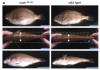
Kishimoto K, Washio Y, Yoshiura Y, et al. Production of a breed of red sea bream Pagrus major with an increase of skeletal muscle muss and reduced body length by genome editing with CRISPR/Cas9. Aquaculture. https://www.sciencedirect.com/science/article/pii/S0044848617324705

Highlights
· Genome editing is a powerful tool for breeding of aquaculture fish, red sea bream (Pagrus major).
· We demonstrate the establishment of a new breed of myostatin complete knockout red sea bream in 2 years.
· Myostatin knockout red sea bream exhibits increase of skeletal muscle, short body length, and small centrum.

Genome editing is a powerful tool as a new breeding technology including for aquaculture because of the high efficiency of gene targeting without the requirement for exogenous gene integration.

CRISPR/Cas9 system, a genome editing tool, has been widely used in various species due to its efficiency and flexibility. We demonstrate the establishment of a new breed of myostatin (Pm-mstn) complete knockout red sea bream (Pagrus major) using CRISPR/Cas9.

This is the first report of the establishment of a new breed in aquaculture marine fish using genome editing.

The mutations were formed by deletions in the first exon of the Pm-mstn, which cause disruption of the C-terminal active domain of MSTN.

The breed exhibited a 16% increase of skeletal muscle, that is, an increase of edible parts.

The breed showed the phenotype of short body length and small centrum, which is not observed in mice and other teleost fish.

We established the homozygous gene disrupted breed in 2 years, which is far shorter than the conventional breeding method.

Our study indicates that genome editing can accelerate the speed of aquaculture fish breeding.


Kishimoto K, Washio Y, Yoshiura Y, et al. Production of a breed of red sea bream Pagrus major with an increase of skeletal muscle muss and reduced body length by genome editing with CRISPR/Cas9. Aquaculture. https://www.sciencedirect.com/science/article/pii/S0044848617324705

Highlights
· Genome editing is a powerful tool for breeding of aquaculture fish, red sea bream (Pagrus major).
· We demonstrate the establishment of a new breed of myostatin complete knockout red sea bream in 2 years.
· Myostatin knockout red sea bream exhibits increase of skeletal muscle, short body length, and small centrum.

Genome editing is a powerful tool as a new breeding technology including for aquaculture because of the high efficiency of gene targeting without the requirement for exogenous gene integration.

CRISPR/Cas9 system, a genome editing tool, has been widely used in various species due to its efficiency and flexibility. We demonstrate the establishment of a new breed of myostatin (Pm-mstn) complete knockout red sea bream (Pagrus major) using CRISPR/Cas9.

This is the first report of the establishment of a new breed in aquaculture marine fish using genome editing.

The mutations were formed by deletions in the first exon of the Pm-mstn, which cause disruption of the C-terminal active domain of MSTN.

The breed exhibited a 16% increase of skeletal muscle, that is, an increase of edible parts.

The breed showed the phenotype of short body length and small centrum, which is not observed in mice and other teleost fish.

We established the homozygous gene disrupted breed in 2 years, which is far shorter than the conventional breeding method.

Our study indicates that genome editing can accelerate the speed of aquaculture fish breeding.

Capture.PNG
 
[OA] Effects of an ActRIIB.Fc Ligand Trap on Cardiac Function in Simian Immunodeficiency Virus-Infected Male Rhesus Macaques

Observations that naturally occurring inactivating mutations of the myostatin gene are associated with increased muscle mass have stimulated substantial pharmaceutical efforts to develop drugs that inhibit myostatin action or signaling through the ActRIIB receptor to treat and prevent the loss of muscle mass and function during aging and chronic illness, such as that associated with HIV infection, chronic obstructive lung disease, injury, or end-stage renal disease. A number of inhibitors of myostatin and activins that block signaling through the ActRIIB receptor are undergoing efficacy trials in humans for these and other indications.

An important safety issue with respect to the long-term therapeutic applications of these drugs is whether these compounds induce myocardial hypertrophy and impair cardiac function.

The aim of this investigation was to determine the effects of an ActRIIB ligand trap, an inhibitor of myostatin, activins, and some other members of the TGF-β superfamily, on measures of myocardial mass and function using a primate model of simian immunodeficiency virus (SIV)-induced weight loss and muscle wasting.

Fourteen pair-housed, juvenile male rhesus macaques were inoculated with SIVmac239; 4 weeks postinoculation, they were treated with weekly injections of 10 mg/kg ActRIIB.Fc or saline for 12 weeks. Myocardial mass and function were evaluated using two-dimensional echocardiography at baseline and after 12 weeks.

The administration of ActRIIB.Fc was associated with a significantly greater increase in thickness of left ventricular posterior wall and interventricular septum both in diastole and systole. Cardiac output and cardiac index increased with time, more in animals treated with ActRIIB.Fc than in those treated with saline, but the difference was not statistically significant. The changes in ejection fraction, fractional shortening, and stroke volume did not differ significantly between groups. The changes in end-diastolic and end-systolic volumes did not differ between groups.

In addition to a large reduction in IGF1 mRNA expression in the ActRIIB.Fc-treated animals, complex changes were detected in the myocardial expression of proteins related to calcium transport and storage.

In conclusion, ActRIIB.Fc administration for 12 weeks was associated with increased myocardial mass but did not adversely affect myocardial function in juvenile SIV-infected rhesus macaques. Further studies are necessary to establish long-term cardiac safety.

Guo W, Pencina KM, Gagliano-Jucá T, et al. Effects of an ActRIIB.Fc Ligand Trap on Cardiac Function in Simian Immunodeficiency Virus-Infected Male Rhesus Macaques. Journal of the Endocrine Society 2018;2:817-31. Effects of an ActRIIB.Fc Ligand Trap on Cardiac Function in Simian Immunodeficiency Virus-Infected Male Rhesus Macaques | Journal of the Endocrine Society | Oxford Academic
 
[OA] Effects of an ActRIIB.Fc Ligand Trap on Cardiac Function in Simian Immunodeficiency Virus-Infected Male Rhesus Macaques

Observations that naturally occurring inactivating mutations of the myostatin gene are associated with increased muscle mass have stimulated substantial pharmaceutical efforts to develop drugs that inhibit myostatin action or signaling through the ActRIIB receptor to treat and prevent the loss of muscle mass and function during aging and chronic illness, such as that associated with HIV infection, chronic obstructive lung disease, injury, or end-stage renal disease. A number of inhibitors of myostatin and activins that block signaling through the ActRIIB receptor are undergoing efficacy trials in humans for these and other indications.

An important safety issue with respect to the long-term therapeutic applications of these drugs is whether these compounds induce myocardial hypertrophy and impair cardiac function.

The aim of this investigation was to determine the effects of an ActRIIB ligand trap, an inhibitor of myostatin, activins, and some other members of the TGF-β superfamily, on measures of myocardial mass and function using a primate model of simian immunodeficiency virus (SIV)-induced weight loss and muscle wasting.

Fourteen pair-housed, juvenile male rhesus macaques were inoculated with SIVmac239; 4 weeks postinoculation, they were treated with weekly injections of 10 mg/kg ActRIIB.Fc or saline for 12 weeks. Myocardial mass and function were evaluated using two-dimensional echocardiography at baseline and after 12 weeks.

The administration of ActRIIB.Fc was associated with a significantly greater increase in thickness of left ventricular posterior wall and interventricular septum both in diastole and systole. Cardiac output and cardiac index increased with time, more in animals treated with ActRIIB.Fc than in those treated with saline, but the difference was not statistically significant. The changes in ejection fraction, fractional shortening, and stroke volume did not differ significantly between groups. The changes in end-diastolic and end-systolic volumes did not differ between groups.

In addition to a large reduction in IGF1 mRNA expression in the ActRIIB.Fc-treated animals, complex changes were detected in the myocardial expression of proteins related to calcium transport and storage.

In conclusion, ActRIIB.Fc administration for 12 weeks was associated with increased myocardial mass but did not adversely affect myocardial function in juvenile SIV-infected rhesus macaques. Further studies are necessary to establish long-term cardiac safety.

Guo W, Pencina KM, Gagliano-Jucá T, et al. Effects of an ActRIIB.Fc Ligand Trap on Cardiac Function in Simian Immunodeficiency Virus-Infected Male Rhesus Macaques. Journal of the Endocrine Society 2018;2:817-31. Effects of an ActRIIB.Fc Ligand Trap on Cardiac Function in Simian Immunodeficiency Virus-Infected Male Rhesus Macaques | Journal of the Endocrine Society | Oxford Academic
"In addition to a large reduction in IGF1 mRNA expression in the ActRIIB.Fc-treated animals, complex changes were detected in the myocardial expression of proteins related to calcium transport and storage."

This portion I would love to see more off. That is the most interesting part.

Too bad they have to use monkey's or dog's or whatever. There is plenty of knuckleheads on here willing to do these trials I am sure. I may be dumb enough.

Good stuff Doc.
Thanks.
 
"In addition to a large reduction in IGF1 mRNA expression in the ActRIIB.Fc-treated animals, complex changes were detected in the myocardial expression of proteins related to calcium transport and storage."

This portion I would love to see more off. That is the most interesting part.

Too bad they have to use monkey's or dog's or whatever. There is plenty of knuckleheads on here willing to do these trials I am sure. I may be dumb enough.

Good stuff Doc.
Thanks.

The cardiac issues are the critical factor for any myostatin/follistatin/etc. treatments.
 
The cardiac issues are the critical factor for any myostatin/follistatin/etc. treatments.


Too bad they have to use monkey's or dog's or whatever. There is plenty of knuckleheads on here willing to do these trials I am sure. I may be dumb enough.

Good stuff Doc.
Thanks.

Unfortunately as a prerequisite to approval researchers are bound by ethical constrains set forth by review boards,

And the hurdles a researcher must overcome increase markedly once humans are involved.

Yep and that includes knuckleheads some of whom are willing to “try” almost anything, or at least that’s what they would like for others to believe.

All that being said clinical trials often follow primate studies such as these.

Jim
 
Lessard SJ, MacDonald TL, Pathak P, et al. JNK regulates muscle remodeling via myostatin/SMAD inhibition. Nat Commun 2018;9:3030. JNK regulates muscle remodeling via myostatin/SMAD inhibition

Skeletal muscle has a remarkable plasticity to adapt and remodel in response to environmental cues, such as physical exercise. Endurance exercise stimulates improvements in muscle oxidative capacity, while resistance exercise induces muscle growth.

Here we show that the c-Jun N-terminal kinase (JNK) is a molecular switch that when active, stimulates muscle fibers to grow, resulting in increased muscle mass. Conversely, when muscle JNK activation is suppressed, an alternative remodeling program is initiated, resulting in smaller, more oxidative muscle fibers, and enhanced aerobic fitness.

When muscle is exposed to mechanical stress, JNK initiates muscle growth via phosphorylation of the transcription factor, SMAD2, at specific linker region residues leading to inhibition of the growth suppressor, myostatin. In human skeletal muscle, this JNK/SMAD signaling axis is activated by resistance exercise, but not endurance exercise.

We conclude that JNK acts as a key mediator of muscle remodeling during exercise via regulation of myostatin/SMAD signaling.
 
Last edited:
Lessard SJ, MacDonald TL, Pathak P, et al. JNK regulates muscle remodeling via myostatin/SMAD inhibition. Nat Commun 2018;9:3030. JNK regulates muscle remodeling via myostatin/SMAD inhibition

Skeletal muscle has a remarkable plasticity to adapt and remodel in response to environmental cues, such as physical exercise. Endurance exercise stimulates improvements in muscle oxidative capacity, while resistance exercise induces muscle growth.

Here we show that the c-Jun N-terminal kinase (JNK) is a molecular switch that when active, stimulates muscle fibers to grow, resulting in increased muscle mass. Conversely, when muscle JNK activation is suppressed, an alternative remodeling program is initiated, resulting in smaller, more oxidative muscle fibers, and enhanced aerobic fitness.

When muscle is exposed to mechanical stress, JNK initiates muscle growth via phosphorylation of the transcription factor, SMAD2, at specific linker region residues leading to inhibition of the growth suppressor, myostatin. In human skeletal muscle, this JNK/SMAD signaling axis is activated by resistance exercise, but not endurance exercise.

We conclude that JNK acts as a key mediator of muscle remodeling during exercise via regulation of myostatin/SMAD signaling.

"Chronic Interference Hypothesis"

To date, JNK has been known as an important regulator of cellular stress and inflammatory responses27. We now identify dual roles for JNK as a positive regulator of muscle hypertrophy and a negative regulator of endurance adaptation in muscle.

Our observation that hypertrophy and endurance adaptations are regulated in opposing directions by JNK is in line with clinical observations that muscle adaptation is blunted when endurance and resistance training are performed concurrently (i.e., within the same exercise session)11. While there are some hypotheses regarding causes underlying interference between endurance and resistance adaptations9,10, the precise molecular mechanisms are incompletely understood.

Our data imply that JNK activation may be one mechanism for interference with concurrent training. When JNK was inappropriately activated with endurance exercise in models of low response to aerobic capacity, endurance adaptations were impaired16. Conversely, when JNK activation was prevented in mJNKKO mice, the mice had a potentiated response to endurance training, but muscle hypertrophy with overload was ablated (Figs. 1 and 2).

Thus, JNK acts as a molecular switch to allow either endurance adaptations when inactive, or growth/hypertrophy adaptations when active. This premise may partly explain the mutual exclusivity of obtaining optimal endurance and strength adaptations.
 
Murlasits Z, Kneffel Z, Thalib L. The physiological effects of concurrent strength and endurance training sequence: A systematic review and meta-analysis. Journal of Sports Sciences 2018;36:1212-9. https://doi.org/10.1080/02640414.2017.1364405

We conducted a systematic literature review and meta-analysis to assess the chronic effects of the sequence of concurrent strength and endurance training on selected important physiological and performance parameters, namely lower body 1 repetition maximum (1RM) and maximal aerobic capacity (VO2max/peak).

Based on predetermined eligibility criteria, chronic effect trials, comparing strength-endurance (SE) with endurance-strength (ES) training sequence in the same session were included. Data on effect sizes, sample size and SD as well other related study characteristics were extracted.

The effect sizes were pooled using, Fixed or Random effect models as per level of heterogeneity between studies and a further sensitivity analyses was carried out using Inverse Variance Heterogeneity (IVHet) models to adjust for potential bias due to heterogeneity.

Lower body 1RM was significantly higher when strength training preceded endurance with a pooled mean change of 3.96 kg (95%CI: 0.81 to 7.10 kg). However, the training sequence had no impact on aerobic capacity with a pooled mean difference of 0.39 ml.kg.min−1 (95%CI: −1.03 to 1.81 ml.kg.min−1).

Sequencing strength training prior to endurance in concurrent training appears to be beneficial for lower body strength adaptations, while the improvement of aerobic capacity is not affected by training order.
 
The Myostatin Gene: An Overview of Mechanisms of Action and Its Relevance to Livestock Animals

Myostatin, also known as growth differentiation factor 8, a member of the transforming growth factor‐beta super‐family, is a negative regulator of muscle development. Myostatin acts at key points during pre‐ and post‐natal life of amniotes that ultimately determine the overall muscle mass of an animal.

Mutations have already demonstrated the impact of attenuating myostatin activity on muscle development. A number of large animals, including cattle, sheep, dogs and humans, display the ‘double muscled’ phenotype due to mutations in the myostatin gene.

Here, we firstly give an overview of the molecular pathways regulated by myostatin that control muscle development. Then we describe the natural mutations and their associated phenotypes as well as the physiological influence of altering myostatin expression in livestock animals (cattle, sheep, goat, horse, pig, rabbit and chicken).

Knowledge of null alleles and polymorphisms in the myostatin gene are of great interest in the animal breeding field, and it could be utilized to improve meat production in livestock animals.

Aiello D, Patel K, Lasagna E. The myostatin gene: an overview of mechanisms of action and its relevance to livestock animals. Animal Genetics 2018;0. https://doi.org/10.1111/age.12696
 

Attachments

Hoogaars WMH, Jaspers RT. Past, Present, and Future Perspective of Targeting Myostatin and Related Signaling Pathways to Counteract Muscle Atrophy. Advances in experimental medicine and biology 2018;1088:153-206. Past, Present, and Future Perspective of Targeting Myostatin and Related Signaling Pathways to Counteract Muscle Atrophy

Myostatin was identified more than 20 years ago as a negative regulator of muscle mass in mice and cattle. Since then, a wealth of studies have uncovered the potential involvement of myostatin in muscle atrophy and sparked interest in myostatin as a promising therapeutic target to counteract decline of muscle mass in patients afflicted with different muscle-wasting conditions. Insight in the molecular mechanism of myostatin signaling and regulation of myostatin activity has resulted in the identification of specific treatments to inhibit myostatin signaling and related signaling pathways.

Currently, several treatments that target myostatin and related proteins have been evaluated in preclinical animal models of muscle wasting, and some potential therapies have progressed to clinical trials. However, studies also revealed potential downsides of myostatin targeting in skeletal muscle and other tissues, which raises the question if myostatin is indeed a valuable target to counteract muscle atrophy.

In this review we provide an updated overview of the molecular mechanisms of myostatin signaling, the preclinical evidence supporting a role for myostatin and related proteins in muscle atrophy, and the potential issues that arise when targeting myostatin. In addition, we evaluate the current clinical status of different treatments aimed at inhibiting myostatin and discuss future perspectives of targeting myostatin to counteract muscle atrophy.
 

Attachments

Soon ... Gene Editing Myostatin ...


Second International Summit on Human Genome Editing

George Q. Daley,* M.D., Ph.D., is dean of the Faculty of Medicine and Caroline Shields Walker Professor of Medicine, Harvard Medical School. Daley trained in internal medicine at Massachusetts General Hospital, where he served as chief resident, and completed a clinical fellowship in hematology/oncology at Brigham and Women’s Hospital, Dana Farber Cancer Institute, and Boston Children’s Hospital. He was a founding executive committee member of the Harvard Stem Cell Institute, served as president of the International Society for Stem Cell Research (ISSCR, 2007-2008), and anchored the special task forces that produced the ISSCR Guidelines for Stem Cell Research and Clinical Translation (2006, 2008, 2016). As a graduate student with David Baltimore, Daley created the mouse model that proved the BCR/ABL oncogene causes human chronic myeloid leukemia (CML), work that validated BCR/ABL as a target for drug blockade and helped motivate the development of Gleevec®, a revolutionary magic-bullet chemotherapy that induces remissions in virtually every CML patient. Daley’s laboratory studies blood development from embryonic and induced pluripotent stem cells, with the goal of translating insights in stem cell biology into cellular therapies for degenerative, malignant, and genetic blood diseases. http://www.nationalacademies.org/hk/bios.html#Daley
 
Effect of Testosterone on FGF2, MRF4 and Myostatin in Hypogonadotropic Hypogonadism: Relevance to Muscle Growth

Context - Basic Fibroblast growth factor (FGF2) is an important stimulatory modulator of satellite cells in the skeletal muscle, which play a cardinal role in muscle growth and repair.

Objective - We evaluated whether the skeletal muscle expression of FGF2 and muscle growth and differentiation factors are reduced in patients with hypogonadotropic hypogonadism (HH), and whether testosterone replacement therapy results in their restoration.

Design - This is a secondary analysis of a previously completed trial of testosterone replacement in men with type 2 diabetes and HH.

Setting - Clinical Research Center at University

Patients - Twenty-two men with HH and 20 eugonadal men were compared at baseline.

Interventions - Twelve men with HH were treated with intramuscular injections of 200mg testosterone every 2 weeks for 22 weeks, while 10 men received placebo injections. Quadriceps muscle biopsies and blood samples were obtained prior to and after testosterone therapy.

Outcome Measures and Results - The expression of FGF2 and FGFR2 in skeletal muscle of HH men was significantly lower than that in eugonadal men by 57% and 39%, respectively (p<0.05). Following 22 weeks of testosterone, the expression of FGF2 increased, while that of MRF4 and myostatin decreased significantly. There was no change in expression of FGFR2, myogenin and MyoD in the skeletal muscle. Plasma FGF2 and IGF-1 concentrations increased following TRT.

Conclusions - These data show for the first time that testosterone is a major modulator of FGF2, MRF4 and myostatin expression in skeletal muscle. These effects may contribute to the increase in muscle mass following testosterone therapy.

Ghanim H, Dhindsa S, Batra M, et al. Effect of testosterone on FGF2, MRF4 and myostatin in hypogonadotropic hypogonadism: relevance to muscle growth. The Journal of Clinical Endocrinology & Metabolism 2019:jc.2018-01832-jc.2018-. https://academic.oup.com/jcem/advance-article-abstract/doi/10.1210/jc.2018-01832/5280416
 
Last edited:
I’m sure many have read the abstract on this paper:

Measurement of myostatin concentrations in human serum: Circulating concentrations in young and older men and effects of testosterone administration. - PubMed - NCBI

It shows myostatin levels are high by week 8 in men given test. But the full paper, which I can’t link because it seems a copy has to be requested?, says the following:


Myostatin levels were significantly higher on day 56 compared to baseline in both young and older men (Fig. 3A). Older men experienced a significantly greater percent increase in myostatin levels than young men (Fig. 3B). The increases in myostatin levels during testosterone therapy were not sustained; thus, serum myostatin levels on day 140 were not significantly different from those at baseline.

So hypothetically if someone were to stay on cycle or blast beyond week 20, does this imply their gains would only be stalled for up to 8 weeks after day 56?
Consensus on this?
 
Back
Top