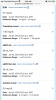
thanks for the response! I appreciate it. I’m 40, pretty lean for 250 lbs, never cycled anything more than TRT dosages. I’m going to go meet with my dr and take your advice and retest my blood. From your knowledge do you contribute anything to the TRT or is it the other factors? My test levels have been in range for years and I don’t want to lower my dosage unless it’s a must.
It is very unlikely that 200mg/wk would affect your kidneys. There are some AAS users that stop because of kidney problems but it can be genetics as well as whatever else they have been doing. Your TRT is not even remotely close to what many AAS users take.
You may wish to take your yearly blood tests and put it in a spreadsheet. That may show patterns.
You have an older picture with similar bodyweight
1 month body fat cut If you are similar to that now, you are neither fat or lean. This isn't to be impertinent but rather how your doc will view things. The relevance is that eGFR is a very crappy, inaccurate test. It is just a crude marker for docs to look at. Skinny, malnourished people will show incorrectly high eGFR whereas lean, athletic, muscular people will show incorrectly low. One member in his 20's always had readings like your current one. When they did an inulin clearance test, the real GFR was more than double.
You could ask your doctor for that. Another test if you are in USA is a kidney stone test [ LabCorp's Litholink]. It is just a 24 hour urine and blood test sent to Chicago. Besides stones it shows all the stuff the kidneys are processing which indicates real function. GFR is more about blood flow through the kidney rather than what it is accomplishing. You may find with high protein you are passing a lot of calcium oxalate. Stones are one thing because they are treatable. However one can have calcium oxalate crystals which causes irreversible damage.
Now there is no point panicking. Rather direct the doctor to the test if he isn't thinking about it. That is where his attention should be rather than TRT.
If you do the test, eat and exercise exactly as you have doing. Your goal is to see what has been going on, not to see how good one can make a test look. Then with more accurate info, you can decide what to do next, mainly less protein (dietary protein forms oxalate and higher BUN and Creatinine).
Hopefully this is helpful