
MESO-Rx
Anabolic Steroids

Navigation
Install the app
How to install the app on iOS
Follow along with the video below to see how to install our site as a web app on your home screen.
Note: This feature may not be available in some browsers.
More options
Style variation
Guest viewing is limited
- You have a limited number of page views remaining
- 5 guest views remaining
- Register now to remove this limitation
- Already a member? Click here to login
You are using an out of date browser. It may not display this or other websites correctly.
You should upgrade or use an alternative browser.
You should upgrade or use an alternative browser.
Giant Semaglutide Thread (and other GLP-1 / GIP agonists)
- Thread starter Doodle
- Start date

anon55
Member
I see that like a statin. 5mg works great and 40% of LDL-C is down, 40mg it's 60%... Increasing the dose will not do really anything more.The fact that Novo is trying to get 7.2mg semaglutide approved makes me think that loss of effectiveness is becoming a bigger problem. If homeostasis were the whole story, 7.2mg would be starvation/death.
As someone that had sleeve gastrectomy which absolutely tanks your ghrelin levels and destroys appetite and satiety, I can confidently say that the body has a sneaky way of trying to force ghrelin levels back to what they were. I went from having post it note reminders about eating, to using absolutely every ounce of will power fighting thoughts about snacking.But that's exactly what I report, the appetite suppression it's not forever unless you keep increasing the dosage but at some point the max dosage is reached and you will get accustomed to it.
My wife couldn't eat shit at 2.5mg now she can easily even so she can't binge anymore, increased at 5mg appetite suppression increased again and now it's fading away all the other benefits are there tho and that's what matters.
She is weighting even a bit more then when she started using a GLP-1 since she is bulking so if it was mathematically like said she should have massive appetite suppression but she hasn't.
Maybe this effect works different for fit ppl using it for different reasons then weight loss..
If we were having immunogenic response and losing effectiveness we would see it in our blood glucose control and other benefits would disappear but they are not.
Probably if you keep pushing yourself to eat the body react and if you are not obese let you push the envelope? I don't know. I'm just reporting first hand how it is for ppl around me that are not the typical GLP-1 users and are more like the one around here
Food noise has a way of returning. Eventually I doubt drugs will completely eliminate it. As it is now, I use 10mg Tirz and it works. I still have food noise and all, but the early satiety part is still in check. Many Times food-noise returns with a bang and folk feel that means the GLP-1 has stopped working.
No GLP-1 has been able to remove 'food-noise' for me. All I do is tell myself: "you don't need to eat that", or I drink water, and make sure to avoid grazing. Grazing is one easy way to beat bariatric surgery and GLP-1 activity per weight loss. Metabolism wise, that's another kettle of fish. You have some folks with type 2 diabetes showing marked improvement in their metabolic health yet they aren't losing weight like everyone else on mounjaro is.

99.9% true in my opinion.The fact that Novo is trying to get 7.2mg semaglutide approved makes me think that loss of effectiveness is becoming a bigger problem. If homeostasis were the whole story, 7.2mg would be starvation/death.
Exactly! You can't remove something that's needed for your body to survive and thanks god we can't remove it.As someone that had sleeve gastrectomy which absolutely tanks your ghrelin levels and destroys appetite and satiety, I can confidently say that the body has a sneaky way of trying to force ghrelin levels back to what they were. I went from having post it note reminders about eating, to using absolutely every ounce of will power fighting thoughts about snacking.
Food noise has a way of returning. Eventually I doubt drugs will completely eliminate it. As it is now, I use 10mg Tirz and it works. I still have food noise and all, but the early satiety part is still in check. Many Times food-noise returns with a bang and folk feel that means the GLP-1 has stopped working.
No GLP-1 has been able to remove 'food-noise' for me. All I do is tell myself: "you don't need to eat that", or I drink water, and make sure to avoid grazing. Grazing is one easy way to beat bariatric surgery and GLP-1 activity per weight loss. Metabolism wise, that's another kettle of fish. You have some folks with type 2 diabetes showing marked improvement in their metabolic health yet they aren't losing weight like everyone else on mounjaro is.
The body get a shock at first and that's what happened with me when I first tried sema or tirz. i just forgot of food. I kept doing stuff and just didn't think of eating almost at all..wasn't hungry either and felt full in two bites. 3 months later on sema i was at 1mg eating one full pizza, fried chips and ice-cream on my regular cheat meal xD
But I had a thousand of good benefit even so I could now eat like a pig again if I wanted....thing I didn't want to.
What GLP1 gave me during their use was something we all should learn well, moderation.
I don't want to stop eating or don't want to crave great good food..I want to be moderate when I indulge myself.
I learned it before going on glp1 but glp1 force the lesson on you no matter what and it's great


Ghoul
Member
99.9% true in my opinion.
More likely looking for a simple way to achieve the higher average weight loss of their main competitor, Tirz, which failed.
Or a major conspiracy to hide the "secret loss of efficacy" absolutely no clinician has noticed in one of the most closely studied drugs, with nearly every specialty from oncologists to rheumatologists and neurologists, and their respective medical associations studying it.
17,000 participants, weight loss maintained, using the maintenance dose, for the 4 year period of the study.

Semaglutide: 4-Year Weight Loss and Cardiovascular Benefits - EASO
Two important studies based on the largest and longest clinical trial of the effects of semaglutide on weight in over 17,000 adults with overweight and obesity but not diabetes find patients lost on average 10% of their body weight and over 7cm from their waistline after 4 years. Clinically...
 easo.org
How would this "semaglutide loses effectiveness over time" and weight returning go unnoticed with millions of users and all the eyes of the medical establishment focused on it?
You guys notice it starts to stop working in a matter of weeks, 17,000 don't see it in years, staying on the same does for 90% of that time, never exceeding 2.4mg?
Think there may be some "there's no weight homeostasis mechanism, fatties simply lack the willpower I possess and they don't" bias.
Last edited:
Why weight returning? If it gives you some brain magic in being able to resist your urge why ppl should go back to gain weight at maintenance dose.More likely looking for a simple way to achieve the higher average weight loss of their main competitor, Tirz, which failed.
Or a major conspiracy to hide the "secret loss of efficacy" absolutely no clinician has noticed in one of the most closely studied drugs, with nearly every specialty from oncologists to rheumatologists and neurologists, and their respective medical associations studying it.
17,000 participants, weight loss maintained, using the maintenance dose, for the 4 year period of the study.
Semaglutide: 4-Year Weight Loss and Cardiovascular Benefits - EASO
Two important studies based on the largest and longest clinical trial of the effects of semaglutide on weight in over 17,000 adults with overweight and obesity but not diabetes find patients lost on average 10% of their body weight and over 7cm from their waistline after 4 years. Clinically...
How would this "semaglutide loses effectiveness over time" and weight returning go unnoticed with millions of users and all the eyes of the medical establishment focused on it?
You guys notice it starts to stop working in a matter of weeks, 17,000 don't see it in years, staying on the same does for 90% of that time, never exceeding 2.4mg?
Think there may be some "there's no weight homeostasis mechanism, fatties simply lack the willpower I possess and they don't" bias.
I have noticed most of the obese ppl when they start losing they get a new drive into them that they wanna keep losing and so they become slowly better at resisting their urges helped by the GLP1
When the hunger goes back it's still a different one, you are able to say no if you want and that's what I believe keeps ppl on track for the most part.
Well I have no scientific explanation what I know is, no matter how much I increased the dosage with time the appetite suppression was gone and my weight was the same or higher.
It's not for loss of effectiveness. If you look at the difference in weight loss between 1.7mg and 2.4 mg it's more remarkable than the weight loss difference between 10mg and 15mg Tirz or 8mg and 12mg reta (these are averages of course) which is why there will most likely be no Reta 16mg Trial or Tirz 30 trial. doesn't make financial sense for them.The fact that Novo is trying to get 7.2mg semaglutide approved makes me think that loss of effectiveness is becoming a bigger problem. If homeostasis were the whole story, 7.2mg would be starvation/death.
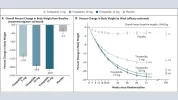
Tirz 10 vs 15: 21.4% vs 22.5% loss body weight after 72 weeks
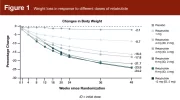
Reta 8 vs 12: 23.9 vs 24.2% loss body weight after 48 weeks
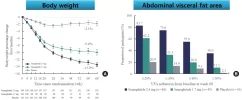
Sema 1.7 vs 2.4: 9.6 vs 13.2% weight loss after 60 weeks.
Sema looked as if it was worthy of investigating. Sales volume might be why they chose 7.2mg

Attachments

I might be using terminology too rigidly, but "wearing off" and the shape of the dose-response curve are two very different concepts. I will explain using NSAIDs, which almost everyone has some experience with.
One is the dose-response curve of the compound. These are almost always non-linear, usually sigmoidal. The reported levels of subjective pain relief and objective measure of inflammatory markers is the same with ibuprofen at 400 mg and 800 mg (usually 2 vs 4 tablets). The only difference is that 800 mg provides the same effect longer.
The idea of tolerance to a (previously effective) dose involves a different mechanism -- often the upregulation of degradation enzymes in response to some amount of organizational damage or a signaling response. Some NSAIDs, like ketorolac (Toradol in the US), celecoxib (Celebrex in the US), and naproxen (Aleve in the US) will cause tolerance, presumably because of interaction with the part of the brain that is involved in pain processing, the periaqueductal gray. Alarmingly, naproxen is widely available OTC and has been potentially reported to cause increased pain response at cessation, which is one reasons opiates are a motherfucker.
I have to cop to not following the exchange past this page, so maybe I'm clarifying something that isn't material here.
One is the dose-response curve of the compound. These are almost always non-linear, usually sigmoidal. The reported levels of subjective pain relief and objective measure of inflammatory markers is the same with ibuprofen at 400 mg and 800 mg (usually 2 vs 4 tablets). The only difference is that 800 mg provides the same effect longer.
The idea of tolerance to a (previously effective) dose involves a different mechanism -- often the upregulation of degradation enzymes in response to some amount of organizational damage or a signaling response. Some NSAIDs, like ketorolac (Toradol in the US), celecoxib (Celebrex in the US), and naproxen (Aleve in the US) will cause tolerance, presumably because of interaction with the part of the brain that is involved in pain processing, the periaqueductal gray. Alarmingly, naproxen is widely available OTC and has been potentially reported to cause increased pain response at cessation, which is one reasons opiates are a motherfucker.
I have to cop to not following the exchange past this page, so maybe I'm clarifying something that isn't material here.
egruberman
Member
I see that like a statin. 5mg works great and 40% of LDL-C is down, 40mg it's 60%... Increasing the dose will not do really anything more.
@psauce already addressed this, but not directly. Statins have a dose response curve that yields a fixed efficacy over time. There are certainly diminishing returns. I think the issue with GLP-1 RAs is that the response diminishes in some, for reasons not entirely well known.
And since I'm in the GLP-1 thread. I got a dexa scan the other day and the technician said it was the lowest VAT number she's ever seen.
It's slightly different. These glp1 drugs were initially manufactured as diabetes meds. To this end, there haven't been study outcomes that show a decreased glucose metabolism effect after time. However there has been animal studies that show a reduction in weight loss effects, in regard to thijgsblike gastric motility and appetite suppression, indicating that there's more to those things than receptor agonism.I might be using terminology too rigidly, but "wearing off" and the shape of the dose-response curve are two very different concepts. I will explain using NSAIDs, which almost everyone has some experience with.
One is the dose-response curve of the compound. These are almost always non-linear, usually sigmoidal. The reported levels of subjective pain relief and objective measure of inflammatory markers is the same with ibuprofen at 400 mg and 800 mg (usually 2 vs 4 tablets). The only difference is that 800 mg provides the same effect longer.
The idea of tolerance to a (previously effective) dose involves a different mechanism -- often the upregulation of degradation enzymes in response to some amount of organizational damage or a signaling response. Some NSAIDs, like ketorolac (Toradol in the US), celecoxib (Celebrex in the US), and naproxen (Aleve in the US) will cause tolerance, presumably because of interaction with the part of the brain that is involved in pain processing, the periaqueductal gray. Alarmingly, naproxen is widely available OTC and has been potentially reported to cause increased pain response at cessation, which is one reasons opiates are a motherfucker.
I have to cop to not following the exchange past this page, so maybe I'm clarifying something that isn't material here.
And this is what I keep telling, the drugs works wonder for what it was invented. Unlike Viagra xDIt's slightly different. These glp1 drugs were initially manufactured as diabetes meds. To this end, there haven't been study outcomes that show a decreased glucose metabolism effect after time. However there has been animal studies that show a reduction in weight loss effects, in regard to thijgsblike gastric motility and appetite suppression, indicating that there's more to those things than receptor agonism.

I've been looking at the A1C reduction tables of Sema and Tirz and it got me thinking; it appears at first that the reduction in blood sugar is dose-dependent, but is it not possible that the higher reduction is only a result of MORE weight loss? Since more weight is lost at every dose increase...
That's why you need to take with a grain of salt some those studies or at least put it in perspective, I believe there are a few that are focused only on diabetes patients that were not obese or overweight.. but I could be wrong.I've been looking at the A1C reduction tables of Sema and Tirz and it got me thinking; it appears at first that the reduction in blood sugar is dose-dependent, but is it not possible that the higher reduction is only a result of MORE weight loss? Since more weight is lost at every dose increase...
Its Not too skewed tho because if you check Reta, It has the highest weight loss of the three but for glucose control is average and not good as much as Tirzepatide.
It's a bit complicated I guess to extrapolate what is doing what but the general consensus is that you get great benefit from any of these glp-1 xD
For example on my experience Semaglutide at 1mg had fantastic blood glucose control, a diabetic friend report Tirzepatide af 5mg having worse BG control for him. Don't know if at 10mg it would be better ( probably yes ).
If you go only by the numbers reported tirzepatide is superior Vs Semaglutide in any aspect.
Hard to say
Online there are many anecdotal experiences of people who are on pahrma Ozempic or Mounjaro who overtime say the appetite suppression has faded.
I don't think it's because you build a tolerance to the drug, even if the appetite suppresion goes away the glucose control stays, so you are still sensitive to the drug.
I think it's because the body wants to restore your weight/bodyfat.
Studies show that 70-90% of people who loose weight trough diet and excercise eventually regain the weight (even if it is months or years later).
I belive in the "setpoint theory", basically the body has a bf/weight setpoint and it doesn't want to stray to far away from it for a long period of time.
I myself can attest to this. I lost weight naturally many times troughout the years. Every time I would loose weight and once I would reach the maintenance phase my hunger would start to get higher and higher over the months, until I'd regain the weight after 6months-1year of being lean.
Only thing I noticed is that as I gain more muscle my bodyfat setpoint naturally lowers, not by much but it does lower.
When I had less muscle my "comfortable state" was probably like 35% bf, now it's maybe closer to 26-28%.
I cannot attribute this to anabolics since I haven't used any yet.
Also I haven't found excercise to be a significant component, since if I excercise more my appetite just gets higher and my NEAT lowers. Same for diet, I tried IF, carnivore, high volume eating. I always end up eating a similar amount of calories.
I don't think it's because you build a tolerance to the drug, even if the appetite suppresion goes away the glucose control stays, so you are still sensitive to the drug.
I think it's because the body wants to restore your weight/bodyfat.
Studies show that 70-90% of people who loose weight trough diet and excercise eventually regain the weight (even if it is months or years later).
I belive in the "setpoint theory", basically the body has a bf/weight setpoint and it doesn't want to stray to far away from it for a long period of time.
I myself can attest to this. I lost weight naturally many times troughout the years. Every time I would loose weight and once I would reach the maintenance phase my hunger would start to get higher and higher over the months, until I'd regain the weight after 6months-1year of being lean.
Only thing I noticed is that as I gain more muscle my bodyfat setpoint naturally lowers, not by much but it does lower.
When I had less muscle my "comfortable state" was probably like 35% bf, now it's maybe closer to 26-28%.
I cannot attribute this to anabolics since I haven't used any yet.
Also I haven't found excercise to be a significant component, since if I excercise more my appetite just gets higher and my NEAT lowers. Same for diet, I tried IF, carnivore, high volume eating. I always end up eating a similar amount of calories.
I'm starting a lean mass phase soon and I'll be utilizing 2.5mg Tirz (at least that's the plan) throughout to see how it affects BG alongside 8iu GH; will report back or maybe start a log then.That's why you need to take with a grain of salt some those studies or at least put it in perspective, I believe there are a few that are focused only on diabetes patients that were not obese or overweight.. but I could be wrong.
Its Not too skewed tho because if you check Reta, It has the highest weight loss of the three but for glucose control is average and not good as much as Tirzepatide.
It's a bit complicated I guess to extrapolate what is doing what but the general consensus is that you get great benefit from any of these glp-1 xD
For example on my experience Semaglutide at 1mg had fantastic blood glucose control, a diabetic friend report Tirzepatide af 5mg having worse BG control for him. Don't know if at 10mg it would be better ( probably yes ).
If you go only by the numbers reported tirzepatide is superior Vs Semaglutide in any aspect.
Hard to say
People with Type II diabetes lose less weight, but have better control for Glucose and Fatty liver. It works even in people that have way less significant weight-loss.I've been looking at the A1C reduction tables of Sema and Tirz and it got me thinking; it appears at first that the reduction in blood sugar is dose-dependent, but is it not possible that the higher reduction is only a result of MORE weight loss? Since more weight is lost at every dose increase...

BrunoES
Member
From what I have read (and I may be wrong), people who lost weight with the GLP-1's, even though they feel the appetite coming back, they maintained their weight if they kept using their maintenance dose.Online there are many anecdotal experiences of people who are on pahrma Ozempic or Mounjaro who overtime say the appetite suppression has faded.
I don't think it's because you build a tolerance to the drug, even if the appetite suppresion goes away the glucose control stays, so you are still sensitive to the drug.
I think it's because the body wants to restore your weight/bodyfat.
Studies show that 70-90% of people who loose weight trough diet and excercise eventually regain the weight (even if it is months or years later).
I belive in the "setpoint theory", basically the body has a bf/weight setpoint and it doesn't want to stray to far away from it for a long period of time.
I myself can attest to this. I lost weight naturally many times troughout the years. Every time I would loose weight and once I would reach the maintenance phase my hunger would start to get higher and higher over the months, until I'd regain the weight after 6months-1year of being lean.
Only thing I noticed is that as I gain more muscle my bodyfat setpoint naturally lowers, not by much but it does lower.
When I had less muscle my "comfortable state" was probably like 35% bf, now it's maybe closer to 26-28%.
I cannot attribute this to anabolics since I haven't used any yet.
Also I haven't found excercise to be a significant component, since if I excercise more my appetite just gets higher and my NEAT lowers. Same for diet, I tried IF, carnivore, high volume eating. I always end up eating a similar amount of calories.
egruberman
Member
I'm starting a lean mass phase soon and I'll be utilizing 2.5mg Tirz (at least that's the plan) throughout to see how it affects BG alongside 8iu GH; will report back or maybe start a log then.
I’m just finishing a “bulk” in which I stayed on low dose tirzepatide for the duration. FWIW, I have zero struggles gaining weight, so I wasn’t worried about appetite suppression.
In 20 weeks I gained 2lbs of fat and ~23lbs of lean tissue according to the dexa scan. I consider those to be satisfactory results.
Note: while I consider dexa to be reasonably precise, the above is difficult to accept. I imagine ~10lbs of that lean mass is muscle glycogen and water. Regardless, that’s still exceeds my expectations.
What I was responding to was people using the terminology for tolerance and dose-response curves interchangeably. I'm not confused about the properties of the compound.It's slightly different. These glp1 drugs were initially manufactured as diabetes meds. To this end, there haven't been study outcomes that show a decreased glucose metabolism effect after time. However there has been animal studies that show a reduction in weight loss effects, in regard to thijgsblike gastric motility and appetite suppression, indicating that there's more to those things than receptor agonism.
This is impressive, thanks for sharing. Do you mind sharing more of your experience? What was your Tirz dosage? How was your BG and at how may calories on average? Were you on a medium/high dosage of HGH? 20 weeks is a long time; enough for BG to creep up some.I’m just finishing a “bulk” in which I stayed on low dose tirzepatide for the duration. FWIW, I have zero struggles gaining weight, so I wasn’t worried about appetite suppression.
In 20 weeks I gained 2lbs of fat and ~23lbs of lean tissue according to the dexa scan. I consider those to be satisfactory results.
Note: while I consider dexa to be reasonably precise, the above is difficult to accept. I imagine ~10lbs of that lean mass is muscle glycogen and water. Regardless, that’s still exceeds my expectations.
Similar threads


- Replies
- 8
- Views
- 379

- Replies
- 10
- Views
- 97
- Question
- Replies
- 7
- Views
- 513

- Replies
- 7
- Views
- 603
A


