Yes aggregate preventing. excipients can diminish starting purity. There's a paper I shared earlier that provided a lot of insight into a pharma company development team going through all sorts of excipients to find the right balance of initial damage and the amount of aggregation that develops later under expected real world conditions for their hgh product.
I'll try to dig that up (
@readalot )
QSC only used mannitol. That could provide deceptively high purity tests versus competitors using other excipients, like PH buffers. which may be much less aggregated after a few days of reconstitution, keeping a higher proportion
of the hgh active.
On the other hand, another paper I can't seem to find, compared numerous pharma hgh formulations and the reported side effects sent to the FDA "post marketing surveillance" system.
They didn't mention this, but I noticed the simplest formations, excipients only for ph control, usually single dose vials intended for immediate use after reconstitution, had the lowest rate of reported side effects,
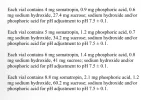
For instance:
Serostim
View attachment 317454
vs Norditropin in multi dose pens, with a preservative (histadine) to prevent protein breakdown during lypholizaton, Polyaxmer 188, which protects the hgh from physical damage like shocks that cause aggregation, and phenol, another anti-aggregation excipient, preventing oxidation.
Obviously they chose those ingredients because they decided they were necessary to keep the hgh in good shape during storage and handling, but it certainly costs some amount of purity (that info isn't usually made public, FDA keeps it confidential as a trade secret. It's blacked out in public documents).
It's all these unknowns that makes me think the best practice is to use the smallest dose vials practical, as quickly as possible after reconstitution, thus minimizing the one factor in common to all aggregation development, time.