Blood Pressure

Do you have any comorbidities like kidney or heart problems?

What got you on hctz?
No issues with heart other than lipids (total 154, tri 72, HDL 31, VLDL 14, Tot Chol/HDL Ratio 5, ApoB 96). These numbers were before I started Nexlizet (bempedoic acid180 & ezetimibe10) and just very recently pitavastatin 2mg.
I understand the lipids are really not good and I can't seem to improve my HDL even with high polyphenol olive oil, avocados etc. I'm hoping to work down the LDL, especially the ApoB with these meds. I think that will improve the ratio which I believe is what is used to predict MACE. Also I'm 50yrs old so I wish I would have gotten to this sooner.

Kidney and liver I want to say are good. ALT is 28 but AST was 55 recently while on some compounds. AST has been in the mid 20s before. GGT is 9.
(not really sure what else to be looking at for kidney health)

I got on hctz because I pushed my Dr to give me the Telm40 with the hctz in it because while on 8 weeks of elevated compounds, my BP was in the 140s/90s.
 
No issues with heart other than lipids (total 154, tri 72, HDL 31, VLDL 14, Tot Chol/HDL Ratio 5, ApoB 96). These numbers were before I started Nexlizet (bempedoic acid180 & ezetimibe10) and just very recently pitavastatin 2mg.
I understand the lipids are really not good and I can't seem to improve my HDL even with high polyphenol olive oil, avocados etc. I'm hoping to work down the LDL, especially the ApoB with these meds. I think that will improve the ratio which I believe is what is used to predict MACE. Also I'm 50yrs old so I wish I would have gotten to this sooner.

Kidney and liver I want to say are good. ALT is 28 but AST was 55 recently while on some compounds. AST has been in the mid 20s before. GGT is 9.
(not really sure what else to be looking at for kidney health)

I got on hctz because I pushed my Dr to give me the Telm40 with the hctz in it because while on 8 weeks of elevated compounds, my BP was in the 140s/90s.

Since you're not using HCTZ for any reason other than BP reduction, and it's by far the worst for long term health of the three, if it were me I'd eliminate it.

Here you can see there's a slight boost in typical BP reduction range by dropping HCTZ and increasing Ciln to 20.

Regimen. Reduction of SBP/DBP

40 Telm/12.5 HCTZ/5 Ciln 20–24 / 12–15

40 Telm/ 20 Ciln 22–25/ 13–16

After a month if you need more, you can increase Telm to 80. The fact is any risk from max dosages of both is very small, and far less than HCTZ, so eliminating that would be my priority.
 
Theoretically, if I took amlo then slammed some ephedrine, it would cause massive edema and fuck me up?

Like everything with BP meds. things move slowly. Occasional ephedrine use with amlodipine won't cause edema to develop, but regular use will. Not only does it constrict capillaries even tighter. and raise blood pressure, regular use increases blood volume worsening the problem further.
 
Since you're not using HCTZ for any reason other than BP reduction, and it's by far the worst for long term health of the three, if it were me I'd eliminate it.

Here you can see there's a slight boost in typical BP reduction range by dropping HCTZ and increasing Ciln to 20.

Regimen. Reduction of SBP/DBP

40 Telm/12.5 HCTZ/5 Ciln 20–24 / 12–15

40 Telm/ 20 Ciln 22–25/ 13–16

After a month if you need more, you can increase Telm to 80. The fact is any risk from max dosages of both is very small, and far less than HCTZ, so eliminating that would be my priority.
Good thing I already have some pre-emptively bought Telm20 and Telm40 from India (you sparked the idea a while back, thanks yet again!). I'll stop the Telm40 with HCTZ and switch to the straight Telm40 and up the Ciln.

Not to derail the BP info here, but based on my lipids above should I use the Pita 2mg for now then jump up to the 4mg if I need further reduction based on bloodwork say a month from now? Or do you have an idea of possible impact of the 2mg Pita variance?
I'm assuming I need to drastically reduce LDL/ApoB to (hopefully) reverse any buildup.
 
Good thing I already have some pre-emptively bought Telm20 and Telm40 from India (you sparked the idea a while back, thanks yet again!). I'll stop the Telm40 with HCTZ and switch to the straight Telm40 and up the Ciln.

Not to derail the BP info here, but based on my lipids above should I use the Pita 2mg for now then jump up to the 4mg if I need further reduction based on bloodwork say a month from now? Or do you have an idea of possible impact of the 2mg Pita variance?
I'm assuming I need to drastically reduce LDL/ApoB to (hopefully) reverse any buildup.

So instead of getting into the weeds I've decided to simplify my position on lipids, as this applies to 98%.

Focus on LDL-C, and everything else will fall into place*

Get LDL-C below 60 to stop plaque accumulation. This applies to everyone, from 18-108, regardless of other factors.

Get LDL-C below 55 for plaque regression. The lower you go, the faster and deeper regression of soft plaques will be.

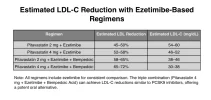
With your numbers, here are the expected results with your options:

IMG_2105.webp

There is NO lower limit for LDL where benefits stop. By giving healthy people PCSK9 inhibitors, getting to single digits, even zero LDL-C has been demonstrated in very large scale trials over 8+ years (and ongoing) to have no negative effects, a reduction in cardiovascular conditions, and a reduction in all cause mortality.

* (except Lp(a), which can't be treated yet, but you should measure it in preparation for upcoming treatments as it's proven to be a major risk factor, completely independent from LDL and entirely genetic).
 
Last edited:
So instead of getting into the weeds I've decided to simplify my position on lipids, as this applies to 98%.

Focus on LDL-C, and everything else will fall into place*

Get LDL-C below 60 to stop plaque accumulation. This applies to everyone, from 18-108, regardless of other factors.

Get LDL-C below 55 for plaque regression. The lower you go, the faster and deeper regression of soft plaques will be.

With your numbers, here are the expected results with your options:

View attachment 339980

There is NO lower limit for LDL where benefits stop. By giving healthy people PCSK9 inhibitors, getting to single digits, even zero LDL-C has been demonstrated in very large scale trials over 8+ years (and ongoing) to have no negative effects, a reduction in cardiovascular conditions, and a reduction in all cause mortality.

* (except Lp(a), which can't be treated yet, but you should measure it in preparation for upcoming treatments as it's proven to be a major risk factor, completely independent from LDL and entirely genetic).
Luckily for that, the LpA one there bunch of promising drugs in development, 4-6 i believe in Phase 2 and 3 Trials
 
So instead of getting into the weeds I've decided to simplify my position on lipids, as this applies to 98%.

Focus on LDL-C, and everything else will fall into place*

Get LDL-C below 60 to stop plaque accumulation. This applies to everyone, from 18-108, regardless of other factors.

Get LDL-C below 55 for plaque regression. The lower you go, the faster and deeper regression of soft plaques will be.

With your numbers, here are the expected results with your options:

View attachment 339980

There is NO lower limit for LDL where benefits stop. By giving healthy people PCSK9 inhibitors, getting to single digits, even zero LDL-C has been demonstrated in very large scale trials over 8+ years (and ongoing) to have no negative effects, a reduction in cardiovascular conditions, and a reduction in all cause mortality.

* (except Lp(a), which can't be treated yet, but you should measure it in preparation for upcoming treatments as it's proven to be a major risk factor, completely independent from LDL and entirely genetic).
Thankfully my Lp(a) or little a, is <8.4 so at least I have something genetically going for me haha.

Once again I sincerely appreciate the help with harm reduction!!
 
Luckily for that, the LpA one there bunch of promising drugs in development, 4-6 i believe in Phase 2 and 3 Trials

If I could, I'd be in one of the trials. The meds are straightforward, very effective, no danger signals, and there's already strong evidence risks drop significantly by lowering Lp(a).

It seems Lp(a) puts smaller vessels that get less attention at greatest risk. IE, in your legs. More a concern for quality of life than outright death, but still.

What a time to be alive. We have the tools and solid evidence we need to avoid the worst outcomes those not too long ago were helpless against. The extinction of heart disease is in sight.

This is the news service I use to stay on top of developments in medicine, consider signing up (for free, I think you might have to pretend you're a healthcare provider).

 
Luckily for that, the LpA one there bunch of promising drugs in development, 4-6 i believe in Phase 2 and 3 Trials

I think only a small subset of people will benefit from it tho. It'll be extremely expensive and require prior authorization as well. My lp(a) is also very low, single digits thankfully. PSCK9s in general, also lower lp(a).

I'm still waiting for oral psck9s.

And.. i guess too low might not be the best either.
How do i get access to the raw data? I want to see the % of people with high baseline lp(a).

1754682916931.webp
 
Last edited:
I think only a small subset of people will benefit from it tho. It'll be extremely expensive and require prior authorization as well. My lp(a) is also very low, single digits thankfully. PSCK9s in general, also lower lp(a).

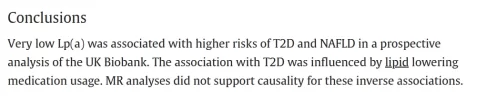
Looks like 1 in 5 people have high lp(a).
20%. Much higher than i expected.

1754683142973.webp
 
Looks like 1 in 5 people have high lp(a).
20%. Much higher than i expected.

View attachment 339990
I bet it’s higher than that. No Doctor has ever checked mine. I was not even aware of its importance until joining this forum. Mine is also low <8.4. But I only know because I pay to have it checked.
 
If I could, I'd be in one of the trials. The meds are straightforward, very effective, no danger signals, and there's already strong evidence risks drop significantly by lowering Lp(a).

It seems Lp(a) puts smaller vessels that get less attention at greatest risk. IE, in your legs. More a concern for quality of life than outright death, but still.

What a time to be alive. We have the tools and solid evidence we need to avoid the worst outcomes those not too long ago were helpless against. The extinction of heart disease is in sight.

This is the news service I use to stay on top of developments in medicine, consider signing up (for free, I think you might have to pretend you're a healthcare provider).

Thanks for sharing that link. It's great how you can subscribe/alert to only the subjects that are important to you.
 
Thanks for sharing that link. It's great how you can subscribe/alert to only the subjects that are important to you.

I have subs for Cardiology and Endocrinology. Those are enough to keep my inbox full of news on daily basis.

They occasionally offer "Continuing education" via a series a videos on the latest treatment protocols for BP or lipids. I wish my doctors were passionate enough about these topics to follow this kind of thing, because it seems the they're years behind the latest evidence based standards.

One of those seminars convinced me to have my Lp(A) tested a while ago. The first at my GPs practice in fact.
 
I bet it’s higher than that. No Doctor has ever checked mine. I was not even aware of its importance until joining this forum. Mine is also low <8.4. But I only know because I pay to have it checked.

I reckon so too.
Apo(B) and lp(a) is generally not covered by insurance.
Thus doctor's won't test, and most have no clue what they are either..
They probably have a hard enough time convincing people to take statins lol

I wish my doctors were passionate enough about these topics to follow this kind of thing, because it seems the they're years behind the latest evidence based standards.

In their defense, i think most just don't have the time to follow up with these advancements, especially those who do not run their own direct no-insurance practice. Shit moves really quick.
 

To be clear, it's not genuinely a "cure", since it doesn't permanently fix it, but it did eliminate all symptoms for me. BP wasn't ideal and have to take something for it anyway, so it worked out perfectly.

Affected a couple of toes on each foot for me. Started about 10 years ago.

After the first month at 10mg I noticed symptoms seemed much better, but I wasn't certain. By the end of the 2nd month it was obvious things were improved immensely. Only the slightest cold induced symptoms.

A month after I increased to 20mg it was over. No symptoms whatsoever.

Full disclosure, I'm also using daily low dose tadalafil, which Ciln is combined with in the Reynauds treatment trial.


(besides the pumps, LD tadalafil a great longevity drug that lowers all cause mortality, and especially the risk of heart attack or stroke. It's even FDA approved for this purpose. Sides are minor, if any, minor nose congestion is most common, and resolve within a month for the vast majority).

Spy pic of dangerous investigational drug Cilnidipine, kept safely away from the public in a secure lab in Boston, MA.

View attachment 339708
I wonder if I should try this medication instead of the amlodipine. Just to see. Amlodipine was supposed to also help with the raynauds but didn’t do shit. And cialis I swear only dilates blood vessels to my face and dick lmao. Shit makes me red AF lol. This week I have 5 fasted cardio days in at 30 to 35 min. Going to keep that up for another week and see how much it helps my bp. I would imagine I need atleast 8-12 weeks to see a good change. Also started 10 min walk after every meal.
 
I wonder if I should try this medication instead of the amlodipine. Just to see. Amlodipine was supposed to also help with the raynauds but didn’t do shit. And cialis I swear only dilates blood vessels to my face and dick lmao. Shit makes me red AF lol. This week I have 5 fasted cardio days in at 30 to 35 min. Going to keep that up for another week and see how much it helps my bp. I would imagine I need atleast 8-12 weeks to see a good change. Also started 10 min walk after every meal.

I'll make it short and sweet.

I was on Amlodipine for a decade and it didn't help AT ALL.

Cilnidipine made all the difference in the world. At this point the thought of losing access to it gives me a little anxiety tbh.

You know how much those "minor" symptoms can really bring down your quality of life.
 
I'll make it short and sweet.

I was on Amlodipine for a decade and it didn't help AT ALL.

Cilnidipine made all the difference in the world. At this point the thought of losing access to it gives me a little anxiety tbh.

You know how much those "minor" symptoms can really bring down your quality of life.
Bro. I have to work outdoors sometimes too. It really sucks man. Thank you. I’m going to check it out.
 
Bro. I have to work outdoors sometimes too. It really sucks man. Thank you. I’m going to check it out.

The slightest cold hitting my toes could trigger it. It was low grade torture, and no one has an answer. I went to top medical specialists, and my conclusion is they see Raynaud's as an annoyance, but not a serious condition. 20% of US adults are thought to have it, but 80%+ are undiagnosed.

Also, remember to give it a month or so to take full effect.
 
Ciln's reduction is also easier to fine tune, with just a little more reduction with each additional 5mg, vs going from 40 to 80 telm that can easily overshoot your target.
I know you don't have a crystal ball (or maybe you fucking do...lol)

But what would you put the odds at that Cilnidipine will be available in the USA in the next 3-5 years (which Im guessing the only hope of that happening being if the Tadalafil-Cilnidipine protocol ends up being a success?)

I'm planning to stock up on a few years worth...and who knows what the world will look like by 2030...but just wondering if there is any rationale reason to hope for a US version (of course off label for BP so that may just be another impossible regulatory hurdle).
 
I know you don't have a crystal ball (or maybe you fucking do...lol)

But what would you put the odds at that Cilnidipine will be available in the USA in the next 3-5 years (which Im guessing the only hope of that happening being if the Tadalafil-Cilnidipine protocol ends up being a success?)

I'm planning to stock up on a few years worth...and who knows what the world will look like by 2030...but just wondering if there is any rationale reason to hope for a US version (of course off label for BP so that may just be another impossible regulatory hurdle).
He mentioned this before so I just looked it up. Likely to be approved off-label for systemic sclerosis.

“In September 2024, the U.S. Food & Drug Administration (FDA) granted orphan drug designation to AISA-021 (cilnidipine), a fourth-generation calcium channel antagonist with an increased selectivity for the N-type calcium channel.1 This designation is for the agent’s development as a treatment for systemic sclerosis (SSc).”
 
Back
Top