Sigma Audley Inc. - Your source for peptides, ancillaries, AAS, and more!

So does anybody know the best way to send Bitcoin I used to just cash up but then that didn't work so I had to switch to Exodus and I would fund my account with cash app but now cash app close my account because I was using Exodus
That’s odd. That’s exactly how I do it. And Cashapp just raised my transfer limits for btc to crazy high amounts. Like 100K/week.
 
will say, after about 5 clear vials of the 36iu gh, I just reconstituted one with the noted "floaters" / fiber looking things. Does seem to be a very common occurrence..
 
will say, after about 5 clear vials of the 36iu gh, I just reconstituted one with the noted "floaters" / fiber looking things. Does seem to be a very common occurrence..
Ask jano if he can analyze graphene oxide (the toxin in covid vaccines). seen alot of contaminated stuff like insulin n dental anastetics contain it as well
 
will say, after about 5 clear vials of the 36iu gh, I just reconstituted one with the noted "floaters" / fiber looking things. Does seem to be a very common occurrence..
Got two kits of those 36 IU from them and praying there is no jizz strands in it. Did you use phone light or black light to see it? Or was it just obvious with naked eye?

People need to buy a black light. You might be scared of the stuff you see. Even with filters, I'm not running a vial of anything with floaters.

That's just personal preference though. Some guys here apparently will pin stuff even with floaters which is WILD to me.
 
Last edited:
Got two kits of those 36 IU from them and praying there is no jizz strands in it. Did you use phone light or black light to see it? Or was it just obvious with naked eye?

People need to buy a black light. You might be scared of the stuff you see. Even with filters, I'm not running a vial of anything with floaters.

That's just personal preference though. Some guys here apparently will pin stuff even with floaters which is WILD to me.
If I pay for it, I'm pinning it.
 
Got two kits of those 36 IU from them and praying there is no jizz strands in it. Did you use phone light or black light to see it? Or was it just obvious with naked eye?

People need to buy a black light. You might be scared of the stuff you see. Even with filters, I'm not running a vial of anything with floaters.

That's just personal preference though. Some guys here apparently will pin stuff even with floaters which is WILD to me.
The phone light in a dark room is enough, these are pretty obvious.
 
Some people just don't want to deal with customs.
I figured it was simple but just wanted to know, I often debate the topic internally.
Faster shipping. Often a lot faster. No customs issues. Sometimes the price is a lot more, and stock can be an issue for sure and you often have to be fast. That being said, SA's markup for domestic is extremely fair.
Makes sense, ive been very lucky with my international orders in general. I have been debating for some time international vs domestic on the hgh. Those group buys are killer its kept me stocked 4 now.
Thanks for taking time to answer seemingly such a basic question. I would rather ask a "dumb" question then assume anything.
 
Got two kits of those 36 IU from them and praying there is no jizz strands in it. Did you use phone light or black light to see it? Or was it just obvious with naked eye?

People need to buy a black light. You might be scared of the stuff you see. Even with filters, I'm not running a vial of anything with floaters.

That's just personal preference though. Some guys here apparently will pin stuff even with floaters which is WILD to me.

There are almost certainly aggregates like that in every UGL rHGH, they're just below the visible range, and are potentially much more dangerous than the large, visibile ones.

As much as no one want to see "trash" in any vial, it's important to realize you can't see the vast majority of that stuff. Clear is no assurance of anything.

I've had 1ml of "clear" peptide solution completely clog a 13mm filter before getting 1/3 of the liquid through, which is insane. The peptides are hundreds of times smaller than the filter pores, so the quantity of trash it takes to clog a filter like that has to be enormous.

Filter it all to be safe. (and to keep these compounds at maximum effectiveness).
 
There are almost certainly aggregates like that in every UGL rHGH, they're just below the visible range, and are potentially much more dangerous than the large, visibile ones.

As much as no one want to see "trash" in any vial, it's important to realize you can't see the vast majority of that stuff. Clear is no assurance of anything.

I've had 1ml of "clear" peptide solution completely clog a 13mm filter before getting 1/3 of the liquid through, which is insane. The peptides are hundreds of times smaller than the filter pores, so the quantity of trash it takes to clog a filter like that has to be enormous.

Filter it all to be safe. (and to keep these compounds at maximum effectiveness).

Have u ever considered getting it tested, what the crap that's in your filters are? You can get Jano to reconstitute then GCMS a pre and post filtered vial.
 
Have u ever considered getting it tested, what the crap that's in your filters are? You can get Jano to reconstitute then GCMS a pre and post filtered vial.

I'm certain it's aggregates, which is primarily a function of the excipients (or lack thereof) creating an environment that encourages aggregation.

The 30+ varieties of pharma rHGH are all using the same molecule. 99% of their work is ensuring it stays stable via the formulation.

Unfortunately excipients just aren't a focus of our community.

We could make a lot of progress by starting with one simple cheap test that doesn't even require a lab. Check the PH of the reconstituted solution on a PH strip.

I'll bet if we gather that data, we'll see a clear correlation between visible aggregates and PH.

All that's needed is someone to develop a standardized protocol, so we're all using the same test strip (from Amazon), put a drop on, and wait the same amount of time.

@readalot

That would be a start to figuring out whose formulations are getting it right.

PH is THE most critical element to peptide stability. The wrong PH can cause near instant degradation, and more over time.

 
There are almost certainly aggregates like that in every UGL rHGH, they're just below the visible range, and are potentially much more dangerous than the large, visibile ones.

As much as no one want to see "trash" in any vial, it's important to realize you can't see the vast majority of that stuff. Clear is no assurance of anything.

I've had 1ml of "clear" peptide solution completely clog a 13mm filter before getting 1/3 of the liquid through, which is insane. The peptides are hundreds of times smaller than the filter pores, so the quantity of trash it takes to clog a filter like that has to be enormous.

Filter it all to be safe. (and to keep these compounds at maximum effectiveness).
I feel like the strands that people see are only visible right after reconstitution. That's at least what I notice with all brands. Those strands seem to have dissapeared the next day. I'm thinking they are something else because wouldn't they be visible as well after a while? Could it have something to do with the excipients?
 
I'm certain it's aggregates, which is primarily a function of the excipients (or lack thereof) creating an environment that encourages aggregation.

The 30+ varieties of pharma rHGH are all using the same molecule. 99% of their work is ensuring it stays stable via the formulation.

Unfortunately excipients just aren't a focus of our community.

We could make a lot of progress by starting with one simple cheap test that doesn't even require a lab. Check the PH of the reconstituted solution on a PH strip.

I'll bet if we gather that data, we'll see a clear correlation between visible aggregates and PH.

All that's needed is someone to develop a standardized protocol, so we're all using the same test strip (from Amazon), put a drop on, and wait the same amount of time.

@readalot

That would be a start to figuring out whose formulations are getting it right.

PH is THE most critical element to peptide stability. The wrong PH can cause near instant degradation, and more over time.


The issue with excipients is that its almost impossible to get any info on. Even Jano won't share what he considers as excipient for each peptide, when performing his testing.

The reconstituted solution of PH will largely depend on the water being used? No? Hospira's pH ranges from 4.5 to 7.0 depending on batch. A large amount of "issues" faced by people, might be simply due to the pH of the batch they have, and the quality of the water (fake, amazon etc)

Have u ever filtered pharma peptides and just to see if the filter clogs?
 
I feel like the strands that people see are only visible right after reconstitution. That's at least what I notice with all brands. Those strands seem to have dissapeared the next day. I'm thinking they are something else because wouldn't they be visible as well after a while? Could it have something to do with the excipients?

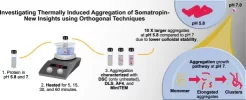
So the two types of aggregation that can occur are "growth", where peptides bump into each other and adhere into a "snowball" kind of structure, growing larger over time.

The other type of aggregation is spontaneous, where certain conditions will cause a certain size and shape to form almost immediately. with no intermediate "growth".

The latter is what I think the strings are, and most commonly the result of the PH being too acidic or base.

What may happen is the PH changes a little as the solution sits, just enough for the conditions to no longer support the spontaneous large string aggregates and they fall apart, "disaggregate" back into solution. On the other hand, the change in PH may just result in smaller, sub visible aggregates, not breaking the strings down back into rHGH monomers.

Ideal PH would prevent aggregation almost entirely.

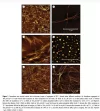
You can see the impact of PH on types of aggregates formation here using GLP-1 as an example peptide (cloudy particles vs strings):

IMG_9794.webp

And the impact on rHGH. The researchers were able to reproduce conditions creating "strings" by adjusting PH:

IMG_9088.webp
 
Last edited:
So the two types of aggregation that can occur are "growth", where peptides bump into each other and adhere into a "snowball" kind of structure, growing larger over time.

The other type of aggregation is spontaneous, where certain conditions will cause a certain size and shape to form almost immediately. with no intermediate "growth".

The latter is what I think the strings are, and most commonly the result of the PH being too acidic or base.

What may happen is the PH changes a little as the solution sits, just enough for the conditions to no longer support the spontaneous large string aggregates and they fall apart, "disaggregate" back into solution. On the other hand, the change in PH may just result in smaller, sub visible aggregates, not breaking the strings down back into rHGH monomers.

Ideal PH would prevent aggregation almost entirely.

You can see the impact of PH on types of aggregates formation here using GLP-1 as an example peptide (cloudy particles vs strings):

View attachment 340220

If you want to be anal about pH values, then Hospira definitely won't cut it.

Take Pharma Tirz for instance.
pH is 6.5-7.5

Pharma Sema.
pH 7.4

Serostim
pH of 7.4 to 8.5

Hospira's pH ranges from 4.5 to 7.0 depending on batch.
 
The issue with excipients is that its almost impossible to get any info on. Even Jano won't share what he considers as excipient for each peptide, when performing his testing.

The reconstituted solution of PH will largely depend on the water being used? No? Hospira's pH ranges from 4.5 to 7.0 depending on batch. A large amount of "issues" faced by people, might be simply due to the pH of the batch they have, and the quality of the water (fake, amazon etc)

Have u ever filtered pharma peptides and just to see if the filter clogs?

Initially yes the BAC PH dominates. But very quickly it changes by interactions with the lyophilized powder and (believe it or not) the glass walls of the vials. Thats why "buffers" are used in pharma excipient formulations. To stop the PH from changing from whatever it's supposed to be.

I haven't filtered pharma peptides (all mine come in pens), but having read countless FDA documents I'm confident they don't have this problem. After efficacy and safety of the drug, you could say preventing aggregation is the major focus of regulators and pharma companies when it comes
to protein drugs.

Also, with the correct excipients, including buffers, the variation in Hospira PH won't matter, as the excipients will compensate for it, and the end result will be the correct PH. That's what buffers do, pull the solution back toward the correct PH when it changes.
 
Initially yes the BAC PH dominates. But very quickly it changes by interactions with the lyophilized powder and (believe it or not) the glass walls of the vials. Thats why "buffers" are used in pharma excipient formulations. To stop the PH from changing from whatever it's supposed to be.

I haven't filtered pharma peptides (all mine come in pens), but having read countless FDA documents I'm confident they don't have this problem. After efficacy and safety of the drug, you could say preventing aggregation is the major focus of regulators and pharma companies when it comes
to protein drugs.

Also, with the correct excipients, including buffers, the variation in Hospira PH won't matter, as the excipients will compensate for it, and the end result will be the correct PH. That's what buffers do, pull the solution back toward the correct PH when it changes.

Then the appropriate reconstitution solution would probably be a PBS buffer with BA. BA by itself, is pretty acidic. I don't remember my Hospira pH but i know it was pretty close to 6.
 
Then the appropriate reconstitution solution would probably be a PBS buffer with BA. BA by itself, is pretty acidic. I don't remember my Hospira pH but i know it was pretty close to 6.
cant remember if im correct but im pretty sure i remember i read somewhere hospira ba is 5.7 ph average
 
Back
Top