Transferring oils for long term storage

One is in vacuum and the other isn't. Being in vacuum prevents oxidation. Certain compounds like tren, gso, eo are more prone to oxidation.

I assume you got the ultra spec ones for sterile not evacuated? Normal alk vials do not have PTFE or flurotec stoppers.
What would be the proper way to fill a evacuated/vacuum sealed vial? Just let the vaccum pull in the contents of a syringe of the compound? I feel like I'm forgetting something simple and will feel like an idiot when it's pointed out to me.


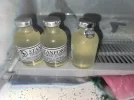
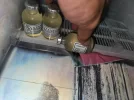
Here's 108ml, 36ml per vial, (2+ years of 500mg a week usage) of Stan's MCT test E 250mg/ml in 30cc ALK Flurotec vials in a normal freezer, ready for long term storage. After a day in the freezer at -8° Fahrenheit, the oil has become like gel, but still moves very slowly if tipped. I don't think I see any signs of crashing?
20250825_011513.webp
20250825_011439.webp

20250825_011443.webp

20250825_012122.webp

I'm not planning on using a low temp/cryo freezer for any oils as none of the stopper materials seem to be rated for temps that low, and the seals would likely fail. Besides, that's probably overkill. I plan to freeze drostanolone propionate, trenbolone acetate, nandrolone decanoate, methenolone enanthate, and Sustanon 250. Depending on my plans for the next several years, I may end up freezing some less common compounds like Methyltrienolone, YK-11 (injectable), TNE, and Superdrol.

'll keep updating the thread as I go along. I was thinking about taking some stuff out of the freezer at intervals of time, and sending some of it to Jano along with oil from the same batch that was stored at room temp, and see how much loss of potency is seen in both samples. A year would be a minimum, and possibly a waste of time, so perhaps starting at 2 years. I'm open to suggestions on this, so feel free to make recommendations.
 
The info provided is solid by photon. I have the ultra spec and ALK. ALK are butyl stoppers. The ultra spec have ptfe coated chlorobutyl stoppers. The ALK made in USA. Ultra spec are China. Either are great. Enjoy.
Have you found a good source for evacuated vials with coated stoppers? I'm thinking I should use them for stand Tren as it's not only Tren, but also in GSO as that's all that was available at the time. Can't seem to find both evacuated and coated stoppers in one product.
 
Have you found a good source for evacuated vials with coated stoppers? I'm thinking I should use them for stand Tren as it's not only Tren, but also in GSO as that's all that was available at the time. Can't seem to find both evacuated and coated stoppers in one product.
Only place I found wanted a min 100K order
 
Only place I found wanted a min 100K order
Yeah, I think I saw that site too. Group buy? lol

I wonder how effective it is to pull out air after filling the vials. I've started using a 20cc syringe for that part, so you figure with a nearly completely filled to the stopper with oil vial, removing 20+cc's of air has to create some level of vacuum and remove a good portion of the oxygen in there. Better than not doing it, at least.
 
What would be the proper way to fill a evacuated/vacuum sealed vial? Just let the vaccum pull in the contents of a syringe of the compound? I feel like I'm forgetting something simple and will feel like an idiot when it's pointed out to me.


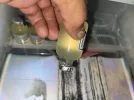
Here's 108ml, 36ml per vial, (2+ years of 500mg a week usage) of Stan's MCT test E 250mg/ml in 30cc ALK Flurotec vials in a normal freezer, ready for long term storage. After a day in the freezer at -8° Fahrenheit, the oil has become like gel, but still moves very slowly if tipped. I don't think I see any signs of crashing?
View attachment 343119
View attachment 343120

View attachment 343121

View attachment 343122

I'm not planning on using a low temp/cryo freezer for any oils as none of the stopper materials seem to be rated for temps that low, and the seals would likely fail. Besides, that's probably overkill. I plan to freeze drostanolone propionate, trenbolone acetate, nandrolone decanoate, methenolone enanthate, and Sustanon 250. Depending on my plans for the next several years, I may end up freezing some less common compounds like Methyltrienolone, YK-11 (injectable), TNE, and Superdrol.

'll keep updating the thread as I go along. I was thinking about taking some stuff out of the freezer at intervals of time, and sending some of it to Jano along with oil from the same batch that was stored at room temp, and see how much loss of potency is seen in both samples. A year would be a minimum, and possibly a waste of time, so perhaps starting at 2 years. I'm open to suggestions on this, so feel free to make recommendations.

Cool setup man
 
Yeah, I think I saw that site too. Group buy? lol

I wonder how effective it is to pull out air after filling the vials. I've started using a 20cc syringe for that part, so you figure with a nearly completely filled to the stopper with oil vial, removing 20+cc's of air has to create some level of vacuum and remove a good portion of the oxygen in there. Better than not doing it, at least.
In the spirit of overkill, I had a thought about using Argon to displace oxygen in vials for really long term storage. I can't think of any reason it would cause any issues, argon is cheap(ish), inert, and heavier than O2, so it wouldn't even need to completely fill the space in an upright vial.

A small cylinder, a regulator, inline filter, and a barb adapter along with a valve would allow any tubing to be connected, and going from tube to a leur lock needle is not an issue.

For smaller batches it's probably too much investment, but maybe for large long term storage? What am I missing, other than it probably not even being necessary.:p
 
In the spirit of overkill, I had a thought about using Argon to displace oxygen in vials for really long term storage. I can't think of any reason it would cause any issues, argon is cheap(ish), inert, and heavier than O2, so it wouldn't even need to completely fill the space in an upright vial.

A small cylinder, a regulator, inline filter, and a barb adapter along with a valve would allow any tubing to be connected, and going from tube to a leur lock needle is not an issue.

For smaller batches it's probably too much investment, but maybe for large long term storage? What am I missing, other than it probably not even being necessary.:p
Argon leak in your house might be kinda bad.

the artist dog GIF
 
In the spirit of overkill, I had a thought about using Argon to displace oxygen in vials for really long term storage. I can't think of any reason it would cause any issues, argon is cheap(ish), inert, and heavier than O2, so it wouldn't even need to completely fill the space in an upright vial.

A small cylinder, a regulator, inline filter, and a barb adapter along with a valve would allow any tubing to be connected, and going from tube to a leur lock needle is not an issue.

For smaller batches it's probably too much investment, but maybe for large long term storage? What am I missing, other than it probably not even being necessary.:p

For small batches just get these and store your oils in vacuum.
 
Yeah, I think I saw that site too. Group buy? lol

I wonder how effective it is to pull out air after filling the vials. I've started using a 20cc syringe for that part, so you figure with a nearly completely filled to the stopper with oil vial, removing 20+cc's of air has to create some level of vacuum and remove a good portion of the oxygen in there. Better than not doing it, at least.
We can let @readalot coordinate the group buy. He seems to have that let’s pitch in code cracked
 
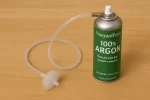
You can do what pharma does for sensitive injectables and peptides: a sterile argon flush to completely eliminate any possibility of oxidation with an inert gas "blanket". Argon is much heavier than air, so oxygen will be pushed up and out of the vent needle, and air cannot flow back in.

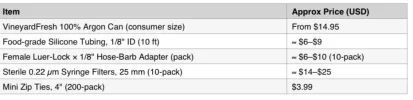
Something like this:

C016A774-CA26-41ED-95AE-FD2CE3FA9B65.webp

IMG_2291.webp


-Insert the spray can’s straw/nozzle.

-Slide an 6-8" inch piece of 1/8" ID silicone tubing over the straw.

-Secure with a mini zip tie.

-On the other end of that tubing, push on the 1/8" hose-barb of the female luer-lock adapter. Secure with a zip tie.

-Attach a sterile 0.22 µm PTFE syringe filter to the female luer-lock adapter.

-Attach your luer-lock needle to the filter.

-Insert needle into vial. Just enough to get through stopper.

-Insert a second, larger gauge needle as a vent to relieve pressure as the gas flows.

-Deliver short, gentle bursts of argon to flush the vial headspace, then withdraw the gas needle first, followed by the vent.

-(optional) Seal with sterile vial sticker.

-Can also be used for long term preservation of lyophilized peptides.
 
You can do what pharma does for sensitive injectables and peptides: a sterile argon flush to completely eliminate any possibility of oxidation with an inert gas "blanket". Argon is much heavier than air, so oxygen will be pushed up and out of the vent needle, and air cannot flow back in.

Something like this:

View attachment 343169

View attachment 343173


-Insert the spray can’s straw/nozzle.

-Slide an 6-8" inch piece of 1/8" ID silicone tubing over the straw.

-Secure with a mini zip tie.

-On the other end of that tubing, push on the 1/8" hose-barb of the female luer-lock adapter. Secure with a zip tie.

-Attach a sterile 0.22 µm PTFE syringe filter to the female luer-lock adapter.

-Attach your luer-lock needle to the filter.

-Insert needle into vial. Just enough to get through stopper.

-Insert a second, larger gauge needle as a vent to relieve pressure as the gas flows.

-Deliver short, gentle bursts of argon to flush the vial headspace, then withdraw the gas needle first, followed by the vent.

-(optional) Seal with sterile vial sticker.

-Can also be used for long term preservation of lyophilized peptides.

Now..is there a possibility of Argon dissolving in BB?
 
Now..is there a possibility of Argon dissolving in BB?

The only risk is the physical hazard of micro bubbles if you shake up the vial (which we hopefully all avoid injecting, though the risk of micro bubbles causing harm is very low), but even then argon micro bubbles are technically safer than air micro bubbles because Argon is chemically inert, while oxygen and co2 are not.

Argon is commonly used by pharma as headspace blanketing gas for injectables that easily oxidize.
 
Before we go down the "OMG ghoul tryna kill us with the poison gas!", argon is also commonly used to extend shelf life of packaged food, including liquids (especially fine wine). Nitrogen is more common, because it's cheaper, but argon is superior.

 
The only risk is the physical hazard of micro bubbles if you shake up the vial (which we hopefully all avoid injecting, though the risk of micro bubbles causing harm is very low), but even then argon micro bubbles are technically safer than air micro bubbles because Argon is chemically inert, while oxygen and co2 are not.

Argon is commonly used by pharma as headspace blanketing gas for injectables that easily oxidize.

Chemically inert yes -- no chemical bonding.
Argon is also soluble in organic solvents.
 

Sponsors

Back
Top