I had followed along on some of the growth threads where this was talk about this. Not planning on keeping it at 5iu for much past this blast. Will drop down to 2-3 and recheck prior to starting the next blast.Very interesting. Those are quite impressive numbers. Perhaps a little too impressive for the long run. Depending on your age, it's not great to run IGF-1 far above 450 or so for extended periods of time. Invites the acromegaly and other unwanted side effects. Short term is probably fine.
There's also that paper showing that above a certain dosage, you invite the cardiac remodeling side effects (very much unwanted). The 0.03 mg / kg did not cause issues, but the 0.06 mg / kg did. Using IU, for a 100 kg male that means stay under 9 iu daily. I know you're on 5 iu, but those IGF-1 levels are atypically high for 5 iu.

MESO-Rx
Anabolic Steroids

Navigation
Install the app
How to install the app on iOS
Follow along with the video below to see how to install our site as a web app on your home screen.
Note: This feature may not be available in some browsers.
More options
Style variation
Guest viewing limit reached
- You have reached the maximum number of guest views allowed
- Please register below to remove this limitation
- Already a member? Click here to login
You are using an out of date browser. It may not display this or other websites correctly.
You should upgrade or use an alternative browser.
You should upgrade or use an alternative browser.
MESO-Rx Sponsor Opti USA DOMESTIC - HGH, INJECTABLES, TABLETS, PEPTIDES, & MISC
- Thread starter Opti
- Start date
E2 came back at 15 so I was expecting IGF to be a touch lower based off my initial understanding of E2 and IGF conversion. But this is interesting info, I’ll have to dig into this a little more. Thanks!Unsurprising, because E2 suppresses GH to IGF conversion. Some e2 is necessary, so below a certain level it lowers conversion, but for the most part the "Higher e2= higher IGF" comes from the confusion caused by the fact e2 also stimulates higher endogenous GH production which raises IGF despite e2's IGF conversion blunting effect. But in the context of exogenous GH, where natural GH production is suppressed, higher e2 will lower IGF.

Ghoul
Member
E2 came back at 15 so I was expecting IGF to be a touch lower based off my initial understanding of E2 and IGF conversion. But this is interesting info, I’ll have to dig into this a little more. Thanks!
It'll be a frustrating exercise.
In the BB world, the mistaken understanding still dominates.
In the world of medical research, you'll most often see references to oral estrogen via contraceptives crushing GH to IGF conversion, which is true. Some take that to mean only oral estrogen inhibits conversion, which is not true. It's just that since most GH to IGF conversion takes place in the liver, and oral estrogen only has around 10% bioavailability, oral estrogen pills have 10x the dose intended to enter the bloodstream. The rest gets processed, you guessed it, in the liver. So even a small dose in contraceptives saturates the liver with the other 90% of e2 completely crushing GH to IGF conversion. This is why women with acromegaly used to be treated with oral birth control pills.
E2 delivered via patches, and endogenous e2 (in men from aromatase and women from ovaries), bypasses liver metabolism, so while the effect isn't nearly as strong, they also inhibit conversion, and the more e2 there is the more that process of conversion is blunted.
Things get even more confusing by the fact that if estrogen is pushed close to 0, other processes in the liver shut down, and because of that IGF conversion drops.
I'm glad in the online video discussions between Lee and others regarding rHGH at least it's sometimes said ".... but we know there's a lot we don't know about this stuff and it's an ongoing process to understand".
There's also GH to IGF conversion directly in muscle, which is likely more
important for anabolic effects than the systemic IGF we're checking in blood tests that comes from the liver. How e2 effects internal muscle GH to IGF conversion isn't clear, because you basically have to extract a little muscle tissue to check levels, which isn't very pleasant. But in rodents at least, e2 suppresses IGF conversion there as well.
I like to think of these processes from an evolutionary perspective. Most of the time, if things don't serve a biological purpose they don't exist. It makes some sense that for females, at least while they're fertile and have high e2, lower IGF leaves more GH to make skin look better, hair, nails, less "central adiposity" aka belly fat (don't want them looking pregnant), basically all the "youthful" signs that make females attractive for mating, while males benefit from the anabolic effects of higher IGF, ie, bigger muscles, masculine facial features etc.
Last edited:
I appreciate all the info. Seems like there’s still a lot of unknowns. I think I’m leaving more confused now lol but I’ll keep digging in more. Thanks again!It'll be a frustrating exercise.
In the BB world, the mistaken understanding still dominates.
In the world of medical research, you'll most often see references to oral estrogen via contraceptives crushing GH to IGF conversion, which is true. Some take that to mean only oral estrogen inhibits conversion, which is not true. It's just that since most GH to IGF conversion takes place in the liver, and oral estrogen only has around 10% bioavailability, oral estrogen pills have 10x the dose intended to enter the bloodstream. The rest gets processed, you guessed it, in the liver. So even a small dose in contraceptives saturates the liver with the other 90% of e2 completely crushing GH to IGF conversion. This is why women with acromegaly used to be treated with oral birth control pills.
E2 delivered via patches, and endogenous e2 (in men from aromatase and women from ovaries), bypasses liver metabolism, so while the effect isn't nearly as strong, they also inhibit conversion, and the more e2 there is the more that process of conversion is blunted.
Things get even more confusing by the fact that if estrogen is pushed close to 0, other processes in the liver shut down, and because of that IGF conversion drops.
I'm glad in the online video discussions between Lee and others regarding rHGH at least it's sometimes said ".... but we know there's a lot we don't know about this stuff and it's an ongoing process to understand".
There's also GH to IGF conversion directly in muscle, which is likely more
important for anabolic effects than the systemic IGF we're checking in blood tests that comes from the liver. How e2 effects internal muscle GH to IGF conversion isn't clear, because you basically have to extract a little muscle tissue to check levels, which isn't very pleasant. But in rodents at least, e2 suppresses IGF conversion there as well.
I like to think of these processes from an evolutionary perspective. Most of the time, if things don't serve a biological purpose they don't exist. It makes some sense that for females, at least while they're fertile and have high e2, lower IGF leaves more GH to make skin look better, hair, nails, less "central adiposity" aka belly fat (don't want them looking pregnant), basically all the "youthful" signs that make females attractive for mating, while males benefit from the anabolic effects of higher IGF, ie, bigger muscles, masculine facial features etc.
Ghoul
Member
I appreciate all the info. Seems like there’s still a lot of unknowns. I think I’m leaving more confused now lol but I’ll keep digging in more. Thanks again!
Yeah sorry, lol.
TLDR keep your e2 above 10 but as low as possible if you're trying to maximize IGF.

Yeah it was I reached out to him to thank him for the freebies letting him know what was in the package and he said it was a mistake but I offered to pay for them but said it all falls on them so it was their mistake but I’ll definitely be coming back and getting more golds as I wake up and my right hand in numb af lol took 4iu of blue tops before bedThat had to be a mistake, almost $600 in freebies (EDIT: apparently the blue and black tops were the freebies, not the golds, my mistake) from an order that didn't even total that amount by itself. Pretty sure he doesn't do freebies, I have over 20 orders in with him, and never got any extras. Maybe he likes you better than me hahaha
Seriously though, that's some sick luck there!

Yeah my original order was 3 gold tops but he said basically I got lucky and was their mistake I never get lucky so guess this was my first time lolThat had to be a mistake, almost $600 in freebies (EDIT: apparently the blue and black tops were the freebies, not the golds, my mistake) from an order that didn't even total that amount by itself. Pretty sure he doesn't do freebies, I have over 20 orders in with him, and never got any extras. Maybe he likes you better than me hahaha
Seriously though, that's some sick luck there!
TanFishMan
Member
Got some gold tops. Been trying to wait out the sides on 4iu nightly. Used to be numb fingers now it’s just numb fingertips. And that’s after doing 2 iu for 100 days before starting 4

bigdaddyandfriends
Member
GH and IGF-1 conversion have a complex relationship.
Todd Lee seems to think more estrogen = more IGF1, which apparently he has proven for himself (N=1) in bloodwork. He gets highest IGF1 with estrogen 80-100... even if that were the case for me, that's an E2 far higher than I want.
However, he has also said Tamoxifen increases IGF1 production which it certainly does not, and it acts similarly to estrogen in the liver (if not the breast), which is why it does raise HDL.
I do think the GH>IGF1 conversion may be more complex with both ERa/ERb having different promoting/prohibitng roles and may follow a normal curve where the center 65% gives good conversion, while the top and bottom 17% ranges get impaired. Libido seems to follow a similar model with E2.
I am tying a genistein supplement (phytoestrogen 90% selective to ERb) to see if it raises my IGF1 at all or has other beneficial effects, as I try to keep my E2 at the low-mid range normal.
Todd Lee seems to think more estrogen = more IGF1, which apparently he has proven for himself (N=1) in bloodwork. He gets highest IGF1 with estrogen 80-100... even if that were the case for me, that's an E2 far higher than I want.
However, he has also said Tamoxifen increases IGF1 production which it certainly does not, and it acts similarly to estrogen in the liver (if not the breast), which is why it does raise HDL.
I do think the GH>IGF1 conversion may be more complex with both ERa/ERb having different promoting/prohibitng roles and may follow a normal curve where the center 65% gives good conversion, while the top and bottom 17% ranges get impaired. Libido seems to follow a similar model with E2.
I am tying a genistein supplement (phytoestrogen 90% selective to ERb) to see if it raises my IGF1 at all or has other beneficial effects, as I try to keep my E2 at the low-mid range normal.
Flatriggerman
Member
My 10mg tirz vials are white tops not red. I haven't moved off 3.5mg per week yet. Started at 2mg.Picking up some Blues but want to know
If anyone has tried Tirz Red tops ? For the wife and will have her run them at 9mg vials
. TIA

jakel1045
New Member
Yeah nothing today either. Getting worried.Same here, brother. Thought maybe it was USPS scanning unreliability. Perhaps he is waiting to ship out when he has more packages to send.

AllGoodThings
Member
I've had a few of my orders from Opti take 6 or 7 days for the package to actually be dropped off with USPS, so I wouldn't worry too much. If it gets much past a week from order date and the tracking is still dead, an email may be in order.Yeah nothing today either. Getting worried.

RockyP
Member
He’s been around longer than the electric light. Relax. You’ll get your order.

Yonith
New Member
One of my orders took 10 days. Chill, he’s not Amazon lol. It’s all good; you’ll get it.Yeah nothing today either. Getting worried.
AllGoodThings
Member
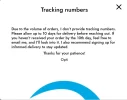
100% accurate!
Placed a $600 retraglutide order with Opt on the 1st September. Promptly paid with Bitcoin. Reached out on the 9th Sept as I hadn't heard anything. Tracking shows that the package was held for mailability determination by USPS (seized).
Comms were good at this point. A bit of back and forth trying to figure out what happened. I called the USPS line but it was clear they weren't going to let it through without a lot of paperwork and me turning up to the mailing center. Neither of which I was going to do. Lines are recorded too so be careful what you admit on the phone.
Shit happens and I thought the address was burned or something so I say to Opt that I would write it off, but then I get two more packages with no problems.
I reached out to get a reship (as policy for lost shipments on Opts website) and made an offer (what I thought was a reasonable - 50% reship so $300 of merch). No response and no response to the follow up on this.
I'm pretty sure the bac water opened in the package and that triggered inspection before seizing.
Seller refused to reship under the policy so don' rely on that in my opinion.
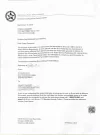
Seller was not made aware this post would be made. Proof attached. Tread carefully amigos.
Comms were good at this point. A bit of back and forth trying to figure out what happened. I called the USPS line but it was clear they weren't going to let it through without a lot of paperwork and me turning up to the mailing center. Neither of which I was going to do. Lines are recorded too so be careful what you admit on the phone.
Shit happens and I thought the address was burned or something so I say to Opt that I would write it off, but then I get two more packages with no problems.
I reached out to get a reship (as policy for lost shipments on Opts website) and made an offer (what I thought was a reasonable - 50% reship so $300 of merch). No response and no response to the follow up on this.
I'm pretty sure the bac water opened in the package and that triggered inspection before seizing.
Seller refused to reship under the policy so don' rely on that in my opinion.
Seller was not made aware this post would be made. Proof attached. Tread carefully amigos.
Attachments

Man this is weird because this is the first time Ive heard of Opti not making it right. Every issue Ive seen posted he has taken care of, including an issue I had a while back. Hopefully he's just backed up on the emails.Placed a $600 retraglutide order with Opt on the 1st September. Promptly paid with Bitcoin. Reached out on the 9th Sept as I hadn't heard anything. Tracking shows that the package was held for mailability determination by USPS (seized).
Comms were good at this point. A bit of back and forth trying to figure out what happened. I called the USPS line but it was clear they weren't going to let it through without a lot of paperwork and me turning up to the mailing center. Neither of which I was going to do. Lines are recorded too so be careful what you admit on the phone.
Shit happens and I thought the address was burned or something so I say to Opt that I would write it off, but then I get two more packages with no problems.
I reached out to get a reship (as policy for lost shipments on Opts website) and made an offer (what I thought was a reasonable - 50% reship so $300 of merch). No response and no response to the follow up on this.
I'm pretty sure the bac water opened in the package and that triggered inspection before seizing.
Seller refused to reship under the policy so don' rely on that in my opinion.
Seller was not made aware this post would be made. Proof attached. Tread carefully amigos.

Similar threads

- Replies
- 72
- Views
- 10K
- Replies
- 192
- Views
- 30K

- Replies
- 1K
- Views
- 95K

- Replies
- 2K
- Views
- 122K


