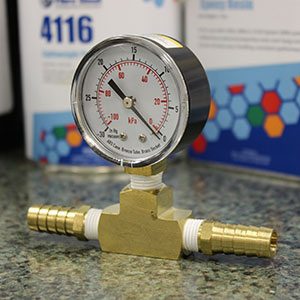
Also, to clarify, my pump itself has no built in gauge and when switched off I lose all vacuum if my valve is left open, meaning my vac pump does not utilize an integrated one way valve
I would option to buy a hand held brake pump with a vac gauge for now till you get set up. About $45-50 from auto store.
Edit: Are you adding solvents and raw first with no carrier? Heat it up lightly, let it dissolve then add carrier. Heat up lightly again then filter warm. Should be a breeze bud
I have one. I was a mechanic a lifetime ago. Tried it. Didn't help. Could be broken given its age though.
I do add BB to powder, stir, heat, then oil, then more oil...till done. Turn off heat, let cool a bit, add BA, stir more then filter warm. Seriously think I get no suction from excess vacuum...but that makes no sense to me.
A/C vacuum pumps can easily overwhelm filters, often rupturing the membrane or bottle.
Just as a mere example check this one out
Polysulfone Filter Holders
Pressure: Vacuum (25 in Hg maximum)
Vacuum Pressure Pump
Maximum vacuum 81kPa (24Hg") from atm
http://www.advantecmfs.com/catalog/filt/vacuum.pdf
And this is a pump that suits lab filtration
some A/C pumps can pull 30+ Hg inches
So
1 Adding a hub reduces individual filter vacuum pressure
2 Vacuum canisters reduce vacuum fluctuations (pump pulses), reduce overall vacuum pressure a bit
they reduce evaporated moisture from liquid being filtered from getting in the pump (not much of a problem with oil brews)
and prevent pump oil from being sprayed to the brew.
Canisters are highly desirable: look at how crowded underhood space in modern cars is, yet they always use vacuum canisters.
3 Vacuum check valve
Many pro systems already come with check valves
Check Valve: 316 stainless steel with ethylene propylene O-ring
https://laboratory.pall.com/content...s_for_MicroFunnel_Filter_Funnel_PN_89100B.pdf
Automotive vacuum check valves are cheap and widely available, but I have no idea if they'll work fine.
4 Vacuum regulating valve
Check to see if vacuum relief valves ain't too expensive
the cheapest, simpler valve can be a refrigerant bottletop screw valve
they are cheap, widely available, and quite leakproof.
I've read that besides closing the pump hose, they can be used as to add a TINY intentional air inlet leak, that reduces overall vacuum by leaving the valve very slightly open upstream.