


bananafeet
Member
I've had some personal experiences using HGH that included getting a relatively high IGF1 level on a low dose (2iu).
However I found it made me prediabetic. It's fair enough that I carry too much bodyfat to ever be called a bodybuilder but I'm not finding any positives with this drug.
Is this just a big circle jerk?
I mean this is from a text book on HGH:
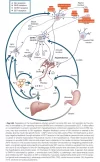
Page 128
This is the interesting part:
The only logical reason I can think of why HGH would be anabolic in bodybuilders is because it's causing hyperinsulinemia which effectively blocks all muscle catabolic processes. The concurrent rise in IGF1 is then used to overcome the peripheral insulin resistance and is directly anabolic (systemically).
But then again large circulating amounts of IGF1 will make everything grow. In response to resistance training local IGF1 levels increase, this is independent of serum levels....
Unless you have low levels of IGF1 I don't see the point. The acute and direct effect of HGH is anti-insulin and diabetogenic.
I sometimes wonder if it will sell at all if it was called "Human Sleep Hormone".
In the sick patients given HGH it raised acute-phase proteins:
Sounds yummy.
Source:
WILLIAMS TEXTBOOK OF ENDOCRINOLOGY FIFTEENTH EDITION
However I found it made me prediabetic. It's fair enough that I carry too much bodyfat to ever be called a bodybuilder but I'm not finding any positives with this drug.
Is this just a big circle jerk?
I mean this is from a text book on HGH:
Page 163"Growth Hormone Hypersecretion Associated With Meta-
bolic Disturbances. Apparently, inappropriate hGH hypersecre-
tion occurs with uncontrolled diabetes mellitus, hepatic failure,
uremia, anorexia nervosa, and protein-calorie malnutrition. Nutri-
tional factors are probably important in this response because in
normal persons, obesity inhibits and fasting stimulates episodic
GH hypersecretion. In diabetes mellitus, cholinergic blockers
reverse the abnormality, possibly by inhibiting hypothalamic
somatostatin secretion (see earlier discussion). Peripheral GH
resistance leading to reduced IGF1 synthesis and release may also
contribute to increased levels of GH"
Page 128
This is the interesting part:
Page 191Catabolic States: The anabolic actions of GH have prompted
investigational use of GH in catabolic states, including surgery,
trauma, burns, parenteral nutrition, and organ failure, to reduce
negative nitrogen balance in critically ill patients. Beneficial
effects of GH have been reported in patients with extensive burns,
but there is an increased risk of hyperglycemia. A study in which
critically ill patients received very high doses of GH (up to 7 mg/
day), approximating 15 to 20 times the normal daily production
rates, was prematurely terminated due to increased fatality. It
has been suggested that GH may have had an adverse effect on
acute-phase protein in these patients. Caution is advised for
nonapproved uses of GH in adults.
Page 192Sports: GH is banned by the World Anti-Doping Agency as
a performance-enhancing anabolic agent. GH is widely abused
by athletes to enhance performance. A systematic review
concluded that claims that GH enhances physical performance
are not supported by the scientific literature evaluating effects
on aerobic capacity, strength, and power. A double-blind
placebo-controlled study has reported that GH, in doses
approximating four times the daily production rates, selectively
enhances anaerobic sprint capacity but does not affect aerobic
capacity, strength, or power in recreational athletes. The ben-
efit for sprinting provides the first evidence justifying the pro-
hibition of GH as a performance-enhancing drug. However,
the doses typically used in the underground and the way GH is
combined with other doping agents and their safety are largely
unknown.
The only logical reason I can think of why HGH would be anabolic in bodybuilders is because it's causing hyperinsulinemia which effectively blocks all muscle catabolic processes. The concurrent rise in IGF1 is then used to overcome the peripheral insulin resistance and is directly anabolic (systemically).
But then again large circulating amounts of IGF1 will make everything grow. In response to resistance training local IGF1 levels increase, this is independent of serum levels....
Unless you have low levels of IGF1 I don't see the point. The acute and direct effect of HGH is anti-insulin and diabetogenic.
I sometimes wonder if it will sell at all if it was called "Human Sleep Hormone".
In the sick patients given HGH it raised acute-phase proteins:
Source: Acute-phase protein - WikipediaAcute-phase proteins (APPs) are a class of proteins whose concentrations in blood plasma either increase (positive acute-phase proteins) or decrease (negative acute-phase proteins) in response to inflammation. This response is called the acute-phase reaction (also called acute-phase response). The acute-phase reaction characteristically involves fever, acceleration of peripheral leukocytes, circulating neutrophils and their precursors. The terms acute-phase protein and acute-phase reactant (APR) are often used synonymously, although some APRs are (strictly speaking) polypeptides rather than proteins.
In response to injury, local inflammatory cells (neutrophil granulocytes and macrophages) secrete a number of cytokines into the bloodstream, most notable of which are the interleukins IL1, and IL6, and TNF-α. The liver responds by producing many acute-phase reactants. At the same time, the production of a number of other proteins is reduced; these proteins are, therefore, referred to as "negative" acute-phase reactants. Increased acute-phase proteins from the liver may also contribute to the promotion of sepsis.
Sounds yummy.
Source:
WILLIAMS TEXTBOOK OF ENDOCRINOLOGY FIFTEENTH EDITION


