
nxckf
Member
Me reading this with a fridge full of 12000iu of GH. Punching the air.

MESO-Rx
Anabolic Steroids

Follow along with the video below to see how to install our site as a web app on your home screen.
Note: This feature may not be available in some browsers.

Pretty much why I use it as an older dude. As far as the insulin sensitivity, Glp-1s, SGLT2 Inhibitors, metformin/berberine, etc... I'm GTG. I take Reta .5 - 4mg (depending) and Jardiance (either just before or after my shot.)The biggest benefit i see from GH strong anticatabolism, reduced fat mass, and significant muscle fullness / pumps even when on HRT levels of test. Plus I’m an old fart so having GH in at 4 - 6 iu per day makes a big difference for me. If I was in my 20’s I wouldn’t touch it.
There’s a strong synergy for anabolism running “high” (whatever that is for the individual) dosages of test and GH with ample food. The blood sugar issues can largely be mitigated by dosing a single bolus at bedtime and using a GLP-1 alongside it

I think HGH pushes the energy expenditure towards fat burning. It's both catabolic and anabolic at the same time (burning fat and helping to build protiens).The most important effect i can confirm is fat loss. At even 3iu it's extremely noticeable over just a week or two after starting. Bolus at least 1 hour post final meal. I start with 5.0 a1c, so if you start with some insulin resistance maybe it's different?
The usefulness seems obvious when I can cut without changing diet or reducing calories. (*I have never done a contest prep. Just observations rehabing injuries.)
I was intentionally aiming to make my post fucused on my own outcome, but I do think going in with insulin resistance, or just being very susceptible could be your problem. Not all diabetic people are fat, but fatter people are more insulin resistant.I think HGH pushes the energy expenditure towards fat burning. It's both catabolic and anabolic at the same time (burning fat and helping to build protiens).
However if you don't manage this well you get atleast temporary insulin resistance or sustained higher blood sugar levels due to it stopping insulin from working.
These hormones have a push-pull relationship. HGH won't be produced if insulin or blood sugar is high.
Anyway you have to manage this yourself. Mess it up and yeah you give yourself diabetes.
Yes you're right someone like me has less of a run way than someone leaner. But not all diabetic people are fat.
Getting high blood sugar is not a side effect of HGH. It's the main effect. Increasing IGF1 is a downstream effect the requires the liver to make up it's mind of what it wants to do.
I mean for me it just gives me anxiety knowing my blood sugar is gonna run high for hours because of something I injected....
How much body fat?However I found it made me prediabetic. It's fair enough that I carry too much bodyfat to ever be called a bodybuilder but I'm not finding any positives with this drug.

Bro I just cited the textbook which cited this study:This has been an interesting read for someone considering HGH. That being said, I struggle with some of the extrapolations made here.
The study cited in the first post involved megadosing "critically ill" patients with 7mg (21IU) of HGH. We don't know what the "critical illness" is or anything else about these patients. Did I miss the citation? How is this relevant to the population here who presumably are not in critically ill condition and are not taking megadoses?
There are some other rodent studies in other posts. Rodent studies are very poor predictors of human outcomes for obvious reasons.
That being said, I do wonder about the cost benefit analysis. And the potential aggregation and development of immunotoxicity, both of which you wouldn't really notice until bad things start happening.
The above coupled with the increase blood sugar levels are all things to consider. Thanks for the discussion.
The reason for the increased morbidity and mortality associated with growth hormone administration in these studies is unclear, but the preponderance of multiple-organ failure and septic shock or uncontrolled infection as causes of death in the growth hormone group suggests that a modulation of immune function may be involved. Depending on the experimental conditions, growth hormone can either augment25,26 or inhibit27,28 the production of reactive oxygen species and proinflammatory cytokines, and it can either reduce29 or increase30 the susceptibility to endotoxin or bacterial challenge in animals. These findings suggest that, depending on the underlying clinical condition, the effects of growth hormone administration on immune function in patients in a catabolic state can be either beneficial or detrimental. In surgical patients, treatment with growth hormone has been associated with improved cell-mediated immunity and a reduced incidence of postoperative wound infections.31 However, growth hormone treatment did not reduce the number of episodes of sepsis in a study of children with burns13 and did not affect the sepsis score or the outcome in a study of patients with sepsis.32
Another possible explanation for the poorer outcome associated with the administration of growth hormone is that it prevents the mobilization of glutamine from muscle and that, as a result, less glutamine is available for rapidly dividing cells, such as leukocytes and enterocytes, and for hepatic production of glutathione.
Source: https://www.sciencedirect.com/science/article/abs/pii/S0261561497800295"In conclusion, growth hormone administration in trauma patients may restrain protein and amino acid catabolism in skeletal muscle. However, the growth hormone-mediated suppression of glutamine production we have observed in this study could decrease the systemic availability of this amino acid. During growth hormone treatment, this potential side-effect could be prevented by an exogenous glutamine administration."

Anyway you have to manage this yourself. Mess it up and yeah you give yourself diabetes.
Yes you're right someone like me has less of a run way than someone leaner. But not all diabetic people are fat.
That's exactly how it works.This has never happened because that's not how diabetes works
keen observation but the non-obese diabetic (NOD) & lean but metabolically overweight phenotype includes ectopic fat storage (eg, fatty liver)
the current conversation is about GH use, which if anything, reduces fatty liver
it's not that kind of diabetes
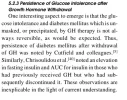
This is definitely an interesting take for sure. I can say over the course of 2 years of constant use basically my liver enzymes are money and never had an issue. I do take regular oral NAC and taurine thoughAnother interesting quote (same article):
Could HGH make you at risk of liver stress by reducing glutathione availability?
Source: https://www.sciencedirect.com/science/article/abs/pii/S0261561497800295
That's exactly how it works.
View attachment 380505
Source: Growth Hormone Therapy and its
Relationship to Insulin Resistance,
Glucose Intolerance and Diabetes Mellitus
A Review of Recent Evidence
William Jeffcoate
Department of Diabetes and Endocrinology, City Hospital, Nottingham, England
I attached the PDF.
I’m curious how you think GH can’t make someone T2 diabetic? From my understandingThe Cutfield reference doesn't support that claim and I couldn't access the other one (ref #40)
Sorry man I'm not smart enough to argue over references. I'll try to find another source.The Cutfield reference doesn't support that claim and I couldn't access the other one (ref #40)
Hyperglycemia is noted as a side effect in the textbook on endocrinology I have. That's a know risk factor for T2M.
Oh ok bro. I'll have a look. That's an important claim after all.Typical hyperglycemia isn't a risk factor for T2DM, it is T2DM
But the evidence claimed by the source you posted doesn't provide any data showing GH-induced insulin resistance is permanent
Typical hyperglycemia isn't a risk factor for T2DM, it is T2DM
But the evidence claimed by the source you posted doesn't provide any data showing GH-induced insulin resistance is permanent
"By contrast, we found that the incidence of type 2 diabetes mellitus was six-fold higher in children treated with GH compared with the incidence in two studies of age-matched untreated children.7,13 There are several possible explanations to account for the high incidence of type 2 diabetes mellitus with GH treatment. Although type 2 diabetes mellitus is thought to be rare in childhood and adolescence, there has been a substantial increase in the incidence of this disorder in the past few years.7,13 GH therapy may also have hastened the onset of type 2 diabetes that would have occurred in adult life without GH therapy. The persistence of diabetes mellitus after GH therapy was stopped excludes a transient drug-induced effect such as that seen with high dose glucocorticoid treatment.3 There are several sites in the insulin-signalling pathway at which GH can induce anti-insulin effects.15 In acromegaly, high GH concentrations are sustained for years and the frequency of diabetes mellitus in these patients is 13–27%.16,17 We speculate that conventional GH therapy alone is unlikely to initiate a new case of type 2 diabetes mellitus. Unlike patients with acromegaly, the children who developed type 2 diabetes received low doses of GH for far fewer years. In short, normal, prepubertal children, 2 years of high-dose GH therapy reduced insulin sensitivity and increased serum insulin concentrations but glucose intolerance did not occur."


