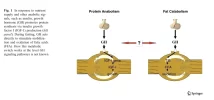
Skeletal muscle is a metabolically active tissue, which accounts for more than 80% of the variation in oxygen consumption during rest. The role of the GH-IGF axis for protein anabolism including muscle growth is also obvious when considering the phenotypes of GH deficiency and acromegaly. Growth hormone substitution in GHDA is associated with a 5–10% increase in muscle volume as assessed by either computed tomography (CT) or dual-energy X-ray absorptiometry (DEXA) scanning [24]. This GH action involves increased protein synthesis and reduced protein breakdown and is mediated both by GH itself and IGF-1. It should, however, be considered that part of this increase includes rehydration. Another important interaction between muscle metabolism and GH is insulin-stimulated glucose disposal. Administration of GH into the brachial artery acutely suppresses insulin-stimulated glucose uptake across the forearm [5].This is accompanied by a concomitant increase in FFA uptake compatible with the lipolytic effects of GH [2]. This is noteworthy, as FFA for many years have been implicated in the development of insulin resistance. It was originally suggested by Randle et al. that increased FFA flux into muscle inhibited glycolysis by means of simple substrate competition [32]. More recent studies in humans suggest that FFA may interfere with insulin signaling and in particular may suppress PI3 kinase activity, which is considered essential for the recruitment and functioning of GLUT4 [8]. By contrast, Jessen et al. did not record any impact of GH on insulin-stimulated PI3 kinase activity in healthy individuals despite the fact that GH was associated with increased FFA levels as well as insulin resistance [9]. It has, however, been shown that GH-induced insulin resistance is associated with accumulation of intramyocellular fat [6] in resemblance with more common conditions of insulin resistance, such as the metabolic syndrome. Moreover, we have been unable to document evidence of crosstalk between the signaling pathways of insulin and GH, respectively [10, 18]. The molecular mechanisms whereby GH causes insulin resistance in muscle therefore remain to be explained.