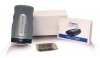
Wow... i was saving money to pay for bloodwork and a doctor consultation before i start my AAS cycle, but now i'm going to delay that goal and focus in saving money to buy the Andro Extender Pennis.
Well, if i workout my muscle i need to workout my pennis too! I want to have a horse pennis when my libido go up from when i'll be blasting with testosterone! Full pennis with full testosterone! LOL!
Buy Andropenis Gold | Totally Guided Shopping Experience

In recent years, penile size has become a matter of great debate, with an increasing number of patients seeking urological advice for a so-called ‘short penis’. In a clinical setting, the definition of ‘short penis’ is more often attributed to a condition termed ‘penile dysmorphophobia’, i.e. the perception of inadequacy of the penis even though the true dimensions of the organ fall within the normal range.
A ‘clinically relevant’ short penis, definable as any length of < 4 cm [< 2"] for the flaccid penis and < 7 cm [< 3"] for the stretched penis, is quite unusual in men seeking medical treatment for inadequate penile size. Several augmentation phalloplasty procedures have been proposed with the aim of elongating the shaft or enlarging the penile girth but at present the drawbacks of these techniques are a lack of standardization, the potential risk of complications, and a high rate of patient dissatisfaction. Given these premises, methods to increase penile dimensions which are less invasive than surgery would be preferable.
It has been claimed that the penile extender, a nonsurgical device that used progressive mechanical traction to the penis, produces a significant improvement in penile length and circumference, both in the flaccid and the erect state. Little scientific evidence and no peer-reviewed clinical study supports the potential clinical utility of the penile extender in the treatment of patients complaining of inadequate penile size. In the present, they assessed a commonly marketed penile extender in a phase II single-arm study that was powered to detect significant changes in penile size.
Gontero P, Di Marco M, Giubilei G, et al.
Use of penile extender device in the treatment of penile curvature as a result of Peyronie's disease. Results of a phase II prospective study. J Sex Med 2009;6(2):558-66.
INTRODUCTION: Pilot experiences have suggested that tension forces exerted by a penile extender may reduce penile curvature as a result of Peyronie's disease. AIM: To test this hypothesis in a Phase II study using a commonly marketed brand of penile extender.
METHODS: Peyronie's disease patients with a curvature not exceeding 50 degrees with mild or no erectile dysfunction (ED) were eligible. Fifteen patients were required to test the efficacy of the device assuming an effect size of >0.8, consistent with an "important" reduction in penile curvature. Changes in penile length over baseline and erectile function (EF) domain scores of the International Index of Erectile Function (IIEF) constituted secondary end points.
MAIN OUTCOME MEASURES: Patients were counselled on the use of the penile extender for at least 5 hours per day for 6 months. Photographic pictures of the erect penis and measurements were carried out at baseline, at 1, 3, 6, and 12 months (end of study). The IIEF-EF domain scores were administered at baseline and at the end of study. Treatment satisfaction was assessed at end of study using a nonvalidated institutional 5-item questionnaire.
RESULTS: Penile curvature decreased from an average of 31 degrees to 27 degrees at 6 months without reaching the effect size (P = 0.056). Mean stretched and flaccid penile length increased by 1.3 and 0.83 cm, respectively at 6 months. Results were maintained at 12 months. Overall treatment results were subjectively scored as acceptable in spite of curvature improvements, which varied from "no change" to "mild improvement."
CONCLUSIONS: In our study, the use of a penile extender device provided only minimal improvements in penile curvature but a reasonable level of patient satisfaction, probably attributable to increased penile length. The selection of patients with a stabilized disease, a penile curvature not exceeding 50 degrees, and no severe ED may have led to outcomes underestimating the potential efficacy of the treatment.
Gontero P, Di Marco M, Giubilei G, et al.
A pilot phase-II prospective study to test the 'efficacy' and tolerability of a penile-extender device in the treatment of 'short penis'. BJU Int 2009;103(6):793-7.
OBJECTIVE: To assess a commonly marketed brand of penile extender, the Andro-Penis(R) (Andromedical, Madrid, Spain), widely used devices which aim to increase penile size, in a phase II single-arm study powered to detect significant changes in penile size, as despite their widespread use, there is little scientific evidence to support their potential clinical utility in the treatment of patients with inadequate penile dimensions.
PATIENTS AND METHODS: Fifteen patients were required to test the efficacy of the device, assuming an effect size of >0.8. Eligible patients were counselled how to use the penile extender for at least 4 h/day for 6 months. Penile dimensions were measured at baseline and after 1, 3, 6 and 12 months (end of study). The erectile function (EF) domain of the International Index of EF was administered at baseline and at the end of the study. Treatment satisfaction was assessed using an institutional unvalidated five-item questionnaire.
RESULTS: After 6 months the mean gain in length was significant, meeting the goals of the effect size, at 2.3 and 1.7 cm for the flaccid and stretched penis, respectively. No significant changes in penile girth were detected. The EF domain scores improved significantly at the end of study. Treatment satisfaction scores were consistent with acceptable to good improvement in all items, except for penile girth, where the score was either 'no change' or 'mild improvement'.
CONCLUSIONS: Penile extenders should be regarded as a minimally invasive and effective treatment option to elongate the penile shaft in patients seeking treatment for a short penis.



 )]
)]