
Leancuisine
New Member
Amazon?
Amazon has everything. It's quest protein chips

MESO-Rx
Anabolic Steroids

Follow along with the video below to see how to install our site as a web app on your home screen.
Note: This feature may not be available in some browsers.
Amazon?

I've seen them but never tried. Going to give them a chance.Amazon has everything. It's quest protein chips

How many bags you gonna eat now? Those sound hella good and how is the price?
Ahh not bad and I might go get a few bags myself.$2 a bag. I ate 3. 1 of each of the flavors. BBQ is by far the best. Best flavors. The cheddar was pretty bland. Sour cream was alright. Got more tasty as I got to the bottom of the bag.
I always doubted whether they had any protein in em at all TBH! A medium sized bag or rinds amounts to usually 35g protein but yet it says NOT A SIGNIFICANT SOURCE OF PROTEIN. Why would they say that if it had 35g in it? Ive seen much less pass for A SIGNIFICANT SOURCE OF PROTEIN. Maybe the protein could be fried out of the skin rinds....? Leaving it void

Mmmmmm kay...idk what the hell that all meansPer the FDA:
Protein": A statement of the number of grams of protein in a serving, expressed to the nearest gram [...] When the protein in foods represented or purported to be for adults and children 4 or more years of age has a protein quality value that is a protein digestibility-corrected amino acid score of less than 20 expressed as a percent, or when the protein in a food represented or purported to be for children greater than 1 but less than 4 years of age has a protein quality value that is a protein digestibility-corrected amino acid score of less than 40 expressed as a percent, either of the following shall be placed adjacent to the declaration of protein content by weight: The statement "not a significant source of protein," or a listing aligned under the column headed "Percent Daily Value" of the corrected amount of protein per serving, as determined in paragraph (c)(7)(ii) of this section, calculated as a percentage of the Daily Reference Value (DRV) or Reference Daily Intake (RDI), as appropriate, for protein and expressed as Percent of Daily Value. When the protein quality in a food as measured by the Protein Efficiency Ratio (PER) is less than 40 percent of the reference standard (casein) for a food represented or purported to be for infants, the statement "not a significant source of protein" shall be placed adjacent to the declaration of protein content.

Mmmmmm kay...idk what the hell that all means
I was hoping he would extrapolate it for me. Im a simple man my dog aint got no pedigreeIt means if you eat protein, you will die. I saw it on the news
Mmmmmm kay...idk what the hell that all means


Basically what it's saying is that pork rinds have the warning that they're not a significant source of protein bc they have a PDCAA value of less than 20%. The protein in pork rinds is a gelatin protein which is far inferior than other common protein types. Since pork rinds are marketed and intended for adults and children over the age of 4, you look at the 20% sentence and not the 40% one. IIRC, one problem with gelatin protein is that it completely lacks tryptophan.
So PDCAA value stands for protein digestibility-corrected amino acid value. What PDCAA tries to show is human essential amino acid requirements and the ability to digest them. It takes the amount of mg of the limiting essential amino acid in 1g of the protein and multiplies it by the mg amount of the same amino acid in the protein used as a standard reference and then divides that by fecal true digestinulity percentage. In other words, it shows you how digestible the essential amino acid found in the smallest amount is. The higher the value the better.
PDCAA values are, as of now, one of the best tools to compare protein qualities although the method does have its drawbacks. Pork rinds have no tryptophan I believe which makes their PDCAA fall under the minimum amount required by the FDA hence the warning. Now if you got enough tryptophan from other sources it balances out. It's like when you eat rice and beans separate vs together. Each separate is an incomplete protein but together they have a full amino acid profile. Does this mean to avoid pork rinds??? No, eat them if you like them, but do not make them your main source of protein for the day.
 mind blown
View attachment 75173 mind blown

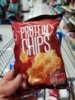

There is a sea salt one too. That's the only one I've tried. Now I have to try the BBQThere's 3! I'm trying the cheddar right now as well. Sour cream is next.
View attachment 75123 View attachment 75124
I have a weakness for cracked pepper and sea salt chips and if they add that flavor definitely will get the whole damned case!There is a sea salt one too. That's the only one I've tried. Now I have to try the BBQ


