R
readalot
Guest
Where?That's fine. I'll red pen it today. Genuinely.
Did I miss it?
Or you didn't provide after Sampei provided a good plan?
Last edited by a moderator:

MESO-Rx
Anabolic Steroids

Follow along with the video below to see how to install our site as a web app on your home screen.
Note: This feature may not be available in some browsers.
Where?That's fine. I'll red pen it today. Genuinely.


I'm new here and read through all 10 pages of this just to find 2 dead links at the end
I'm guessing the project never launched? What info was in the links posted above?
I learned a lot. I'd like to learn even more if this morphed into a different topic somewhere.
That is generous and we will be fortunate to have access to the resulting information.@Sampei is doing the experiment and @TheLobster is generously paying for the whole thing
Thats a good reminder. For me it's easy to forget how prevalent AI responses can be. I'm not used to AI existing yet- very little crossover between my work and daily life and AI so far. So I forget to watch for it in other places.FYI ChatGPT rots your brain
Don't let your kids use it
Stick with regular internet searches, no one is impressed by copied & pasted walls of AI text that can be spotted from a mile away
Link to the study in this article
Another article about the study (more user-friendly): here
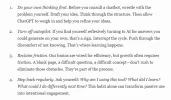
These tips from a Forbes article if you need help quitting ChatGPT:
View attachment 335084
That is generous and we will be fortunate to have access to the resulting information.
Haha, I started this username like 25 years ago and it's been what I use on all my random interest forums. I've always been a tinkerer and robotics hobbyist.Of course I read that in a monotonous robot voice xD
I am intrigued by this method. It sounds great. I have a few points of curiosityActually for per dose filtration. I draw the unfiltered reconstituted peptide into a 3ml syringe. then attach the filter and needle, and backfill an insulin syringe as needed, so each dose is "freshly filtered" just before administration, leaving no "incubation time" for new aggregate formation. So in other words, the "vial" of peptide is stored in the 3ml filtered syringe until it's used up.

3ml with 18g needle:

BD Luer-Lok Syringe with PrecisionGlide Needle, Box of 100 (Click for available sizes)
BD Luer-Lok Syringe with PrecisionGlide Needle, 100 per Box BD Luer Lok Syringe Tip with PrecisionGlide Needle: Becton Dickinson and Company: PrecisionGlide Hypodermic Syringe with needle combination. World's sharpest needle is combined with BD's cleawww.medical-and-lab-supplies.com
 www.medical-and-lab-supplies.com

I am intrigued by this method. It sounds great. I have a few points of curiosity
1. Do you "backwash" the filter after each dose so solution doesn't sit in it?
2. Do you purge the filter before each dose?
3. Do you think the filter could act as a matrix for undesired compounds to incubate in?
4. If we extended this methodology to oils, would they breakdown the plastics? Should oils be stored in glass only?

1. No. The last drop falls or is shaken off the needle tip. That leaves a continuous liquid path from slightly up the needle lumen all that back to the syringe. Where’s bacteria going to enter? Up the needle? It’s not as if I set the needle down on a surface without the cap on. I do swipe the needle with an alcohol swab before filling the insulin syringe and when finished before putting the cap back on.
2. No. There are no extractables, or any other interactions, between PES filter media or the polypropylene housing and 0.9% Benzyl Alcohol. An interesting note is that for a syringe filter to qualify for human medical use, it has to pass a “grow through” test where bacterial is grown on one side of the filter, and it has to be verified none “grows through” to the other side. As a practical matter, any modern PES filter needs to meet this standard to function properly for lab use, although I use FDA pharma grade filters (because I thought I had to when I bought them).
3. Not on the sterile side of the filter path. And no more on the “unsterile” side than would occur in the vial.
4. There’s no point with oils. With proteins, this process ensures any newly formed aggregates are removed just before administration. This is the only advantage vs filtering the entire vial at once.
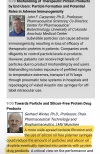
I’m essentially putting a process called “bedside filtration” into practice, something the leading developers of protein drugs have been proposing for the last few years:
View attachment 370629View attachment 370630
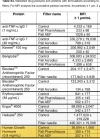
Here’s data showing a reduction in particles in 1ml of rHGH >1um in size from 36,000 to 300 after filtering.
View attachment 370631
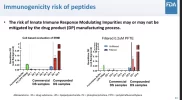
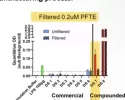
This is the tested level of immunogenicity response the FDA found in commercial GLP Injectable drugs, on the left of each chart, and the 2 GLPs on the right are from the closest we have to UGL, small compounding pharmacy GLPs. See how much worse it is with the compounded peptides?
View attachment 370632
This is immunogenicity of the same compounds before and after filtering. Look at the compounded pharmacy example on the right. Immunogenicity was reduced by 80%. There’s really no explanation for that other than the removal of protein aggregates.
View attachment 370633
Sounds like a solid improvement plan for the new year!
I saw the mention of syringe and needle lubricants. I just reupped all my stock without any consideration for that :/
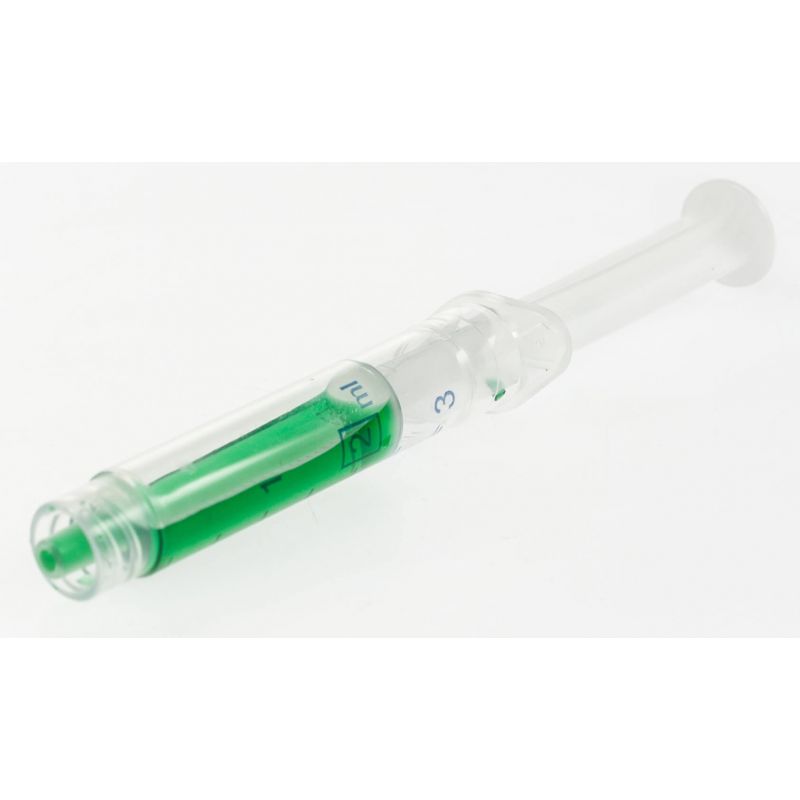
Those look great! Thank youIt’s preferable to go silicone free, but filtering will remove some of the silicone oil drops and the main target, aggregates.
Haven’t tried these personally, and you have to go to 5ml (no 3ml). But for $20 / 100 hard to beat for Silicone Free syringes.
Syringes – UltraCruz® | SCBT - Santa Cruz Biotechnology
UltraCruz® Syringes feature Luer Lock or Luer Slip system & are ideal for a variety of inoculation & sampling tasks in lab or veterinary applicationswww.scbt.com
It’s preferable to go silicone free, but filtering will remove some of the silicone oil drops and the main target, aggregates.
Haven’t tried these personally, and you have to go to 5ml (no 3ml). But for $20 / 100 hard to beat for Silicone Free syringes.
Syringes – UltraCruz® | SCBT - Santa Cruz Biotechnology
UltraCruz® Syringes feature Luer Lock or Luer Slip system & are ideal for a variety of inoculation & sampling tasks in lab or veterinary applications

 www.air-tite-shop.com
Hey Ghoul, may be a dumb question, can I store filtered oils, specifically Zydus Testoviron in Arachis oil, in these Ultra Spec Sterile vials? I didn't know if the rubber stoppers have to be special in order to not degrade or contaminate the oil.Better deals elsewhere:

Buy Ultra Spec Sterile 2ml Clear Sealed Glass Vials at wholesale prices
In order to receive vials in sealed shrink wrap boxes, please order in multiples of 25www.medical-and-lab-supplies.com
3ml with 18g needle:
BD Luer-Lok Syringe with PrecisionGlide Needle, Box of 100 (Click for available sizes)
BD Luer-Lok Syringe with PrecisionGlide Needle, 100 per Box BD Luer Lok Syringe Tip with PrecisionGlide Needle: Becton Dickinson and Company: PrecisionGlide Hypodermic Syringe with needle combination. World's sharpest needle is combined with BD's clea
or get syringes without needle and use these, the ideal peptide reconstitution needles:

BD Nokor Admix Non-Coring Needles, 18G x 1.50", Box of 100
BD Nokor Admix Non-Coring Needles, 18G x 1.50" (38mm) Part No.: 305215 Features: Vented needles* help equalize pressure to reduce blowback during medication preparation from a vial. BD Nokor™ Needles feature a cannula side port to place fluid on the side wall of the container during...
Filters are excessively priced, these are a much better deal. 13mm, .22um (no prefilter).

Sterile 0.2 μm PES Syringe Filters
Hydrophilic PES syringe filters with single or double-layer membrane. Pore sizes of 0.2μm. Diameter of 13mm/25mm/33mm with Luer lock. Sterile individually packed.shop.cobetter.com
Hey Ghoul, may be a dumb question, can I store filtered oils, specifically Zydus Testoviron in Arachis oil, in these Ultra Spec Sterile vials? I didn't know if the rubber stoppers have to be special in order to not degrade or contaminate the oil.
Thank you so much for the info on this. I'm looking to try the bedside filtration method. I've ordered some Silicone Free syringes from Air-Tite, thanks Photon for the great suggestion. Would you still recommend this for longer term storage of MT2, Tirz, and HCG? I plan to reconstitute these monthly, with MT2 maybe every 4-6 weeks since one 10mg vial lasts quite a while. Would you recommend storing these in a plastic syringe, or should I stick to the Ultra Spec glass vials for longer term storage.It’s preferable to go silicone free, but filtering will remove some of the silicone oil drops and the main target, aggregates.
Haven’t tried these personally, and you have to go to 5ml (no 3ml). But for $20 / 100 hard to beat for Silicone Free syringes.
Syringes – UltraCruz® | SCBT - Santa Cruz Biotechnology
UltraCruz® Syringes feature Luer Lock or Luer Slip system & are ideal for a variety of inoculation & sampling tasks in lab or veterinary applications


