


aromatizer
Member
Quite curious about the temperature variation inside a freezer from defrost cycles and the use of a thermos to smooth them, so I ran an experiment and here are the results:
.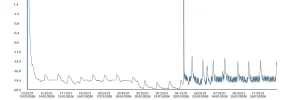
On the left is a temperature sensor inside a thermos, and on the right is the same sensor placed at the bottom of the freezer with no thermos. Both were surrounded by frozen packs. We can clearly see the defrost cycles with around 5°C of temperature variation (likely higher, since the sensor doesn’t record continuously), while the thermos buffers this to only a couple of degrees. There is also a lot of thermal noise from freezer hysteresis, which the thermos shields the contents from.
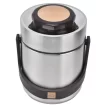
I used a cheap Chinese food thermos that has 3D‑printed inserts available for vials. The freezer is a two‑door Samsung. It’s an interesting experiment: for protecting peptides, it adds a cheap layer of protection from defrost cycles and cooling noise and is probably worth it for peace of mind. For oils, it’s harder to say.
.
On the left is a temperature sensor inside a thermos, and on the right is the same sensor placed at the bottom of the freezer with no thermos. Both were surrounded by frozen packs. We can clearly see the defrost cycles with around 5°C of temperature variation (likely higher, since the sensor doesn’t record continuously), while the thermos buffers this to only a couple of degrees. There is also a lot of thermal noise from freezer hysteresis, which the thermos shields the contents from.
I used a cheap Chinese food thermos that has 3D‑printed inserts available for vials. The freezer is a two‑door Samsung. It’s an interesting experiment: for protecting peptides, it adds a cheap layer of protection from defrost cycles and cooling noise and is probably worth it for peace of mind. For oils, it’s harder to say.


