Looking for guidance on freeze-drying small batches (beginner level)

kuczi

New Member
Hi everyone,

I’m just starting out with learning about freeze-drying (lyophilization) of peptides and I’d really like to get into the practical side of it. At the moment I only have a basic understanding, but I’ve got the motivation and resources to invest in equipment and do things properly.

I’m looking for someone who could:
  • guide me step by step through the process,
  • advise me on what kind of equipment is best to start with,
  • let me know what additional materials/consumables I’ll need,
  • share practical tips and tricks for handling small vials and small-batch work.
I’d be more than happy to pay for proper guidance and mentorship, as I’d like to avoid rookie mistakes and set things up the right way from the beginning.

If anyone here has experience with freeze-drying in a small-scale or lab-like setup and is open to helping out, please drop me a message.

Thanks in advance!
 
is this a serious post?
Yes it is. I don't understand the question. If I wanted to learn something about homebrewing oils, I'd sit and read and learn from ready-made instructions. There aren't many experts on freeze-drying peptides who could share their knowledge yet. Hence my question.
 
This is what I found. Can anybody confim?

# Comprehensive BPC-157 Peptide Lyophilization Protocol

## Physicochemical Properties of BPC-157

**BPC-157** (Body Protection Compound-157) is a synthetic pentadecapeptide with the molecular formula **C₆₂H₉₈N₁₆O₂₂** and a molecular weight of **1419.56 Da**[1][2][3]. Its amino acid sequence is **Gly-Glu-Pro-Pro-Pro-Gly-Lys-Pro-Ala-Asp-Asp-Ala-Gly-Leu-Val**[1][2][4]. The peptide has a decomposition temperature above 232°C[1], and is stable in the pH range 5.5-7.5[5].

Key temperatures for lyophilization are:
- **Glass Transition Temp (Tg')**: approx. -8 to -10°C[6]
- **Collapse Temp (Tc)**: approx. -15 to -20°C[7]
- **Process Critical Temp**: approx. -20 to -25°C[8]

## Solution Recipe and Formulation Composition

### Main Formulation

| Component | Concentration | Function |
|------------------------|----------------|------------------------------------------|
| BPC-157 (active) | 1-10mg/mL | API |
| Trehalose (cryoprotectant) | 5-10% w/v | Protects peptide structure during freezing|
| Mannitol (bulking agent) | 2-5% w/v | Provides cake structure |
| Sodium acetate (buffer) | 10-50mM | pH control and stability |
| Acetic acid (pH adjust) | to pH 6.0-6.5| pH adjustment |
| Water for Injection | q.s. to volume| Sterile solvent |
| Tween 80 (optional) | 0.01-0.1% w/v| Prevents fogging (optional) |

### Calculation Formulas

**Buffer molarity:**
$$
M = \frac{n_{buffer}}{kg_{H_2O}}
$$

**Ionic strength:**
$$
I = \frac{1}{2} \sum c_i z_i^2
$$

where: $$c_i$$ - ion concentration, $$z_i$$ - ion charge

## Step-by-Step Lyophilization Protocol
### Stage 1: Solution Preparation

**Temperature:** 2–8°C
**Duration:** 1–2 hours
**Conditions:** Sterile

1. **BPC-157 Dissolution:**
- Accurately weigh BPC-157 (±0.1mg)
- Dissolve in 80% of final volume of Water for Injection
- Max solution temperature 25°C

2. **Buffer Preparation:**
- Sodium acetate: 2.72g/L (20mM, pH 6.2)
- Glacial acetic acid: titrate to pH 6.0–6.5
- Precise pH control (±0.1 units)

3. **Add Cryoprotectants:**
- Trehalose: 5–10% w/v (recommended: 7.5%)
- Mannitol: 3–5% w/v (recommended: 4%)
- Dissolve slowly, avoid foaming

### Stage 2: Sterilization and Filling

**Sterile Filtration:**
- 0.22μm filter (PVDF or PES)
- Pressure ≤2bar
- Filter integrity test required

**Vial Filling:**
- Glass vials Type I (borosilicate)[9][10]
- Fill volume: 1–5mL
- Tolerance: ±2%
- Semi-stoppered with sterile rubber stoppers

### Stage 3: Freezing

**Critical Parameters:**[7][8]

| Parameter | Value | Notes |
|--------------------------|--------------|----------------------------|
| Initial temperature | +5°C | Controlled start |
| Final temperature | –45 to –50°C | Below Tg' |
| Cooling rate | 0.5–1.0°C/min| To avoid structural damage |
| Hold time | 2–5h | Ensure full freeze |

**Freezing Protocol:**
1. Cool from 5°C to –5°C (hold 10min)
2. Cool –5°C to –25°C (1°C/min)
3. Cool –25°C to –50°C (0.5°C/min)
4. Hold at –50°C for 3–5h

### Stage 4: Primary Drying (Sublimation)

**Process conditions:**[8][11]

| Parameter | Value | Control |
|----------------------|-----------------|---------------|
| Shelf temp | –30 to –20°C | Below Tc |
| Chamber pressure | 50–150mTorr | Sublimation-optimized |
| Product temp | –35 to –25°C | Continuous monitoring |
| Duration | 24–48h | Until all ice removed |

**Mathematical Formulas:**

**Sublimation rate:**
$$
\frac{dm}{dt} = \frac{K_v A_v (T_s - T_b)}{\Delta H_s}
$$

**Product resistance:**
$$
R_p = \frac{P_{ice} - P_c}{dm/dt \cdot A_v}
$$

where:
- $$K_v$$: heat transfer coefficient for vial
- $$A_v$$: vial surface area
- $$T_s$$: shelf temperature
- $$T_b$$: product temperature
- $$\Delta H_s$$: enthalpy of sublimation
- $$P_{ice}$$: ice vapor pressure
- $$P_c$$: chamber pressure

### Stage 5: Secondary Drying (Desorption)

**Process parameters:**[12]

| Parameter | Value | Target |
|-------------------|------------------|---------------|
| Shelf temp | 20–40°C | Remove bound water |
| Chamber pressure | 50–100mTorr | Lower than primary |
| Duration | 6–24h | <3% residual moisture|

**Monitoring:**
- Residual moisture by Karl Fischer titration
- Product temp measurement
- Optional: NIR spectroscopy

### Stage 6: Finalization

1. **Vacuum Stoppering:**
- Chamber pressure: 50–100mTorr
- Nitrogen backfill (99.9% purity)
- Slight overpressure of nitrogen for sealing

2. **Quality Control:**
- Cake appearance: homogeneous, white, intact
- Residual moisture: <3% w/w
- Reconstitution time: <2min
- API content: 95–105%

## Laboratory Equipment

### Essential Equipment

| Device | Price Range (USD) | Specification |
|------------------------------------|----------------------|------------------------------|
| Benchtop freeze dryer | 15,000–50,000 | 2.5–6L condenser |
| Rotary vane vacuum pump | 3,000–15,000 | 50–400L/min |
| HPLC system (basic) | 25,000–100,000 | UV detection, C18 column |
| Karl Fischer titrator | 15,000–40,000 | 10μg–200mg range |
| Analytical balance | 2,000–15,000 | 0.1mg readability |

### Freeze Dryer Technical Specs

**Recommended laboratory freeze dryer:**[13][14][15]
- **Condenser capacity:** 4.5–6L
- **Condenser temp:** –85 to –105°C
- **Shelf area:** 0.3–1.0m²
- **Pressure control:** 1–1000mTorr
- **PLC control system:** Programmable
- **Data logging:** Continuous, export to CSV

### Vacuum Pumps

**Rotary vane pump:**[16][17]
- **Flow:** 100–200L/min
- **Final vacuum:** <3 × 10⁻³mBar
- **Oil:** Synthetic, changed every 3,000h

**Hybrid pump (recommended):**[18]
- **Flow:** 115L/min
- **Final vacuum:** <2 × 10⁻³mBar
- **Chemical resistance:** TFA, acetonitrile, HBr

### Vials and Accessories

**Glass vials:**[9][10]
- **Material:** Type I borosilicate glass
- **Volume:** 2–20mL
- **Surface:** Hydrophobic (EVERIC lyo) or standard
- **Cost:** $0.50–2.00 each

**Rubber stoppers:**
- **Material:** Ultra-pure bromobutyl
- **Gas permeability:** Very low
- **Diameter:** 13–20mm
- **Cost:** $0.10–0.50 each

## Safety Aspects

### Chemical Safety

**Trifluoroacetic acid (TFA):**[19]
- **Classification:** Corrosive, toxic
- **Protection:** Butyl gloves (≥0.5mm)
- **Ventilation:** Hood with B-P2 filter

**Acetonitrile:**
- **Hazard class:** Flammable, harmful
- **Flash point:** 6°C
- **Protection:** Nitrile gloves, goggles

### Laboratory Requirements

- **Room temp:** 18–25°C (±2°C)
- **Humidity:** 35–65% RH
- **Cleanroom class:** ISO 7 (sterile work)
- **Ventilation:** 10–15 air changes/hour

## Quality Control

### Final Product Tests

1. **Visual appearance:**
- Cake: uniform, crack-free
- Color: white to cream
- No visible particulates

2. **Chemical analysis:**
- **HPLC purity:** >97%
- **Mass spectrometry:** sequence confirmation
- **pH after reconstitution:** 6.0–6.5

3. **Physical properties:**
- **Moisture:** <3% w/w (Karl Fischer)
- **Reconstitution time:** <5min
- **Solution clarity:** Class A (Ph. Eur.)

### Process Validation

**Stability studies:**
- **Accelerated:** 25°C/60% RH (6 months)
- **Long-term:** –20°C (24 months)
- **Stress:** 40°C/75% RH (3 months)

## Cost and Economic Considerations

### Initial Investment

**Minimum setup (USD):**
- Benchtop freeze dryer: 25,000
- Vacuum pump: 8,000
- HPLC: 40,000
- Ancillary equipment: 15,000
- **Total:** ~88,000 USD

**Professional setup (USD):**
- Floor freeze dryer: 100,000
- Hybrid pump: 20,000
- HPLC w/ MS: 150,000
- Full equipment: 80,000
- **Total:** ~350,000 USD

### Operating Costs

**Per lyophilization cycle (100 vials):**
- Electricity: $15–25
- Consumables: $10–15
- Vials & stoppers: $100–300
- Labor: $200–400
- **Total:** ~$325–740/cycle
## Troubleshooting

### Common Issues

1. **Cake collapse:**
- Cause: Product temp above Tc
- Solution: Lower shelf temp

2. **Prolonged drying time:**
- Cause: Pressure/temp too low
- Solution: Optimize parameters

3. **High residual moisture:**
- Cause: Insufficient secondary drying
- Solution: Extend time or raise temp

4. **Vial fogging:**
- Cause: Hydrophobic surface
- Solution: Add Tween 80 or change vial type

## Equipment Suppliers

### Europe
- **Freeze dryers:** Christ, GEA, IMA Life
- **Vacuum pumps:** Vacuubrand, Edwards, Pfeiffer
- **Vials:** Schott, Gerresheimer, Stevanato

### USA
- **Freeze dryers:** Labconco, SP Scientific, Millrock
- **Vacuum pumps:** Welch, Agilent, Labconco
- **Vials:** Corning, Wheaton, West Pharmaceutical

***

This protocol ensures maximum stability and bioactivity of BPC-157 according to top pharmaceutical standards. Strict control of temperature, pressure, and use of premium laboratory equipment is crucial for successful lyophilization.

Here are the downloadable files with key tables and specs:

Źródła
[1] BPC 157 | 137525-51-0 - ChemicalBook BPC 157 | 137525-51-0
[2] BPC-157 Synthetic Hormone - Prospec Bio BPC-157 Peptide | BPC-157 Synthetic Hormone | ProSpec
[3] Bpc-157 | C62H98N16O22 | CID 9941957 - PubChem Bpc-157
[4] Buy BPC-157 | 99% Purity (USA Made) | Peptide Sciences https://www.peptidesciences.com/bpc-157
[5] Do Peptides Need to Be Refrigerated? The Ultimate Storage Guide Do Peptides Need to Be Refrigerated? The Ultimate Storage Guide
[6] [PDF] Development of freeze-drying cycle for a peptide-based drug in trays https://iris.polito.it/retrieve/handle/11583/2854182/411272
[7] Practical Advice on Scientific Design of Freeze-Drying Process Practical Advice on Scientific Design of Freeze-Drying Process: 2023 Update - PMC
[8] Recommended Best Practices for Lyophilization Validation—2021 ... Recommended Best Practices for Lyophilization Validation—2021 Part I: Process Design and Modeling - PMC
[9] EVERIC® lyo - SCHOTT Pharma SCHOTT Pharma EVERIC® lyo
[10] Surface Treatment of Glass Vials for Lyophilization - PubMed Central Surface Treatment of Glass Vials for Lyophilization: Implications for Vacuum-Induced Surface Freezing - PMC
[11] Recommended Best Practices for Lyophilization Validation 2021 Part II Recommended Best Practices for Lyophilization Validation 2021 Part II: Process Qualification and Continued Process Verification - PMC
[12] A Guide to Lyophilization Cycle Development - PCI Pharma Services Optimizing Pharmaceutical Processes: A Guide to Lyophilization Cycle Development - PCI Services
[13] Laboratory Freeze Dryers: An Overview of Prices and Factors to ... Laboratory Freeze Dryers: An Overview of Prices and Factors to Consider - Drawell
[14] Shop Freeze Dryers / Lyophilizers For Sale, New and Used Prices Shop Freeze Dryers / Lyophilizers For Sale, New and Used Prices | LabX.com
[15] Freeze Dryers - Fisher Scientific https://www.fishersci.com/us/en/browse/90179077/freeze-dryers
[16] Which vacuum pump is right for you? - Labconco Corporation https://www.labconco.com/articles/is-your-labs-pump-right-for-your-application
[17] How to select the right vacuum pump - Labconco Corporation https://www.labconco.com/articles/how-to-select-the-right-vacuum-pump
[18] Labconco Combination Vacuum Pump, 115 L/min, 230 V - Medisca https://www.medisca.com/products/labconco-combination-vacuum-pump-115-l-min-230-v
[19] [PDF] Safety Data Sheet: Trifluoroacetic acid (TFA) - Carl ROTH https://www.carlroth.com/medias/SDB...wMzRiNDliNWQ1MmJiZDE5ZTgxOGE3MDc0NjZlZTc0OWRl

 
This is what I found. Can anybody confim?

# Comprehensive BPC-157 Peptide Lyophilization Protocol

## Physicochemical Properties of BPC-157

**BPC-157** (Body Protection Compound-157) is a synthetic pentadecapeptide with the molecular formula **C₆₂H₉₈N₁₆O₂₂** and a molecular weight of **1419.56 Da**[1][2][3]. Its amino acid sequence is **Gly-Glu-Pro-Pro-Pro-Gly-Lys-Pro-Ala-Asp-Asp-Ala-Gly-Leu-Val**[1][2][4]. The peptide has a decomposition temperature above 232°C[1], and is stable in the pH range 5.5-7.5[5].

Key temperatures for lyophilization are:
- **Glass Transition Temp (Tg')**: approx. -8 to -10°C[6]
- **Collapse Temp (Tc)**: approx. -15 to -20°C[7]
- **Process Critical Temp**: approx. -20 to -25°C[8]

## Solution Recipe and Formulation Composition

### Main Formulation

| Component | Concentration | Function |
|------------------------|----------------|------------------------------------------|
| BPC-157 (active) | 1-10mg/mL | API |
| Trehalose (cryoprotectant) | 5-10% w/v | Protects peptide structure during freezing|
| Mannitol (bulking agent) | 2-5% w/v | Provides cake structure |
| Sodium acetate (buffer) | 10-50mM | pH control and stability |
| Acetic acid (pH adjust) | to pH 6.0-6.5| pH adjustment |
| Water for Injection | q.s. to volume| Sterile solvent |
| Tween 80 (optional) | 0.01-0.1% w/v| Prevents fogging (optional) |

### Calculation Formulas

**Buffer molarity:**
$$
M = \frac{n_{buffer}}{kg_{H_2O}}
$$

**Ionic strength:**
$$
I = \frac{1}{2} \sum c_i z_i^2
$$

where: $$c_i$$ - ion concentration, $$z_i$$ - ion charge

## Step-by-Step Lyophilization Protocol
### Stage 1: Solution Preparation

**Temperature:** 2–8°C
**Duration:** 1–2 hours
**Conditions:** Sterile

1. **BPC-157 Dissolution:**
- Accurately weigh BPC-157 (±0.1mg)
- Dissolve in 80% of final volume of Water for Injection
- Max solution temperature 25°C

2. **Buffer Preparation:**
- Sodium acetate: 2.72g/L (20mM, pH 6.2)
- Glacial acetic acid: titrate to pH 6.0–6.5
- Precise pH control (±0.1 units)

3. **Add Cryoprotectants:**
- Trehalose: 5–10% w/v (recommended: 7.5%)
- Mannitol: 3–5% w/v (recommended: 4%)
- Dissolve slowly, avoid foaming

### Stage 2: Sterilization and Filling

**Sterile Filtration:**
- 0.22μm filter (PVDF or PES)
- Pressure ≤2bar
- Filter integrity test required

**Vial Filling:**
- Glass vials Type I (borosilicate)[9][10]
- Fill volume: 1–5mL
- Tolerance: ±2%
- Semi-stoppered with sterile rubber stoppers

### Stage 3: Freezing

**Critical Parameters:**[7][8]

| Parameter | Value | Notes |
|--------------------------|--------------|----------------------------|
| Initial temperature | +5°C | Controlled start |
| Final temperature | –45 to –50°C | Below Tg' |
| Cooling rate | 0.5–1.0°C/min| To avoid structural damage |
| Hold time | 2–5h | Ensure full freeze |

**Freezing Protocol:**
1. Cool from 5°C to –5°C (hold 10min)
2. Cool –5°C to –25°C (1°C/min)
3. Cool –25°C to –50°C (0.5°C/min)
4. Hold at –50°C for 3–5h

### Stage 4: Primary Drying (Sublimation)

**Process conditions:**[8][11]

| Parameter | Value | Control |
|----------------------|-----------------|---------------|
| Shelf temp | –30 to –20°C | Below Tc |
| Chamber pressure | 50–150mTorr | Sublimation-optimized |
| Product temp | –35 to –25°C | Continuous monitoring |
| Duration | 24–48h | Until all ice removed |

**Mathematical Formulas:**

**Sublimation rate:**
$$
\frac{dm}{dt} = \frac{K_v A_v (T_s - T_b)}{\Delta H_s}
$$

**Product resistance:**
$$
R_p = \frac{P_{ice} - P_c}{dm/dt \cdot A_v}
$$

where:
- $$K_v$$: heat transfer coefficient for vial
- $$A_v$$: vial surface area
- $$T_s$$: shelf temperature
- $$T_b$$: product temperature
- $$\Delta H_s$$: enthalpy of sublimation
- $$P_{ice}$$: ice vapor pressure
- $$P_c$$: chamber pressure

### Stage 5: Secondary Drying (Desorption)

**Process parameters:**[12]

| Parameter | Value | Target |
|-------------------|------------------|---------------|
| Shelf temp | 20–40°C | Remove bound water |
| Chamber pressure | 50–100mTorr | Lower than primary |
| Duration | 6–24h | <3% residual moisture|

**Monitoring:**
- Residual moisture by Karl Fischer titration
- Product temp measurement
- Optional: NIR spectroscopy

### Stage 6: Finalization

1. **Vacuum Stoppering:**
- Chamber pressure: 50–100mTorr
- Nitrogen backfill (99.9% purity)
- Slight overpressure of nitrogen for sealing

2. **Quality Control:**
- Cake appearance: homogeneous, white, intact
- Residual moisture: <3% w/w
- Reconstitution time: <2min
- API content: 95–105%

## Laboratory Equipment

### Essential Equipment

| Device | Price Range (USD) | Specification |
|------------------------------------|----------------------|------------------------------|
| Benchtop freeze dryer | 15,000–50,000 | 2.5–6L condenser |
| Rotary vane vacuum pump | 3,000–15,000 | 50–400L/min |
| HPLC system (basic) | 25,000–100,000 | UV detection, C18 column |
| Karl Fischer titrator | 15,000–40,000 | 10μg–200mg range |
| Analytical balance | 2,000–15,000 | 0.1mg readability |

### Freeze Dryer Technical Specs

**Recommended laboratory freeze dryer:**[13][14][15]
- **Condenser capacity:** 4.5–6L
- **Condenser temp:** –85 to –105°C
- **Shelf area:** 0.3–1.0m²
- **Pressure control:** 1–1000mTorr
- **PLC control system:** Programmable
- **Data logging:** Continuous, export to CSV

### Vacuum Pumps

**Rotary vane pump:**[16][17]
- **Flow:** 100–200L/min
- **Final vacuum:** <3 × 10⁻³mBar
- **Oil:** Synthetic, changed every 3,000h

**Hybrid pump (recommended):**[18]
- **Flow:** 115L/min
- **Final vacuum:** <2 × 10⁻³mBar
- **Chemical resistance:** TFA, acetonitrile, HBr

### Vials and Accessories

**Glass vials:**[9][10]
- **Material:** Type I borosilicate glass
- **Volume:** 2–20mL
- **Surface:** Hydrophobic (EVERIC lyo) or standard
- **Cost:** $0.50–2.00 each

**Rubber stoppers:**
- **Material:** Ultra-pure bromobutyl
- **Gas permeability:** Very low
- **Diameter:** 13–20mm
- **Cost:** $0.10–0.50 each

## Safety Aspects

### Chemical Safety

**Trifluoroacetic acid (TFA):**[19]
- **Classification:** Corrosive, toxic
- **Protection:** Butyl gloves (≥0.5mm)
- **Ventilation:** Hood with B-P2 filter

**Acetonitrile:**
- **Hazard class:** Flammable, harmful
- **Flash point:** 6°C
- **Protection:** Nitrile gloves, goggles

### Laboratory Requirements

- **Room temp:** 18–25°C (±2°C)
- **Humidity:** 35–65% RH
- **Cleanroom class:** ISO 7 (sterile work)
- **Ventilation:** 10–15 air changes/hour

## Quality Control

### Final Product Tests

1. **Visual appearance:**
- Cake: uniform, crack-free
- Color: white to cream
- No visible particulates

2. **Chemical analysis:**
- **HPLC purity:** >97%
- **Mass spectrometry:** sequence confirmation
- **pH after reconstitution:** 6.0–6.5

3. **Physical properties:**
- **Moisture:** <3% w/w (Karl Fischer)
- **Reconstitution time:** <5min
- **Solution clarity:** Class A (Ph. Eur.)

### Process Validation

**Stability studies:**
- **Accelerated:** 25°C/60% RH (6 months)
- **Long-term:** –20°C (24 months)
- **Stress:** 40°C/75% RH (3 months)

## Cost and Economic Considerations

### Initial Investment

**Minimum setup (USD):**
- Benchtop freeze dryer: 25,000
- Vacuum pump: 8,000
- HPLC: 40,000
- Ancillary equipment: 15,000
- **Total:** ~88,000 USD

**Professional setup (USD):**
- Floor freeze dryer: 100,000
- Hybrid pump: 20,000
- HPLC w/ MS: 150,000
- Full equipment: 80,000
- **Total:** ~350,000 USD

### Operating Costs

**Per lyophilization cycle (100 vials):**
- Electricity: $15–25
- Consumables: $10–15
- Vials & stoppers: $100–300
- Labor: $200–400
- **Total:** ~$325–740/cycle
## Troubleshooting

### Common Issues

1. **Cake collapse:**
- Cause: Product temp above Tc
- Solution: Lower shelf temp

2. **Prolonged drying time:**
- Cause: Pressure/temp too low
- Solution: Optimize parameters

3. **High residual moisture:**
- Cause: Insufficient secondary drying
- Solution: Extend time or raise temp

4. **Vial fogging:**
- Cause: Hydrophobic surface
- Solution: Add Tween 80 or change vial type

## Equipment Suppliers

### Europe
- **Freeze dryers:** Christ, GEA, IMA Life
- **Vacuum pumps:** Vacuubrand, Edwards, Pfeiffer
- **Vials:** Schott, Gerresheimer, Stevanato

### USA
- **Freeze dryers:** Labconco, SP Scientific, Millrock
- **Vacuum pumps:** Welch, Agilent, Labconco
- **Vials:** Corning, Wheaton, West Pharmaceutical

***

This protocol ensures maximum stability and bioactivity of BPC-157 according to top pharmaceutical standards. Strict control of temperature, pressure, and use of premium laboratory equipment is crucial for successful lyophilization.

Here are the downloadable files with key tables and specs:

Źródła
[1] BPC 157 | 137525-51-0 - ChemicalBook BPC 157 | 137525-51-0
[2] BPC-157 Synthetic Hormone - Prospec Bio BPC-157 Peptide | BPC-157 Synthetic Hormone | ProSpec
[3] Bpc-157 | C62H98N16O22 | CID 9941957 - PubChem Bpc-157
[4] Buy BPC-157 | 99% Purity (USA Made) | Peptide Sciences https://www.peptidesciences.com/bpc-157
[5] Do Peptides Need to Be Refrigerated? The Ultimate Storage Guide Do Peptides Need to Be Refrigerated? The Ultimate Storage Guide
[6] [PDF] Development of freeze-drying cycle for a peptide-based drug in trays https://iris.polito.it/retrieve/handle/11583/2854182/411272
[7] Practical Advice on Scientific Design of Freeze-Drying Process Practical Advice on Scientific Design of Freeze-Drying Process: 2023 Update - PMC
[8] Recommended Best Practices for Lyophilization Validation—2021 ... Recommended Best Practices for Lyophilization Validation—2021 Part I: Process Design and Modeling - PMC
[9] EVERIC® lyo - SCHOTT Pharma SCHOTT Pharma EVERIC® lyo
[10] Surface Treatment of Glass Vials for Lyophilization - PubMed Central Surface Treatment of Glass Vials for Lyophilization: Implications for Vacuum-Induced Surface Freezing - PMC
[11] Recommended Best Practices for Lyophilization Validation 2021 Part II Recommended Best Practices for Lyophilization Validation 2021 Part II: Process Qualification and Continued Process Verification - PMC
[12] A Guide to Lyophilization Cycle Development - PCI Pharma Services Optimizing Pharmaceutical Processes: A Guide to Lyophilization Cycle Development - PCI Services
[13] Laboratory Freeze Dryers: An Overview of Prices and Factors to ... Laboratory Freeze Dryers: An Overview of Prices and Factors to Consider - Drawell
[14] Shop Freeze Dryers / Lyophilizers For Sale, New and Used Prices Shop Freeze Dryers / Lyophilizers For Sale, New and Used Prices | LabX.com
[15] Freeze Dryers - Fisher Scientific https://www.fishersci.com/us/en/browse/90179077/freeze-dryers
[16] Which vacuum pump is right for you? - Labconco Corporation https://www.labconco.com/articles/is-your-labs-pump-right-for-your-application
[17] How to select the right vacuum pump - Labconco Corporation https://www.labconco.com/articles/how-to-select-the-right-vacuum-pump
[18] Labconco Combination Vacuum Pump, 115 L/min, 230 V - Medisca https://www.medisca.com/products/labconco-combination-vacuum-pump-115-l-min-230-v
[19] [PDF] Safety Data Sheet: Trifluoroacetic acid (TFA) - Carl ROTH https://www.carlroth.com/medias/SDB...wMzRiNDliNWQ1MmJiZDE5ZTgxOGE3MDc0NjZlZTc0OWRl

Damn you blow this " Knuckle Dragging" neandertals away, i like where you are going , though ,
 
This is what I found. Can anybody confim?

# Comprehensive BPC-157 Peptide Lyophilization Protocol

## Physicochemical Properties of BPC-157

**BPC-157** (Body Protection Compound-157) is a synthetic pentadecapeptide with the molecular formula **C₆₂H₉₈N₁₆O₂₂** and a molecular weight of **1419.56 Da**[1][2][3]. Its amino acid sequence is **Gly-Glu-Pro-Pro-Pro-Gly-Lys-Pro-Ala-Asp-Asp-Ala-Gly-Leu-Val**[1][2][4]. The peptide has a decomposition temperature above 232°C[1], and is stable in the pH range 5.5-7.5[5].

Key temperatures for lyophilization are:
- **Glass Transition Temp (Tg')**: approx. -8 to -10°C[6]
- **Collapse Temp (Tc)**: approx. -15 to -20°C[7]
- **Process Critical Temp**: approx. -20 to -25°C[8]

## Solution Recipe and Formulation Composition

### Main Formulation

| Component | Concentration | Function |
|------------------------|----------------|------------------------------------------|
| BPC-157 (active) | 1-10mg/mL | API |
| Trehalose (cryoprotectant) | 5-10% w/v | Protects peptide structure during freezing|
| Mannitol (bulking agent) | 2-5% w/v | Provides cake structure |
| Sodium acetate (buffer) | 10-50mM | pH control and stability |
| Acetic acid (pH adjust) | to pH 6.0-6.5| pH adjustment |
| Water for Injection | q.s. to volume| Sterile solvent |
| Tween 80 (optional) | 0.01-0.1% w/v| Prevents fogging (optional) |

### Calculation Formulas

**Buffer molarity:**
$$
M = \frac{n_{buffer}}{kg_{H_2O}}
$$

**Ionic strength:**
$$
I = \frac{1}{2} \sum c_i z_i^2
$$

where: $$c_i$$ - ion concentration, $$z_i$$ - ion charge

## Step-by-Step Lyophilization Protocol
### Stage 1: Solution Preparation

**Temperature:** 2–8°C
**Duration:** 1–2 hours
**Conditions:** Sterile

1. **BPC-157 Dissolution:**
- Accurately weigh BPC-157 (±0.1mg)
- Dissolve in 80% of final volume of Water for Injection
- Max solution temperature 25°C

2. **Buffer Preparation:**
- Sodium acetate: 2.72g/L (20mM, pH 6.2)
- Glacial acetic acid: titrate to pH 6.0–6.5
- Precise pH control (±0.1 units)

3. **Add Cryoprotectants:**
- Trehalose: 5–10% w/v (recommended: 7.5%)
- Mannitol: 3–5% w/v (recommended: 4%)
- Dissolve slowly, avoid foaming

### Stage 2: Sterilization and Filling

**Sterile Filtration:**
- 0.22μm filter (PVDF or PES)
- Pressure ≤2bar
- Filter integrity test required

**Vial Filling:**
- Glass vials Type I (borosilicate)[9][10]
- Fill volume: 1–5mL
- Tolerance: ±2%
- Semi-stoppered with sterile rubber stoppers

### Stage 3: Freezing

**Critical Parameters:**[7][8]

| Parameter | Value | Notes |
|--------------------------|--------------|----------------------------|
| Initial temperature | +5°C | Controlled start |
| Final temperature | –45 to –50°C | Below Tg' |
| Cooling rate | 0.5–1.0°C/min| To avoid structural damage |
| Hold time | 2–5h | Ensure full freeze |

**Freezing Protocol:**
1. Cool from 5°C to –5°C (hold 10min)
2. Cool –5°C to –25°C (1°C/min)
3. Cool –25°C to –50°C (0.5°C/min)
4. Hold at –50°C for 3–5h

### Stage 4: Primary Drying (Sublimation)

**Process conditions:**[8][11]

| Parameter | Value | Control |
|----------------------|-----------------|---------------|
| Shelf temp | –30 to –20°C | Below Tc |
| Chamber pressure | 50–150mTorr | Sublimation-optimized |
| Product temp | –35 to –25°C | Continuous monitoring |
| Duration | 24–48h | Until all ice removed |

**Mathematical Formulas:**

**Sublimation rate:**
$$
\frac{dm}{dt} = \frac{K_v A_v (T_s - T_b)}{\Delta H_s}
$$

**Product resistance:**
$$
R_p = \frac{P_{ice} - P_c}{dm/dt \cdot A_v}
$$

where:
- $$K_v$$: heat transfer coefficient for vial
- $$A_v$$: vial surface area
- $$T_s$$: shelf temperature
- $$T_b$$: product temperature
- $$\Delta H_s$$: enthalpy of sublimation
- $$P_{ice}$$: ice vapor pressure
- $$P_c$$: chamber pressure

### Stage 5: Secondary Drying (Desorption)

**Process parameters:**[12]

| Parameter | Value | Target |
|-------------------|------------------|---------------|
| Shelf temp | 20–40°C | Remove bound water |
| Chamber pressure | 50–100mTorr | Lower than primary |
| Duration | 6–24h | <3% residual moisture|

**Monitoring:**
- Residual moisture by Karl Fischer titration
- Product temp measurement
- Optional: NIR spectroscopy

### Stage 6: Finalization

1. **Vacuum Stoppering:**
- Chamber pressure: 50–100mTorr
- Nitrogen backfill (99.9% purity)
- Slight overpressure of nitrogen for sealing

2. **Quality Control:**
- Cake appearance: homogeneous, white, intact
- Residual moisture: <3% w/w
- Reconstitution time: <2min
- API content: 95–105%

## Laboratory Equipment

### Essential Equipment

| Device | Price Range (USD) | Specification |
|------------------------------------|----------------------|------------------------------|
| Benchtop freeze dryer | 15,000–50,000 | 2.5–6L condenser |
| Rotary vane vacuum pump | 3,000–15,000 | 50–400L/min |
| HPLC system (basic) | 25,000–100,000 | UV detection, C18 column |
| Karl Fischer titrator | 15,000–40,000 | 10μg–200mg range |
| Analytical balance | 2,000–15,000 | 0.1mg readability |

### Freeze Dryer Technical Specs

**Recommended laboratory freeze dryer:**[13][14][15]
- **Condenser capacity:** 4.5–6L
- **Condenser temp:** –85 to –105°C
- **Shelf area:** 0.3–1.0m²
- **Pressure control:** 1–1000mTorr
- **PLC control system:** Programmable
- **Data logging:** Continuous, export to CSV

### Vacuum Pumps

**Rotary vane pump:**[16][17]
- **Flow:** 100–200L/min
- **Final vacuum:** <3 × 10⁻³mBar
- **Oil:** Synthetic, changed every 3,000h

**Hybrid pump (recommended):**[18]
- **Flow:** 115L/min
- **Final vacuum:** <2 × 10⁻³mBar
- **Chemical resistance:** TFA, acetonitrile, HBr

### Vials and Accessories

**Glass vials:**[9][10]
- **Material:** Type I borosilicate glass
- **Volume:** 2–20mL
- **Surface:** Hydrophobic (EVERIC lyo) or standard
- **Cost:** $0.50–2.00 each

**Rubber stoppers:**
- **Material:** Ultra-pure bromobutyl
- **Gas permeability:** Very low
- **Diameter:** 13–20mm
- **Cost:** $0.10–0.50 each

## Safety Aspects

### Chemical Safety

**Trifluoroacetic acid (TFA):**[19]
- **Classification:** Corrosive, toxic
- **Protection:** Butyl gloves (≥0.5mm)
- **Ventilation:** Hood with B-P2 filter

**Acetonitrile:**
- **Hazard class:** Flammable, harmful
- **Flash point:** 6°C
- **Protection:** Nitrile gloves, goggles

### Laboratory Requirements

- **Room temp:** 18–25°C (±2°C)
- **Humidity:** 35–65% RH
- **Cleanroom class:** ISO 7 (sterile work)
- **Ventilation:** 10–15 air changes/hour

## Quality Control

### Final Product Tests

1. **Visual appearance:**
- Cake: uniform, crack-free
- Color: white to cream
- No visible particulates

2. **Chemical analysis:**
- **HPLC purity:** >97%
- **Mass spectrometry:** sequence confirmation
- **pH after reconstitution:** 6.0–6.5

3. **Physical properties:**
- **Moisture:** <3% w/w (Karl Fischer)
- **Reconstitution time:** <5min
- **Solution clarity:** Class A (Ph. Eur.)

### Process Validation

**Stability studies:**
- **Accelerated:** 25°C/60% RH (6 months)
- **Long-term:** –20°C (24 months)
- **Stress:** 40°C/75% RH (3 months)

## Cost and Economic Considerations

### Initial Investment

**Minimum setup (USD):**
- Benchtop freeze dryer: 25,000
- Vacuum pump: 8,000
- HPLC: 40,000
- Ancillary equipment: 15,000
- **Total:** ~88,000 USD

**Professional setup (USD):**
- Floor freeze dryer: 100,000
- Hybrid pump: 20,000
- HPLC w/ MS: 150,000
- Full equipment: 80,000
- **Total:** ~350,000 USD

### Operating Costs

**Per lyophilization cycle (100 vials):**
- Electricity: $15–25
- Consumables: $10–15
- Vials & stoppers: $100–300
- Labor: $200–400
- **Total:** ~$325–740/cycle
## Troubleshooting

### Common Issues

1. **Cake collapse:**
- Cause: Product temp above Tc
- Solution: Lower shelf temp

2. **Prolonged drying time:**
- Cause: Pressure/temp too low
- Solution: Optimize parameters

3. **High residual moisture:**
- Cause: Insufficient secondary drying
- Solution: Extend time or raise temp

4. **Vial fogging:**
- Cause: Hydrophobic surface
- Solution: Add Tween 80 or change vial type

## Equipment Suppliers

### Europe
- **Freeze dryers:** Christ, GEA, IMA Life
- **Vacuum pumps:** Vacuubrand, Edwards, Pfeiffer
- **Vials:** Schott, Gerresheimer, Stevanato

### USA
- **Freeze dryers:** Labconco, SP Scientific, Millrock
- **Vacuum pumps:** Welch, Agilent, Labconco
- **Vials:** Corning, Wheaton, West Pharmaceutical

***

This protocol ensures maximum stability and bioactivity of BPC-157 according to top pharmaceutical standards. Strict control of temperature, pressure, and use of premium laboratory equipment is crucial for successful lyophilization.

Here are the downloadable files with key tables and specs:

Źródła
[1] BPC 157 | 137525-51-0 - ChemicalBook BPC 157 | 137525-51-0
[2] BPC-157 Synthetic Hormone - Prospec Bio BPC-157 Peptide | BPC-157 Synthetic Hormone | ProSpec
[3] Bpc-157 | C62H98N16O22 | CID 9941957 - PubChem Bpc-157
[4] Buy BPC-157 | 99% Purity (USA Made) | Peptide Sciences https://www.peptidesciences.com/bpc-157
[5] Do Peptides Need to Be Refrigerated? The Ultimate Storage Guide Do Peptides Need to Be Refrigerated? The Ultimate Storage Guide
[6] [PDF] Development of freeze-drying cycle for a peptide-based drug in trays https://iris.polito.it/retrieve/handle/11583/2854182/411272
[7] Practical Advice on Scientific Design of Freeze-Drying Process Practical Advice on Scientific Design of Freeze-Drying Process: 2023 Update - PMC
[8] Recommended Best Practices for Lyophilization Validation—2021 ... Recommended Best Practices for Lyophilization Validation—2021 Part I: Process Design and Modeling - PMC
[9] EVERIC® lyo - SCHOTT Pharma SCHOTT Pharma EVERIC® lyo
[10] Surface Treatment of Glass Vials for Lyophilization - PubMed Central Surface Treatment of Glass Vials for Lyophilization: Implications for Vacuum-Induced Surface Freezing - PMC
[11] Recommended Best Practices for Lyophilization Validation 2021 Part II Recommended Best Practices for Lyophilization Validation 2021 Part II: Process Qualification and Continued Process Verification - PMC
[12] A Guide to Lyophilization Cycle Development - PCI Pharma Services Optimizing Pharmaceutical Processes: A Guide to Lyophilization Cycle Development - PCI Services
[13] Laboratory Freeze Dryers: An Overview of Prices and Factors to ... Laboratory Freeze Dryers: An Overview of Prices and Factors to Consider - Drawell
[14] Shop Freeze Dryers / Lyophilizers For Sale, New and Used Prices Shop Freeze Dryers / Lyophilizers For Sale, New and Used Prices | LabX.com
[15] Freeze Dryers - Fisher Scientific https://www.fishersci.com/us/en/browse/90179077/freeze-dryers
[16] Which vacuum pump is right for you? - Labconco Corporation https://www.labconco.com/articles/is-your-labs-pump-right-for-your-application
[17] How to select the right vacuum pump - Labconco Corporation https://www.labconco.com/articles/how-to-select-the-right-vacuum-pump
[18] Labconco Combination Vacuum Pump, 115 L/min, 230 V - Medisca Labconco Combination Vacuum Pump, 115 L/min, 230 V
[19] [PDF] Safety Data Sheet: Trifluoroacetic acid (TFA) - Carl ROTH https://www.carlroth.com/medias/SDB...wMzRiNDliNWQ1MmJiZDE5ZTgxOGE3MDc0NjZlZTc0OWRl

Man, backfilling the vacuum with nitrogen to protect the peptide from oxidation like real pharma.

Meanwhile we've got a vendor who insists even vacuum is unnecessary...
 
it says that the minimum cost setup is almost 90k USD. The only people on here who would know about machinery in that price range are
A: people who work in labs
or B: Sources who resell peptides, like that one guy who buys raw powder and resells bottled peps in australia.
maybe look towards bbg8 or some other forums where bigger fish frequent
 
it says that the minimum cost setup is almost 90k USD. The only people on here who would know about machinery in that price range are
A: people who work in labs
or B: Sources who resell peptides, like that one guy who buys raw powder and resells bottled peps in australia.
maybe look towards bbg8 or some other forums where bigger fish frequent

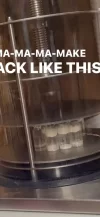
IMG_1592.webp
 
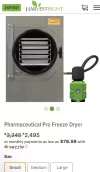
damn, the OPs AI thingy is pretty dang bad then, or just going off of Industrial quantities/machinery. I stand corrected, if this thing can be reliebly used for lypholizing vials of peps

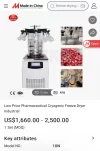
It can but the programming capabilities are limited. There are better, cheaper options:

IMG_2205.webp

It's not the rocket science you may have been led to believe. Now with more and more peptide and rHGH "raws" being sold, we're getting a glimpse into how
vendors like QSC "manufactured" their own peptides.

You measure out the raw and excipients (usually just mannitol for UGL), along with the appropriate amount of distilled water, mix. fill 3ml vials with a syringe through a .22um PES filter, put the rubber stopper on (they are designed for lyophilization), stick into the vacuum freeze dryer, start the time and temp program running. When it's done crimp the metal tops on. That's it.

It also explains why Jano finds a high proportion of peptides unsterile. Because while the peptides are being made in a lab, the finished product is being pumped out of someone's filthy apartment,

1g rHGH RAWS $500 makes thirty 10iu x 10 kits, with vials and mannitol, for about $20 each.

If CBP manages to really stop peptides being shipped to the US, the raws will start coming in and being finished domestically,

50g of rHGH could fit in the barrel of a sharpie marker and make $50,000 of rHGH kits at current SSA prices.
 
Last edited:
man, i could use my own excipients? that sounds sweet. only need to land a good job first, then i will be golden with my own home lypholized GH. ( i will never do this it sounds like a lot of space taken up by machinery and i dont have any extra rooms to store all this stuff)
 
man, i could use my own excipients? that sounds sweet. only need to land a good job first, then i will be golden with my own home lypholized GH. ( i will never do this it sounds like a lot of space taken up by machinery and i dont have any extra rooms to store all this stuff)

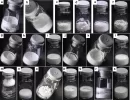
A few months ago someone popped into the forum with pics of what I'm certain was someone's first horrible attempt at "homebrew" rHGH vials and sell them like "systemic inflammation special" bathtub gear to locals at the gym.

Remember the "ugly vials" SRY was selling at a discount? Pretty sure that was someone who didn't practice lyophilizing just mannitol to get their "cake" right before doing it with expensive peptide raws.

IMG_2207.webp
 
A few months ago someone popped into the forum with pics of what I'm certain was someone's first horrible attempt at "homebrew" rHGH vials and sell them like "systemic inflammation special" bathtub gear to locals at the gym.

Remember the "ugly vials" SRY was selling at a discount? Pretty sure that was someone who didn't practice lyophilizing just mannitol to get their "cake" right before doing it with expensive peptide raws.

View attachment 341470
Yeah, I totally get your point. And this is exactly why I want to first learn the basic procedures and recipes – so I don’t screw things up like that guy you mentioned with the “ugly vials.”


Before moving on to real peptide raws, I’d rather practice and make sure I understand the fundamentals – how to prepare, handle, and lyophilize correctly – instead of ending up with a disaster and wasted material.


If you can point me towards the proper step-by-step basics or share some tried-and-tested formulations for starting out, that would be incredibly helpful.
 
Back
Top