Myostatin

METHODS AND FINDINGS: We injected a nanoparticle complex containing myostatin-siRNA and ATCOL (Mst-siRNA/ATCOL) into the masseter muscles

awesome. cant wait to inject nanoparticle complexes! hows the pip anyway?

edit: seriously though, these studies are pretty interesting. I wonder how long until the RC companies have this stuff for researching?
 
Highlights
• Aged mice were treated with a myostatin inhibitor (propeptide-Fc)
• The inhibitor significantly increased muscle mass and muscle fiber size of aged mice in vivo
• There was no significant bone response to propeptide treatment


Arounleut P, Bialek P, Liang LF, et al. A Myostatin Inhibitor (Propeptide-Fc) Increases Muscle Mass and Muscle Fiber Size in Aged Mice but Does not Increase Bone Density or Bone Strength. Exp Gerontol. A Myostatin Inhibitor (Propeptide-Fc) Increases Muscle Mass and Muscle Fiber Size in Aged Mice but Does not Increase Bone Density or Bone Strength

Loss of muscle and bone mass with age are significant contributors to falls and fractures among the elderly. Myostatin deficiency is associated with increased muscle mass in mice, dogs, cows, sheep and humans, and mice lacking myostatin have been observed to show increased bone density in the limb, spine, and jaw.

Transgenic overexpression of myostatin propeptide, which binds to and inhibits the active myostatin ligand, also increases muscle mass and bone density in mice. We therefore sought to test the hypothesis that in vivo inhibition of myostatin using an injectable myostatin propeptide (GDF8 propeptide-Fc) would increase both muscle mass and bone density in aged (24 mo) mice. Mice were injected weekly (20 mg/kg body weight) with recombinant myostatin propeptide-Fc (PRO) or vehicle (VEH; saline) for four weeks.

There was no difference in body weight between the two groups at the end of the treatment period, but PRO treatment significantly increased mass of the tibialis anterior muscle (+7%) and increased muscle fiber diameter of the extensor digitorum longus (+16%) and soleus (+6%) muscles compared to VEH treatment.

Bone volume relative to total volume (BV/TV) of the femur calculated by microCT did not differ significantly between PRO- and VEH-treated mice, and ultimate force (Fu), stiffness (S), toughness (U) measured from three-point bending tests also did not differ significantly between groups. Histomorphometric assays also revealed no differences in bone formation or resorption in response to PRO treatment.

These data suggest that while developmental perturbation of myostatin signaling through either gene knockout or transgenic inhibition may alter both muscle and bone mass in mice, pharmacological inhibition of myostatin in aged mice has a more pronounced effect on skeletal muscle than on bone.
 
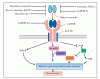
Summary of Therapeutic Invention Points in The Myostatin Signaling Pathway

Myostatin binds to its receptor complex ActRIIB/Alk 4 or 5 on skeletal muscle resulting in activation of the Smad 2/3, mitogen-activated protein kinase and inhibition of the PI3K intracellular signaling pathways that together result in gene transcriptional changes and effects on protein synthesis that ultimately give rise to muscle atrophy.

Myostatin pathway inhibitors act extracellularly by either binding myostatin directly (Fstl3, Follistatin, myostatin antibody, GASP1, myostatin propeptide, decorin peptides, ActRIIB-Fc) or by binding its receptor complex (ActRIIB antibody) in order to block myostatin engaging its receptor complex and activating downstream signaling.

Some of the inhibitors are naturally occurring (myostatin propeptide, Gasp1, follistatin, Fstl3) whereas others are engineered (myostatin antibody, ActRIIB antibody, ActRIIB-Fc).

—I represent inhibitory activities. ? represent activating activities. Ab = antibody.

therapeutic-invention-point.gif

Smith RC, Lin BK. Myostatin inhibitors as therapies for muscle wasting associated with cancer and other disorders. Curr Opin Support Palliat Care. Myostatin inhibitors as therapies for muscle wasting associa... : Current Opinion in Supportive and Palliative Care

PURPOSE OF REVIEW: This review summarizes recent progress in the development of myostatin inhibitors for the treatment of muscle wasting disorders. It also focuses on findings in myostatin biology that may have implications for the development of antimyostatin therapies.

RECENT FINDINGS: There has been progress in evaluating antimyostatin therapies in animal models of muscle wasting disorders. Some programs have progressed into clinical development with initial results showing positive impact on muscle volume.In normal mice myostatin deficiency results in enlarged muscles with increased total force but decreased specific force (total force/total mass). An increase in myofibrillar protein synthesis without concomitant satellite cell proliferation and fusion leads to muscle hypertrophy with unchanged myonuclear number. A specific force reduction is not observed when atrophied muscle, the predominant therapeutic target of myostatin inhibitor therapy, is made myostatindeficient.Myostatin has been shown to be expressed by a number of tumor cell lines in mice and man.

SUMMARY: Myostatin inhibition remains a promising therapeutic strategy for a range of muscle wasting disorders.
 
So , long question short : are there any myostatin inhibitor products on the market already ??? ( black market or pharma ) i did google it but i couldn't find anything that i was expecting .
 
Li X, Wang SJ, Tan SC, et al. The A55T and K153R polymorphisms of MSTN gene are associated with the strength training-induced muscle hypertrophy among Han Chinese men. J Sports Sci. An Error Occurred Setting Your User Cookie

Myostatin, encoded by the MSTN gene, is a strong regulator of skeletal muscle growth. The present study aimed to investigate whether the A55T and K153R polymorphisms of MSTN were associated with the strength training-induced muscle hypertrophy among Han Chinese men. A total of 94 healthy, untrained men were recruited for an 8-week strength training programme. The thicknesses of biceps and quadriceps, along with anthropometric measurements of the participants, were assessed before and after the programme. The MSTN polymorphisms were subsequently genotyped employing polymerase chain reaction-restriction fragment length polymorphism technique and confirmed by DNA sequencing. One-way analysis of variance was used to compare the pre- and post-training measurements between carriers of different polymorphic genotypes. Our results indicated that individuals with AT + TT genotype of the A55T polymorphism showed a significant increase in the thickness of biceps (0.292 +/- 0.210 cm, P = 0.03), but not quadriceps (0.254 +/- 0.198 cm, P = 0.07), compared to carriers of AA genotype. For the K153R polymorphism, the increases in the thicknesses of both biceps (0.300 +/- 0.131 cm) and quadriceps (0.421 +/- 0.281 cm) were significantly higher among individuals with KR than those with KK genotypes (P < 0.01 for both muscles). The results obtained therefore suggested a possible association between the two polymorphisms and the strength training-induced muscle hypertrophy among men of Han Chinese ethnicity.
 
McFarlane C, Vajjala A, Arigela H, et al. Negative Auto-Regulation of Myostatin Expression is Mediated by Smad3 and MicroRNA-27. PLoS One 2014;9(1):e87687. PLOS ONE: Negative Auto-Regulation of Myostatin Expression is Mediated by Smad3 and MicroRNA-27

Growth factors, such as myostatin (Mstn), play an important role in regulating post-natal myogenesis. In fact, loss of Mstn has been shown to result in increased post-natal muscle growth through enhanced satellite cell functionality; while elevated levels of Mstn result in dramatic skeletal muscle wasting through a mechanism involving reduced protein synthesis and increased ubiquitin-mediated protein degradation.

Here we show that miR-27a/b plays an important role in feed back auto-regulation of Mstn and thus regulation of post-natal myogenesis. Sequence analysis of Mstn 3' UTR showed a single highly conserved miR-27a/b binding site and increased expression of miR-27a/b was correlated with decreased expression of Mstn and vice versa both in vitro and in mice in vivo.

Moreover, we also show that Mstn gene expression was regulated by miR-27a/b. Treatment with miR-27a/b-specific AntagomiRs resulted in increased Mstn expression, reduced myoblast proliferation, impaired satellite cell activation and induction of skeletal muscle atrophy that was rescued upon either blockade of, or complete absence of, Mstn.

Consistent with this, miR-27a over expression resulted in reduced Mstn expression, skeletal muscle hypertrophy and an increase in the number of activated satellite cells, all features consistent with impaired Mstn function.

Loss of Smad3 was associated with increased levels of Mstn, concomitant with decreased miR-27a/b expression, which is consistent with impaired satellite cell function and muscular atrophy previously reported in Smad3-null mice. Interestingly, treatment with Mstn resulted in increased miR-27a/b expression, which was shown to be dependent on the activity of Smad3.

These data highlight a novel auto-regulatory mechanism in which Mstn, via Smad3 signaling, regulates miR-27a/b and in turn its own expression. In support, Mstn-mediated inhibition of Mstn 3' UTR reporter activity was reversed upon miR-27a/b-specific AntagomiR transfection. Therefore, miR-27a/b, through negatively regulating Mstn, plays a role in promoting satellite cell activation, myoblast proliferation and preventing muscle wasting.

 
McFarlane C, Vajjala A, Arigela H, et al. Negative Auto-Regulation of Myostatin Expression is Mediated by Smad3 and MicroRNA-27. PLoS One 2014;9(1):e87687. PLOS ONE: Negative Auto-Regulation of Myostatin Expression is Mediated by Smad3 and MicroRNA-27

Growth factors, such as myostatin (Mstn), play an important role in regulating post-natal myogenesis. In fact, loss of Mstn has been shown to result in increased post-natal muscle growth through enhanced satellite cell functionality; while elevated levels of Mstn result in dramatic skeletal muscle wasting through a mechanism involving reduced protein synthesis and increased ubiquitin-mediated protein degradation.

Here we show that miR-27a/b plays an important role in feed back auto-regulation of Mstn and thus regulation of post-natal myogenesis. Sequence analysis of Mstn 3' UTR showed a single highly conserved miR-27a/b binding site and increased expression of miR-27a/b was correlated with decreased expression of Mstn and vice versa both in vitro and in mice in vivo.

Moreover, we also show that Mstn gene expression was regulated by miR-27a/b. Treatment with miR-27a/b-specific AntagomiRs resulted in increased Mstn expression, reduced myoblast proliferation, impaired satellite cell activation and induction of skeletal muscle atrophy that was rescued upon either blockade of, or complete absence of, Mstn.

Consistent with this, miR-27a over expression resulted in reduced Mstn expression, skeletal muscle hypertrophy and an increase in the number of activated satellite cells, all features consistent with impaired Mstn function.

Loss of Smad3 was associated with increased levels of Mstn, concomitant with decreased miR-27a/b expression, which is consistent with impaired satellite cell function and muscular atrophy previously reported in Smad3-null mice. Interestingly, treatment with Mstn resulted in increased miR-27a/b expression, which was shown to be dependent on the activity of Smad3.

These data highlight a novel auto-regulatory mechanism in which Mstn, via Smad3 signaling, regulates miR-27a/b and in turn its own expression. In support, Mstn-mediated inhibition of Mstn 3' UTR reporter activity was reversed upon miR-27a/b-specific AntagomiR transfection. Therefore, miR-27a/b, through negatively regulating Mstn, plays a role in promoting satellite cell activation, myoblast proliferation and preventing muscle wasting.

Hey Doc, great Article.
Do you know what happened with the Research that Wyeth Laboratories was doing back in 2007 - 08 I believe it was.
A paper was Published on the Clinical Phase I/II Trial results of Myo-029.
A Myostatin Inhibitor. I never heard anything else on it.................JP
P.S.
They were touting it as the "Holy Grail" of serious muscle mass.
 
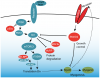
Model of Signaling Pathways Involved In Muscle Regeneration

The satellite cell activating protein synthesis signaling (blue) and the interplay between myogenesis signaling (green) and myostatin-mediated growth control and protein degradation (red) which may form a negative feed-back loop to control growth or regeneration.

journal.pone.0100594.g001.png

Hauerslev S, Vissing J, Krag TO. Muscle Atrophy Reversed by Growth Factor Activation of Satellite Cells in a Mouse Muscle Atrophy Model. PLoS One 2014;9(6):e100594. http://www.plosone.org/article/info:doi/10.1371/journal.pone.0100594


Muscular dystrophies comprise a large group of inherited disorders that lead to progressive muscle wasting. We wanted to investigate if targeting satellite cells can enhance muscle regeneration and thus increase muscle mass.

We treated mice with hepatocyte growth factor and leukemia inhibitory factor under three conditions: normoxia, hypoxia and during myostatin deficiency.

We found that hepatocyte growth factor treatment led to activation of the Akt/mTOR/p70S6K protein synthesis pathway, up-regulation of the myognic transcription factors MyoD and myogenin, and subsequently the negative growth control factor, myostatin and atrophy markers MAFbx and MuRF1.

Hypoxia-induced atrophy was partially restored by hepatocyte growth factor combined with leukemia inhibitory factor treatment. Dividing satellite cells were three-fold increased in the treatment group compared to control. Finally, we demonstrated that myostatin regulates satellite cell activation and myogenesis in vivo following treatment, consistent with previous findings in vitro.

Our results suggest, not only a novel in vivo pharmacological treatment directed specifically at activating the satellite cells, but also a myostatin dependent mechanism that may contribute to the progressive muscle wasting seen in severely affected patients with muscular dystrophy and significant on-going regeneration.

This treatment could potentially be applied to many conditions that feature muscle wasting to increase muscle bulk and strength.
 
I believe it was dr sin jin li that was/ is doning research on this. Back in the mid 90s I think, he was looking for human test subjects for study. I applied but did not get picked. Dam you had to fill out a bunch of shit too.
Ghrp- 6 is supposed to be a myo inhibitor. I tried it but at $ 20 bucks dont no if it was real.
I do no what ever it was I increased all my lifts by 5 reps within 2 weeks of using it .
I did papers on myostatin back in college (90s). I do not think it is much closer now vs then to be a marketable product. After 20 years I am still hopeing after all if Mighty Mouse can gain 337% more lean muscle mass with no adverse side effects just running in a wheel. I can only think what a person could do with it.
 
Mouisel E, Relizani K, Mille-Hamard L, et al. Myostatin is a key mediator between energy metabolism and endurance capacity of skeletal muscle. Am J Physiol Regul Integr Comp Physiol. http://ajpregu.physiology.org/content/early/2014/06/20/ajpregu.00377.2013

Myostatin (Mstn) participates in the regulation of skeletal muscle size and emerges as a regulator of muscle metabolism. We here hypothesized that lack of myostatin profoundly de-presses oxidative phosphorylation dependent muscle function. For this extent, we explored Mstn-/- mice as a model for the constitutive absence of myostatin and AAV-mediated over-expression of myostatin propeptide as a model of myostatin blockade in adult wild type mice.

We show that muscles from Mstn-/- mice, although larger and stronger, fatigue extremely rapidly. Myostatin deficiency shifts muscle from aerobic towards anaerobic energy metabolism as evidenced by decreased mitochondrial respiration, reduced expression of PPAR transcriptional regulators, increased enolase activity, and exercise induced lactic acido-sis.

In consequence, constitutively reduced myostatin signaling diminishes exercise capacity, while the hypermuscular state of Mstn-/- mice increases oxygen consumption and the energy cost of running.

We wondered whether these results are the mere consequence of the congenital fiber-type switch towards a glycolytic phenotype of constitutive Mstn-/- mice. Hence we over-expressed myostatin propeptide in adult mice, which did not affect fiber-type distribution, while nonetheless causing increased muscle fatigability, diminished exercise capacity and decreased Pparb/d and Pgc1a expression.

In conclusion, our results suggest that myostatin endows skeletal muscle with high oxidative capacity and low fatigability, thus regulating the delicate balance between muscle mass, muscle force, energy metabolism and endurance capacity.
 
Padhi D, Higano CS, Shore N, Sieber P, Rasmussen E, Smith MR. Pharmacologic Inhibition of Myostatin and Changes in Lean Body Mass and Lower Extremity Muscle Size in Patients Receiving Androgen Deprivation Therapy for Prostate Cancer. The Journal of Clinical Endocrinology & Metabolism. http://press.endocrine.org/doi/abs/10.1210/jc.2014-1271

Context: Myostatin is a negative regulator of muscle growth. Androgen deprivation (ADT) is associated with muscle loss and increased body fat and currently available therapies have limited efficacy to treat this complication. The anti-myostatin peptibody (AMG 745/Mu-S) markedly attenuated muscle loss and decreased fat accumulation in orchiectomized mice.

Objective: The objective was to evaluate safety, pharmacokinetics (PK) and muscle efficacy of AMG 745 in men undergoing ADT for non-metastatic prostate cancer.

Methods: This was a randomized, blinded, placebo-controlled multiple dose phase 1 study of AMG 745 given for 28 days. The endpoint of percent change from baseline in lean body mass (LBM) as assessed by dual x-ray absorptiometry (DXA) was pre-specified.

Results: Rates of adverse events (AMG 745 versus placebo) were: diarrhea (13% versus 9%), fatigue (13% versus 4%), contusion (10% versus 0%), and injection site bruising (6% versus 4%). Exposure increased linearly from 0.3 mg/kg to 3 mg/kg. AMG 745 significantly increased LBM in the 3 mg/kg versus placebo groups on Day 29 by 2.2% (± 0.8% standard error [SE]), p = 0.008; in exploratory fat mass analysis, a decrease – 2.5% (± 1.0% SE), p = 0.021 was observed. Pharmacodynamic changes in muscle and fat were maintained at follow-up, 1 month after Day 29.

Conclusion: Four weekly SC doses of AMG 745 were well tolerated and were associated with increased LBM and decreased fat in the men receiving ADT for non-metastatic prostate cancer. Results support further investigation of AMG 745 in clinical settings with muscle loss and atrophy.
 
Last edited:
So , long question short : are there any myostatin inhibitor products on the market already ??? ( black market or pharma ) i did google it but i couldn't find anything that i was expecting .
there are, and everyone that has tried them has reported nothing good about them
 
Question : lets say i can get my hands in some Foli . What's the difference between the human grade Foli and the animal grade one ? When i spoke with my supplier he said that even if he could get me human grade Foli it will cost hundreds or even thousands of dollars . What are the risks to take animal grade follistatin ? I don't remember the exact dosage of Foli right now for men but how strong it is compared to a simple cycle of test e ? Would u gain more muscle during his 12 weeks ? How much of it you keep ? I would suggest more than test . How to be sure that u r not gettin some bad quality chemical that will only fuck u up ?
 
Are there any other myostatin inhibitors than Foli ? I just don't get it reading the post . I m sorry for the question if it sounds stupid
 
Re: When Will We Have a SAFE & EFFECTIVE Myostatin Inhibitor in the Future?


yes flex wheeler claims this or has in the past - but its pure bullsh*t

no tests have ever come to show he has the condition and if he did he would have no problems winning olympias - he would have been unbeatable with riods and this condition


no he doesnt but has claimed to in the past as a coverup for massive amounts of gear


if I'm not mistaken Flex Wheeler was the only body builder tested to not have the myostatin gene. Flex probably would of won Mr. O, but he came down with kidney failure and stopped BB.
 
Are there any other myostatin inhibitors than Foli ? I just don't get it reading the post . I m sorry for the question if it sounds stupid


if my memory serves me right. there was mHGH they put in a blank virus and injected to the muscles to make rats gain 20% more muscle sitting on the couch, meaning they took their wheels away, so no exercising at all. I heard you could get it done in the UK for $50k and China for $25k, but never researched, cause I don't have that kind of money.
 
So AMG 745 is a different product than Follistatin ? I wanna see what the future brings for these kinds if PEDs
 
Myostatin Induces Insulin Resistance

Capsule

· Background: Excess nutrient intake and elevated levels of Mstn are both associated with the development of insulin resistance.
· Results: High calorie diet increases Mstn levels. Mstn induces insulin resistance through Cblb.
· Conclusion: Mstn promotes insulin resistance via Cblb-mediated degradation of IRS1 in response to energy dense diets.
· Significance: Inhibition of Mstn is a potential therapeutic to combat insulin resistance and T2D.

Bonala S, Lokireddy S, McFarlane C, Patnam S, Sharma M, Kambadur R. Myostatin induces insulin resistance via Casitas B-lineage lymphoma b (Cblb)-mediated degradation of insulin receptor substrate 1 (IRS1) protein in response to high calorie diet intake. J Biol Chem 2014;289(11):7654-70. http://www.jbc.org/content/289/11/7654.abstract

To date a plethora of evidence has clearly demonstrated that continued high calorie intake leads to insulin resistance and type-2 diabetes with or without obesity. However, the necessary signals that initiate insulin resistance during high calorie intake remain largely unknown.

Our results here show that in response to a regimen of high fat or high glucose diets, Mstn levels were induced in muscle and liver of mice. High glucose- or fat-mediated induction of Mstn was controlled at the level of transcription, as highly conserved carbohydrate response and sterol-responsive (E-box) elements were present in the Mstn promoter and were revealed to be critical for ChREBP (carbohydrate-responsive element-binding protein) or SREBP1c (sterol regulatory element-binding protein 1c) regulation of Mstn expression

Further molecular analysis suggested that the increased Mstn levels (due to high glucose or fatty acid loading) resulted in increased expression of Cblb in a Smad3-dependent manner.

Casitas B-lineage lymphoma b (Cblb) is an ubiquitin E3 ligase that has been shown to specifically degrade insulin receptor substrate 1 (IRS1) protein. Consistent with this, our results revealed that elevated Mstn levels specifically up-regulated Cblb, resulting in enhanced ubiquitin proteasome-mediated degradation of IRS1.

In addition, over expression or knock down of Cblb had a major impact on IRS1 and pAkt levels in the presence or absence of insulin. Collectively, these observations strongly suggest that increased glucose levels and high fat diet, both, result in increased circulatory Mstn levels. The increased Mstn in turn is a potent inducer of insulin resistance by degrading IRS1 protein via the E3 ligase, Cblb, in a Smad3-dependent manner.
 

Sponsors

Back
Top