Need spoon feeding please. Shopping list review.

Human_backhoe

New Member
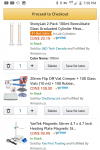
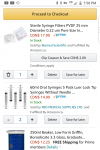
Just looking for some experienced guy to give a second look at what I am about to buy.

Don't know how to get the filters on the 60ml luer lock syringe. Is there a adapter I need?

Do I need blunt filling needles? They all seem to be luer lock but filters are not....

Screenshot_20201120-195818.pngScreenshot_20201120-195811.png


Edit. Am I missing anything? This will be my first attempt at brewing.
 
Is this for a small brew or you looking to do more in the future?

There's no need for the magnetic hot plate. A digital coffee cup warmer will do just fine. You can stir with a sterilized stainless steel spoon.

Stick with pyrex beakers. They're not all that accurate compared to a class A graduated cylinders, but you can easily sterilize them. Graduated cylinders are a pain to sterilize at home if you're using a pressure cooker method and cooking them in the oven upside down, this can easily be done with beakers. Cylinders also need a long brush to go down into them to clean them out. The truth is syringes in 3ml, 5ml, 20ml are plenty big enough to measure out your solvents. You don't need a graduated cylinder if you're just cooking up a batch for yourself. I also like to have glass covers for my beakers that are easily sterilized so I can cover my beaker while the hormone dissolves in the warming oil.

To scale or not to scale, well scales are useful if you have two of them and a calibration weight set to compare. Scales if busted are paraphernalia according to the law, so using displacement of 0.9ml per gram is good enough for the home brewer.

The thing about glassware is you want to sterilize submersed in distilled H20, flip them upside down on your oven tray covered with tin foil along with any other utensils you need and cook them at 250 for 60 minutes to make sure all moisture is gone. Your glassware will come out pristine with no water spots. Pull your tray out with all the vials upside down and from there you can go to work like you were performing surgery, gloves, long sleeve nylon jacket with no loose fibers and face mask.

If you plan to use syringe filters be prepared for a serious pain. First of all you don't have enough syringes. I'm not sure those oral syringes are even sterile. Pushing more than 100ml of oil through a 0.22 micron filters is a slow process, very slow. The syringe filters you chose are fine, those tend not to leak under pressure, although I prefer whatman as they hold up to pressure even better, something you don't want is a rupture of your filter and it leaking all over the place. Let your oil cool off a little before running it through your filter so you don't compromise the filter. You can rig up 60cc luer lock syringe with a caulking gun and go very slowly so you don't exceed the pressure of your filter, this will save your hands and a lot of cussing.

Most of us are using bottle top filters, usually hooked up to either a hand pump or in my case electric pump. You can also get autofill bottle top filters. These tend to be pricey so I don't know what's in your budget.

Keep it simple, don't buy a bunch of shit you don't need, you're a home brewer. The main thing is sterility.

Even after you've capped your vials, it's always a good idea to heat them up one last time on the coffee cup warmer for 40 minutes to ensure they're sterile.

Leave a 2ml air gap between the stop and the fill level of your oil in your vials. You want that when you do your last sterilization so you don't have to use a vent needle from a bulging stopper and it's good for letting the oil breath without contacting the stopper.

You'll be soaking our rubber stoppers in alcohol for 1 hour before you transfer them to your sterile work tray to let them air dry completely before capping.

Needles you'll need are 18g x 1.5". You want a longer needle than 1" it's easier for you to keep it inside your vials when filling and the large gauge needle reduces resistance which you will need if you want to use syringe filters that flow very slowly.
 
Why the crimper? Are to planning to make your own sterile vials? For personal use brewing, it’s way easier to just buy pre-sterilized vials.

As for the graduated cylinder, 100ml is good but a 50ml and a 25 may be useful as well. For accuracy purposes, you want to use the smallest cylinder possible in regards to the amount you’re measuring.
 
Why the crimper? Are to planning to make your own sterile vials? For personal use brewing, it’s way easier to just buy pre-sterilized vials.

As for the graduated cylinder, 100ml is good but a 50ml and a 25 may be useful as well. For accuracy purposes, you want to use the smallest cylinder possible in regards to the amount you’re measuring.
Haven't you found that for practical purposes a graduated cylinder is a pain to use and keep clean.

I worked in laboratories for 25 years and only used them on rare occasions. If I needed to measure out anything with accuracy I used glass volumetric pipettes. We used cylinders so little that we actually used plastic because we pretty much considered them worthless even class A cylinders.

I maintain that a home brewer needs 3ml and 5ml syringes for his BA, 20ml syringes for his BB, EO. Once those are added displacement in a beaker is all he's gonna need. Granted beakers aren't that accurate, they can be off by as much as 5ml, but displacement of small increments are gonna reduce the error to the point it's not that important. Say you're adding 10 grams of raws to your oil, that's 9ml of displacement, that should reduce your margin of error.

I just like to keep things as simple as possible for the average homebrewer.
 
Why the crimper? Are to planning to make your own sterile vials? For personal use brewing, it’s way easier to just buy pre-sterilized vials.

As for the graduated cylinder, 100ml is good but a 50ml and a 25 may be useful as well. For accuracy purposes, you want to use the smallest cylinder possible in regards to the amount you’re measuring.
I've personally never been impressed with pre-sterilized vials, the rubber stoppers are typically harder to penetrate making it more likely to core due to the needle.

Also I don't think they do such a hot job of making sure the inside of those vials are spotless. I've used them and will use them if I need to travel with a 5ml vial, but I notice they can have very small floaters and I've used multiple brands with this problem.

Washing your vials really well, cooking them for 45 minutes in a pressure cooker with distilled H20 and baking them upside down in an oven is a pain, but they come out spotless.
 
Damn! Thank you all.

I definitely plan on sterilization of my own vials. I don't care to trust the pre done ones. Too much left to chance in MY mind! It looks like I might switch to the bottle top fillers instead of the caulking gun method. I have ton of vacuum generators laying around. All the ones I have seen on Amazon either have shit reviews or you can't get sterile PVDF filters for them.

After filtration, is a sterile syringe with a blunt filler tip acceptable to fill vials?

I plan on brewing enough for the whole family. So quite a bit in the end. Plus is seems like I might really enjoy the process.

One day I will go fully automated. Just want to do a few batches by hand and learn as much as possible first. I have a stock of peristaltic pumps kicking around. I just don't have the time in life to write the code and wire up sensors for pressure so I don't blow out filters.
 
Haven't you found that for practical purposes a graduated cylinder is a pain to use and keep clean.

I worked in laboratories for 25 years and only used them on rare occasions. If I needed to measure out anything with accuracy I used glass volumetric pipettes. We used cylinders so little that we actually used plastic because we pretty much considered them worthless even class A cylinders.

I maintain that a home brewer needs 3ml and 5ml syringes for his BA, 20ml syringes for his BB, EO. Once those are added displacement in a beaker is all he's gonna need. Granted beakers aren't that accurate, they can be off by as much as 5ml, but displacement of small increments are gonna reduce the error to the point it's not that important. Say you're adding 10 grams of raws to your oil, that's 9ml of displacement, that should reduce your margin of error.

I just like to keep things as simple as possible for the average homebrewer.
Not at all, I don’t worry about sterilizing my beakers, cylinders etc. That’s all redundant if you’re using sterile syringe filters into pre-sterilized vials.
I’ve also had zero issues with the pre-sterilized vials I buy. They’ve all been crystal clear, zero floaters, and they have silicone stoppers I believe.
For 99% of brewers I think this is the safest way to produce personal amounts of gear. There are way less chances to introduce contaminants to your final product.
 
After filtration, is a sterile syringe with a blunt filler tip acceptable to fill vials?
Use an 18g regular needle. The one end of the syringe filter is a slip fitting which you just wedge your 18g pin on. The other end of the filter is leur lock, which will twist onto whatever size syringe you use to fill the vials.
 
Not at all, I don’t worry about sterilizing my beakers, cylinders etc. That’s all redundant if you’re using sterile syringe filters into pre-sterilized vials.
I’ve also had zero issues with the pre-sterilized vials I buy. They’ve all been crystal clear, zero floaters, and they have silicone stoppers I believe.
For 99% of brewers I think this is the safest way to produce personal amounts of gear. There are way less chances to introduce contaminants to your final product.
Spending decades looking through a microscope has me obsessed with sterility.

I will never trust a filter alone because there is a degree of uncertainty as to whether there could be a microscopic defect in the filter. Now if you filter it twice, that provides some assurance. I personally recommend running your brew through a 0.45 and 0.22 micron filter. You will pre-saturate these filters with sterile oil so you don't lose too much finished product containing hormone.

Smallest bacteria such as cocci can go down to 2 microns, the rods/bacilli can be as narrow as 1 micron.

This is why I insist on heat sterilization before I ever inject anything and not extreme heat, just 140 F for 40 minutes will do the job.
 
Spending decades looking through a microscope has me obsessed with sterility.

I will never trust a filter alone because there is a degree of uncertainty as to whether there could be a microscopic defect in the filter. Now if you filter it twice, that provides some assurance. I personally recommend running your brew through a 0.45 and 0.22 micron filter. You will pre-saturate these filters with sterile oil so you don't lose too much finished product containing hormone.

Smallest bacteria such as cocci can go down to 2 microns, the rods/bacilli can be as narrow as 1 micron.

This is why I insist on heat sterilization before I ever inject anything and not extreme heat, just 140 F for 40 minutes will do the job.
I can certainly understand your obsession based on your occupation. I’m sure you’ve forgotten more things then I’ll ever know on the subject.
I like to think that even if bacteria were to pass through the .22 micron filter it would be neutralized by the BA and perhaps even the antibacterial and fungal properties of some carrier oils.
 
Haven't you found that for practical purposes a graduated cylinder is a pain to use and keep clean.

I worked in laboratories for 25 years and only used them on rare occasions. If I needed to measure out anything with accuracy I used glass volumetric pipettes. We used cylinders so little that we actually used plastic because we pretty much considered them worthless even class A cylinders.

I maintain that a home brewer needs 3ml and 5ml syringes for his BA, 20ml syringes for his BB, EO. Once those are added displacement in a beaker is all he's gonna need. Granted beakers aren't that accurate, they can be off by as much as 5ml, but displacement of small increments are gonna reduce the error to the point it's not that important. Say you're adding 10 grams of raws to your oil, that's 9ml of displacement, that should reduce your margin of error.

I just like to keep things as simple as possible for the average homebrewer.
I love my graduated cylinders... I used to use syringes to measure and they are very accurate and simple but not good for larger volumes. Good idea to use syringe measuring if you're using syringes filters. They are hard enough without added contaminants. I dnt clean my graduated cylinders often. I store them upside down one a beaker with paper towel in the bottom. Probably adds some contaminants (which is very bad for syringes filters), but that doesn't slow down a bottle top very much
 
Is this for a small brew or you looking to do more in the future?

There's no need for the magnetic hot plate. A digital coffee cup warmer will do just fine. You can stir with a sterilized stainless steel spoon.

Stick with pyrex beakers. They're not all that accurate compared to a class A graduated cylinders, but you can easily sterilize them. Graduated cylinders are a pain to sterilize at home if you're using a pressure cooker method and cooking them in the oven upside down, this can easily be done with beakers. Cylinders also need a long brush to go down into them to clean them out. The truth is syringes in 3ml, 5ml, 20ml are plenty big enough to measure out your solvents. You don't need a graduated cylinder if you're just cooking up a batch for yourself. I also like to have glass covers for my beakers that are easily sterilized so I can cover my beaker while the hormone dissolves in the warming oil.

To scale or not to scale, well scales are useful if you have two of them and a calibration weight set to compare. Scales if busted are paraphernalia according to the law, so using displacement of 0.9ml per gram is good enough for the home brewer.

The thing about glassware is you want to sterilize submersed in distilled H20, flip them upside down on your oven tray covered with tin foil along with any other utensils you need and cook them at 250 for 60 minutes to make sure all moisture is gone. Your glassware will come out pristine with no water spots. Pull your tray out with all the vials upside down and from there you can go to work like you were performing surgery, gloves, long sleeve nylon jacket with no loose fibers and face mask.

If you plan to use syringe filters be prepared for a serious pain. First of all you don't have enough syringes. I'm not sure those oral syringes are even sterile. Pushing more than 100ml of oil through a 0.22 micron filters is a slow process, very slow. The syringe filters you chose are fine, those tend not to leak under pressure, although I prefer whatman as they hold up to pressure even better, something you don't want is a rupture of your filter and it leaking all over the place. Let your oil cool off a little before running it through your filter so you don't compromise the filter. You can rig up 60cc luer lock syringe with a caulking gun and go very slowly so you don't exceed the pressure of your filter, this will save your hands and a lot of cussing.

Most of us are using bottle top filters, usually hooked up to either a hand pump or in my case electric pump. You can also get autofill bottle top filters. These tend to be pricey so I don't know what's in your budget.

Keep it simple, don't buy a bunch of shit you don't need, you're a home brewer. The main thing is sterility.

Even after you've capped your vials, it's always a good idea to heat them up one last time on the coffee cup warmer for 40 minutes to ensure they're sterile.

Leave a 2ml air gap between the stop and the fill level of your oil in your vials. You want that when you do your last sterilization so you don't have to use a vent needle from a bulging stopper and it's good for letting the oil breath without contacting the stopper.

You'll be soaking our rubber stoppers in alcohol for 1 hour before you transfer them to your sterile work tray to let them air dry completely before capping.

Needles you'll need are 18g x 1.5". You want a longer needle than 1" it's easier for you to keep it inside your vials when filling and the large gauge needle reduces resistance which you will need if you want to use syringe filters that flow very

Regarding the heating plate, aside from a few compounds isn’t it best to let the compounds fall into solution without heat by just stirring?
 
Regarding the heating plate, aside from a few compounds isn’t it best to let the compounds fall into solution without heat by just stirring?
Are you referring to the problem of it later crashing out of solution if you rely on heat to dissolve your raws.

You'll need some gentle heat(coffee cup warmer) to dissolve it. As long as you don't brew at too high a concentration then you'll be fine with your hormone not crashing.

For me I tend to brew mine with lower concentration and less solvents.

One thing you will always have the ability to do later is add more sterile oil or BB if you leave that 2ml air gap in the vials. If you find your solution crashing later on just add what you need to keep it from crashing.
 
Are you referring to the problem of it later crashing out of solution if you rely on heat to dissolve your raws.

You'll need some gentle heat(coffee cup warmer) to dissolve it. As long as you don't brew at too high a concentration then you'll be fine with your hormone not crashing.

For me I tend to brew mine with lower concentration and less solvents.

One thing you will always have the ability to do later is add more sterile oil or BB if you leave that 2ml air gap in the vials. If you find your solution crashing later on just add what you need to keep it from crashing.
Yup exactly. I was under the impression that the bb should do all the dissolving with time and stirring and using heat to “force it” could result it it crashing later down the road.
 
Yup exactly. I was under the impression that the bb should do all the dissolving with time and stirring and using heat to “force it” could result it it crashing later down the road.

Heat increases the solubility of the solute so it's easier to force more hormone to dissolve into solution than would otherwise be possible at room temperature. End result is an oversaturated solution that will crash when returned to room temp.

Standard concentrations, with appropriate carrier and solvent %, stored at room temp won't crash just because they were heated.
 
Raws that are added to a cooled off oil with the proper ba and bb won't necessarily dissolve just because you have solvents. Try doing that with short esters that are a pain to dissolve without heat first, you'll be sitting there for days watching your cooled off beaker waiting for those crystals to dissolve.

I don't like too much bb in my brews or ba for that matter. I tend to stick with 1% ba because I'm brewing for myself and no more than 15% bb. I will brew at lower concentration of hormone because I feel that I can create a very smooth injectable with little pip this way.

These guys that are pushing 400mg/ml, that's not for the homebrewer.

Start with 200mg/ml for long esters and 80mg/ml for short esters, no esters 50mg/ml.
 
It looks like I might switch to the bottle top fillers instead of the caulking gun method

I would still keep the syringe filters as a backup. You'd be surprised, they come in handy to have around.

Aside from that, bottle top filters are the way to go. However, don't get the cheapest ones... The autofils used to be my preference but they have REALLY gone downhill in the last year or so. The filters will blow out mid filtration and I've had many crack at the base of the collection container and break the vacuum. As soon as I use up the ones I have, I'll never use them again.
 
I
I would still keep the syringe filters as a backup. You'd be surprised, they come in handy to have around.

Aside from that, bottle top filters are the way to go. However, don't get the cheapest ones... The autofils used to be my preference but they have REALLY gone downhill in the last year or so. The filters will blow out mid filtration and I've had many crack at the base of the collection container and break the vacuum. As soon as I use up the ones I have, I'll never use them again.
I feel like for a small homebrew application you could ensure more sterilization directly filtering into a pre sterilized vial vs pulling filtered oil out of a media bottle to then full the vile adding another variable of exposure
 

Sponsors

Back
Top