So I was trying to figure out why the aggregates appeared “globular” in your vial. Also the “wavy” appearance when you swirled it in the video was unusual. I thought they might be silicone contamination droplets, however those are round, and your “specks” had irregular edges like rHGH aggregates, but were translucent instead of the usual white:
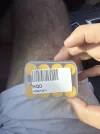
When I saw the insulin syringe, and the 3.5ml water it came together.
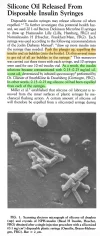
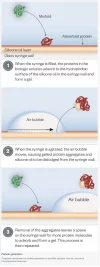
Insulin syringes are notorious for being heavily lubricated with silicone (SO). Multiple strokes increases the amount expelled significantly. With the amount of BAC, I knew that syringe had to be pumped until all the silicone was scraped off the cylinder walls, into the water and out through the needle:
View attachment 369216
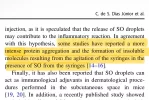
The issue with silicon is it causes proteins to aggregate:
View attachment 369222
Only one thing can make it much worse, flicking:
View attachment 369219
Silicone droplets stick to vial walls, and when rHGH comes onto contact with it, unfolds and forms a “translucent” gel aggregate. Movement knocks the aggregate “jellyfish” loose, and now the spot is available for another rHGH monomer to get stuck, unfold, and the process repeats.
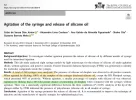
This is how it happens inside a prefilled syringe, but the same process occurs in a vial that’s being swirled, or the impact of just putting it on a hard surface, no flicking needed:
View attachment 369223
Suggest you switch to silicone free syringes for reconstituting, or any 3ml syringe so multiple strokes won’t be needed, to avoid this problem.
(The cold made them “disappear” because gelataneous aggregates and silicone droplets get denser in cold, sink to the bottom, and are essentially invisible in the solution. )