Optimal IGF 1 levels

  • Thread starter Thread starter Deleted member 123722
  • Start date Start date
D

Deleted member 123722

Guest
When taking HGH, what are the optimal supraphysiological IGF-1 ranges do we want to be in for cutting, and for bulking?

I bulked on 5ius and my range was 495; now I'm cutting and only using 3ius, so I'm assuming its in the high 300's; should I just be using five again, or will 300 be enough for a cut?

I've had my natty ranges test anywhere from 111 to 200.

Thanks.
 
IMO for cutting its not so much the igf1 level that matters as it is the effect each injection has on fat cells/fat burning (to put it simply) so just do 2iu 2-3x per day, one of which being before fasted cardio
 
Cutting makes hgh less effective. Capturing bloods on Monday to compare bulk vs cut hgh response
 
When taking HGH, what are the optimal supraphysiological IGF-1 ranges do we want to be in for cutting, and for bulking?

I bulked on 5ius and my range was 495; now I'm cutting and only using 3ius, so I'm assuming its in the high 300's; should I just be using five again, or will 300 be enough for a cut?

I've had my natty ranges test anywhere from 111 to 200.

Thanks.

It's not the igf1 it's the lipolysis and the prevention of fat accrual you get from GH that matters. GH also speeds up cortisol to cortisone production in visceral adipose tissues and this plays a big role too. And it elevates T4 -> T3 conversion.
 
That's a recipe for insulin resistance. Do not do that.
This is not true when done properly, and is common among competitors. I will add, although it should be common sense, to keep injections say 90mins away from food.
 
This is not true when done properly, and is common among competitors. I will add, although it should be common sense, to keep injections say 90mins away from food.

If something is common among competitors means absolutely nothing, and frankly it should mean just the opposite, about it being safe and healthy. They even use insulin to help with blood sugar, which even furthers insulin resistance. Nothing about that is good for insulin resistance.

I will add, although it should be common sense, to keep injections say 90mins away from food.

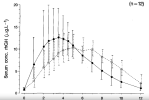
You realize that GH doesn't even peak at 90 mins? Pharmacokinetics for GH are a bit varying, but Tmax for SubQ is usually around 3 to 4h. And 2 to 3h for IM. You still have GH in you 12h after injection.

1677845581565.png

I've seen your posts about GH and meal timing before and you seem to be somewhat misguided, or just have very skewed health standards (no pun intended). But I am interested, why do you think that after 90m it's safe to eat carbs?
 
I've taken my GH the same way:

AM fasted with my coffee, then an hour later I eat my 1st meal. Then I hit the gym 45-1hr after I eat.

Had no issues doing it this way, and IIRC, @Type-IIx approved of this protocol because it hits during the gym.
 
I've taken my GH the same way:

AM fasted with my coffee, then an hour later I eat my 1st meal. Then I hit the gym 45-1hr after I eat.

Had no issues doing it this way, and IIRC, @Type-IIx approved of this protocol because it hits during the gym.

Poster above was talking about 3x daily injections not a single injection prior to working out. Working out does help with nutrient absorption (but it also slows down digestion), however, taking GH and an hour later eating carbs is not healthy, no mater if you train or not. It doesn't matter what somebody from the bodybuilding community approves, as people here have very skewed health standards and advice is mostly given in the context of lowering the severity of unwanted health outcomes, ie. lowering health risks, but certainly not alleviating them altogether. Also, wasn't that post about FFA and not insulin resistance? I don't remember ...

And you probably eat a heavy carb meal right after the gym too, right?

When I see a plethora of sane, mentally stable, and especially non brain foggy (non depersonalized, dissociated) persons, who exhibit good executive functions!, and take large amounts of GH per day in such a manner (with a heavy carb load), show at my doorstep, I'm going to call bullshit on this one.

Everything the bodybuilding community does is particularly inflammatory, from aas to hard training it self. But imo, GH is one of the worst offenders of brain fog here, as central insulin resistance is far from being an imaginary outcome. People just don't notice it consciously that much, they just get more confused, impulsive, depersonalized, etc.
 
Last edited:
If something is common among competitors means absolutely nothing, and frankly it should mean just the opposite, about it being safe and healthy. They even use insulin to help with blood sugar, which even furthers insulin resistance. Nothing about that is good for insulin resistance.


You realize that GH doesn't even peak at 90 mins? Pharmacokinetics for GH are a bit varying, but Tmax for SubQ is usually around 3 to 4h. And 2 to 3h for IM. You still have GH in you 12h after injection.

View attachment 252902

I've seen your posts about GH and meal timing before and you seem to be somewhat misguided, or just have very skewed health standards (no pun intended). But I am interested, why do you think that after 90m it's safe to eat carbs?
Not sure where you've gotten your information but some is not correct.


I suggest you look to enrolling in a curriculum such as J3university which will give you all the more scientific information and explanations you would be looking for as well as citations for where the information is coming from. You'll gain a very thorough education on topics like this and many others
 
Like I said though "IMO" aka in my opinion. If you disagree, all good. Just what I feel is most effective. Cool thing about the forum is we can all post different opinions and information and don't necessarily need to agree with eachother.

My education and personal experiences may differ from yours, no biggie
 
Not sure where you've gotten your information but some is not correct.

What wasn't correct?

Like I said though "IMO" aka in my opinion. If you disagree, all good. Just what I feel is most effective. Cool thing about the forum is we can all post different opinions and information and don't necessarily need to agree with eachother.

My education and personal experiences may differ from yours, no biggie

Ofc, it's just a friendly discussion. I'm on high dose doxycycline cycle for an infection, and am feeling like chit (mental and physical), so I might come of a bit harsh.

But all things considered, the 90m after injection, I don't understand where you're getting that from and the subjective what "works best", doesn't mean anything. And what do you mean by works best anyway? In regards to anabolic response? I'm talking about insulin resistance, ie. health ..
 
Last edited:
For someone that has morning workouts a pre workout meal involving carbs is necessary. I’ve read anywhere from 45min-90min is the protocol but not at the risk of becoming insulin resistant or diabetic in the short or long term. If you dose it in the morning how long should you wait to eat?
 
What wasn't correct?


Ofc, it's just a friendly discussion. I'm on high dose doxycycline cycle for an infection, and am feeling like chit (mental and physical), so I might come of a bit harsh.

But all things considered, the 90m after injection, I don't understand where you're getting that from and the subjective what "works best", doesn't mean anything. And what do you mean by works best anyway? In regards to anabolic response? I'm talking about insulin resistance, ie. health ..
What wasn't correct was saying that insulin use causes insulin resistance. While there may be some situations that I'm not familiar with, insulin like Lantus is actually used to help manage insulin resistance and prevent type 2 in bodybuilders. I imagine things used in excessive doses of course will have issues, but something like 15-20iu of Lantus from what I know isn't going to cause it. I don't have the sources off hand to cite, but Jewett has a pretty good lecture explaining that and how it doesn't actually lead to insulin resistance in his course on managing blood glucose

With the 90mins, I don't have a source to cite on it, it's just what I've been taught by some of the higher level guys, a few being Jewett, JP and Efferding.

Optimal in terms of my response is optimal for fat loss, which is what I think op was looking for. He isn't usually looking for the most healthy option. I do agree that what is optimal for bodybuilding goals isn't always what's optimal for health.
 
What wasn't correct was saying that insulin use causes insulin resistance. While there may be some situations that I'm not familiar with, insulin like Lantus is actually used to help manage insulin resistance and prevent type 2 in bodybuilders. I imagine things used in excessive doses of course will have issues, but something like 15-20iu of Lantus from what I know isn't going to cause it. I don't have the sources off hand to cite, but Jewett has a pretty good lecture explaining that and how it doesn't actually lead to insulin resistance in his course on managing blood glucose

With the 90mins, I don't have a source to cite on it, it's just what I've been taught by some of the higher level guys, a few being Jewett, JP and Efferding.

Optimal in terms of my response is optimal for fat loss, which is what I think op was looking for. He isn't usually looking for the most healthy option. I do agree that what is optimal for bodybuilding goals isn't always what's optimal for health.

Who are this guys? This is not at all how insulin resistance (IR) works. Respectfully, you are either misinterpreting what they are saying, or they don't understand what they are talking about.

There is a difference between elevated fasted blood glucose levels, which can be fixed via exogenous insulin, and IR. Insulin resistance happens via chronic insulin (over)stimulation of the glucose transporter - Glut4 - which can lead to a decrease in it's expression and function, ie. it becomes resistant to insulin.

Chronically elevated fasted blood sugar levels when using GH, are due to gluconeogenesis, which is stimulated by GH in the liver. This leads to chronically elevated insulin secretion, which leads to IR.

The other mechanism in which GH can cause IR is actually via it's "fat burning" mechanism. Free fatty acids interfere with insulin signaling, either directly via activating PKC which then phosphorylates insulin receptor substrate-1, or indirectly via FFA metabolites (DAG and ceramide for instance) accumulation in the liver and muscles.

You are not solving IR via exogenous insulin, you are merely resolving it's outcome, ie. elevated blood glucose. You are however making insulin resistance worse, because more insulin = more glut4 desensitization. You wont notice this with fasted blood glucose monitoring, as that will now be "in range", but you will notice it via a poorer post prandial glucose management response, which will result in brain fog, or just brain fog in general, not just after a meal. There are many other really unwelcomed outcomes of IR, like dementia, even parkinsons ...


There is a lot more to it then "just" dementia and parkinsons. But I'm not getting in to all of that now as I'm brain dead from doxy. Writing this literary feels like a marathon. But the long story short is no, you are not helping IR much with exogenous insulin.

However, it is a bit more complicated then that as chronically high BG levels can lead to inflammation, which is also a big factor in IR. This happens through several mechanisms: activation of inflammatory signaling pathways, formation of advanced glycation end-products (AGEs), and off course, yours truly, oxidative stress, So this is how you're helping to mitigate some damage via insulin use.

 
For someone that has morning workouts a pre workout meal involving carbs is necessary. I’ve read anywhere from 45min-90min is the protocol but not at the risk of becoming insulin resistant or diabetic in the short or long term. If you dose it in the morning how long should you wait to eat?

If we're talking about carbs, I'd say 8 hours. 8/16 intermittent fasting is a great fit for rhGH use. Referencing the "blog post" that was mentioned before by Type, if I remember correctly it was about FFA's (I'm not reading it again atm, too tired), I'd be willing to eat a predominantly fat and some proteins meal app 4 to 5h after the pin, depending if it was IM or subQ. Pharmacokinetics differ between individuals, so I'd rather say later then sooner. You could eat a fast digesting carb meal almost right before the pin though. But if morning fasted cardio is the goal then this kinda defeats the purpose I guess. Just be careful, considering that the BG levels should be in normal fasted levels when the GH starts rising in the blood serum, or shortly there after ...

It's hard giving healthy advice to bodybuilders because everything they're doing or want to do, is unhealthy. You then have to find a balance between not deterring them with your health consciousness and still giving them some "room to play" as otherwise all your costumers will be none existent and you'll just be able to say "don't do drugs".
 
If we're talking about carbs, I'd say 8 hours. 8/16 intermittent fasting is a great fit for rhGH use. Referencing the "blog post" that was mentioned before by Type, if I remember correctly it was about FFA's (I'm not reading it again atm, too tired), I'd be willing to eat a predominantly fat and some proteins meal app 4 to 5h after the pin, depending if it was IM or subQ. Pharmacokinetics differ between individuals, so I'd rather say later then sooner. You could eat a fast digesting carb meal almost right before the pin though. But if morning fasted cardio is the goal then this kinda defeats the purpose I guess. Just be careful, considering that the BG levels should be in normal fasted levels when the GH starts rising in the blood serum, or shortly there after ...

It's hard giving healthy advice to bodybuilders because everything they're doing or want to do, is unhealthy. You then have to find a balance between not deterring them with your health consciousness and still giving them some "room to play" as otherwise all your costumers will be none existent and you'll just be able to say "don't do drugs".
So the “safest” way is dosing before bed, one single bolus of let’s say 4iu?
 
So the “safest” way is dosing before bed, one single bolus of let’s say 4iu?

8/16 IF would be better, as using up the FFA's is healthier then just laying in bed and letting the FFA's float around. But yes, before sleep is imo the best if fasting is not an option. But mind you, getting that GH bolus when slow wave sleep is very important for brain health. So I'd still use a small bolus 1 - 2h before bed.

I'd say one stupid way of using is also for bulking , really no need to use GH for bulking (unless you can pull 8/16 IF or smth while doing so), you don't need the extra muscle mass from it. A much safer way would be in a caloric deficit, with a 4 - 5h fasting window after the pin with a no carb or a very low carb first after that time.
 
8/16 IF would be better, as using up the FFA's is healthier then just laying in bed and letting the FFA's float around. But yes, before sleep is imo the best if fasting is not an option. But mind you, getting that GH bolus when slow wave sleep is very important for brain health. So I'd still use a small bolus 1 - 2h before bed.

I'd say one stupid way of using is also for bulking , really no need to use GH for bulking (unless you can pull 8/16 IF or smth while doing so), you don't need the extra muscle mass from it. A much safer way would be in a caloric deficit, with a 4 - 5h fasting window after the pin with a no carb or a very low carb first after that time.
Hey,

reviving this discussion, I have been reading on HGH for a few months now,

i cant seem to figure out what exactly does it even do?
HGH has hell lot of studies, none support the ideas that HGH actually adds actual contractile tissue when taken,

IGF1 levels rise to supraphysiological levels, so what? systemic IGF1 is not even mildly contributory to contractile tissue, it does not alter Local IGF1 rise in muscle post workout,

The increased collagen synthesis does not even ass to athlete's performance much is performance studies,

For the fat lipolysis part, not that we have GLP1 like Reta that not only increase your metabolic rate to some 5-10% on >=(4mg) dosages and increase nutrional partitioning, HGH seems like a waste.

I am totally not being dense, i just cant seem to figure out what HGH does even do ?
 
Back
Top