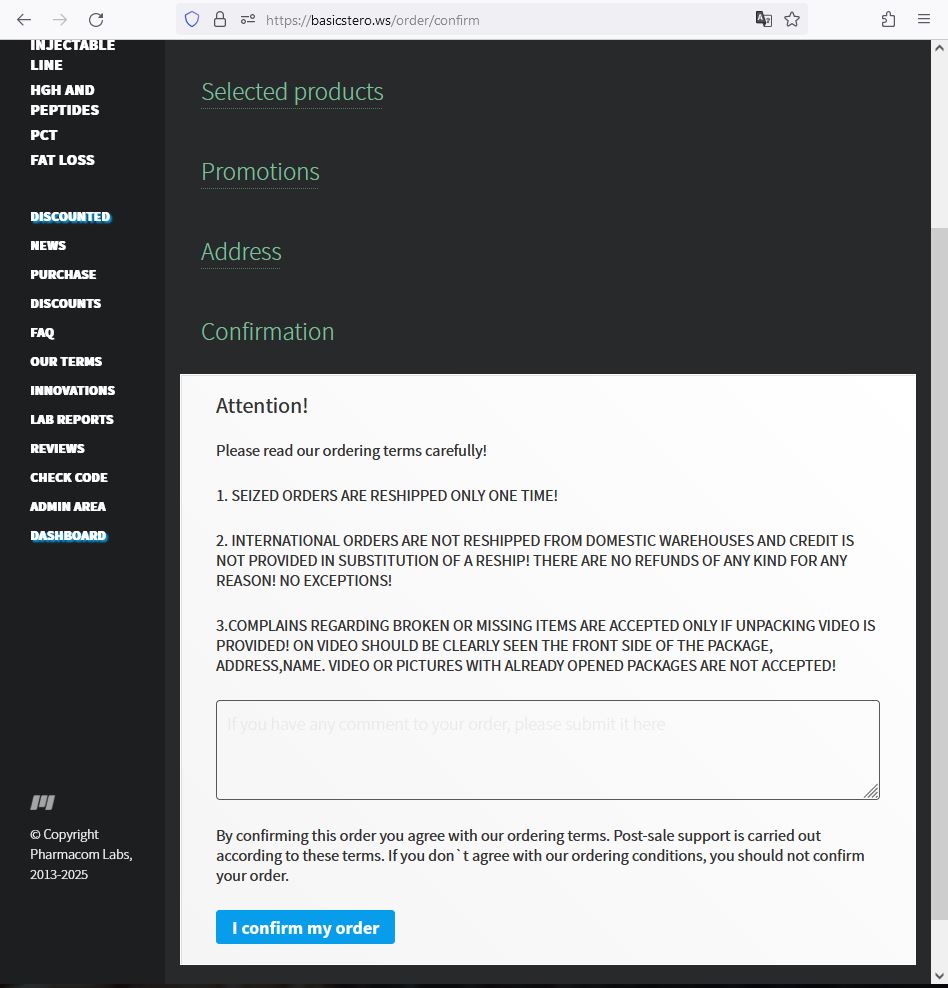
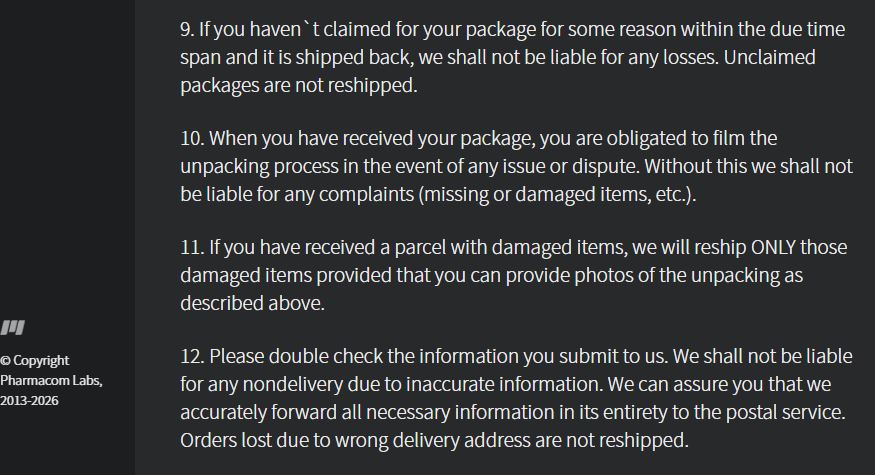
MESO-Rx Sponsor Pharmacom Labs officials and our Basicstero.com store

Why are the prices for this site like:

Test C canada warehouse $49
Test C international $49
Test C UK warehouse $49
USA Domestic $94

Is that a typo or double the price for USA?
The UK price is a little higher than that and international is a little lower...but, yeah - that's about what they are charging across the board.

Get your stuff in a month or two cheap via international order - with risk of another month or two wait in case of siezure - and one reship. Or pay more for what they call zero risk and fast delivery.

Now, why is it double? And why is the CA and UK warehouse's nowhere near as high? Supply, demand - and what the market is willing to pay.

Either they are selling as many as they can ship in at that price, or they may lower it. But I'm willing to bet they are getting enough people to buy at that price that they are just fine.
 
Guy needs to send to Jano or stfu honestly. He'd be doing everyone a service. Pharmacom is as close to blue chip supplier as exists in this game.. I seriously doubt they'd put out under dosed test cyp.
suck my dick wwe GIF
 
The UK price is a little higher than that and international is a little lower...but, yeah - that's about what they are charging across the board.

Get your stuff in a month or two cheap via international order - with risk of another month or two wait in case of siezure - and one reship. Or pay more for what they call zero risk and fast delivery.

Now, why is it double? And why is the CA and UK warehouse's nowhere near as high? Supply, demand - and what the market is willing to pay.

Either they are selling as many as they can ship in at that price, or they may lower it. But I'm willing to bet they are getting enough people to buy at that price that they are just fine.
GUess i will stick with the chinese sh*t I been getting. As far I see it, it should be opposite for Canada and the USA prices.
 
Any promo codes for new customers? Your products have an intriguing origin. Professional lab is Moldova very cool honestly.
Hello. You can find information about discount at the link in the code box below. But, there are no promo codes for new customers. Also, the production facility was moved for Asia years ago for logistic and economic reasons. I try to ensure you are fully informed :)
Code:
https://basicstero.ws/discounts
 
Why are the prices for this site like:

Test C canada warehouse $49
Test C international $49
Test C UK warehouse $49
USA Domestic $94

Is that a typo or double the price for USA?
The price differences between warehouses are because of the different overall operational costs to run and maintain a warehouse in some regions, import risk and costs, warehouse staff wages and higher compensation to the warehouse staff for the risks warehouse workers have in some regions.
Like with anything else in life, or any other business, business operations in some locations simply cost more compared to some other locations.

Also, everyone needs to be reminded that a business can set any price they want for any product or service without any need to have a "reason" (other than have positive cash flow) so maybe the higher prices at some warehouses helps improve the economic viability of the warehouse.
They set a price they want to have to reach their target goals.

Keep in mind, this is a for-profit business, not a public service or charity, so they, like any seller of anything, can pick any price they want.

Therefore, I think it is because the business made the informed choice that they wanted and/or needed to reach certain price-points at each location for each warehouse to have economic viability.
 
Guy needs to send to Jano or stfu honestly. He'd be doing everyone a service. Pharmacom is as close to blue chip supplier as exists in this game.. I seriously doubt they'd put out under dosed test cyp.
I agree with you. It's absolutely stupid considering how cheap test already is to make, BUT also why the fuck post then? Unless you're some shill.
Pcom has been my primary source for intl gear for years (10+), but always know things can change with labs.
 
Hey, this talk about lab results and analytic results just reminded me of something. I did some AI searches to find the USP/FDA potency requirements because someone a little while ago said he does not accept the +/- 10% standard. I think a lot of people don;t even realize that big official licensed companies follow such a standard and compound pharmacies may follow a +/- 5% to +/-20% standard.

Also, keep in mind that analytic testing results have an error range and are a process run by humans; like with anything else, humans are not perfect so there are always possibilities or errors and inconsistencies in any process.
Two analytic samples from the same exact batch may give slightly different results because the testing procedure itself has some variance.

Therefore, if we consider the possible variance in production potency (+/- 10%, maybe even +/- 5% to +/- 20%) with the possible variance in the analytic results, the error may compound and give values that people freak out about (because they may not understand, are ignorant, or just emotional and dramatic).

Overall, it seems that steroid forum communities do not really understand these details and have developed some unrealistic expectations regarding analytic results.

Please see my next post for the results of my searches and inquiries about potency standards (EDIT: to add a quote to the post below).
US FDA and USP Potency Standards.

FDA-approved medications generally must contain active ingredients within +/- 10% of the labeled amount. For compounded preparations, the typical acceptable range is also +/- 10%, with a maximum, in some cases, of up to +/- 20%.

Based on United States Pharmacopeia (USP) standards, which guide pharmacy compounding practices, the information provided is generally accurate. [1, 2, 3]

Compounded Preparations (USP 795 & 797)
• Typical Range: The standard acceptable variability in potency for most compounded nonsterile (USP 795) and sterile (USP 797) preparations is +/- 10% of the labeled strength.
• Maximum Range: Depending on the stability of the ingredient, the specific dosage form, or if the ingredient is complex (such as some proteins), the acceptable range can extend up to +/- 20%.
• Other Ranges: For certain raw powders, potency requirements may be as tight as +/- 2%, while for others it may differ. [5, 6]
FDA-Approved Medications
• General Standards: FDA-approved manufactured drugs must adhere to strict stability and potency standards, typically requiring active ingredients to be within 90%–110% (+/- 10%) of the labeled amount, though some specific drug monographs may differ. [7, 8, 9, 10, 11]
Key Differences
• Compounded Drugs: Are not FDA-approved, meaning the FDA does not evaluate their safety, effectiveness, or quality before they are marketed, although they must be made using specific USP guidelines.
• Acceptable Variability: Because they are made one at a time to individual prescriptions, compounded drugs often have a slightly wider permitted variance (sometimes up to +/- 20%) compared to the strict, consistent manufacturing requirements of FDA-approved drugs. [6, 12, 13, 14, 15]

[1] Understanding Compounding Pharmacies: Requirements and Services
[2] What Is Liquid Medicine From Compounding Pharmacies? - Burt's
[3] Understanding Reference and Working Standards in Pharmaceuticals | farnamshime tajhiz posted on the topic | LinkedIn
[4] ARL Bio Pharma | Labeling Compounded Preparations
[5] THE PCCA BLOG | Notable Changes in the New USP <795>
[6] https://www.arlok.com/sites/default...797 for Compounded Sterile Preparations_0.pdf
[7] https://www.pharmacy.texas.gov/files_pdf/BN/Nov21/D.1.3.pdf
[8] The Scientist’s Guide to Understanding FDA Drug Approval
[9] Compounded Bioidentical Hormone Preparations - The Clinical Utility of Compounded Bioidentical Hormone Therapy - NCBI Bookshelf
[10] Compounding Pharmacies: The Top 5 Questions | Sona Pharmacy + Clinic
[11] Study: Expiration dates have nothing to do with shelf life of drugs
[12] Human Drug Compounding Laws
[13] What Ingredients Can Be Used in Compounded Drugs?
[14] https://www.goodrx.com/drugs/medication-basics/compound-medications
[15] Comparison of three automated compounding devices for parenteral nutrition according to four key technical tests - PMC


The United States Pharmacopeia (USP) establishes that the generally accepted potency range for most compounded and manufactured drug preparations is +/- 10% of the labeled amount, though this can vary from +/- 5% to +/- 20% depending on the specific monograph. These standards, often cited in FDA guidance and 21 CFR 211.192, ensure drug quality, purity, and potency. [1, 2, 3]

Key details regarding USP/FDA potency requirements:
• Standard Range: The common, accepted potency range is 90% –110% (+/- 10%) of the label claim.
• Variations: Potency requirements may be stricter (+/- 5% for potent analgesics) or wider (+/- 20% for some proteins) based on specific USP monographs.
• Regulatory Context: FDA 21 CFR 211.192 requires investigation of any batch that fails to meet these established specifications.
• Compounding: USP 795 & USP 797 standards for compounded preparations frequently reference the +/- 10% tolerance. [1, 2, 4, 5, 6]

[1] 21 CFR 211.192 Production Record Review - Performance Validation
[2] ARL Bio Pharma | Potency Testing Benefits and Requirements
[3] https://qualitymatters.usp.org/what-letters-usp-mean-label-your-medicine
[4] Strength Conversion in Drug Listing
[5] Compounding with Commercial Drugs Can Cause Errors | Pharmacy Times
[6] https://www.usp.org/sites/default/f...stability-testing-compounded-preparations.pdf

(NOTE: these are AI search and inquiry results, not my original work).

 
Last edited:
US FDA and USP Potency Standards.

FDA-approved medications generally must contain active ingredients within +/- 10% of the labeled amount. For compounded preparations, the typical acceptable range is also +/- 10%, with a maximum, in some cases, of up to +/- 20%.

Based on United States Pharmacopeia (USP) standards, which guide pharmacy compounding practices, the information provided is generally accurate. [1, 2, 3]

Compounded Preparations (USP 795 & 797)
• Typical Range: The standard acceptable variability in potency for most compounded nonsterile (USP 795) and sterile (USP 797) preparations is +/- 10% of the labeled strength.
• Maximum Range: Depending on the stability of the ingredient, the specific dosage form, or if the ingredient is complex (such as some proteins), the acceptable range can extend up to +/- 20%.
• Other Ranges: For certain raw powders, potency requirements may be as tight as +/- 2%, while for others it may differ. [5, 6]
FDA-Approved Medications
• General Standards: FDA-approved manufactured drugs must adhere to strict stability and potency standards, typically requiring active ingredients to be within 90%–110% (+/- 10%) of the labeled amount, though some specific drug monographs may differ. [7, 8, 9, 10, 11]
Key Differences
• Compounded Drugs: Are not FDA-approved, meaning the FDA does not evaluate their safety, effectiveness, or quality before they are marketed, although they must be made using specific USP guidelines.
• Acceptable Variability: Because they are made one at a time to individual prescriptions, compounded drugs often have a slightly wider permitted variance (sometimes up to +/- 20%) compared to the strict, consistent manufacturing requirements of FDA-approved drugs. [6, 12, 13, 14, 15]

[1] Understanding Compounding Pharmacies: Requirements and Services
[2] What Is Liquid Medicine From Compounding Pharmacies? - Burt's
[3] Understanding Reference and Working Standards in Pharmaceuticals | farnamshime tajhiz posted on the topic | LinkedIn
[4] ARL Bio Pharma | Labeling Compounded Preparations
[5] THE PCCA BLOG | Notable Changes in the New USP <795>
[6] https://www.arlok.com/sites/default...797 for Compounded Sterile Preparations_0.pdf
[7] https://www.pharmacy.texas.gov/files_pdf/BN/Nov21/D.1.3.pdf
[8] The Scientist’s Guide to Understanding FDA Drug Approval
[9] Compounded Bioidentical Hormone Preparations - The Clinical Utility of Compounded Bioidentical Hormone Therapy - NCBI Bookshelf
[10] Compounding Pharmacies: The Top 5 Questions | Sona Pharmacy + Clinic
[11] Study: Expiration dates have nothing to do with shelf life of drugs
[12] Human Drug Compounding Laws
[13] What Ingredients Can Be Used in Compounded Drugs?
[14] https://www.goodrx.com/drugs/medication-basics/compound-medications
[15] Comparison of three automated compounding devices for parenteral nutrition according to four key technical tests - PMC


The United States Pharmacopeia (USP) establishes that the generally accepted potency range for most compounded and manufactured drug preparations is +/- 10% of the labeled amount, though this can vary from +/- 5% to +/- 20% depending on the specific monograph. These standards, often cited in FDA guidance and 21 CFR 211.192, ensure drug quality, purity, and potency. [1, 2, 3]

Key details regarding USP/FDA potency requirements:
• Standard Range: The common, accepted potency range is 90% –110% (+/- 10%) of the label claim.
• Variations: Potency requirements may be stricter (+/- 5% for potent analgesics) or wider (+/- 20% for some proteins) based on specific USP monographs.
• Regulatory Context: FDA 21 CFR 211.192 requires investigation of any batch that fails to meet these established specifications.
• Compounding: USP 795 & USP 797 standards for compounded preparations frequently reference the +/- 10% tolerance. [1, 2, 4, 5, 6]

[1] 21 CFR 211.192 Production Record Review - Performance Validation
[2] ARL Bio Pharma | Potency Testing Benefits and Requirements
[3] https://qualitymatters.usp.org/what-letters-usp-mean-label-your-medicine
[4] Strength Conversion in Drug Listing
[5] Compounding with Commercial Drugs Can Cause Errors | Pharmacy Times
[6] https://www.usp.org/sites/default/f...stability-testing-compounded-preparations.pdf

(NOTE: these are AI search and inquiry results, not my original work).

 
Last edited:
Back
Top