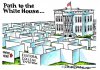
We survey recent theoretical and empirical literature on political economics of non-democracies. Dictators face many challenges to their rule: internal, such as palace coups or breakdown of their support coalition, or external, such as mass protests or revolutions.
We analyze strategic decisions made by dictators — hiring political loyalists to positions that require competence, restricting media freedom at the cost of sacrificing bureaucratic efficiency, running a propaganda campaign, organizing electoral fraud, purging associates and opponents, and repressing citizens — as driven by the desire to maximize the regime's chances of staying in power.
We argue that the key to understanding the functioning and ultimately the fate of a nondemocratic regime is the information flows within the regime, and the institutions that govern these information flows.
This site uses cookies to help personalise content, tailor your experience and to keep you logged in if you register.
By continuing to use this site, you are consenting to our use of cookies.