

MESO-Rx
Anabolic Steroids

Navigation
Install the app
How to install the app on iOS
Follow along with the video below to see how to install our site as a web app on your home screen.
Note: This feature may not be available in some browsers.
More options
Style variation
Guest viewing is limited
- You have a limited number of page views remaining
- 10 guest views remaining
- Register now to remove this limitation
- Already a member? Click here to login
You are using an out of date browser. It may not display this or other websites correctly.
You should upgrade or use an alternative browser.
You should upgrade or use an alternative browser.
Trump Timeline ... Trumpocalypse
- Thread starter CdnGuy
- Start date
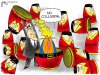
THIRTEEN RUSSIANS
https://claytoonz.com/2018/02/17/thirteen-russians/
If there’s one thing we should all be sure of, Hillary Clinton was the best presidential candidate because Vladimir Putin wanted us to elect Donald Trump.
On Friday, Special Counsel Robert Mueller indicted thirteen Russians. Donald Trump FINALLY admitted Russia meddled in our election in a statement that was focused, surprise, entirely on himself. Trump believes the indictments are vindication that there was no collusion with his campaign. No, it doesn’t. Mueller isn’t done. What the details of the indictments do confirm is that Donald Trump would not be president without the help of Vladimir Putin and Russian meddlers. It’s time to ditch the idea that Russia had no affect on the outcome of our election.
The Russians didn’t just post a few memes with outrageous conspiracy theories for your gullible right-wing friends to share on Facebook. They ran a third presidential campaign. While the campaign was designed to make the worst human being possible the president of the United States, it’s higher objective was to derail Hillary Clinton and throw our government into chaos. Part of that strategy was to support, not just Trump, but Bernie Sanders and Jill Stein.
Trump’s margin of victory in Pennsylvania, Wisconsin and Michigan was smaller than the votes Stein received in each of those states. Russians focused on those states by purchasing pro-Stein ads on Facebook. Trump would not have won the presidency without Stein’s performance.
Jill Stein is not the spoiler or scapegoat. It’s Vladimir Putin.
The Russians posed as Americans to coordinate and infiltrate political activities. They organized grass-roots rallies. They paid for a cage large enough to hold an actress impersonating Clinton in a prison uniform. They stoked racial tensions and sowed social discord. They had a troll farm with a budget of over $1 million a month.
Trump has spent over a year denying the Russians meddled in our election, and he’s called it “fake news” and a hoax. This was not a hoax.
Trump has done nothing to punish Russia and his inaction has only encouraged them to continue their attacks on our nation. He has never convened a Cabinet-level meeting on Russian interference and has even refused to enact sanctions on Russia passed by Congress that he himself signed. During the transition period, Obama leveled sanctions against Russia and seized two of their compounds in the U.S. Trump’s people were telling the Russians not to retaliate because the new president would take care of it.
Vladimir Putin wanted Donald Trump to be our president. Putin does not want what’s best for the United States. No American should want our president to be the person Putin picks. Our president is a Russian a troll and he has proved Clinton right. He’s Putin’s puppet.
Right-wing fanatics always claimed Obama is a traitor, hated America and sought to destroy it. How ironic they’ve given us a president who actually fits that description.
One of the most damning aspects of this indictment is the revelation (though many of us already knew) that Russians recruited Americans to help them subvert our Democracy. They had Americans help spread propaganda, “fake news,” and conspiracy theories. They coordinated with members of the Trump campaign (which we’ll be hearing more about in the future from the Special Counsel). They even paid Americans to dress as Hillary Clinton in prison garb at rallies.
Turn on the TV and you’ll see and hear conservatives echo Trump’s talking points of no collusion, or that the dossier is fake and evidence of Clinton’s collusion with Russia. Go on social media and you’ll see post by idiots echoing the same points. Look at Congress and you’ll see Republicans writing fake memos in order to subvert Mueller’s investigation. Talk to your crazy uncle and he’s talking about Hillary’s Russian uranium deal.
The Russian’s attack against our nation isn’t over and it continues today. What is also continuing is that many Americans are still helping them.
https://claytoonz.com/2018/02/17/thirteen-russians/
If there’s one thing we should all be sure of, Hillary Clinton was the best presidential candidate because Vladimir Putin wanted us to elect Donald Trump.
On Friday, Special Counsel Robert Mueller indicted thirteen Russians. Donald Trump FINALLY admitted Russia meddled in our election in a statement that was focused, surprise, entirely on himself. Trump believes the indictments are vindication that there was no collusion with his campaign. No, it doesn’t. Mueller isn’t done. What the details of the indictments do confirm is that Donald Trump would not be president without the help of Vladimir Putin and Russian meddlers. It’s time to ditch the idea that Russia had no affect on the outcome of our election.
The Russians didn’t just post a few memes with outrageous conspiracy theories for your gullible right-wing friends to share on Facebook. They ran a third presidential campaign. While the campaign was designed to make the worst human being possible the president of the United States, it’s higher objective was to derail Hillary Clinton and throw our government into chaos. Part of that strategy was to support, not just Trump, but Bernie Sanders and Jill Stein.
Trump’s margin of victory in Pennsylvania, Wisconsin and Michigan was smaller than the votes Stein received in each of those states. Russians focused on those states by purchasing pro-Stein ads on Facebook. Trump would not have won the presidency without Stein’s performance.
Jill Stein is not the spoiler or scapegoat. It’s Vladimir Putin.
The Russians posed as Americans to coordinate and infiltrate political activities. They organized grass-roots rallies. They paid for a cage large enough to hold an actress impersonating Clinton in a prison uniform. They stoked racial tensions and sowed social discord. They had a troll farm with a budget of over $1 million a month.
Trump has spent over a year denying the Russians meddled in our election, and he’s called it “fake news” and a hoax. This was not a hoax.
Trump has done nothing to punish Russia and his inaction has only encouraged them to continue their attacks on our nation. He has never convened a Cabinet-level meeting on Russian interference and has even refused to enact sanctions on Russia passed by Congress that he himself signed. During the transition period, Obama leveled sanctions against Russia and seized two of their compounds in the U.S. Trump’s people were telling the Russians not to retaliate because the new president would take care of it.
Vladimir Putin wanted Donald Trump to be our president. Putin does not want what’s best for the United States. No American should want our president to be the person Putin picks. Our president is a Russian a troll and he has proved Clinton right. He’s Putin’s puppet.
Right-wing fanatics always claimed Obama is a traitor, hated America and sought to destroy it. How ironic they’ve given us a president who actually fits that description.
One of the most damning aspects of this indictment is the revelation (though many of us already knew) that Russians recruited Americans to help them subvert our Democracy. They had Americans help spread propaganda, “fake news,” and conspiracy theories. They coordinated with members of the Trump campaign (which we’ll be hearing more about in the future from the Special Counsel). They even paid Americans to dress as Hillary Clinton in prison garb at rallies.
Turn on the TV and you’ll see and hear conservatives echo Trump’s talking points of no collusion, or that the dossier is fake and evidence of Clinton’s collusion with Russia. Go on social media and you’ll see post by idiots echoing the same points. Look at Congress and you’ll see Republicans writing fake memos in order to subvert Mueller’s investigation. Talk to your crazy uncle and he’s talking about Hillary’s Russian uranium deal.
The Russian’s attack against our nation isn’t over and it continues today. What is also continuing is that many Americans are still helping them.

[OA] McAdams DP. The Appeal of the Primal Leader: Human Evolution and Donald J. Trump. ESIC Journal 1.2: http://journals.academicstudiespress.com/index.php/ESIC/article/view/45
Drawing on the distinction between dominance and prestige as two evolutionarily grounded strategies for attaining status in human groups, this essay examines an underappreciated feature of Donald Trump’s appeal to the millions of American voters who elected him president in 2016—his uncanny ability to channel primal dominance.
Like the alpha male of a chimpanzee colony, Trump leads (and inspires) through intimidation, bluster, and threat, and through the establishment of short-term, opportunistic relationships with other high-status agents.
Whereas domain-specific expertise confers status in the prestige paradigm, dominant leaders derogate expertise in order to establish a direct, authoritarian connection to their constituency.
Trump’s leadership style derives readily from his personality makeup, which entails a combustible temperament mixture of high extraversion and low agreeableness, a motivational agenda centered on extreme narcissism, and an internalized life story that tracks the exploits of an intrepid warrior who must forever fight to win in a Hobbesian world of carnage.
Drawing on the distinction between dominance and prestige as two evolutionarily grounded strategies for attaining status in human groups, this essay examines an underappreciated feature of Donald Trump’s appeal to the millions of American voters who elected him president in 2016—his uncanny ability to channel primal dominance.
Like the alpha male of a chimpanzee colony, Trump leads (and inspires) through intimidation, bluster, and threat, and through the establishment of short-term, opportunistic relationships with other high-status agents.
Whereas domain-specific expertise confers status in the prestige paradigm, dominant leaders derogate expertise in order to establish a direct, authoritarian connection to their constituency.
Trump’s leadership style derives readily from his personality makeup, which entails a combustible temperament mixture of high extraversion and low agreeableness, a motivational agenda centered on extreme narcissism, and an internalized life story that tracks the exploits of an intrepid warrior who must forever fight to win in a Hobbesian world of carnage.
PRESIDENT DONALD TRUMP’S nominee to lead the IRS, Charles Rettig, is a longtime tax lawyer who has defended people and companies against the agency in court. Rettig would replace John Koskinen, who stepped down as commissioner at the end of his term in November. If confirmed by the Senate, Rettig would lead the agency as it begins to implement a sweeping $6 trillion tax overhaul, maneuvering hundreds of pages of changes made to the tax code amid a shrinking staff and budget.
Between 2010 and 2011, Rettig served as chair of the IRS Advisory Council, which advises the IRS on different tax administration issues and makes policy recommendations. But the bulk of his experience has been in representing clients before the IRS and the Tax Division of the Department of Justice. He’s been with the Beverly Hills-based firm Hochman Salkin Rettig Toscher & Perez for over 35 years.
But his most famous client may just be “Girls Gone Wild” creator Joe Francis, whose tax evasion case was just one of many legal woes.
Francis, who made his fortune selling videos of topless young women, was indicted in April 2007 on two counts of tax evasion. The indictment charged that his companies claimed more than $20 million in false deductions on their 2002 and 2003 corporate income tax returns, the Justice Department said in a statement. It also charged that he used offshore bank accounts to conceal the income he had earned during the time. Francis was charged with sexual battery that same month, for reportedly groping an 18-year-old young woman at a party in Hollywood.
“Mr. Francis … has long been surrounded by professional financial and tax advisers while primarily focusing on building and expanding the ‘Girls Gone Wild’ branded empire throughout the world,” Rettig said in an email to the Associated Press at the time. “The allegations set forth in the tax-related indictment will be fairly and appropriately resolved through the judicial process,” Rettig said. “If a tax liability is later determined to exist, it will be paid.”
Rettig’s work for the “Girls Gone Wild” creator is unlikely to hamper his nomination, but it has a particular of-course-he-did quality to it.
On Friday, special counsel Robert S. Mueller III indicted 13 Russians who are accused of helping orchestrate the greatest foreign threat to U.S. democracy in modern history.
In his first year in office, President Trump incorrectly called Russia’s attack on American democracy a hoax 44 times. He tweeted that “Russia talk is FAKE NEWS put out by the Dems.”
The indictment document blows up such absurd myths once and for all. It connects names with dates and events, describes Russian-organized real-world rallies that Americans attended, and chronicles stolen identities and nefarious bank transfers.
Americans of all political stripes must see this charging document as a wake-up call. We must not let partisan divides between Republicans and Democrats blind us to the threat, nor bind us to inaction.
We’re in a fight to save our democracy from foreign attacks — and currently we are doing absolutely nothing to fight back.
Mueller’s indictment outlines a sophisticated operation with three primary goals: to help elect Donald Trump as president of the United States; to undermine faith in our democratic institutions; and to stoke polarization by turning Americans against one another. Each of these goals shares a common overarching aim: to weaken the United States by sowing chaos and division in ways that benefit Russia.
...
But to suggest, as many in Trumpworld do, that not a single American voter was swayed by this three-year-long, carefully orchestrated, wide-reaching information-warfare campaign is a dangerous fantasy — because it downplays the menace that this new kind of threat poses to our democratic system. If you successfully attack the democratic system, you attack the mechanism by which every other decision is made, from tax policy to nuclear weapons. Imagine Pearl Harbor, except that the proverbial flames could engulf our ability to make our own free-thinking democratic choices for years.
Trump and his ardent supporters, of course, are eager to downplay the threat. Because the Russians tried to help Trump win, they want to pretend it was minor, unimportant and unworthy of a response. That helps explain why Trump failed to impose sanctions that Congress passed with overwhelming bipartisan support, why he bizarrely proposed setting up a joint cybersecurity task force with the same government that conducted a major cyberattack against the United States and why he keeps acting as Russian President Vladimir Putin’s chief apologist in the West.

IF A READER were to judge from popular media accounts, the biggest threat to university life and public discourse would be obvious: the left-wing students on campus fighting various forms of bigotry and other injustices. From liberal broadsheets to Breitbart.com, commentators have taken up a strawman debate — largely shaped by the far right — about campus free speech. Tactics like “no-platforming” and physically confronting neo-Nazis have come under the liberal microscope; the ethics questioned, the proponents decried as the real fascistic force on campus.
As Adam Johnson, a contributing analyst for Fairness and Accuracy in Reporting, told me, a November study he conducted found that the “New York Times has dedicated 21 columns and articles to the subject of conservatives’ free speech on campus, while only three covered the silencing of college liberals or leftists.”
But recently released reports from a pair of prominent nonprofit organizations tell a different story, focusing on the danger we should be addressing: the increased targeting of student spaces by neo-Nazis and white supremacists, and the violence these ideologies entail.
The Anti-Defamation League reported that incidents of white supremacist propaganda on U.S. campuses more than tripled in 2017. Groups doubling down on campus propagandizing include explicit neo-Nazis like the Florida-based Atomwaffen Division, as well as associations like Identity Evropa, known for couching its unabashed racist message in thinly veiled panegyrics to protecting Western culture and posters bearing Michelangelo’s David.
“The ‘alt-right’ is a movement of mostly young white males,” Carla Hill, senior researcher for the Anti-Defamation League’s Center on Extremism, told me. “They realize that for any movement to truly grow, they must reach young minds, and this segment of the white supremacist movement has been focused on doing that.”
The potential gravity of this surge was then underlined by a report from the Southern Poverty Law Center, titled simply, “The Alt-Right Is Killing People.” More than 100 people have been killed or injured since 2014 by perpetrators believed to be influenced by the racism and misogyny that defines the so-called alt-right, the center found. More than 60 people were killed or injured in “alt-right” violence last year alone.
The reports draw no direct link between the rise in white supremacist propaganda and the spike in white supremacist murders. But together, they make clear that the threat of “alt-right” influence on young people, above all young white men, is anything but academic: Racist ideology is never free of violence, and neither is it in the case of the cosplaying, Nazi-adjacent trolls of the “alt-right.”
The Anti-Defamation League reported separately in November that white supremacists and other far-right extremists were responsible for 59 percent of all extremist-related fatalities in the U.S. in 2017, up from 20 percent in 2016. While it’s too soon for much dispositive social science on the link, it’s difficult to consider all this data outside of the Trump era in American politics.
Last edited:
At about noon in San Francisco on Saturday, a team of six protesters pushed off of Fisherman’s Wharf in a boat with a 33-foot inflatable chicken that resembled President Donald Trump fastened to it. The chicken was outfitted in giant prison fatigues—and as they headed toward Alcatraz, a banner on the side of the boat that read “Transporting Prisoner 00045” was unfurled.
“It’s the Cock of The Rock,” organizer Danelle Morton told The Daily Beast.
They circled Alcatraz twice at five miles per hour, then coasted along the banks of the city to show off the inflatable bird to the weekend crowds on San Francisco’s Embarcadero.
The stunt was the brainchild of 62-year-old Morton and her crew of five organizers, all of whom met while planning a protest last April aimed at pressuring President Trump to release his tax returns. The Tax Marches drew crowds of thousands in cities across the country and hosted speakers including Nancy Pelosi, Sen. Ron Wyden and Rep. Maxine Waters.
And thanks in large part to Morton, the marches had their own symbol: oversized inflatable Donald Trump chickens made in China.
Last edited:
PARKLAND, Fla. — A Florida social services agency conducted an in-home investigation of Nikolas Cruz after he exhibited troubling behavior nearly a year and a half before he shot and killed 17 people at his former high school in Florida, a state report shows.
The agency, the Florida Department of Children and Families, had been alerted to posts on Snapchat of Mr. Cruz cutting his arms and expressing interest in buying a gun, according to the report. But after visiting and questioning Mr. Cruz at his home, the department determined he was at low risk of harming himself or others.
...
According to the report, investigators also tried to speak to a school police officer, who declined to cooperate.
The Department of Children and Families would have had no way to know if Mr. Cruz’s behavior became more erratic after losing his mother because the agency is not automatically notified of a caretaker’s death, said George Sheldon, a former department secretary.
“It’s hard to second-guess because we don’t know everything that the department knew at the time, but clearly this young man was showing serious signs of a mental health disorder, something that does not pop up overnight,” said Mr. Sheldon, who left the department in 2011 and now oversees a nonprofit foster-care agency in Miami. “He was troubled and about to explode. And the results were devastating.”
The indictment by special counsel Robert S. Mueller III of 13 Russians associated with a St. Petersburg online “troll factory” that allegedly interfered with the U.S. election has brought a sense of vindication to the handful of former employees who have already been speaking out about what they witnessed.
One of them, 43-year-old Marat Mindiyarov, a teacher by training, spoke by phone with The Washington Post on Saturday from the village outside St. Petersburg where he lives. Mindiyarov worked in a department for Russian domestic consumption. When he took a test in December 2014 to move to the factory’s “Facebook department” targeting the U.S. market, Mindiyarov recalled, he was asked to write an essay about Hillary Clinton. Here are lightly edited excerpts of the conversation.
...
How did it feel inside?
I arrived there, and I immediately felt like a character in the book “1984” by George Orwell — a place where you have to write that white is black and black is white. Your first feeling, when you ended up there, was that you were in some kind of factory that turned lying, telling untruths, into an industrial assembly line. The volumes were colossal — there were huge numbers of people, 300 to 400, and they were all writing absolute untruths. It was like being in Orwell’s world.
What sorts of untruths did you write?
My untruths amounted to posting comments. I worked in the commenting department — I had to comment on the news. No one asked me my opinion. My opinions were already written for me, and I had to write in my own words that which I was ordered to write.
Similar threads
- Replies
- 186
- Views
- 4K

- Replies
- 33
- Views
- 558


- Replies
- 21
- Views
- 1K
